

What Is Lungworm and Why Is It Spreading?
Lungworm — caused by the parasite Angiostrongylus vasorum — has become one of the most discussed parasitic threats to dogs in Europe over the past two decades. Once considered a regional problem confined to parts of southern England, France, and Iberia, it has steadily expanded its geographic range and is now reported with increasing frequency in Germany, Italy, the Netherlands, Denmark, and beyond.
The reasons for this spread are not fully understood, but urbanisation, the movement of foxes (a key reservoir host) into suburban environments, and climate factors are all thought to play a role. For dog owners across Europe, this shift means that lungworm is no longer a concern only for those in traditionally affected areas — it is a risk that must be taken seriously continent-wide.
The Life Cycle of Angiostrongylus vasorum
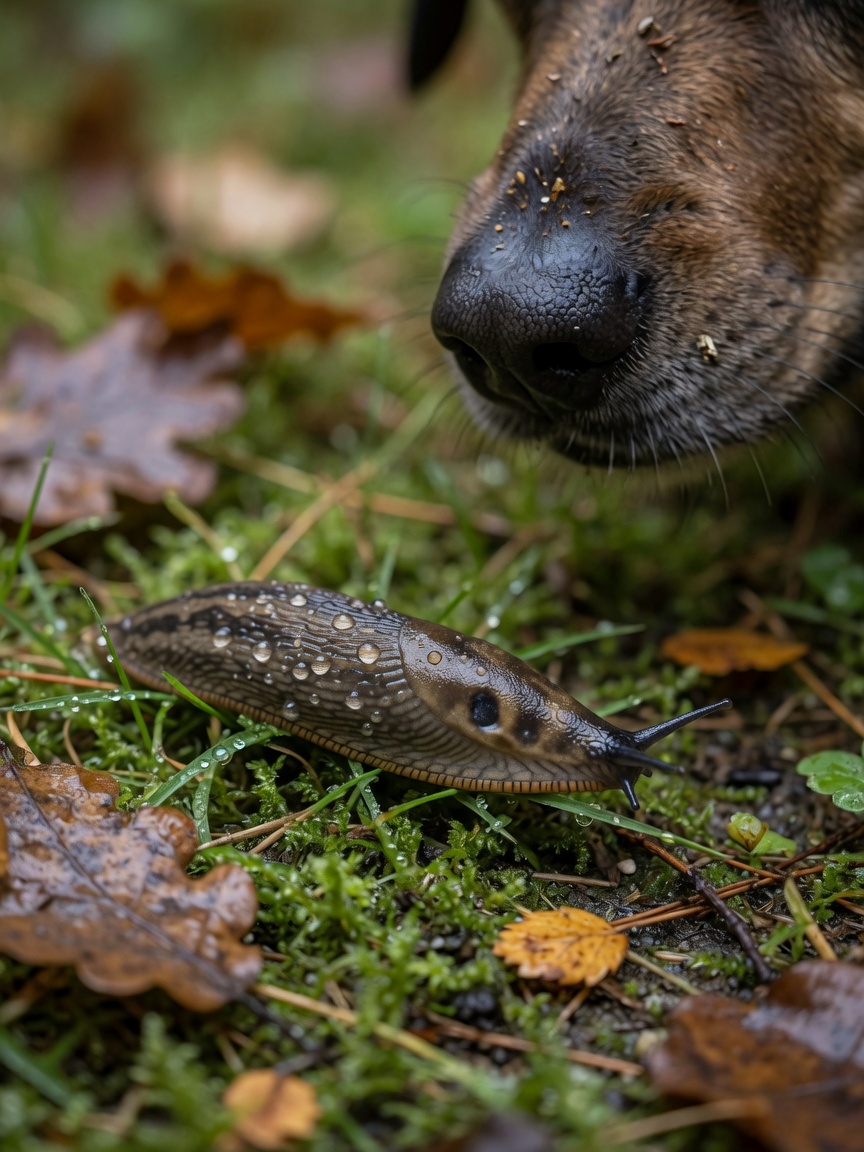
Understanding how lungworm spreads is essential to appreciating why prevention matters. The life cycle involves intermediate hosts — slugs and snails — as well as a definitive host (the dog or fox) and is considerably more complex than a straightforward direct transmission route.
Adult lungworms live in the pulmonary arteries and right side of the heart of infected dogs and foxes. Female worms lay eggs that hatch into first-stage larvae (L1) within the lung tissue. These larvae migrate up the airways, are coughed up, swallowed, and passed out in the dog's faeces. In the environment, the larvae are ingested by slugs or snails, where they develop through two further larval stages (L2 and L3) over several weeks. Dogs become infected by ingesting these intermediate hosts — whether deliberately, accidentally while sniffing or licking grass, eating fallen fruit contaminated with slug slime, or drinking from puddles. Foxes act as a wildlife reservoir, maintaining the parasite's environmental presence even in areas with low dog density.
Frogs may also act as paratenic (transport) hosts, carrying infective larvae without being necessary to the cycle. This provides yet another route by which curious dogs can become exposed.
Geographic Spread Across Europe
Cases of Angiostrongylus vasorum have been confirmed in the United Kingdom, Ireland, France, Spain, Portugal, Italy, Germany, Switzerland, Austria, the Netherlands, Denmark, and Sweden, among others. Studies in the UK have found prevalence rates in foxes as high as 20–40% in some urban areas, making fox faecal contamination of gardens a meaningful source of infective larvae for slugs and snails. ESCCAP guideline GL6 flags this parasite as a significant and growing concern for dogs throughout Europe.
Clinical Signs: What to Look For

Lungworm infection presents with a wide and sometimes puzzling range of clinical signs, which is one reason the condition is often underdiagnosed. The severity depends on the worm burden — a low-level infection may produce only subtle signs, while a heavy burden can be rapidly fatal.
Respiratory Signs
The most commonly recognised signs involve the respiratory tract: a persistent cough (which may be dry or productive), laboured breathing, exercise intolerance, and in severe cases, respiratory distress. These signs arise because the worms' presence in the pulmonary arteries causes inflammation, and larvae migrating through lung tissue trigger further damage.
Coagulopathy (Bleeding Disorders)
One of the most dangerous and distinctive features of lungworm infection is its ability to cause coagulopathy — a disruption of normal blood clotting. Affected dogs may bruise easily, bleed from small cuts for longer than expected, develop unexplained nosebleeds, bleed into the eye, or suffer internal haemorrhage. Some dogs present with neurological signs including seizures due to bleeding into the brain. This coagulopathy can appear without prominent respiratory signs, making the diagnosis easy to miss.
General Systemic Signs
Dogs with lungworm may also show weight loss, lethargy, vomiting, diarrhoea, and general malaise. In some cases, signs of right-sided heart failure may develop as the worm burden increases and the pulmonary vasculature becomes compromised.
Diagnosis
Diagnosing lungworm requires specific tests, as routine faecal examinations may miss the parasite. Your vet may recommend:
- Baermann technique — a specialised faecal flotation method that detects L1 larvae in fresh faeces. Multiple samples improve sensitivity, as larval shedding can be intermittent.
- Bronchoalveolar lavage (BAL) — retrieval and examination of fluid from the airways, which may reveal larvae or eggs in cases where faecal tests are negative.
- Angio Detect — a rapid in-clinic antigen test that detects a protein shed by adult female A. vasorum. This test is particularly useful when faecal shedding is low or intermittent and provides a result within minutes.
- Chest radiographs and echocardiography — imaging to assess lung pathology and evidence of pulmonary hypertension or right heart changes.
Treatment
The treatment of choice for Angiostrongylus vasorum infection in dogs is Advocate (imidacloprid/moxidectin), which is the only EU-licensed spot-on treatment with a label claim for the treatment and prevention of lungworm. It is applied to the back of the neck monthly. In clinical cases, a course of treatment (typically three monthly applications) alongside supportive care — which may include anti-inflammatories, blood or plasma transfusions in cases of severe coagulopathy, and oxygen therapy for respiratory distress — is required. Your vet will tailor the treatment plan to your dog's individual condition.
Prevention: Monthly Advocate Is the Gold Standard
Given the potentially fatal nature of lungworm infection and the difficulty of completely preventing exposure to slugs and snails, monthly prevention with Advocate is the most reliable protective strategy for dogs at risk. ESCCAP GL6 recommends that dogs in lungworm-endemic areas receive monthly anthelmintic treatment effective against A. vasorum.
Practical steps to reduce exposure include:
- Avoiding leaving dog toys or water bowls outside overnight, where slugs and snails congregate.
- Supervising dogs in gardens, particularly after rain when slugs are most active.
- Not allowing dogs to eat grass, fallen fruit, or drink from puddles in high-risk areas.
- Picking up dog faeces promptly to interrupt the environmental transmission cycle.
Dogs that spend time in gardens, rural environments, or areas where foxes are present are at heightened risk and should be considered candidates for year-round monthly prevention. Speak to your vet about whether Advocate is appropriate for your dog, particularly if they also require flea and tick cover, as Advocate also provides protection against fleas, ear mites, and some intestinal worms.