
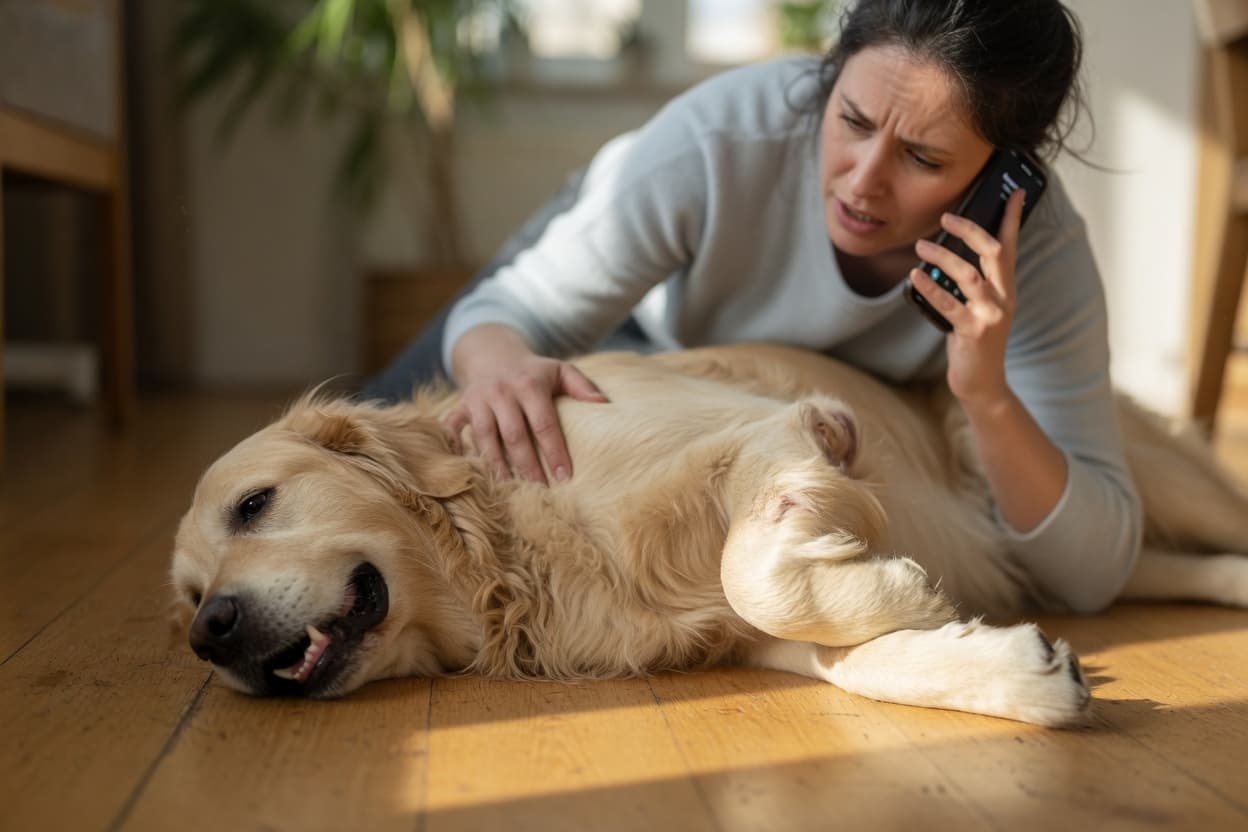
Dog Broken Bone: Signs, Splinting & Emergency Transport
By Julia Wrenfield, Pet Wellness Researcher | ForPetsHealthcare.com
A dog running at full speed, a fall from a balcony, a collision with a car — fractures happen fast and without warning. What you do in the first 10 minutes can mean the difference between your dog walking again and permanent disability — or death. Studies show that traumatic fractures in dogs carry mortality rates of up to 18% when shock is not managed within the first hour. This guide will give you the knowledge to act correctly, calmly, and fast.
How to Know If Your Dog Has a Broken Bone
Dogs instinctively mask pain, which makes fracture recognition tricky. Watch for these signs immediately after any trauma:
- Non-weight-bearing lameness — the dog refuses to put any weight on a limb
- Visible deformity — the limb looks bent at an unnatural angle
- Swelling and bruising that appears within 15–30 minutes of injury
- Bone protruding through skin (open/compound fracture — extreme emergency)
- Crepitus — a grinding or crackling sound when the area is gently touched
- Extreme vocalisation when the area is approached or touched
- Pale or white gums — a critical sign of shock
- Rapid, shallow breathing combined with lethargy
Any combination of these signs after a traumatic event means treat this as a fracture until a vet says otherwise.
Types of Dog Fractures You Need to Know
Not all fractures are the same, and knowing the type helps you understand urgency:
- Closed fracture: Bone broken but skin intact. Serious, but more stable than open.
- Open (compound) fracture: Bone pierces through the skin. Risk of infection is extreme — this is a surgical emergency within hours.
- Greenstick fracture: Bone bends but doesn't fully break. Common in puppies. Less immediately life-threatening but still requires veterinary care.
- Comminuted fracture: Bone shatters into multiple pieces. Often caused by high-impact trauma (car accidents). High risk of blood vessel damage.
- Pelvic fracture: Frequently accompanies car accidents. Can cause bladder rupture or nerve damage — requires imaging.
Step-by-Step: What to Do RIGHT NOW
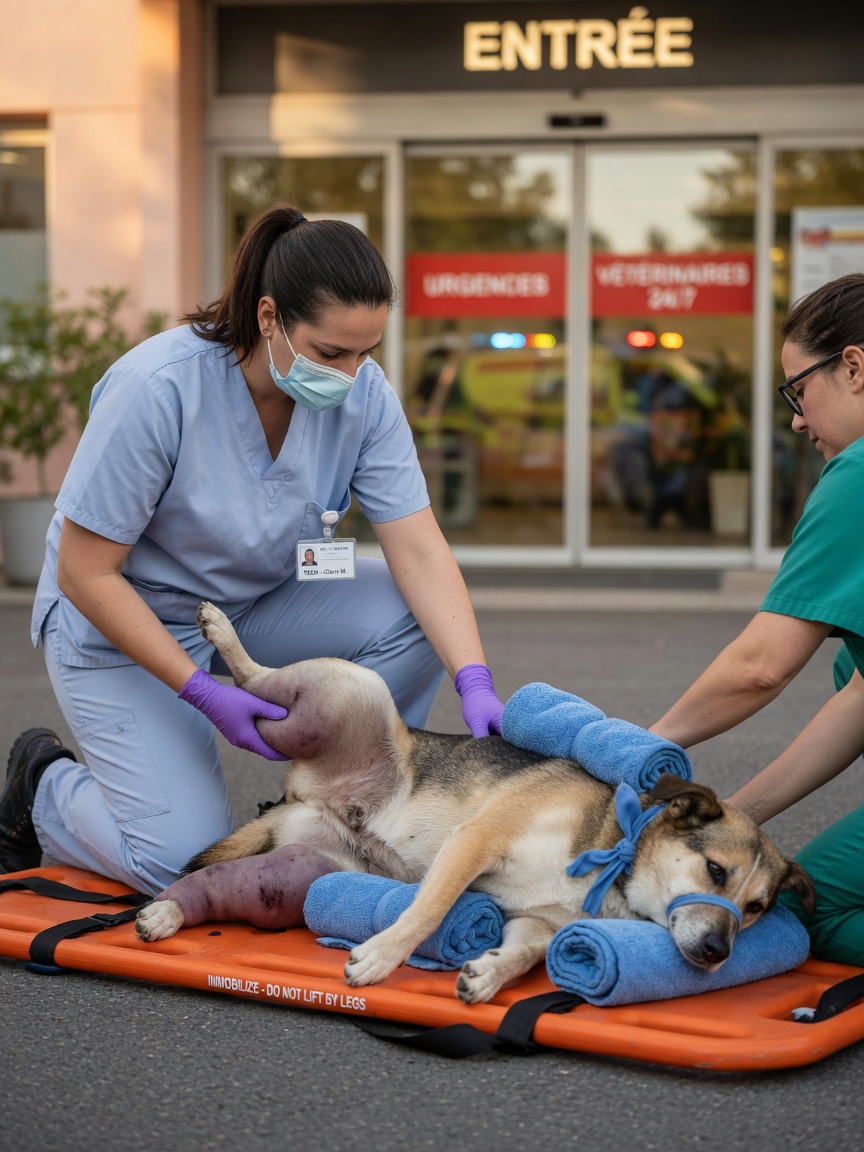
- Stay calm and keep your dog still. Panic causes dogs to thrash, worsening the injury. Speak in a low, steady voice.
- Do NOT attempt to straighten the limb. You can sever a blood vessel or turn a closed fracture into an open one.
- Muzzle your dog — even the gentlest dog can bite when in severe pain. Use a soft cloth, leash, or commercial muzzle. Do NOT muzzle if the dog is vomiting or having trouble breathing.
- Call your vet or emergency animal hospital immediately. Describe the injury, the type of trauma, and the symptoms. Ask for transport instructions specific to the injury location.
- Control bleeding for open fractures: Apply gentle pressure with a clean cloth. Do NOT use a tourniquet unless you've been instructed by a vet.
- Create a makeshift stretcher using a rigid board, flat box, or thick folded blanket. Gently slide (do not lift) your dog onto it with at least two people.
- Immobilise during transport. Use rolled towels or folded blankets to prevent the dog from sliding. Minimise turns and bumps during the drive.
- Monitor for shock: Check gum colour every 5 minutes. Pink = okay. Pale/white/blue = shock. Keep dog warm with a blanket.
If your dog shows any of these signs after trauma — pale gums, an abnormally shaped limb, inability to stand, or visible bone — call an emergency veterinary clinic immediately. Do not wait to see if it gets better. Internal bleeding can be fatal within 2 hours of injury.
Splinting: When and How (With Important Cautions)
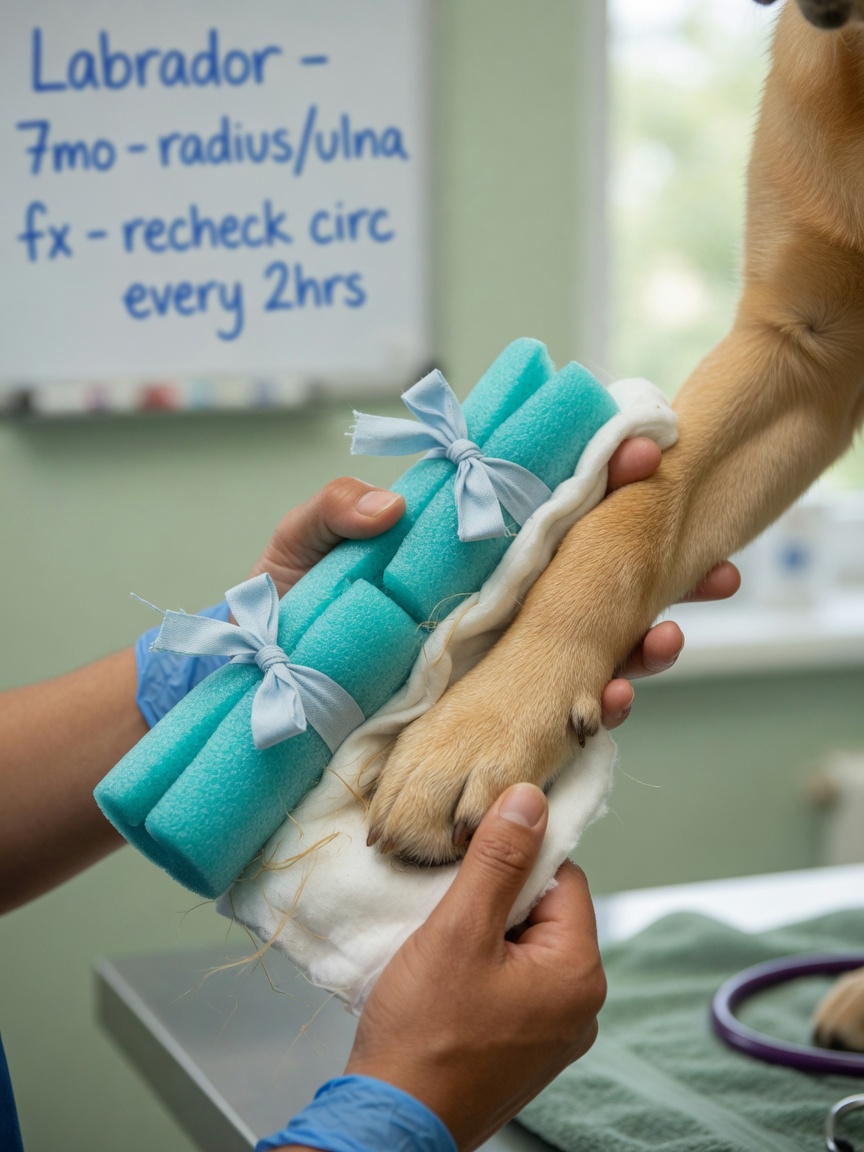
Splinting at home should only be attempted if veterinary care is more than 1 hour away and the limb is dangerously mobile. Improper splinting causes pressure sores, cuts off circulation, and is often more harmful than no splint at all. If you must splint:
- Use a rigid material (a rolled magazine, a wooden spoon, foam pool noodle) that extends one joint above and below the fracture.
- Pad the splint heavily with cotton wool or cloth before applying.
- Secure loosely with bandage or strips of cloth — you should be able to slip two fingers under the wrapping.
- Check every 15 minutes that the paw below the splint remains warm. Cold or bluish paw = too tight, remove immediately.
- Never splint a pelvic, spinal, or rib fracture.
What the Vet Will Do: Understanding the Treatment Process
When you arrive at the clinic, the vet will immediately assess for shock, internal bleeding, and respiratory compromise. Pain management via IV opioids is typically the first step. Stabilisation follows, with X-rays to determine fracture type and severity.
Treatment options include external coaptation (cast/splint), surgical bone plating (ORIF), or external skeletal fixation (pins). According to veterinary orthopaedic studies, surgical repair has a 90–95% success rate for long-bone fractures in dogs when performed within 12–24 hours of injury.
Recovery: What to Expect After a Dog Fracture
Recovery typically takes 6–12 weeks for simple fractures and up to 6 months for complex surgical cases. During recovery, your dog's nutritional needs change dramatically — bone healing requires elevated levels of calcium, phosphorus, vitamin D, and protein.
A quality orthopaedic recovery diet and targeted supplements can significantly accelerate healing. Veterinary nutritionists recommend products specifically formulated for musculoskeletal recovery. Browse recovery support supplements at Zooplus.es — look for joint and mobility support formulations designed for post-surgical dogs.
Prevention: Reducing the Risk of Broken Bones in Dogs
- Never allow dogs to jump from elevated surfaces (beds, cars, furniture) without a ramp, especially large or older breeds.
- Keep dogs leashed near roads at all times.
- Ensure adequate calcium and phosphorus in the diet, particularly for growing puppies and lactating females — deficiencies lead to brittle bones.
- Schedule annual vet checks with bone density discussion for senior dogs.
Key Takeaways
- Broken bones are trauma emergencies — act within minutes, not hours.
- Pale gums indicate shock — this is immediately life-threatening.
- Never try to straighten a broken limb — it can cause fatal blood vessel damage.
- Open fractures must reach a vet within 4–6 hours to prevent fatal infection.
- Surgical repair has a 90–95% success rate when performed promptly.
- Proper nutrition accelerates bone healing during recovery.
References
- Beale BS. "Use of nutraceuticals and chondroprotectants in osteoarthritic dogs and cats." Veterinary Clinics of North America: Small Animal Practice. 2004;34(1):271–289. PMID: 15032126
- Langley-Hobbs SJ. "Survey of 52 fractures of the patella in 34 cats." Veterinary Record. 2009;164(3):80–86. PMID: 19151292
Article by Julia Wrenfield, Pet Wellness Researcher | ForPetsHealthcare.com | Last reviewed June 2026