
Why Socialisation Is the Most Important Thing You Can Do for Your Kitten
The experiences a kitten has in its first weeks of life leave an impression that lasts a lifetime. During specific developmental windows, a kitten's brain is actively forming its understanding of what is safe and what is frightening. Miss these windows, and you may spend years managing a fearful or reactive cat. Get them right, and you give your kitten the gift of genuine confidence.
The World Small Animal Veterinary Association (WSAVA) has a clear position on this: early socialisation is a veterinary health issue, not merely a training preference. Behavioural problems are among the most common reasons cats are surrendered to shelters, and the vast majority of those problems have roots in inadequate early socialisation.
The Two Critical Windows You Need to Know
The Primary Window: 2 to 7 Weeks
The most sensitive period for feline socialisation runs from roughly two to seven weeks of age. During this time, kittens are extraordinarily receptive to new experiences. Positive exposure to people, sounds, surfaces, and handling during these weeks helps wire the brain to treat those things as normal rather than threatening. This stage usually happens with the breeder or rescue organisation before a kitten comes home with you, so asking about their socialisation programme is an entirely reasonable question when adopting.
The Secondary Window: 7 to 14 Weeks
The second window, running from seven to fourteen weeks, is the period during which most owners actually have their kitten. While the brain is slightly less plastic than in the first window, this is still an enormously important and productive time for socialisation. Do not make the mistake of thinking the opportunity has passed. Gentle, positive exposure during this stage has a real and lasting impact on temperament.
What to Expose Your Kitten To
People of Different Ages and Appearances
Kittens need to meet a wide variety of people while they are young. Invite friends and family members of different ages, including children who can be supervised to interact gently. People wearing hats, glasses, beards, or different types of clothing can all seem alarming to a cat that has never encountered them before. Aim for brief, positive interactions rather than long sessions that may overwhelm a young kitten.
Everyday Sounds
The household sounds that adults barely notice — the washing machine, the vacuum cleaner, the television, the doorbell — can be genuinely startling to a kitten hearing them for the first time. Introduce these sounds at low volume while the kitten is engaged in something enjoyable, such as eating or playing. Gradually increase exposure as the kitten's comfort grows.
Handling and Vet-Like Touches
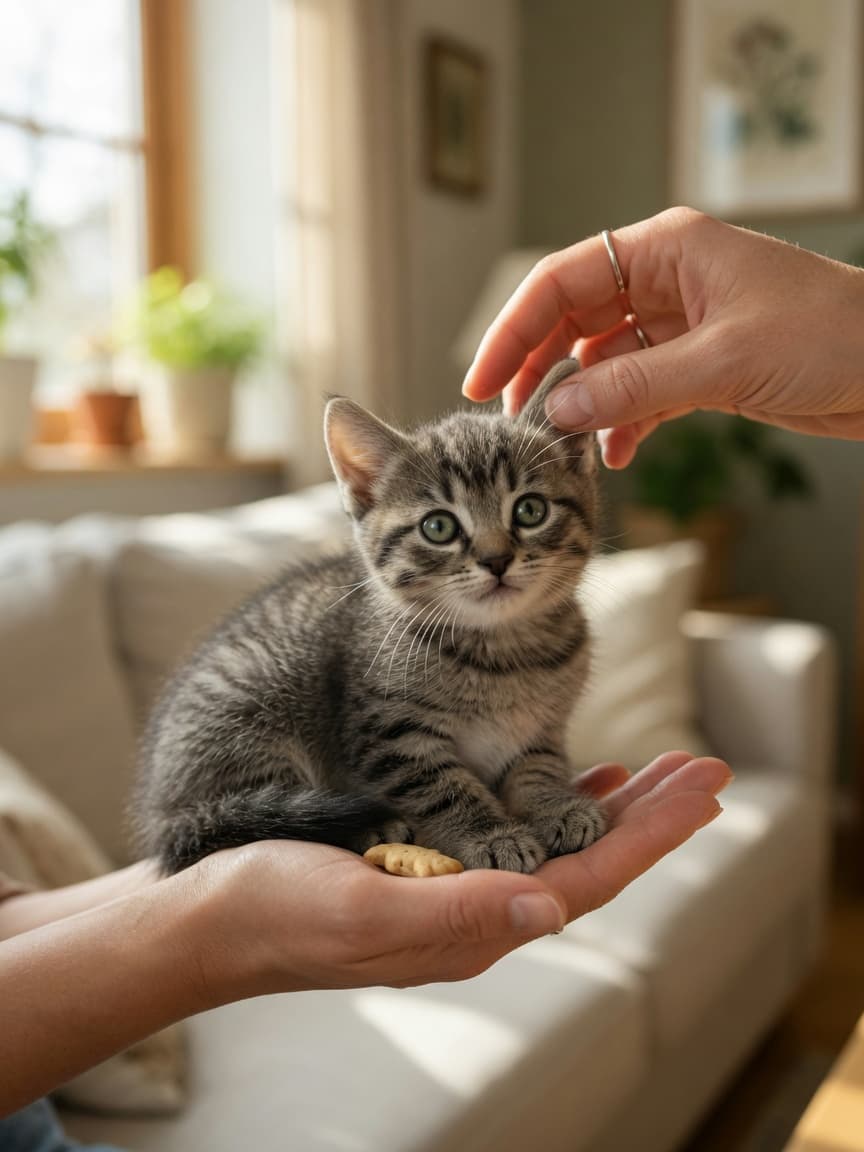
Gently touching a kitten's ears, paws, mouth, and belly from an early age makes veterinary examinations far less stressful throughout its life. Pair this handling with small, high-value treats — Zooplus stocks a wide range of kitten-appropriate treats and interactive toys that are ideal for making these sessions genuinely rewarding. Keep sessions short, perhaps two to three minutes, and always end on a positive note.
Carriers and Car Travel
Leave a carrier open in a room where the kitten spends time. Place a soft blanket and a treat inside so the kitten begins to associate the carrier with comfort rather than the vet. Short car journeys taken when the kitten is relaxed can also help prevent travel anxiety later in life.
Recognising Fear in Your Kitten
Knowing when your kitten is overwhelmed is essential. Signs that a kitten is frightened include flattened ears, a low crouched body posture, a puffed tail, dilated pupils, hissing or spitting, and attempts to hide or flee. If you see any of these signals, immediately reduce the intensity of whatever is happening. Move further away, lower the volume, or give the kitten space to retreat. Pushing through fear does not build confidence — it builds trauma.
Always let the kitten approach new things at its own pace. Curiosity and voluntary exploration are far more effective than forced exposure.
Introducing Other Pets Safely
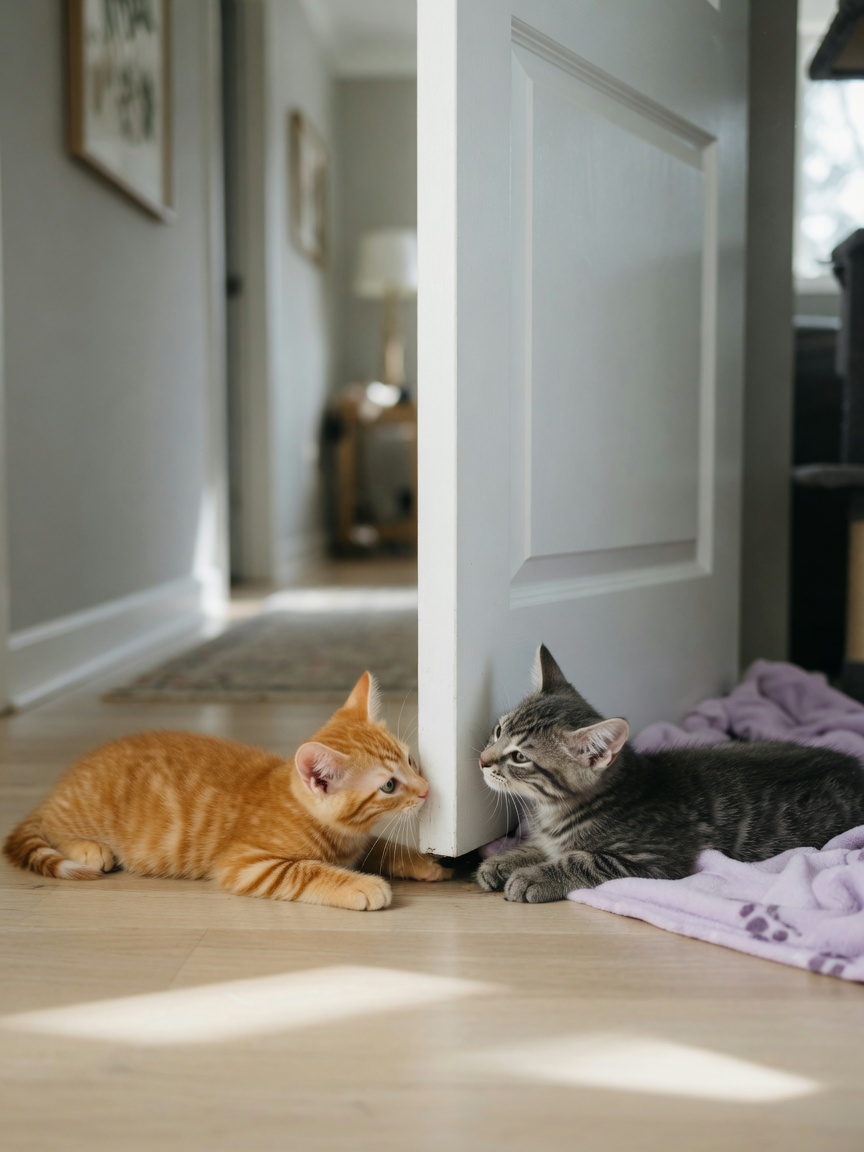
If you have other cats or a dog, introductions need to be managed carefully. Keep the new kitten in a separate room initially, allowing animals to sniff each other under the door. After several days, swap bedding between the animals so they can become familiar with each other's scent. Visual introductions through a baby gate or cracked door should come before any direct contact. Supervised face-to-face meetings should be brief and positive, with treats available to reward calm behaviour from all animals involved.
Never force animals together or allow bullying. Some introductions take several weeks. Patience here pays dividends for the entire lifetime of your pets.
Common Socialisation Mistakes to Avoid
The most frequent error owners make is overwhelming their kitten in an attempt to socialise it quickly. Inviting twelve people to meet the kitten on the same day, or placing the kitten directly in front of the vacuum cleaner, is not socialisation — it is flooding, and it can have the opposite of the intended effect. Always work within the kitten's comfort zone and expand it gradually.
A second common mistake is relying on punishment to manage fearful behaviour. Spraying a kitten with water, making loud noises to deter it, or physically restraining it during distress will undermine trust and make socialisation harder. Positive reinforcement — rewarding calm, curious behaviour with treats, play, and gentle praise — is the only approach that actually works.
Finally, do not assume that a kitten that hides for the first few days is unsocialisable. Give it time, space, and positive experiences, and most kittens will come around beautifully.
Building a Lifelong Bond
Socialisation is not a one-time task that you complete and tick off a list. It is the beginning of a relationship built on trust. A kitten that learns the world is a safe and interesting place — because you took the time to introduce it gently and positively — grows into a cat that is a genuine pleasure to live with. The investment of a few weeks of thoughtful effort pays off in years of companionship.
Use interactive wand toys from retailers like Zooplus to build positive associations with play, and keep those early sessions short, frequent, and fun. You are not just teaching your kitten about the world — you are becoming its safe base within it.