
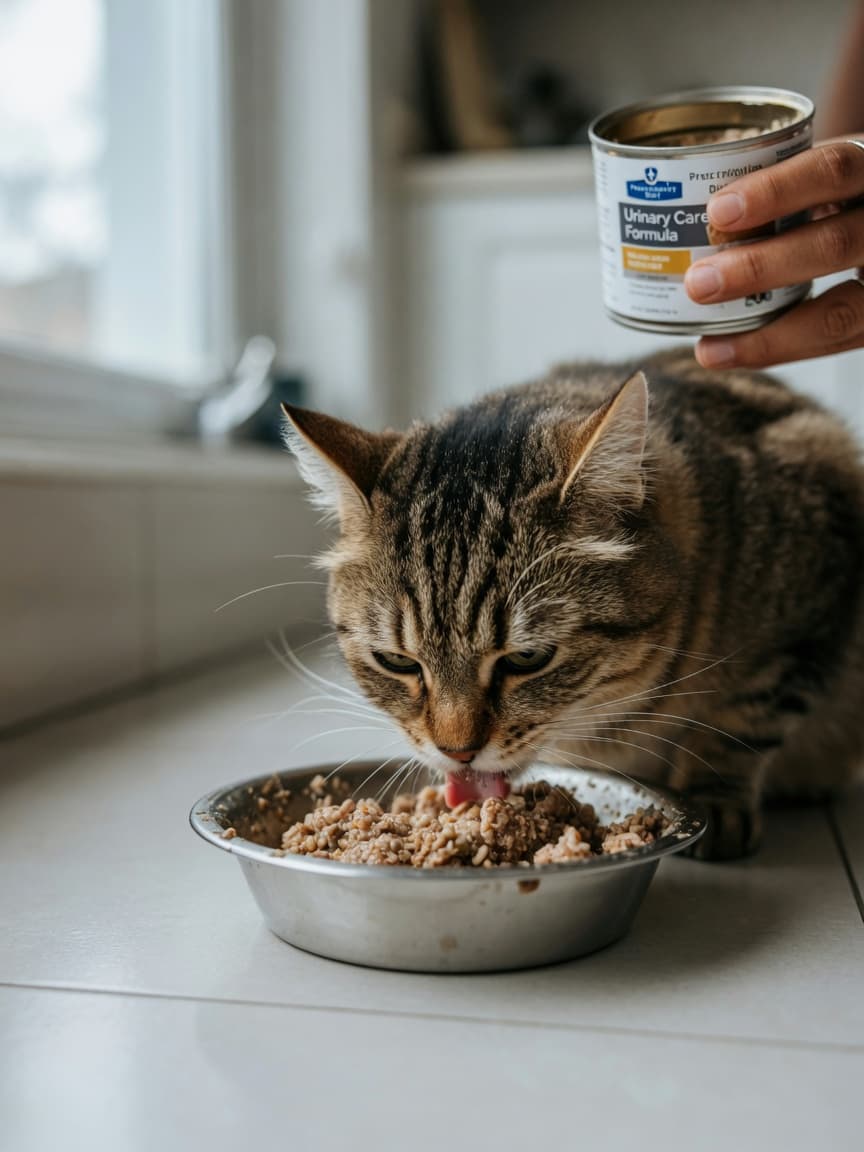
The Rise of the Prescription Urinary Diet
Walk into any veterinary clinic and you will encounter a wall of prescription urinary diets, many of them recommended after a first episode of lower urinary tract disease. These diets are genuinely useful tools in specific clinical situations, but they are also sometimes recommended more broadly than the evidence strictly supports. Understanding when a prescription urinary diet is truly necessary — and when it may be overkill or even counterproductive — helps owners make better-informed decisions in partnership with their vet.
Prescription urinary diets are not a single category. They vary considerably in their mechanisms and targets, and matching the diet to the specific diagnosis is essential. A diet that helps one cat may harm another.
What Prescription Urinary Diets Actually Do
Most prescription urinary diets work through one or more of the following mechanisms:
- Modifying urine pH to create conditions unfavourable for specific crystal types
- Restricting minerals such as magnesium, phosphorus, or calcium that contribute to crystal formation
- Increasing urine volume through higher moisture content or added sodium to stimulate thirst
- Reducing urinary oxalate or promoting inhibitors of crystal formation such as citrate
Some diets are designed specifically for dissolution of existing struvite stones. Others target prevention of oxalate recurrence. Still others are marketed as broad "urinary health" formulations intended to reduce the risk of multiple crystal types simultaneously, typically by targeting a neutral urine pH and moderate mineral restriction.
When a Prescription Diet Is Genuinely Necessary
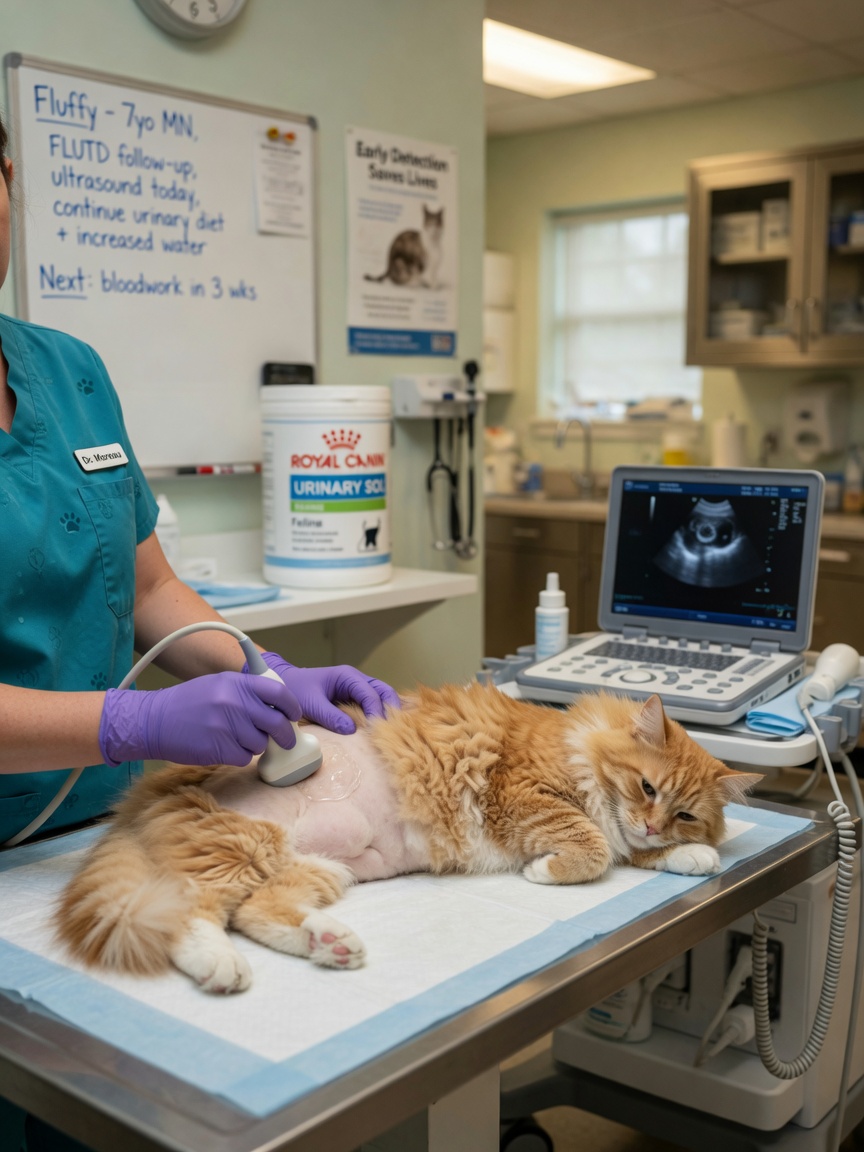
There are clear-cut situations where a prescription urinary diet is not optional but an essential part of treatment.
Struvite urolith dissolution is the strongest indication. Prescription struvite dissolution diets — such as Hill's s/d or Royal Canin Urinary S/O — have robust evidence for dissolving sterile struvite stones non-surgically. In these cases, the diet is doing therapeutic work that no over-the-counter food can replicate. Without it, surgical removal becomes the only alternative.
Confirmed calcium oxalate urolithiasis is a second strong indication. Following removal of oxalate stones, a prevention diet helps maintain urine pH in the range that reduces oxalate precipitation and ensures adequate urine dilution. Given the high recurrence risk, this is not a situation where guesswork is appropriate.
Recurrent urethral obstruction in male cats, particularly where crystalluria is identified as a contributing factor, also represents a situation where dietary precision matters. The stakes — a potentially fatal obstruction — justify the investment in a properly matched prescription diet.
When the Evidence Is Weaker
For cats diagnosed with feline idiopathic cystitis — which is the most common lower urinary tract diagnosis and represents cases where no infection, stones, or structural abnormality is found — the role of prescription diet is less clear-cut.
FIC is primarily driven by stress and neurological factors rather than urine chemistry. The benefit of wet food in these cats is well established: increased water intake dilutes the urine and reduces the irritating effect of concentrated urine on an inflamed bladder wall. However, this benefit can be achieved with high-quality, high-moisture commercial wet food rather than a prescription formulation.
Several studies have examined whether urinary prescription diets reduce FIC episode frequency compared to good-quality wet food, and the results have not consistently shown a meaningful advantage. In a cat with FIC and no crystals, no stones, and a normal urine pH, the primary intervention should be increasing water intake, reducing stress, and improving environmental enrichment — not necessarily spending significantly more on a prescription diet.
Over-the-Counter Urinary Support Foods
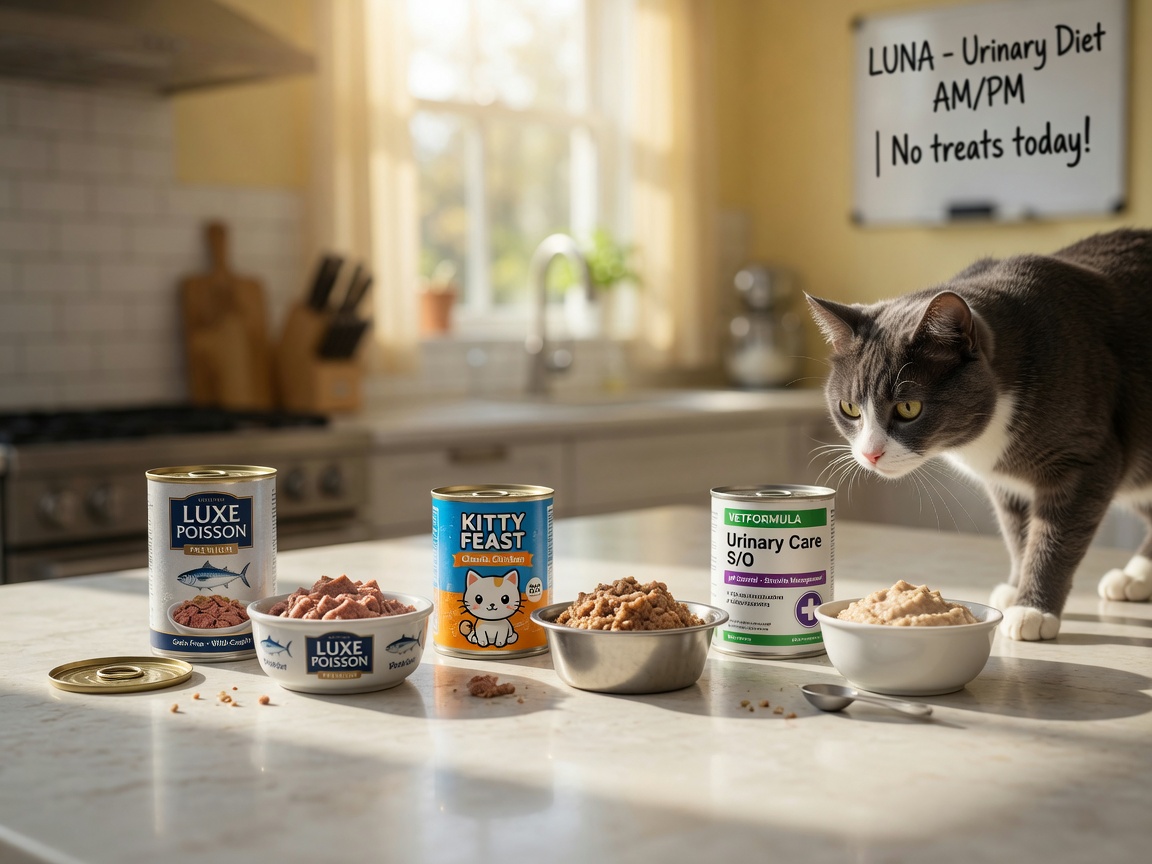
A number of non-prescription urinary support diets are now available from reputable manufacturers, positioned between standard commercial food and full prescription formulations. These typically target moderate urine pH and increased moisture content without the degree of mineral restriction found in prescription products.
For cats with a history of mild crystalluria without confirmed stone disease, or for cats in households where prevention is the goal rather than active treatment, these products represent a reasonable middle ground. They are also useful for long-term maintenance in cats who have completed a struvite dissolution protocol and no longer need the intensive acidification of a dissolution diet.
The limitation is that over-the-counter formulations have not been tested against actual stone dissolution or validated against recurrence prevention in published studies to the same degree as prescription options. Where stones are confirmed, a vet-recommended prescription diet remains the safer choice.
Cost, Compliance, and Practicalities
Prescription urinary diets are significantly more expensive than standard commercial food — often two to four times the cost — and some cats refuse to eat them. Palatability issues are real and should not be dismissed; a nutritionally ideal diet that the cat will not eat provides no benefit.
When a prescription diet is genuinely indicated, the transition should be gradual — over seven to ten days — mixing increasing proportions of the new food with the current diet. Abrupt transitions commonly cause gastrointestinal upset and food aversion, which is particularly counterproductive when trying to establish long-term dietary management.
It is also worth discussing with your vet how long the prescription diet needs to continue. Dissolution diets for struvite are typically used until radiographic or ultrasound evidence confirms stone resolution, plus an additional month. Prevention diets are often recommended long-term, but this should be reviewed periodically with repeat urinalysis to confirm the diet is achieving its intended effect on urine pH and specific gravity.
The Broader Nutritional Picture
No urinary diet, prescription or otherwise, exists in isolation from the rest of the cat's care. Hydration remains the single most impactful nutritional variable in feline urinary health, and increasing moisture intake through wet food — regardless of the specific formulation — delivers measurable benefit. A cat eating a prescription dry food is in a worse position than one eating a standard wet food, at least with respect to urinary dilution. Prescription plus wet is ideal where indicated; wet alone is often sufficient where it is not.