
Is Philodendron Toxic to Dogs?
Updated: June 2026
Why Philodendrons Are So Commonly Dangerous
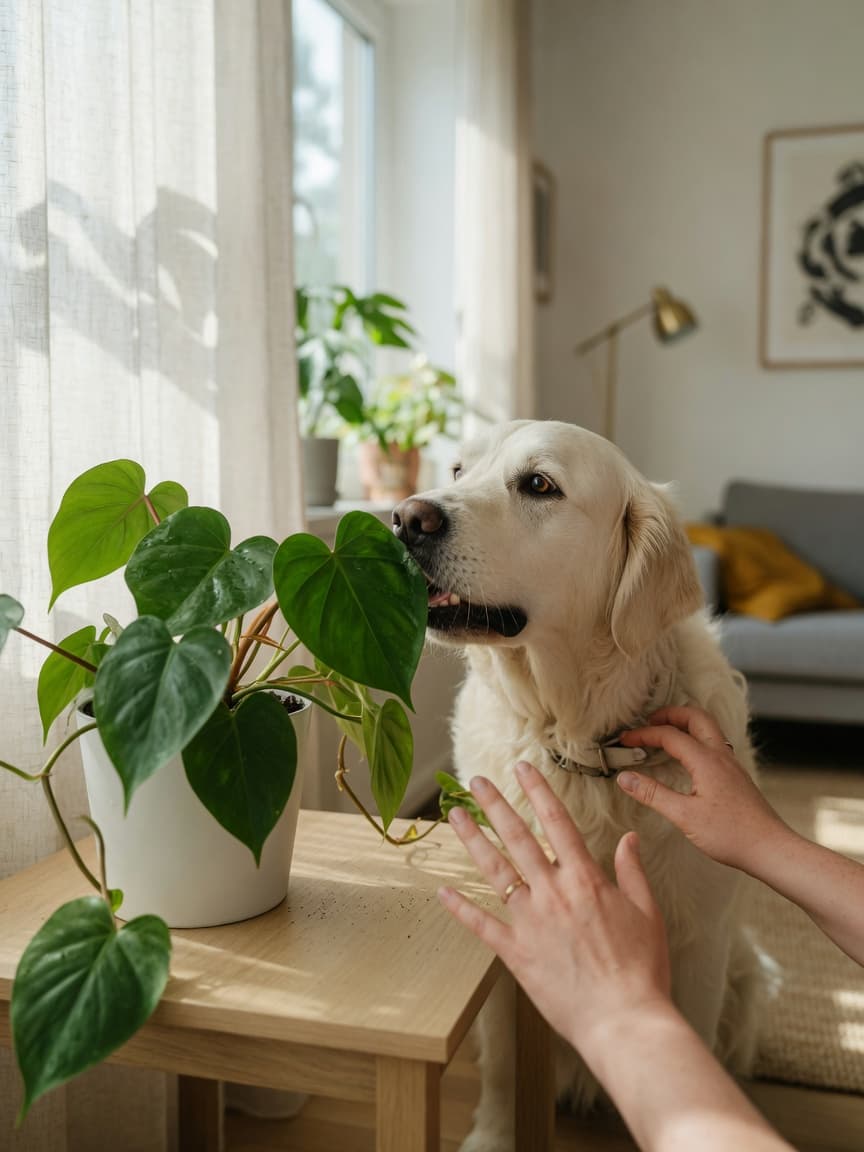
Philodendrons are among the world's most popular houseplants — and therein lies the danger. The genus Philodendron contains hundreds of species and cultivars, all loved by plant enthusiasts for their dramatic tropical foliage, ease of care, and adaptability to indoor environments. Heart-leaf philodendron, split-leaf philodendron (often confused with Monstera), tree philodendron, selloum, velvet-leaf philodendron — the varieties are seemingly endless, and they are found in homes, offices, lobbies, and public spaces worldwide.
They are also all toxic to dogs. Without exception. There is no "safe" philodendron species or variety. If you have a dog and a philodendron in the same home, you have a hazard on your hands — particularly if your dog is young, curious, or has a habit of chewing on plants.
The Mechanism of Toxicity: Calcium Oxalate Crystals
Unlike some plant toxins that require absorption into the bloodstream before causing harm, philodendron's primary toxin acts immediately on contact. All parts of the philodendron plant — leaves, stems, petioles, and roots — are packed with insoluble calcium oxalate crystals, microscopic needle-shaped structures called raphides that are housed in specialized plant cells called idioblasts.
When a dog bites into or chews a philodendron leaf or stem, these idioblasts rupture and eject thousands of microscopic raphide crystals into the oral mucosa, tongue, lips, gums, throat, and esophagus. The crystals physically penetrate tissue like tiny needles, causing immediate mechanical injury. This injury is compounded by the concurrent release of proteolytic enzymes and other irritating compounds from the plant cells, which enhance tissue penetration of the crystals and amplify the inflammatory response.
The result is intense, immediate oral pain and burning — which is actually somewhat protective in that many dogs will stop chewing the moment they feel it. However, a dog that is particularly food-motivated, very young, or that chews and swallows quickly may ingest a significant amount before the full aversion response kicks in.
Symptoms of Philodendron Toxicity in Dogs
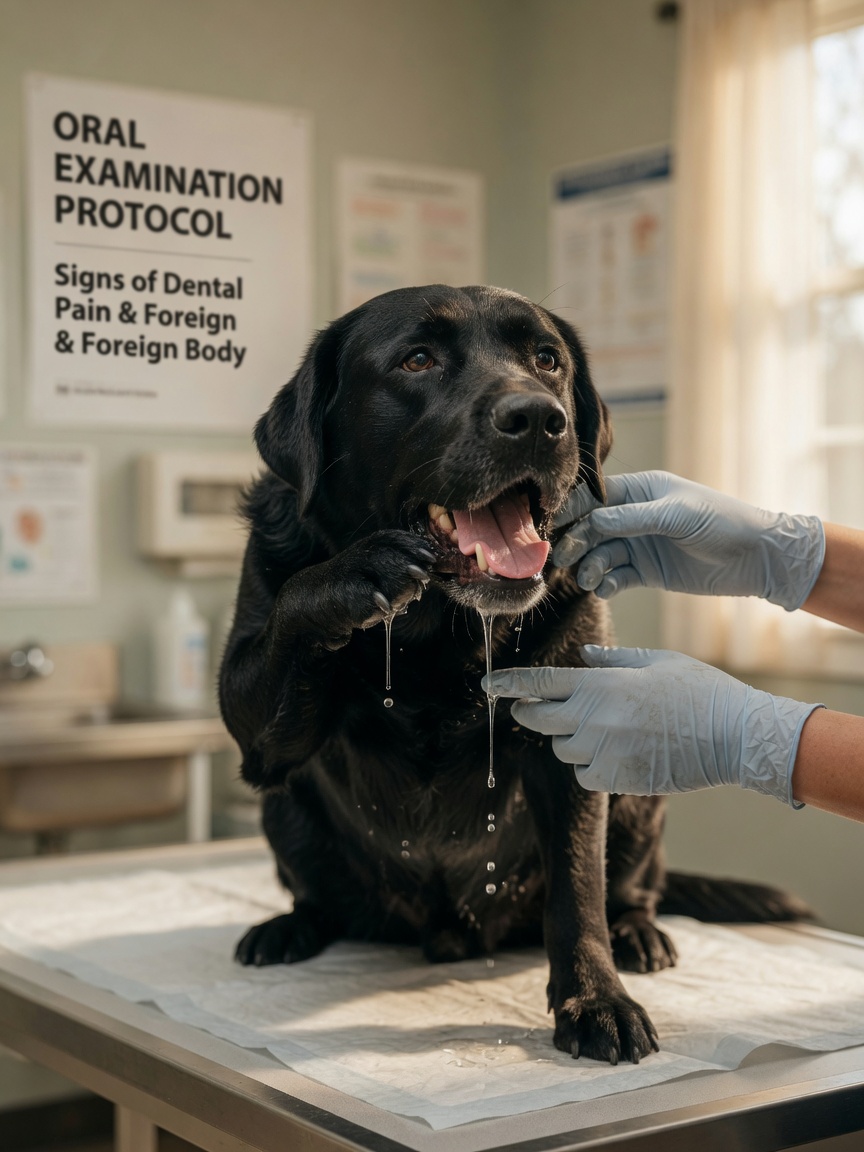
The clinical picture of philodendron poisoning is driven primarily by the intense local irritation caused by calcium oxalate crystals. Symptoms are typically immediate and alarming:
- Pawing at the mouth and face: Your dog will likely paw repeatedly at their muzzle and mouth in response to the intense burning sensation. This is often one of the first and most obvious signs owners notice.
- Excessive drooling (hypersalivation): Dramatic overproduction of saliva as the mouth attempts to flush the irritant. The drooling can be profuse.
- Oral swelling and redness: The lips, tongue, and oral mucosa may appear visibly swollen and inflamed.
- Vocalization: Some dogs cry out, whine, or yelp due to the oral pain.
- Difficulty swallowing (dysphagia): Swelling and pain in the throat and esophagus can make swallowing difficult and uncomfortable.
- Difficulty breathing (in severe cases): Significant swelling of the throat and upper airway can compromise breathing. This requires immediate emergency care.
- Vomiting: Occurs if crystals are swallowed, as the esophagus and stomach become irritated.
- Appetite loss: The dog will typically refuse food because eating is painful.
- In rare severe cases: Renal damage has been reported with large ingestions, as oxalate crystals can deposit in kidney tubules.
How Serious Is Philodendron Poisoning?
Philodendron toxicity is considered moderately serious. It is not acutely life-threatening in the way that lily or oleander toxicity can be — most dogs that chew briefly on a philodendron will experience significant discomfort but will recover with supportive care. However, there are several scenarios where it becomes more dangerous:
- Large ingestions: If a dog consumes a substantial amount of plant material, the systemic effects can be more pronounced, and the risk of esophageal damage, vomiting aspiration, and kidney injury increases.
- Upper airway swelling: Severe swelling can obstruct the airway, which is a medical emergency requiring immediate veterinary intervention.
- Small or brachycephalic dogs: Breeds with already-compromised airways (like bulldogs, pugs, or French bulldogs) are at higher risk from any degree of oral/pharyngeal swelling.
- Dogs that swallow large amounts: Some dogs, particularly fast-eating or food-motivated breeds, may swallow plant material before the pain response stops them.
Even in mild cases, the intense pain and distress are reason enough to seek veterinary guidance promptly.
What to Do If Your Dog Chews Philodendron
- Call your veterinarian immediately or contact ASPCA Poison Control at (888) 426-4435.
- Do not induce vomiting without professional guidance — vomiting can re-expose the esophagus to the crystals and worsen irritation.
- You can rinse your dog's mouth gently with cool water to help remove surface crystals, but do not force water or cause additional stress.
- Offering a small amount of milk, yogurt, or ice cream (plain, no xylitol) may help soothe oral irritation by binding calcium oxalate — ask your vet first.
- If your dog shows any signs of difficulty breathing or is in extreme distress, go to an emergency animal hospital immediately without waiting to call first.
Veterinary treatment is primarily supportive: pain management, antihistamines to reduce swelling, IV fluids if needed, and monitoring. Most dogs recover within 24 hours with appropriate care.
Prevention: Making Your Home Safe
Because philodendrons are so common and because calcium oxalate crystal toxicity acts immediately (meaning there's no window to prevent absorption), prevention is the most important tool available. Keep philodendrons and all calcium oxalate-containing plants (which include pothos, dumb cane/Dieffenbachia, peace lily, and elephant ear) completely out of reach of dogs. For households with persistent plant-chewers, removing these plants entirely is the safest option.
Replace toxic houseplants with dog-safe alternatives such as spider plants, Boston ferns, areca palms, or peperomia. A simple room-by-room audit of your houseplants using the ASPCA Toxic Plant database can help you identify and eliminate hidden hazards throughout your home.
Key Takeaways
- All philodendron species are toxic to dogs — there are no safe varieties.
- Toxicity is caused by insoluble calcium oxalate crystals (raphides) that physically penetrate oral tissue, causing immediate intense pain and inflammation.
- Key symptoms are pawing at the mouth, excessive drooling, swollen lips/tongue, difficulty swallowing, and vomiting.
- Severe swelling can compromise the airway and requires emergency veterinary care.
- Call your vet immediately or ASPCA Poison Control at (888) 426-4435 if your dog chews any philodendron.
- Do not induce vomiting without professional guidance. Rinsing the mouth with cool water can help remove surface crystals.
References
- Franceschi VR, Nakata PA. "Calcium oxalate in plants: formation and function." Annual Review of Plant Biology. 2005;56:41-71. PMID: 15862089
- Reiter LV, Toutain PL, Ferran AA. "Oxalate nephrotoxicity after ingestion of Philodendron domesticum in cats and dogs: a systematic review." Veterinary Journal. 2011;190(2):e61-67. PMID: 21478032