
What Is Megaoesophagus in Dogs?
Megaoesophagus is a condition in which the oesophagus becomes abnormally enlarged and loses the muscular contractions, known as peristalsis, that are needed to propel food and water down into the stomach. Instead of food moving efficiently from the mouth to the stomach, it pools in the dilated oesophagus and is often returned through the mouth in a process called regurgitation. The condition can affect dogs of any age and breed, though some are at significantly higher risk than others.
It is important to understand that megaoesophagus is not a single disease but rather a syndrome. In most cases it cannot be cured, only managed, and the long-term outlook depends heavily on the underlying cause, the severity of the condition, and how consistently owners apply the recommended feeding strategies.
Congenital Versus Acquired Megaoesophagus
There are two broad categories of megaoesophagus: congenital and acquired.
Congenital megaoesophagus is present from birth or becomes apparent very early in life, typically when a puppy begins eating solid food. It occurs because the nerve pathways that control oesophageal muscle function do not develop normally. Puppies will regurgitate their food shortly after eating and may fail to gain weight despite having a healthy appetite. Certain breeds are particularly prone to the congenital form, including the German Shepherd, Irish Setter, Great Dane, Miniature Schnauzer, and Labrador Retriever.
Acquired megaoesophagus develops later in life and can have numerous underlying causes. These include myasthenia gravis, which is a neuromuscular disease and one of the most common causes in adult dogs, as well as Addison's disease, hypothyroidism, lead poisoning, oesophageal inflammation, and certain tumours. In some cases no underlying cause can be identified, and the condition is described as idiopathic. Identifying an underlying cause is valuable because, in some instances, treating that cause can lead to improvement or even resolution of the megaoesophagus itself.
Recognising the Signs
The hallmark sign of megaoesophagus is regurgitation, which is frequently confused with vomiting. Understanding the difference between the two is important for both owners and the diagnostic process.
Vomiting is an active process. The dog will show signs of nausea such as drooling, lip-licking, or restlessness, and will use obvious abdominal effort to expel stomach contents. The material brought up has typically been in the stomach and may smell strongly of digestive acid.
Regurgitation, by contrast, is a passive process. There is little or no warning and no abdominal heaving. The dog simply lowers its head and undigested food or frothy fluid appears. The material has not reached the stomach, so it tends to be tubular or cylindrical in shape and smells relatively neutral.
Other signs associated with megaoesophagus include weight loss, poor body condition despite eating well, visible enlargement of the neck or throat area, coughing, nasal discharge, and lethargy. Many affected dogs appear constantly hungry because they are not absorbing adequate nutrition.
Aspiration Pneumonia: The Greatest Risk
The most serious complication of megaoesophagus is aspiration pneumonia. When food or fluid sits in the dilated oesophagus, there is a significant risk that material will be inhaled into the lungs, either during regurgitation or when the dog lies down. This causes inflammation and infection in the lung tissue, which can be life-threatening.
Signs of aspiration pneumonia include coughing, increased breathing rate, laboured breathing, fever, and general deterioration. Dogs with megaoesophagus who develop aspiration pneumonia require prompt veterinary attention, and the condition may need hospitalisation, oxygen therapy, and antibiotics. Aspiration pneumonia is the leading cause of death in dogs with megaoesophagus, which is why management strategies focus heavily on preventing food and fluid from entering the airways.
Diagnosis
A veterinary surgeon will begin with a thorough history and clinical examination. The description of regurgitation rather than vomiting is often the first indicator, particularly in a young puppy of a predisposed breed.
Plain chest X-rays may reveal a gas-filled or food-filled oesophagus, which is a strong indicator of the condition. A barium swallow study, in which the dog ingests a contrast agent that shows up on X-ray, can confirm that the oesophagus is dilated and that food is not being propelled normally. Fluoroscopy, which is real-time X-ray imaging, allows the vet to observe swallowing movement as it happens and is considered the most informative method for assessing oesophageal motility.
Further blood tests, urine analysis, and additional investigations may be carried out to identify or rule out underlying causes such as myasthenia gravis or hormonal conditions.
Feeding Strategies and the Bailey Chair
Because megaoesophagus cannot be cured in most cases, management centres on reducing the risk of aspiration and ensuring the dog receives adequate nutrition. Feeding position is the single most important aspect of daily management.
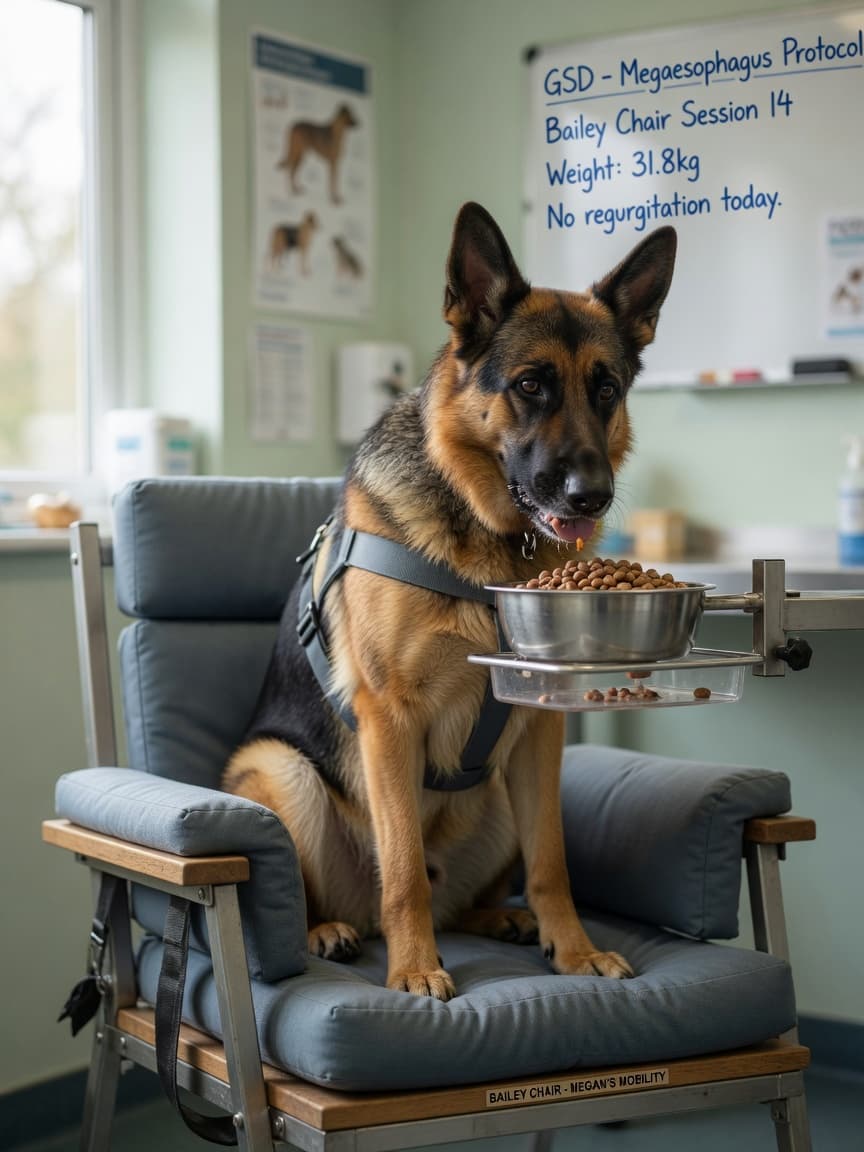
Dogs with megaoesophagus should be fed in an upright, vertical position so that gravity assists food in travelling down into the stomach. They should remain in this position for ten to fifteen minutes after each meal. To achieve this, many owners use a device called a Bailey Chair, which is a specially constructed chair that holds the dog in a sitting-up position with the body vertical. Bailey Chairs can be purchased commercially or built at home, and their use has been credited with dramatically improving the quality of life and life expectancy of dogs with this condition.
Food consistency also matters. Many dogs manage better with food that has been blended into small meatballs or formed into a thick slurry, rather than dry kibble or food served in a shallow bowl. The ideal consistency varies between individual dogs and may require some trial and adjustment. Feeding small meals frequently, typically three to five times a day, reduces the volume of food sitting in the oesophagus at any one time and lowers the risk of regurgitation.
Water should also be offered in a raised position, and some dogs do better drinking from an elevated source rather than bending down to a floor-level bowl.
Long-Term Outlook
The prognosis for dogs with megaoesophagus varies considerably. Puppies with the congenital form sometimes improve as the nervous system matures, and a small number may resolve the condition entirely. Adult dogs with an identifiable and treatable underlying cause may also show improvement once that condition is addressed. For the majority, however, megaoesophagus is a lifelong condition requiring consistent management.
With dedicated care, many dogs with megaoesophagus live reasonably comfortable lives. The key to success lies in strict adherence to upright feeding, careful monitoring for early signs of aspiration pneumonia, and regular veterinary follow-up. Owners who invest in a Bailey Chair and commit to the feeding routine often report significantly fewer episodes of regurgitation and better overall condition in their dogs.
If your dog is showing signs of regurgitation, unexplained weight loss, or persistent coughing, contact your veterinary surgeon promptly. Early diagnosis and the right management plan give dogs with megaoesophagus the best possible chance of a good quality of life.