
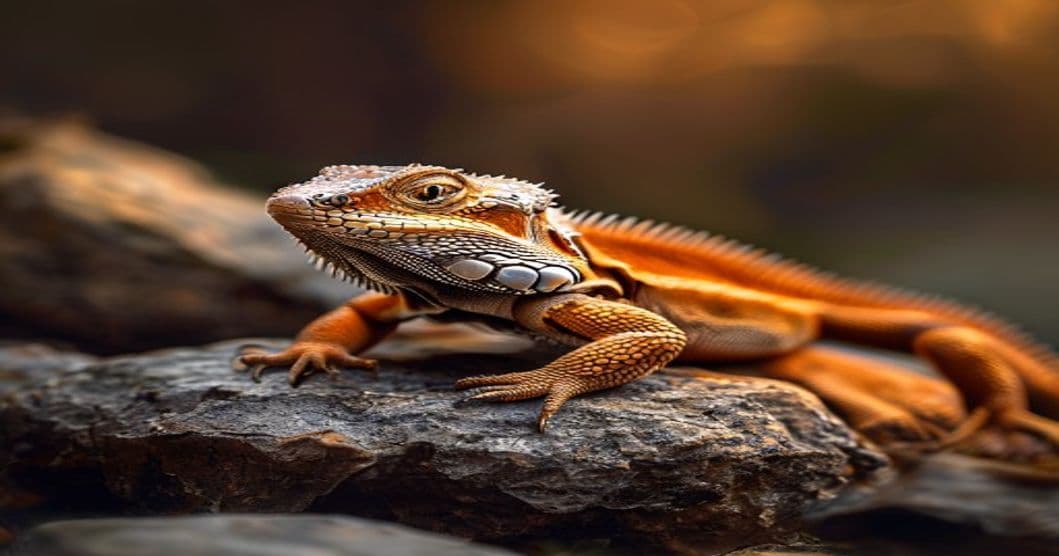
A Pet That Looks Clean but Rarely Is
Between 2006 and 2014, small turtles — those with shells under four inches in diameter — were linked to eleven separate Salmonella outbreaks in the United States, affecting over 800 people. The majority of those infected were children under five. The statistics are not unique to North America: health authorities across Europe consistently identify reptile ownership as a significant, underappreciated risk factor for Salmonella infection in humans. Understanding why requires understanding one fundamental fact: virtually all reptiles carry Salmonella, all the time, without appearing ill.
Why Reptiles and Salmonella Are Inseparable
Salmonella is a natural and essentially permanent component of the gastrointestinal microbiome of reptiles. Estimates suggest that between 85 and 90 per cent of all reptiles — including turtles, tortoises, bearded dragons, geckos, iguanas, snakes, and chameleons — shed Salmonella in their faeces at any given time. Unlike mammals, reptiles experience no illness as a result. The bacteria exist in a commensal relationship with the reptile host, causing no inflammation or disease.
This means there is no way to test a reptile and clear it of Salmonella. Negative results on a single faecal test are not meaningful, as shedding is intermittent. Treatment with antibiotics does not eliminate colonisation and may contribute to the emergence of resistant strains. The bacteria are simply part of who reptiles are, microbiologically speaking.
Routes of Transmission to Humans
Direct Contact
Handling a reptile transfers Salmonella to the hands. The bacteria are present not only in faeces but on the skin and scales of the animal itself, on enclosure surfaces, substrate, decorations, water dishes, and any object the reptile has touched. A child who handles a turtle and then touches their mouth has a direct route to infection.
Indirect and Environmental Transmission
Salmonella can survive in the environment for extended periods. Reptile enclosures that are cleaned in shared bathtubs or kitchen sinks contaminate those surfaces persistently. Water from aquatic turtle tanks is heavily contaminated. Even rooms where reptiles roam freely can harbour environmental Salmonella on flooring and furniture.
The Kitchen Sink Problem
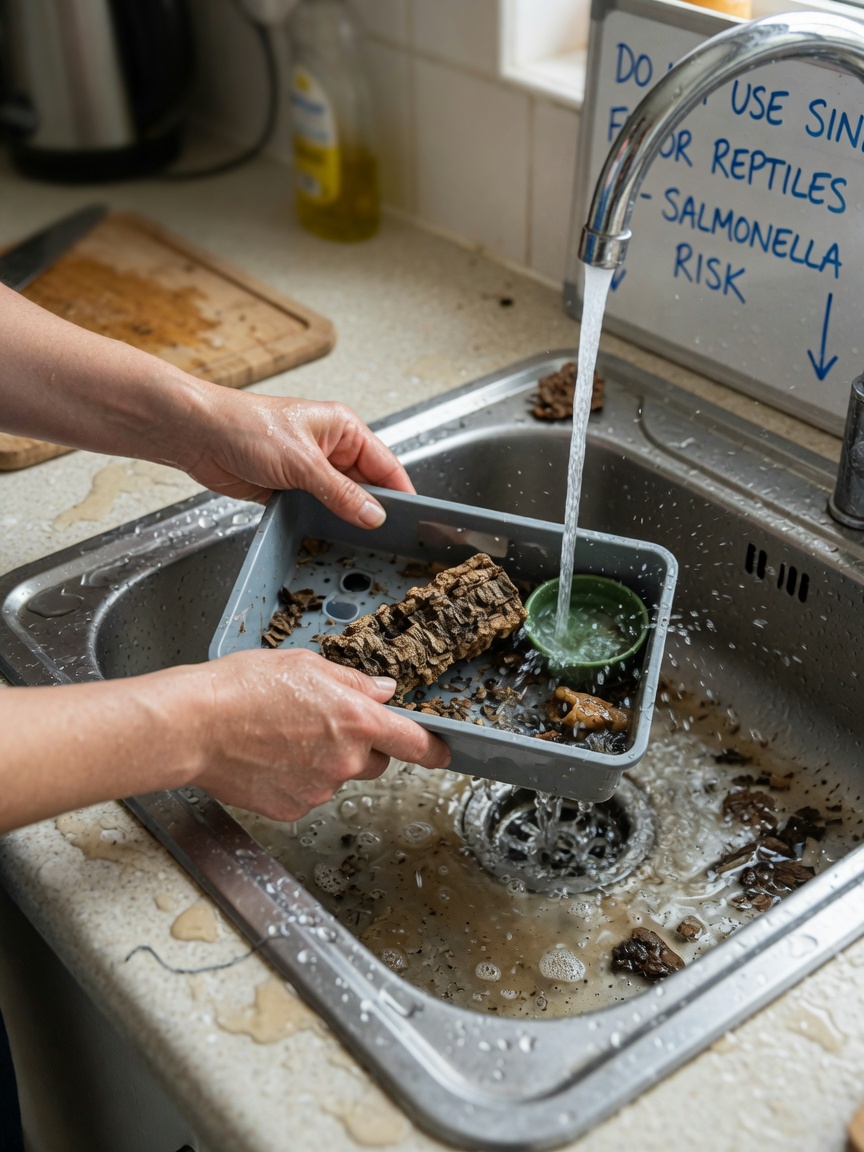
A particularly important transmission route is the practice of bathing reptiles or cleaning their enclosures in household sinks or bathtubs. Studies have detected Salmonella in household drains for months after the last reptile contact. This is a common and poorly appreciated pathway to infection, particularly in households with young children.
Who Is Most at Risk?
- Children under five, whose immune systems are not fully developed and who are more likely to engage in hand-to-mouth behaviour
- Adults over 65, who may have weakened immune responses
- Pregnant women, for whom Salmonella infection carries risks to both mother and foetus
- People with HIV, cancer, diabetes, or those taking immunosuppressive medications
- Individuals who have recently taken antibiotics, which disrupt the protective gut microbiome
Public health agencies in the UK, US, and EU consistently advise that reptiles are not suitable pets in households with any of these individuals, particularly children under five.
Symptoms of Salmonella Infection in Humans
Human salmonellosis typically presents six to 72 hours after exposure, with nausea, vomiting, diarrhoea — which may be bloody — abdominal cramps, and fever. Most healthy adults recover within four to seven days without specific treatment. However, in high-risk individuals, the infection can spread beyond the gut, causing septicaemia and potentially life-threatening illness requiring hospitalisation and intravenous antibiotics.
Practical Risk Reduction for Reptile Owners
Hygiene Protocols
- Wash hands thoroughly with soap and water immediately after handling any reptile or touching its enclosure, food, or water
- Never allow reptiles to roam freely in kitchens, dining areas, or bedrooms
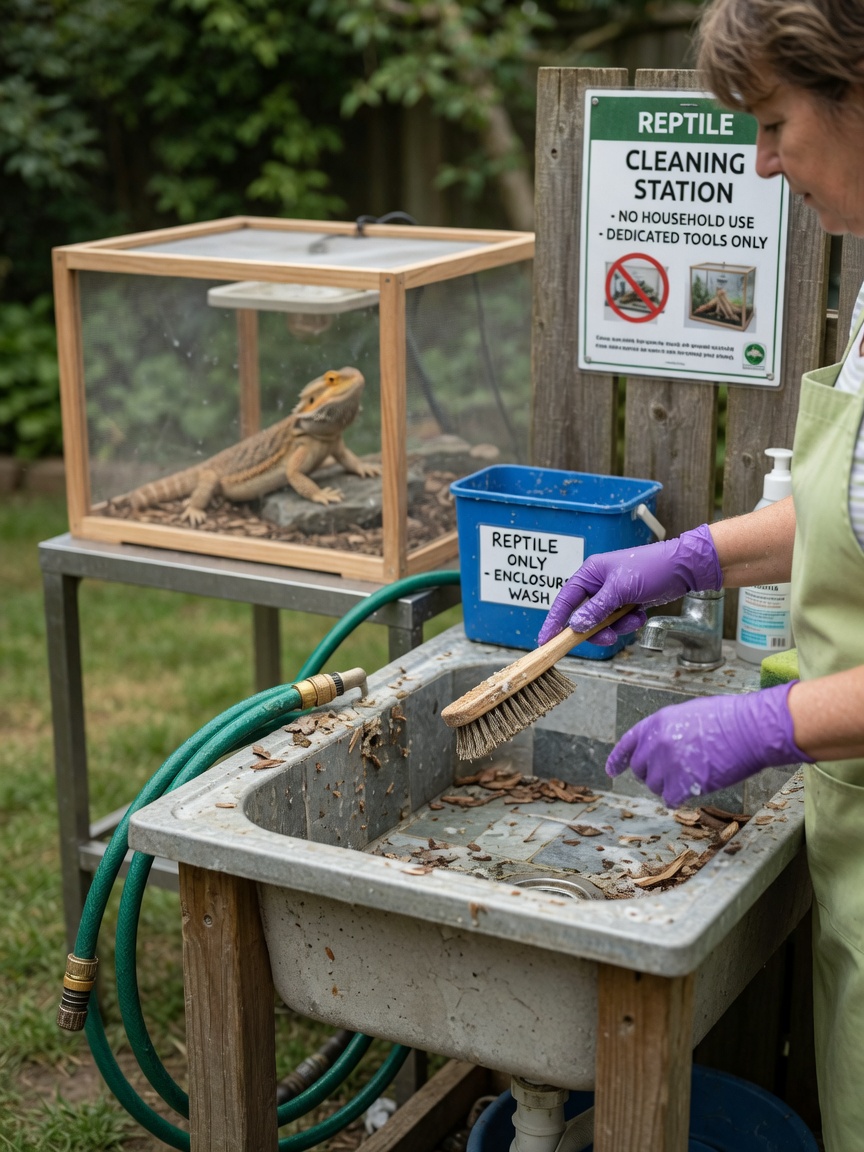
- Never clean reptile enclosures, bowls, or decorations in kitchen sinks or bathtubs used by household members — use a dedicated outdoor space or a container reserved solely for this purpose
- Do not allow reptiles to come into contact with food preparation surfaces
- Supervise all child-reptile interactions and ensure handwashing immediately afterwards
Enclosure Management
- Remove faeces from enclosures daily
- Use disposable gloves when cleaning substrate
- Disinfect enclosure surfaces regularly with appropriate reptile-safe disinfectants
- Change aquatic turtle water frequently, as it becomes heavily contaminated rapidly
A Note on Veterinary Care
Your reptile veterinarian can advise on general husbandry that minimises environmental contamination and keeps your animal in optimal health. While Salmonella carriage cannot be eliminated, a well-nourished, well-housed reptile with a stable environment may shed less heavily than a stressed or unwell animal. Regular veterinary checks are important for your reptile's welfare and for identifying any other health issues that could affect household safety.
If a member of your household develops suspected Salmonella infection and you own a reptile, inform your GP or healthcare provider. This context is clinically relevant and will guide appropriate testing and management. Reptiles are rewarding companions for informed, responsible owners — but that responsibility extends explicitly to protecting the humans who share their home.