
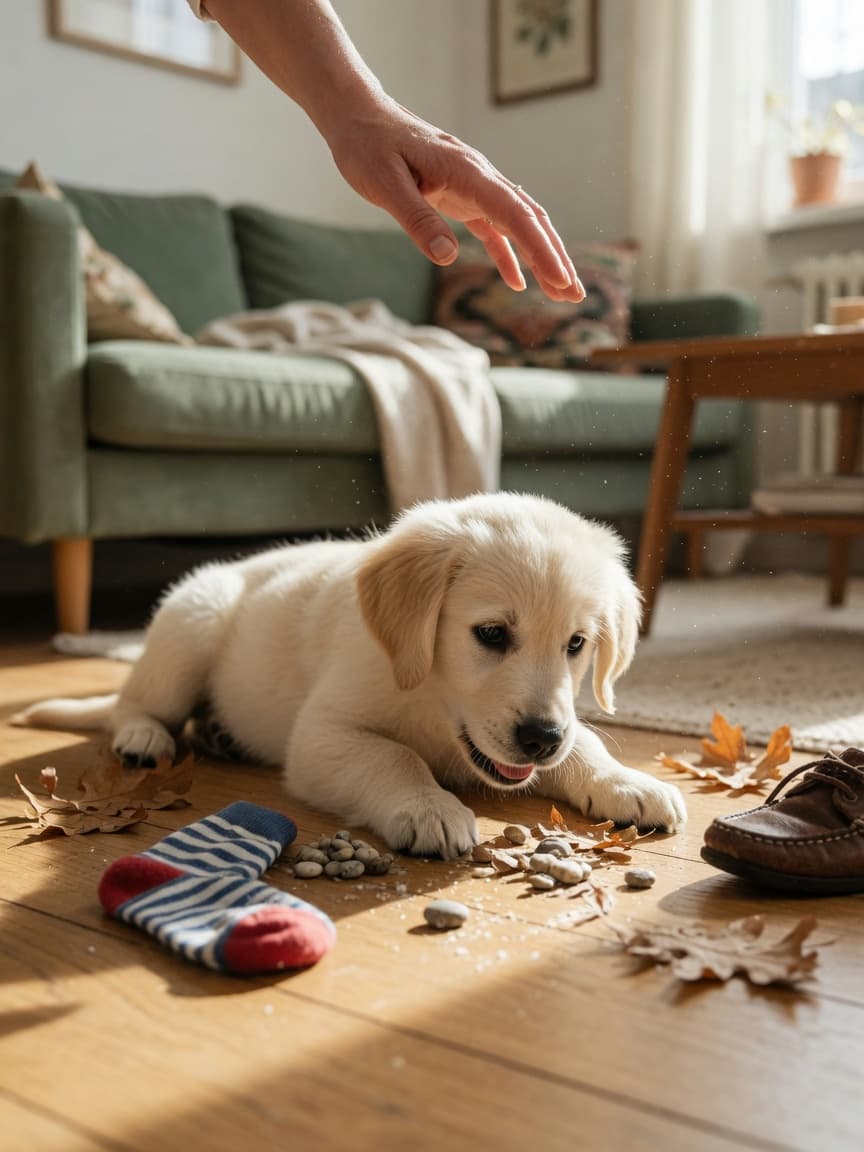
If you've recently brought a puppy home, you've probably discovered that they treat the world like an all-you-can-eat buffet. From socks and shoes to pebbles and leaves, puppies seem determined to taste absolutely everything they encounter. This behaviour, known as pica when excessive, is completely normal during puppyhood—but it's also potentially dangerous. Understanding why puppies eat everything and learning practical strategies to redirect this behaviour will help keep your furry friend safe whilst satisfying their natural curiosity.
Why Puppies Eat Everything: Understanding the Root Cause
Puppies explore their world primarily through their mouths, much like human toddlers do. This investigative behaviour serves an important developmental purpose, but it becomes problematic when it poses health risks. Several factors drive this behaviour:
- Teething discomfort: Puppies begin teething around three to four weeks of age, and chewing helps relieve sore gums
- Boredom and excess energy: Puppies require significant mental and physical stimulation; without it, they'll create their own entertainment
- Nutritional deficiencies: Occasionally, eating non-food items can signal missing nutrients in their diet
- Attention-seeking: If a puppy gets a reaction—even a negative one—when eating something forbidden, they may repeat the behaviour
- Anxiety or stress: Some puppies eat unusual items when feeling anxious or overwhelmed
The Health Risks You Need to Know
Ingesting inappropriate items can lead to serious health complications. Foreign body obstruction is one of the most common emergencies veterinarians treat in puppies, potentially requiring surgery. Other risks include intestinal blockages, poisoning from toxic substances, choking, and gastrointestinal damage. This makes prevention absolutely essential for your puppy's wellbeing and your peace of mind.
Practical Strategies to Stop the Behaviour

Preventing inappropriate eating requires a multi-faceted approach:
- Puppy-proof your environment: Remove temptation by securing loose items, storing hazardous materials safely, and keeping choking hazards out of reach. Check both at puppy eye-level and elevated surfaces where curious pups can jump
- Provide appropriate chew toys: Offer a variety of safe, durable chew toys that satisfy the natural chewing urge. Rotate toys regularly to maintain novelty and interest. Toys designed for teething relief, such as rubber rings you can refrigerate, are particularly helpful
- Establish a consistent exercise routine: Aim for 5 minutes of exercise per month of age, twice daily. A tired puppy is far less likely to engage in destructive behaviour. Include both physical activity and mental stimulation through training sessions and puzzle games
- Use positive reinforcement: When your puppy chews appropriate toys, reward them enthusiastically with praise and treats. This teaches them which items are acceptable to chew
- Redirect immediately: When you catch your puppy eating something inappropriate, gently remove the item and redirect them to an approved toy. Avoid scolding, as this may cause anxiety
- Review their diet: Consult your veterinarian to ensure your puppy receives complete, balanced nutrition appropriate for their age and breed. Poor nutrition can sometimes trigger pica-like behaviour
Training and Supervision
Consistent supervision is crucial during the puppy stage. Keep your puppy within sight during waking hours, and use baby gates to confine them to safe areas when you cannot actively watch them. Teaching the "leave it" command provides an additional safety tool for real-world situations.
When to Contact Your Vet
If your puppy shows signs of distress, vomiting, lethargy, or constipation after eating something questionable, contact your veterinarian immediately. Additionally, if the behaviour persists beyond four to six months or seems obsessive, professional guidance is warranted.
Key Takeaways
Stopping your puppy from eating everything requires patience, environmental management, and consistent training. Remember that this phase is temporary—most puppies naturally outgrow indiscriminate eating as they mature. By providing appropriate outlets for their chewing instincts, maintaining excellent supervision, and staying calm and positive, you'll guide your puppy safely through this challenging developmental stage. Your veterinarian remains your best resource for personalised advice specific to your puppy's needs and circumstances.