

When Quirky Becomes a Clinical Concern
A dog chasing its tail for a moment during play is unremarkable. A dog that spends forty minutes a day pursuing its tail, cannot be interrupted, and appears distressed when prevented — that is a different matter entirely. Compulsive behaviours in dogs are the canine equivalent of obsessive-compulsive disorder in humans: repetitive, seemingly purposeless actions that the animal performs beyond what any context would require and that interfere with normal functioning.
What Are Canine Compulsive Behaviours
A compulsive behaviour typically originates from a normal behavioural sequence — predatory pursuit, grooming, locomotion — that becomes detached from its original context and is performed in excessive, repetitive bouts. The dog does not appear to choose this behaviour freely; rather, the motivation seems irresistible.
Common Examples
- Tail chasing or spinning — particularly prevalent in Bull Terriers and German Shepherds
- Flank sucking — almost exclusively documented in Dobermanns, involving repetitive sucking of the flank skin
- Fly snapping — snapping at invisible flies, more common in Cavalier King Charles Spaniels and Border Collies
- Light and shadow chasing — fixation on reflected light or moving shadows, often escalating over time
- Paw licking or acral lick dermatitis — repetitive licking of the lower limbs, causing secondary skin lesions
- Fence running or pacing — stereotyped locomotor patterns, particularly in dogs with insufficient outlets for movement
The strong breed associations are not coincidental. Genetic studies have identified chromosome regions linked to compulsive behaviour in several breeds, suggesting a heritable neurological vulnerability, much as OCD has a heritable component in humans.
What Drives These Behaviours
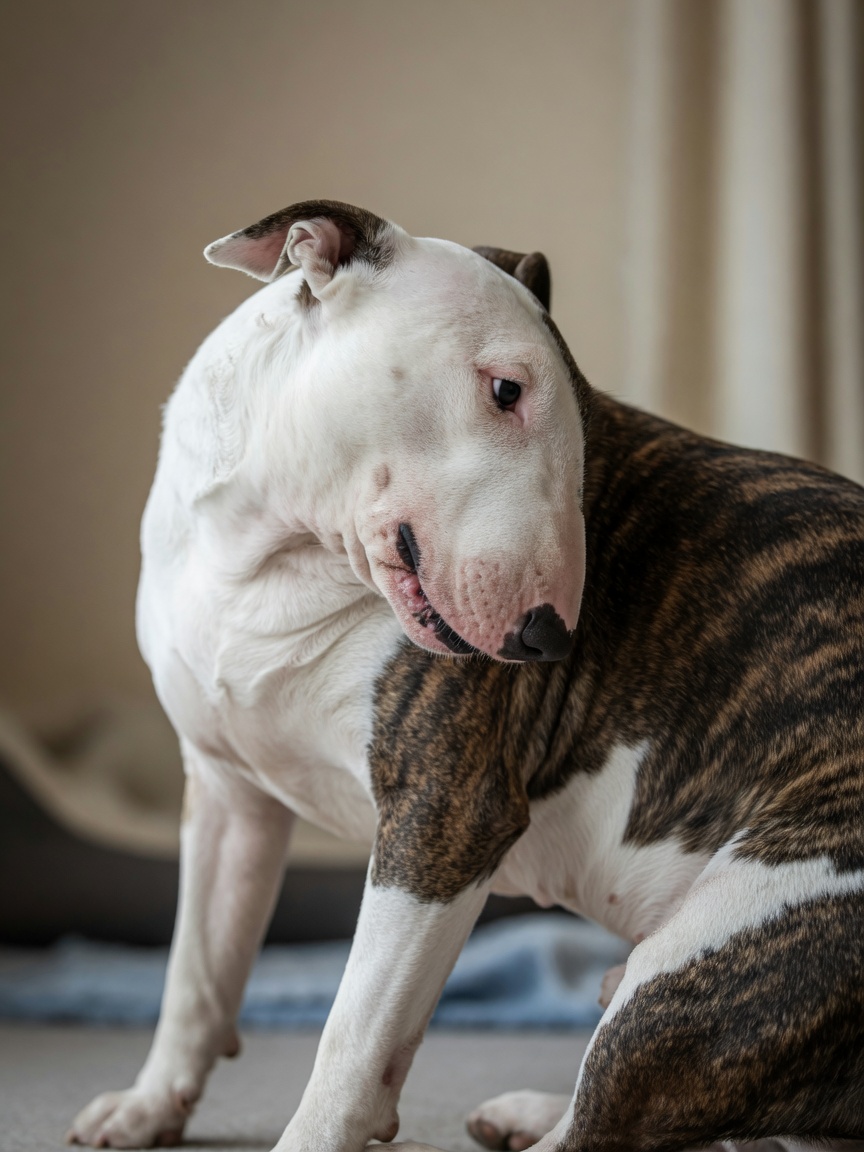
Compulsive behaviours are not simply bad habits. The current scientific understanding points to dysregulation in the brain's motivational and reward pathways — specifically involving serotonin and dopamine systems. However, the expression of these tendencies is heavily influenced by environment.
Stress and Conflict
Many compulsive behaviours first appear during periods of chronic stress, frustration, or conflict. A dog that is regularly prevented from completing natural behaviour sequences — herding without livestock, retrieving without the opportunity to retrieve — may redirect this motivational energy into repetitive patterns. Once established, the behaviour can become self-reinforcing because it provides a form of internal relief.
Inadvertent Reinforcement
Owners who laugh at tail chasing, film it, or engage the dog during an episode may unintentionally reward and strengthen the behaviour. This does not mean the owner caused the compulsion, but it can accelerate its entrenchment.
Underlying Medical Conditions
This is critical: several medical conditions produce behaviours that resemble compulsions. Partial seizures can cause fly snapping and staring episodes. Anal gland disease, skin conditions, and pain can drive self-directed repetitive behaviours. A thorough veterinary examination is not optional — it is the first step.
Assessment: Distinguishing Compulsion from Normal Behaviour
Before labelling a behaviour compulsive, consider the following criteria, which veterinary behaviourists use to guide clinical assessment:
- The behaviour occurs out of context, not simply during play or in response to an obvious trigger
- It is difficult or impossible to interrupt once started
- It increases in frequency or intensity over time
- It interferes with normal activities — eating, sleeping, social interaction
- The dog appears distressed when prevented from completing the behaviour
Video recordings of episodes are invaluable. Note the time of day, what preceded the behaviour, how long it lasted, and whether you were able to redirect the dog. This information significantly assists a clinical assessment.
Management and Treatment

Effective management of compulsive behaviour requires a multi-pronged approach. There is rarely a single fix.
Environmental and Lifestyle Changes
- Identify and reduce sources of chronic stress, frustration, or conflict in the dog's environment
- Ensure daily exercise is adequate for the breed and individual dog — insufficient physical and mental stimulation is a significant risk factor
- Provide structured outlets for natural behaviour sequences: scent work, foraging activities, and breed-appropriate tasks
- Remove triggers where identified — mirrors, reflective surfaces, laser pointers for light-chasers
Behaviour Modification
Response interruption and redirection — calmly interrupting the compulsive sequence and redirecting to an incompatible behaviour — can reduce frequency when applied consistently. It is important to interrupt early in the sequence, before arousal peaks, and to avoid punishing the dog during or after an episode. Punishment increases stress and typically worsens compulsive behaviour.
Pharmacological Support
In moderate to severe cases, veterinary prescription of serotonin-reuptake inhibiting medications has good evidence of efficacy in reducing compulsive behaviour frequency and intensity. Medication does not eliminate the behaviour but reduces it to a level at which behaviour modification becomes possible. This should always be discussed with a veterinary behaviourist.
Prognosis and Owner Expectations
Mild compulsive behaviours in a well-managed environment may plateau and become largely insignificant with lifestyle adjustments. Severe, long-established compulsions in genetically predisposed breeds require sustained management, often including long-term medication, specialist oversight, and significant owner commitment. Complete resolution is uncommon in severe cases, but meaningful quality-of-life improvement is achievable for most dogs.
Action Points
- See your vet first to rule out medical and neurological causes
- Keep a log and video of episodes: frequency, duration, and context
- Refer to a veterinary behaviourist or certified clinical animal behaviourist for a formal assessment
- Review the dog's daily routine for sources of chronic stress or unmet behavioural needs
- Do not punish the behaviour — it increases stress and worsens the problem
- Ask your vet about medication if the behaviour is frequent, escalating, or causing physical harm