
Why You Cannot Compare Labels at Face Value
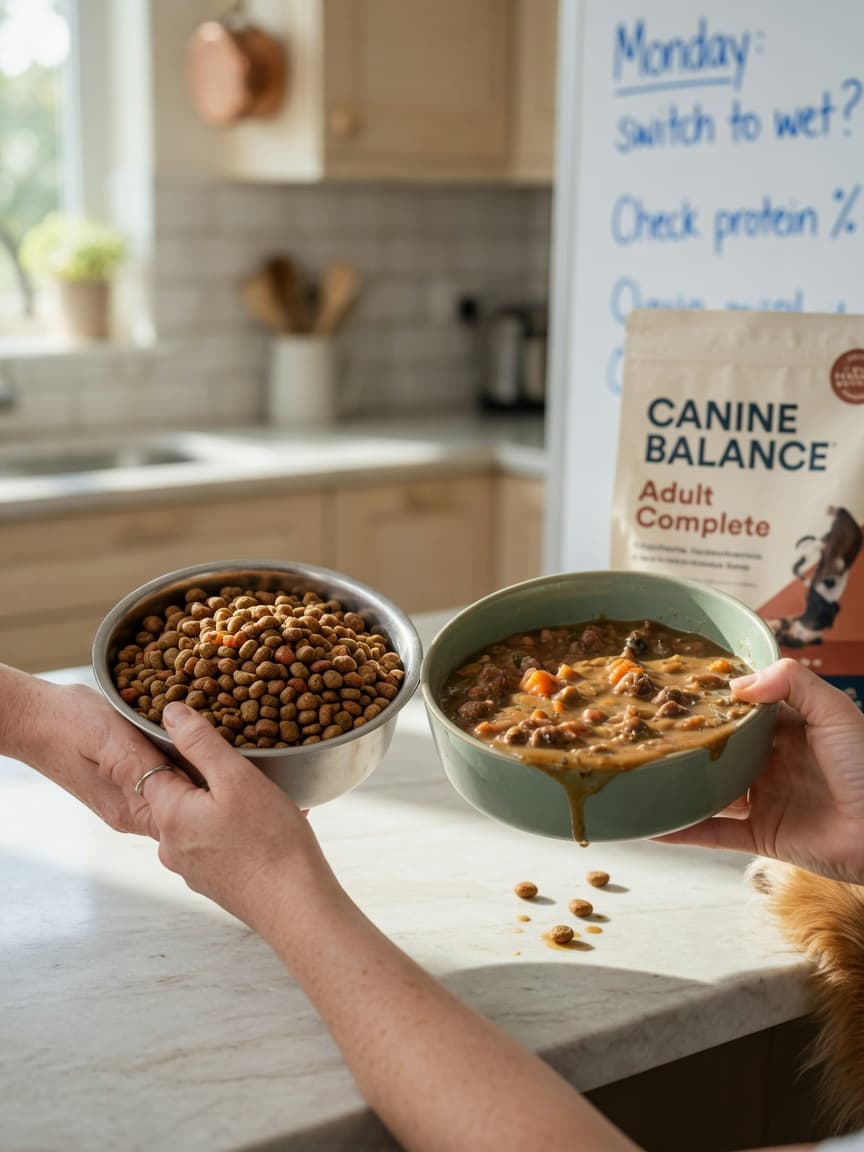
Imagine looking at two dog foods side by side. The first is a dry kibble showing 28 percent crude protein on the label. The second is a wet food listing 9 percent crude protein. At first glance, the kibble looks significantly higher in protein. But what if the wet food actually delivers more protein per calorie once the water content is removed? That is not a hypothetical scenario. It happens regularly, and owners comparing foods on the basis of as-fed percentages alone are working with misleading information.
The dry matter basis calculation is the tool that fixes this problem. It is a simple piece of arithmetic that allows you to compare any two dog foods fairly, regardless of format, moisture content, or packaging. Once you understand how it works, it will change how you read labels permanently.
The Problem With Moisture Differences
All pet food contains water, but the amount varies dramatically by product type. Dry kibble typically contains around 10 percent moisture, though some products run slightly higher. Wet foods are usually between 75 and 82 percent moisture. Raw and fresh foods can be even higher. Semi-moist products sit somewhere in between.
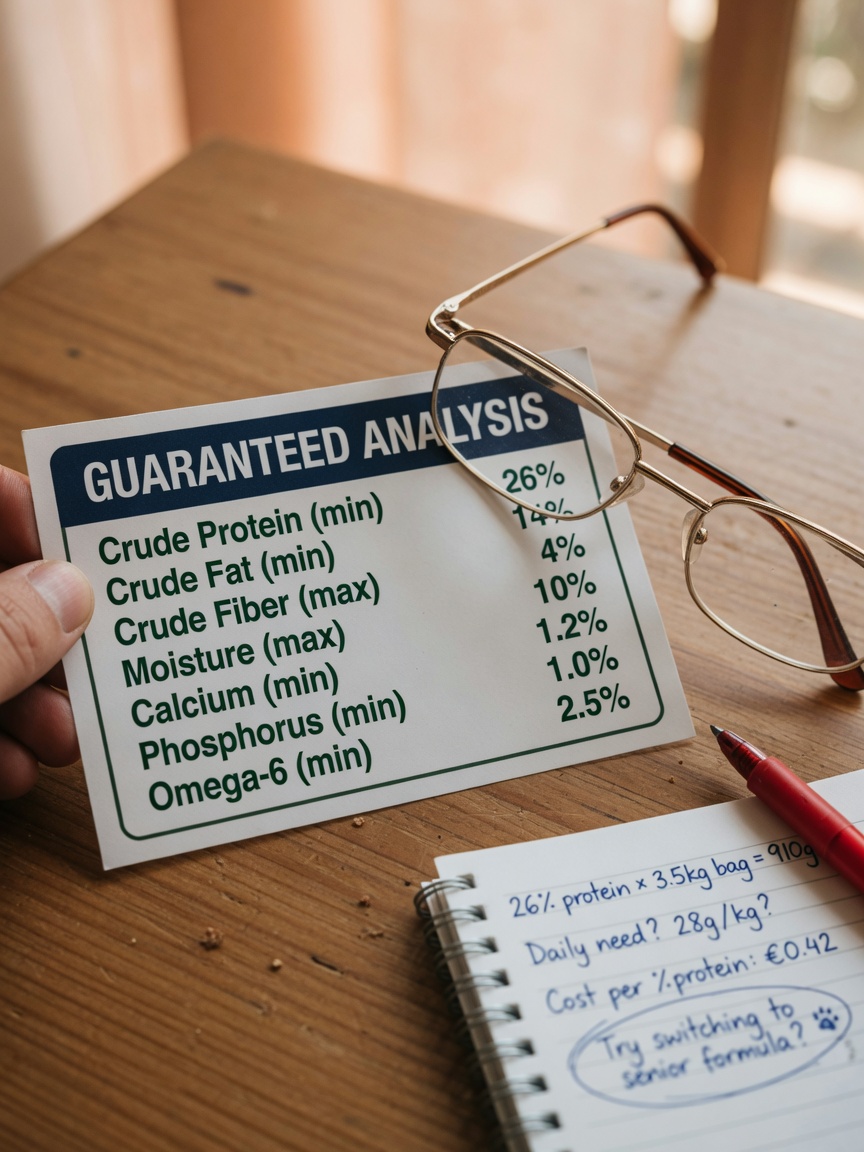
The guaranteed analysis panel on every pet food label reports nutrient levels on an as-fed basis, meaning the percentages include the water content of the food. When a wet food shows 9 percent protein and 80 percent moisture, that protein figure is diluted by the large volume of water in the product. The remaining 20 percent of the food, the actual dry matter, contains a much higher concentration of protein than the label suggests at first glance.
Comparing as-fed percentages between products with different moisture levels is like comparing the concentration of orange squash when one glass is barely diluted and the other is mostly water. The label numbers are technically accurate, but they are not telling you what you actually need to know.
How the Dry Matter Basis Calculation Works
The calculation involves two steps, and neither requires anything more than basic arithmetic.
Step one: find the dry matter percentage of the food. Take the moisture figure from the guaranteed analysis panel and subtract it from 100. If a wet food shows 78 percent moisture, its dry matter percentage is 22 percent.
Step two: divide the as-fed nutrient percentage by the dry matter percentage, then multiply by 100. If that wet food shows 9 percent protein, divide 9 by 22, which gives you 0.409. Multiply by 100 and you get 40.9 percent protein on a dry matter basis.
For the kibble with 28 percent protein and 10 percent moisture, the dry matter is 90 percent. Divide 28 by 90 and multiply by 100, and you get 31.1 percent protein on a dry matter basis.
What looked like a wide gap between 28 percent and 9 percent is, on a dry matter basis, a comparison of 31.1 percent against 40.9 percent. The wet food actually delivers considerably more protein per unit of dry matter than the kibble. That is a meaningfully different picture than the as-fed labels suggested.
Applying This to Every Nutrient
The same calculation applies to any nutrient listed on the guaranteed analysis panel. Fat content, fibre content, and ash can all be converted to a dry matter basis using the identical two-step process. This allows you to do genuinely useful comparisons across:
- Wet versus dry foods
- Dry kibble versus fresh or raw food
- Different brands with varying moisture levels
- Premium versus budget formulations across format types
Once everything is on a dry matter basis, you are comparing like with like, which is the only way to make a fair assessment of nutritional content.
A Worked Example for Clarity
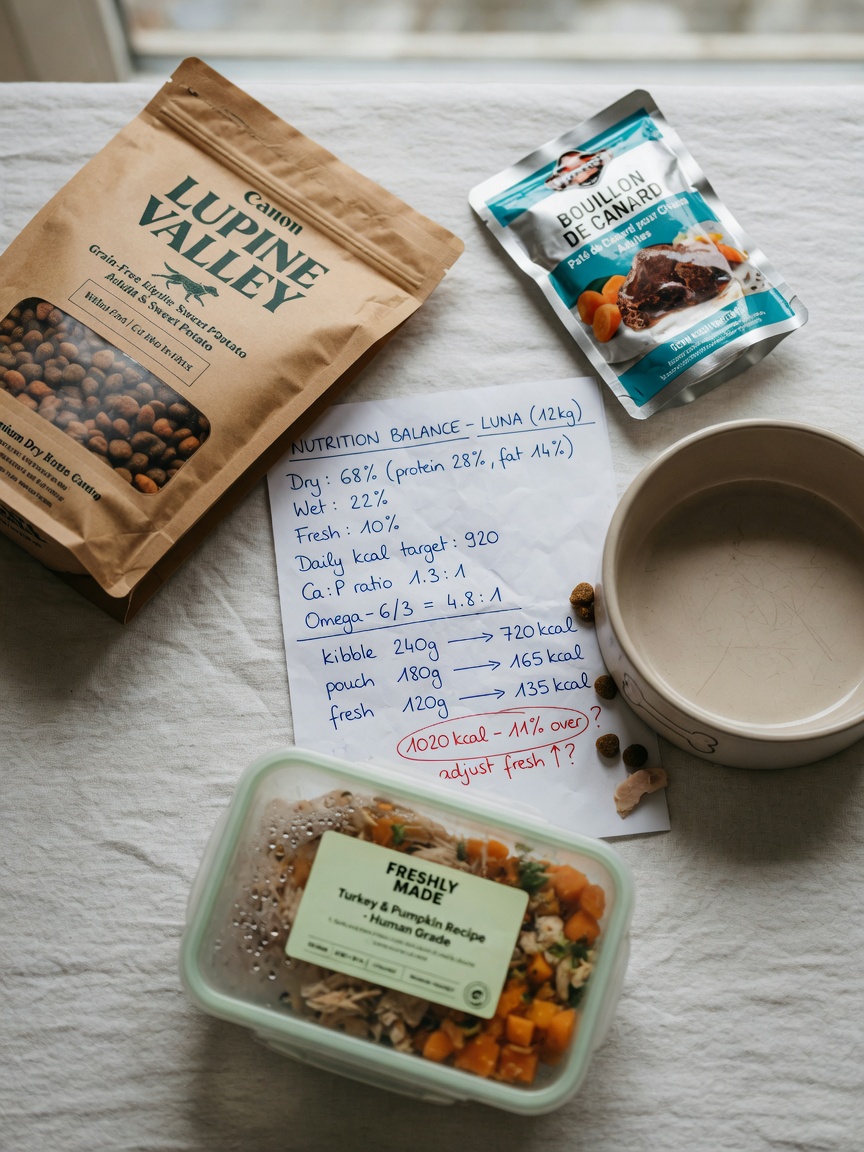
Suppose you are choosing between a premium dry food and a pouch wet food for an adult dog. The dry food guaranteed analysis shows: protein 26 percent, fat 14 percent, moisture 10 percent. The wet food shows: protein 8 percent, fat 5 percent, moisture 80 percent.
For the dry food, dry matter is 90 percent. Protein on dry matter basis: 26 divided by 90 multiplied by 100 equals 28.9 percent. Fat: 14 divided by 90 multiplied by 100 equals 15.6 percent.
For the wet food, dry matter is 20 percent. Protein: 8 divided by 20 multiplied by 100 equals 40 percent. Fat: 5 divided by 20 multiplied by 100 equals 25 percent.
The wet food delivers substantially more protein and fat on a dry matter basis than the dry food, despite looking significantly lower on the as-fed label. Whether that profile is better or worse for your individual dog depends on their needs, but at least you now have accurate numbers to work with.
The Limitations of Dry Matter Comparison
Dry matter basis is an excellent tool but not a complete one. There are a few things it does not account for that are worth keeping in mind.
First, it measures quantity but not quality. A food with 40 percent protein on a dry matter basis might derive that protein from highly digestible chicken meat or from a poorly absorbed plant source. Digestibility is not reflected in the guaranteed analysis at all, and yet it determines how much of that nutrient your dog actually absorbs and uses.
Second, caloric density varies between foods, and dry matter comparison does not account for this. A food might appear higher in protein on a dry matter basis but lower when evaluated per 1,000 kilocalories. For dogs managing weight, caloric density comparisons can matter more than dry matter ratios.
Third, the guaranteed analysis provides minimum and maximum values, not exact ones. The real figures in any given batch may differ slightly from what is printed.
Making This Part of Your Routine
You do not need to run these numbers every time you buy the same food you have been using for years. But any time you are considering switching products or comparing options across formats, spending two minutes on the dry matter basis calculation will give you genuinely better information than the as-fed labels alone.
- Find the moisture percentage on the guaranteed analysis panel
- Subtract it from 100 to get the dry matter percentage
- Divide each nutrient percentage by the dry matter percentage and multiply by 100
- Compare the resulting dry matter basis figures between products
It is one of the most straightforward analytical tools available to dog owners, it requires nothing more than the information already printed on the packaging, and it makes every future label comparison substantially more meaningful.