
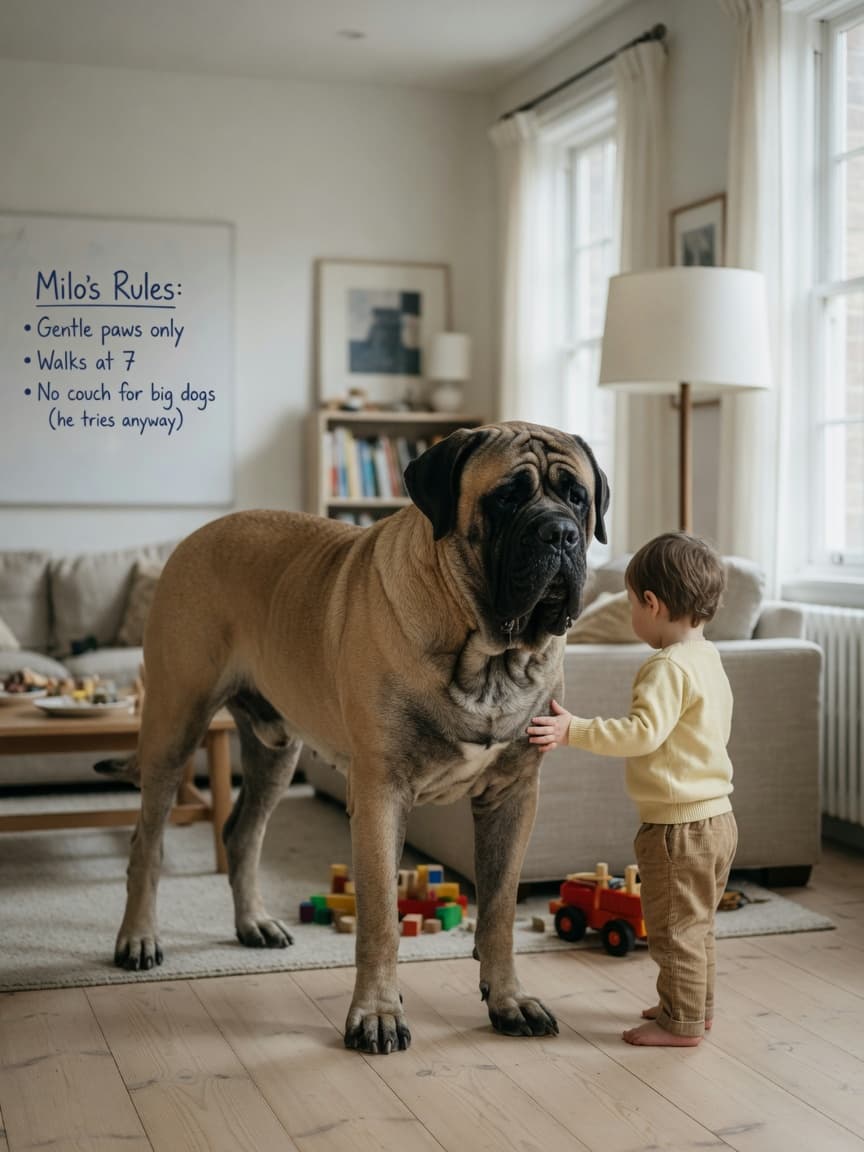
The English Mastiff is a giant, gentle-natured breed best suited to owners with spacious homes and experience managing large dogs, prized for its calm, affectionate loyalty to family. Its most defining trait is sheer size combined with a surprisingly placid temperament. The headline health concern for this breed is its shortened lifespan relative to smaller dogs, driven largely by joint disease and a predisposition to certain cancers and cardiac conditions.
Breed Overview
- Size: One of the heaviest recognised dog breeds; males often exceed 70kg, with females somewhat lighter. Height typically ranges from 70–90cm at the shoulder.
- Lifespan: Commonly reported as 6–10 years, shorter than most breeds due to the physical demands of large body size.
- Coat: Short, dense, and straight, with colours including fawn, apricot, and brindle, always with a black mask.
- Origin: An ancient British breed with a lineage tracing back centuries, historically used for guarding property and livestock, and later refined into the gentle companion seen today.
Temperament & Family Fit
The English Mastiff is often described as a "gentle giant," and this reputation is well earned. Despite an imposing physical presence, most Mastiffs are calm, patient, and deeply devoted to their families, often forming close bonds with children when properly socialised. They tend to be watchful rather than aggressive, using their size and low, rumbling bark to deter unwanted visitors rather than acting out with hostility.
This breed is not naturally high-energy and is generally content with moderate exercise, making it a reasonably good fit for owners who want a loyal companion without the demands of a highly active working breed. However, their sheer bulk means that early socialisation and basic obedience training are essential — a fully grown Mastiff that pulls on the lead or jumps up can be genuinely difficult to manage, regardless of how good-natured it is. Because of their size, families should also consider practical matters such as furniture space, vehicle size for transport, and the cost of feeding and veterinary care.
Mastiffs typically do well with other pets when raised together, though their size alone means supervision around small children and small animals is sensible, simply to avoid accidental knocks rather than because of any inherent aggression.
Health Issues in English Mastiffs
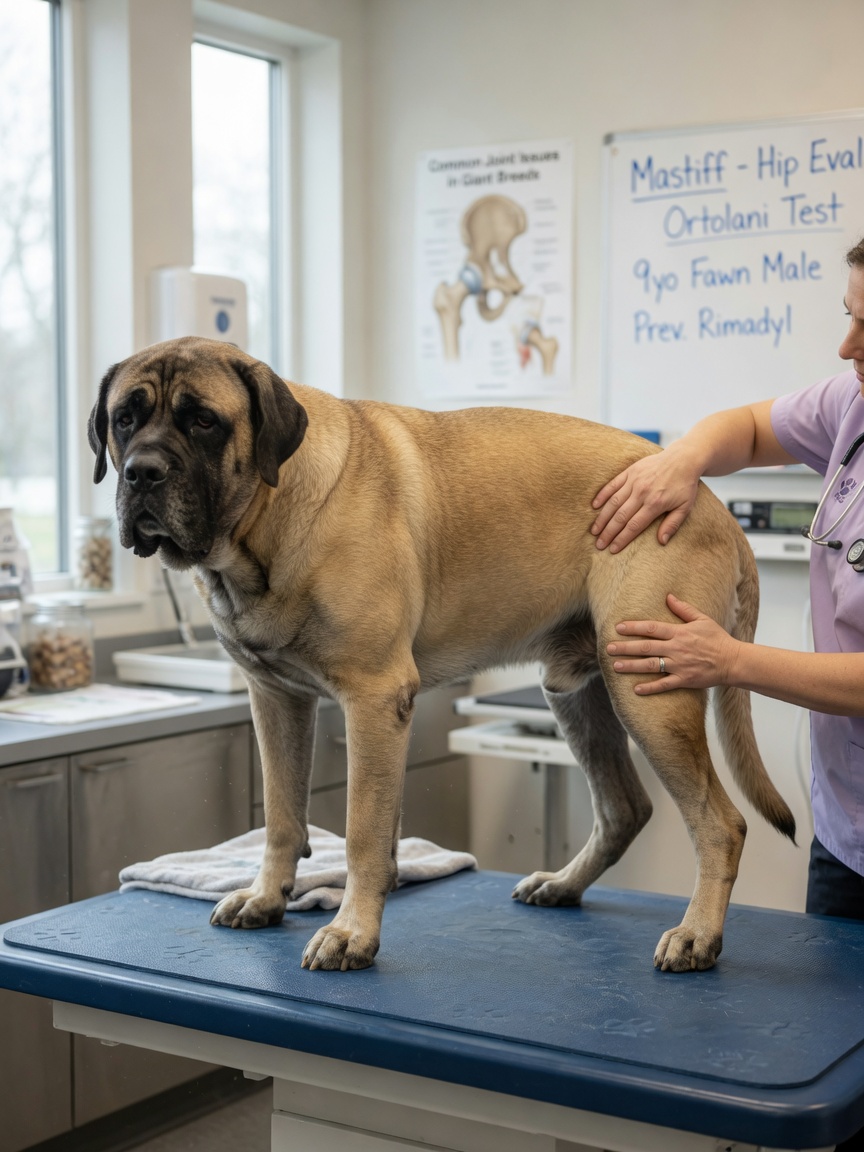
As with most giant breeds, the English Mastiff's health profile is shaped heavily by its size and rapid growth rate. Prospective and current owners benefit from understanding the breed's commonly documented predispositions so they can watch for early signs and work proactively with their vet.
Hip and Elbow Dysplasia
Hip and elbow dysplasia are developmental joint conditions where the bones of the joint do not fit together as smoothly as they should, leading to abnormal wear over time. This is commonly reported in giant breeds like the Mastiff, largely because of the strain rapid growth places on developing joints.
Early signs can include stiffness after rest, reluctance to jump into cars, a bunny-hopping gait, or lameness that may come and go. Because puppies grow so quickly, monitoring growth rate and body condition closely during the first year is one of the most useful things an owner can do; our puppy growth stages guide explains what healthy development looks like at each stage. Vets may recommend hip and elbow scoring for breeding dogs, and controlled exercise, joint-friendly diets, and maintaining a lean body condition throughout life can all help reduce strain on developing joints. If dysplasia does develop, management options range from weight control and physiotherapy to surgery in more severe cases.
Osteoarthritis
Partly as a consequence of joint conditions like dysplasia, and partly simply due to the mechanical load a very heavy body places on joints over time, osteoarthritis is a frequently seen issue in older Mastiffs. It involves progressive degeneration of joint cartilage, leading to pain and reduced mobility.
Owners often first notice subtle changes: slower to rise in the morning, hesitance on stairs, or a reluctance to go on longer walks. Keeping a Mastiff at a healthy weight throughout life is one of the most impactful preventive measures, since excess weight significantly increases joint stress in a breed already carrying substantial body mass. Our guide to arthritis in dogs management covers practical strategies, from supportive bedding to joint supplements and vet-guided pain management, that can help maintain quality of life as dogs age.
Gastric Dilatation-Volvulus (Bloat)
Gastric dilatation-volvulus, commonly known as bloat, is a life-threatening emergency in which the stomach fills with gas and can twist on itself, cutting off blood supply. Deep-chested giant breeds such as the Mastiff are commonly reported to be at higher risk than smaller, narrower-chested breeds.
Signs to watch for include a visibly swollen or tight abdomen, unproductive retching, restlessness, and sudden distress — this is always an emergency requiring immediate veterinary attention, as the condition can progress rapidly. Feeding smaller, more frequent meals rather than one large daily meal, avoiding vigorous exercise immediately before or after eating, and using slow-feed bowls may help reduce risk. Some owners discuss preventive gastropexy (a surgical procedure to tack the stomach in place) with their vet, particularly if their dog has other risk factors.
Dilated Cardiomyopathy (DCM) and Other Cardiac Conditions
Dilated cardiomyopathy is a heart condition in which the heart muscle weakens and the chambers enlarge, reducing the heart's ability to pump blood efficiently. It is among the cardiac conditions commonly reported in giant breeds, including the Mastiff.
Early signs are often subtle and easy to miss, including reduced stamina, coughing, laboured breathing, or fainting episodes. Because symptoms can develop gradually, routine veterinary check-ups that include listening for heart murmurs or irregular rhythms are valuable, and some owners of at-risk breeds choose to have periodic cardiac screening such as echocardiograms. Maintaining a balanced, appropriate diet and avoiding unproven boutique or grain-free formulations without veterinary guidance is also sensible, given ongoing research interest in links between certain diets and cardiac health in dogs.
Cancer (Including Osteosarcoma and Lymphoma)
Giant breeds including the Mastiff are commonly reported to have a higher susceptibility to certain cancers, including osteosarcoma (bone cancer) and lymphoma, compared with many smaller breeds. This is thought to relate partly to their large body size and rapid growth.
Owners should watch for unexplained lumps, persistent lameness not linked to an obvious injury, swollen lymph nodes, unexplained weight loss, or lethargy. Regular home checks — running hands over the body to feel for new lumps — combined with prompt veterinary attention to any persistent or unexplained symptom gives the best chance of early detection and treatment.
Skin Fold Dermatitis and Allergies
The Mastiff's loose, wrinkled skin, particularly around the face and neck, can trap moisture and debris, making skin fold dermatitis a commonly reported issue. Some Mastiffs also experience general skin allergies, which can cause itching, redness, or recurrent ear infections.
Early signs include a sour odour from skin folds, redness, or visible irritation, along with excessive scratching or paw licking in dogs with broader allergic sensitivities. Regular cleaning and drying of facial folds, particularly after eating or drinking, helps prevent bacterial or yeast overgrowth. For dogs showing signs of broader skin sensitivity, our dog skin allergies guide explains how to identify triggers and manage symptoms in partnership with a vet.
Entropion and Other Eye Conditions
Entropion, a condition where the eyelid rolls inward and causes the eyelashes to rub against the eye's surface, is commonly reported in Mastiffs, partly due to their facial structure. Left unaddressed, it can cause chronic irritation or corneal damage.
Signs include excessive tearing, squinting, redness, or visible rubbing at the eyes. Surgical correction is generally straightforward and often recommended if the condition is causing ongoing discomfort, and early veterinary assessment helps prevent secondary complications.
Nutrition & Feeding
Feeding a giant breed correctly is one of the most important things an owner can do, particularly during puppyhood. Mastiff puppies should be fed a diet specifically formulated for large or giant breed puppies, which is designed to support slower, steadier bone growth rather than the rapid growth that can strain developing joints. Overfeeding or supplementing calcium inappropriately during this stage can worsen the risk of skeletal problems, so following veterinary guidance on portion sizes and growth checks is valuable.
In adulthood, maintaining a lean body condition is arguably the single most impactful nutritional goal, given how directly excess weight impacts joint health, cardiac workload, and overall lifespan in giant breeds. Meals are often best split into two or more smaller portions daily rather than one large meal, partly to support digestion and partly as a precaution against bloat. Fresh water should always be available, though some owners choose to limit large gulps of water immediately around exercise.
As Mastiffs enter their senior years — which arrives earlier than in smaller breeds — nutritional needs shift again, often benefiting from joint-supportive nutrients and adjusted calorie content to match reduced activity. Our guide to best dog food for senior dogs offers useful guidance on this transition. Dogs with diagnosed skin sensitivities may also benefit from tailored approaches described in our hypoallergenic dog food guide, and some owners explore probiotics for dogs to support digestive health, ideally after discussing suitability with their vet.
Grooming & Care
The Mastiff's short coat is relatively low-maintenance in terms of grooming, generally requiring only weekly brushing to remove loose hair and keep the skin healthy, with more frequent brushing during seasonal shedding periods. Bathing can be done as needed rather than on a strict schedule.
More attention is usually needed for the facial folds and drool-prone jowls, which should be wiped and dried regularly to prevent skin irritation or odour. Ears should be checked weekly for signs of redness, wax build-up, or odour, as floppy-eared breeds can be more prone to ear infections. Nails should be trimmed regularly, since overly long nails can affect gait and comfort, particularly given the dog's substantial body weight bearing down on each foot.
Routine dental care, including regular tooth brushing, also supports long-term health and can help catch early signs of dental disease before it affects eating or overall wellbeing.
Exercise & Training Needs
Despite their size, English Mastiffs are not a high-energy breed and generally do well with moderate daily exercise rather than intense or prolonged activity. Two shorter walks a day, combined with some free time in a secure garden, is usually sufficient for adult dogs. Puppies in particular should have exercise carefully limited during their growth phase, as excessive jumping, running on hard surfaces, or forced long walks can put undue stress on developing joints — another reason understanding normal growth patterns matters early on.
Training should begin early, ideally from puppyhood, focusing on basic obedience, lead manners, and calm greetings. Because a fully grown Mastiff is physically powerful, teaching good lead behaviour before the dog reaches full size makes daily life considerably easier and safer for everyone involved. Mastiffs generally respond well to positive reinforcement methods and are eager to please their owners, though their sometimes stubborn streak means patience and consistency are valuable traits in training sessions.
Mental stimulation, through puzzle feeders, gentle training games, or simply structured daily routines, can help keep this thoughtful breed content, particularly as they age and physical exercise capacity naturally declines.
FAQs
Are English Mastiffs good with children?
Generally, yes — Mastiffs are often noted for their gentle, patient nature around children when properly socialised from puppyhood. That said, their sheer size means supervision is important, mainly to prevent accidental knocks or trips rather than due to any aggressive tendencies.
How much do English Mastiffs eat?
Exact amounts vary by individual size, age, and activity level, but Mastiffs typically require substantially larger food portions than average-sized breeds, split across two or more meals daily. A vet or veterinary nutritionist can help calculate appropriate portions based on the individual dog's weight and body condition.
Why do Mastiffs have shorter lifespans than smaller dogs?
Giant breeds like the Mastiff commonly experience shorter lifespans, and this is generally attributed to the combined physical strain of carrying a very large body, along with a higher predisposition to certain cancers, cardiac conditions, and joint disease compared with smaller breeds.
Do English Mastiffs drool a lot?
Yes, drooling is a well-known trait of the breed, particularly around the loose jowls, and tends to increase after eating, drinking, or exercise. Regular wiping of the mouth area helps keep skin folds clean and comfortable.
This guide is intended for general informational purposes only and does not replace individualised veterinary advice. Always consult a qualified veterinarian regarding any health concerns or before making significant changes to your dog's diet, exercise, or care routine.