
Dogs Get Into Scrapes — Here Is How to Respond Sensibly
Dogs are active, curious animals and minor injuries are an inevitable part of their lives. A scraped paw from rough terrain, a small cut from brambles on a woodland walk, or a graze from scrambling under a fence — these happen regularly to dogs of all ages and breeds. The question most owners face is not whether to care about the wound, but how to decide whether it can be managed at home or needs professional veterinary attention.
Getting this judgement right matters. Overtreating a superficial wound wastes your time and stresses your dog unnecessarily. Undertreating a wound that needs veterinary care risks infection, delayed healing, or complications that become expensive and painful to resolve later.
Assessing the Wound: Key Questions to Ask
Before doing anything else, take a clear look at the wound and work through these questions:
- How deep is it? A wound you can see into, or one where you can see tissue beneath the skin surface, needs veterinary attention.
- How long is it? Lacerations longer than about 2 cm are generally better assessed by a vet, as they may need suturing to heal well.
- Is it actively bleeding? Minor bleeding that slows with gentle pressure is manageable. Bleeding that is heavy, spurting, or does not slow within ten minutes needs emergency care.
- Where is it located? Wounds near the eyes, inside the ear canal, on the paw pads, or over joints carry higher complication risks and often need veterinary input.
- What caused it? Puncture wounds from bites — even small ones — are far more serious than they look. Animal bites introduce bacteria deep into tissue and carry a high infection risk.
Wounds You Can Treat at Home
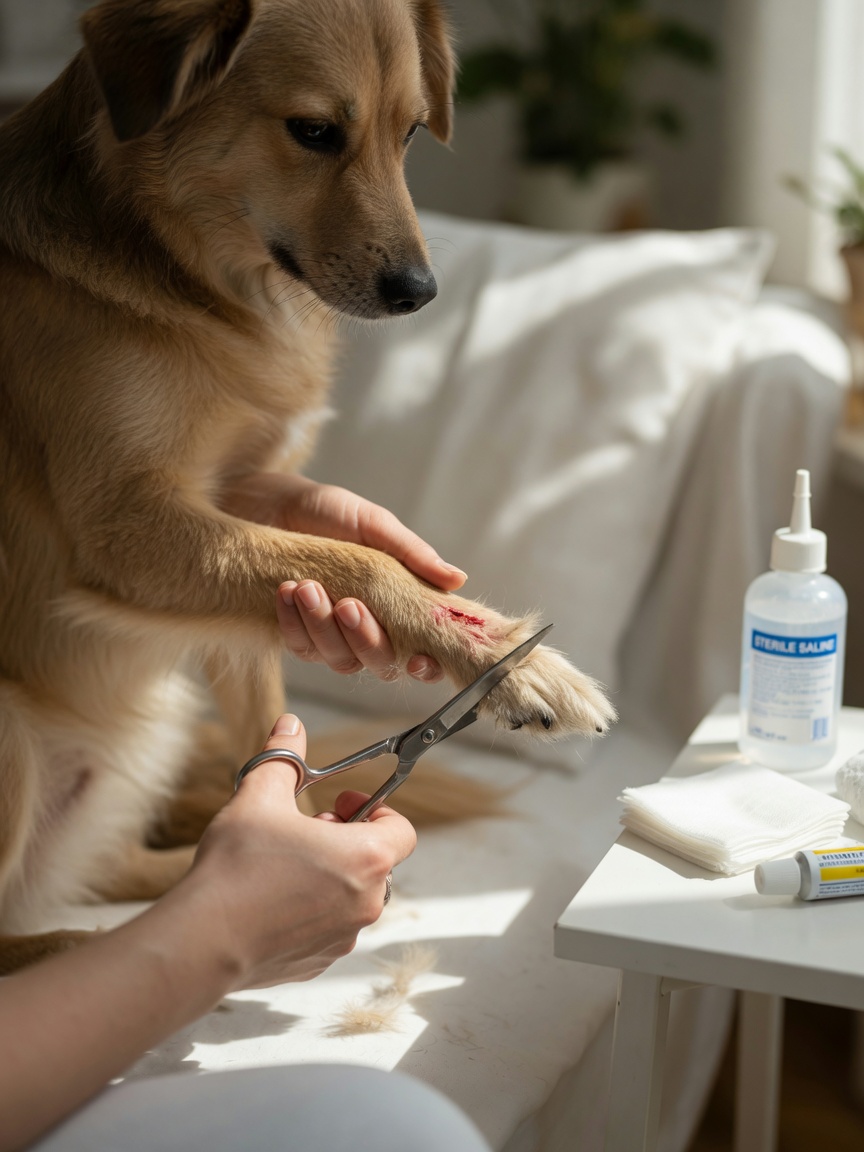
Superficial grazes, minor cuts, and small abrasions on the body surface — away from sensitive areas — can usually be managed at home if they are clean, not actively bleeding, and your dog is not showing signs of significant pain.
The process is straightforward. First, stay calm so your dog stays calm. Put on disposable gloves. If there is hair over or around the wound, carefully clip it away using blunt-ended scissors — this prevents hair acting as a contamination source and makes cleaning much easier.
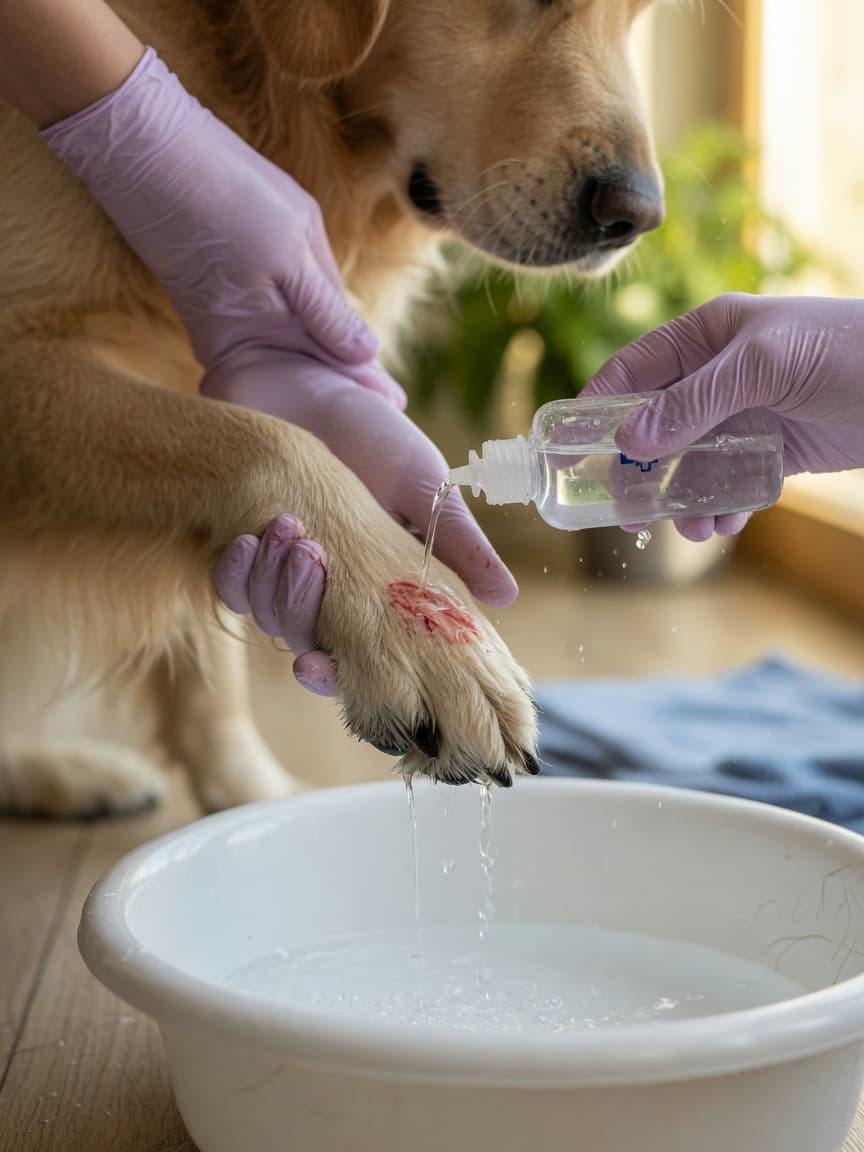
Flush the wound thoroughly with sterile saline solution or clean, cool water. A syringe or squeezy bottle creates gentle pressure that helps dislodge debris. Avoid using hydrogen peroxide, iodine, or alcohol on wounds — these damage tissue and delay healing. Plain saline is genuinely the best option.
Once clean, apply a thin layer of veterinary antiseptic ointment if available. Cover with a non-stick dressing held in place with self-adhesive bandage, and check it twice daily. A healing wound should look cleaner and less inflamed over 24 to 48 hours. If it looks worse, contact your vet.
Preventing Your Dog From Interfering With the Wound
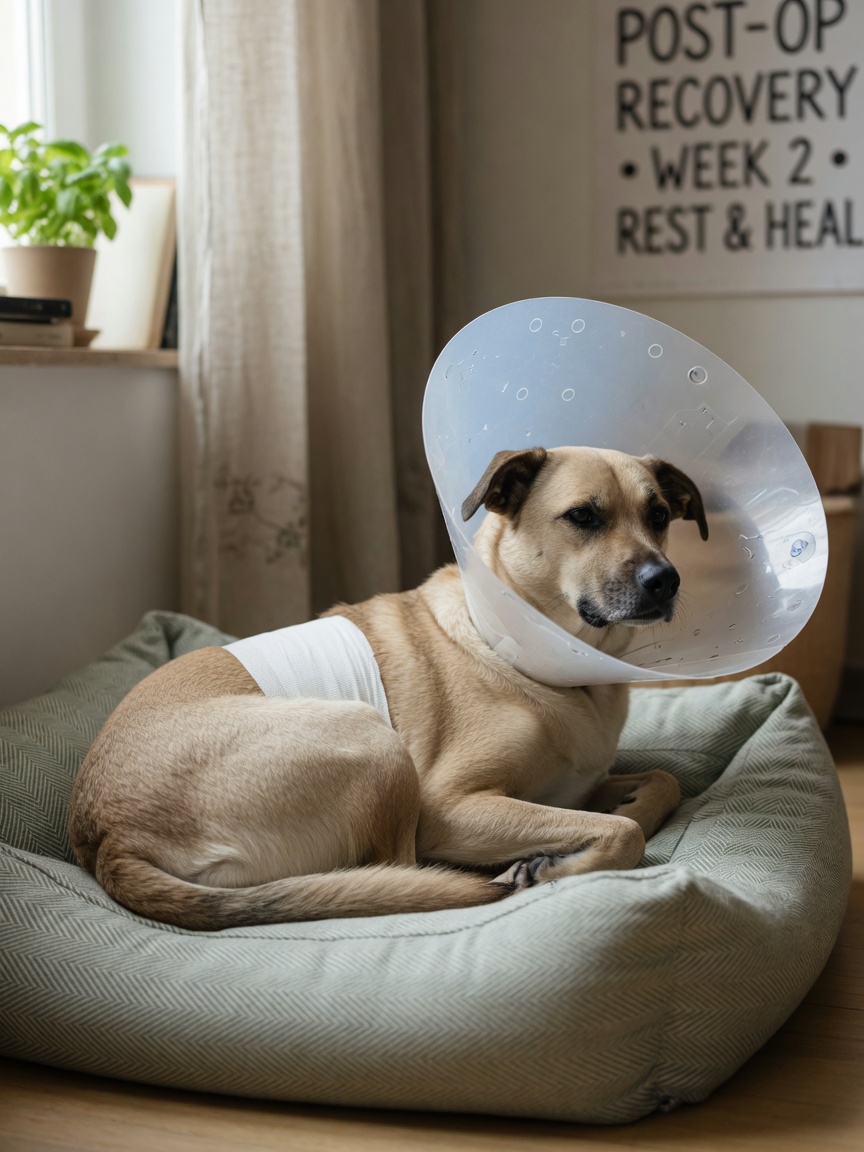
Dogs lick wounds instinctively, and while saliva has some mild antimicrobial properties, excessive licking delays healing and introduces bacteria from the mouth. An Elizabethan collar (the classic cone) is the most reliable way to prevent this, though many dogs find them stressful initially.
Alternatives include recovery suits, which cover the body and work well for trunk wounds, or inflatable collars that restrict muzzle access without blocking peripheral vision. Some dogs accept bandaging alone, but determined lickers will remove dressings with impressive efficiency.
Signs That a Home-Treated Wound Is Getting Worse
Even wounds that start out manageable can develop complications. Contact your vet if you notice:
- Increasing redness, swelling, or warmth around the wound beyond the first 24 hours
- Discharge that is yellow, green, or has an unpleasant smell
- The wound edges pulling apart or appearing gaping
- Your dog becoming lethargic, losing appetite, or running a temperature
- The wound not showing clear improvement after 48 to 72 hours
Infection in dogs can escalate quickly, particularly in warmer months when flies can become an issue. A wound that appeared minor on Monday can look very different by Wednesday if bacteria take hold.
When to Go Straight to the Vet
Some wound situations should always bypass home care entirely:
- Any bite wound, regardless of size — the puncture point is deceiving; the damage and bacterial contamination below the surface can be extensive
- Deep or gaping lacerations
- Wounds on paw pads, which bear weight and are very difficult to keep clean and protected at home
- Eye injuries or wounds very close to the eye
- Wounds over joints or tendons
- Any wound where you can see underlying tissue, muscle, or bone
- Wounds caused by road traffic accidents or significant trauma — even if the visible injury looks minor, internal injuries are possible
Paw Pad Injuries: A Special Case
Paw pad wounds deserve particular mention because they are common and tricky to manage. The pads bear the full weight of the dog, are constantly in contact with the ground, and are difficult to bandage effectively. A dog with a significant pad injury may need professional bandaging and possibly activity restriction.
For minor pad grazes, the same cleaning principles apply. Bandaging a paw at home requires care: wrap from the toes upward, use adequate padding beneath the bandage, and change it at least once daily. A wet or soiled bandage should be changed immediately regardless of timing.
Keeping a Calm Head
The most useful thing you can do when your dog is injured is approach the situation methodically rather than panicking. Assess the wound honestly, treat what you genuinely can, and do not hesitate to call your vet for guidance when you are unsure. A brief phone consultation with a veterinary nurse can often clarify whether you need to come in or whether home care is appropriate. Most practices are very willing to advise remotely for straightforward queries.