
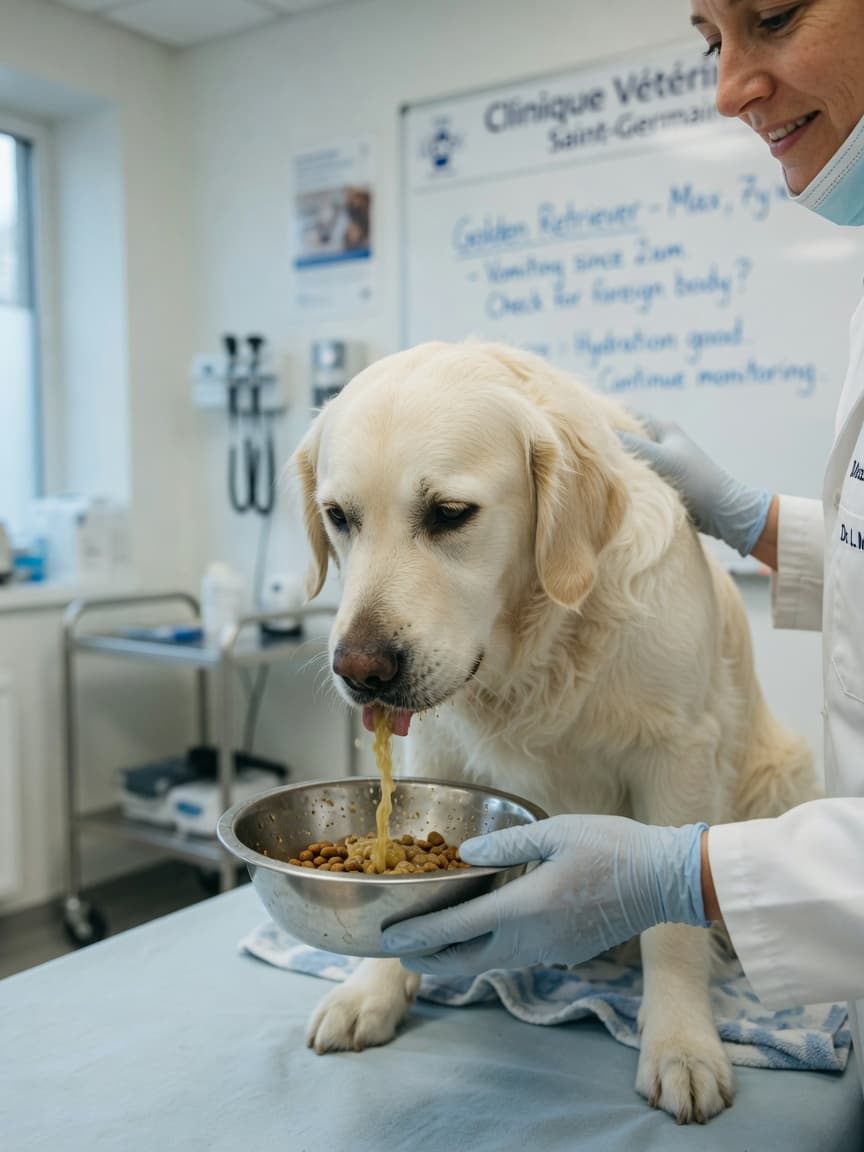
Why Do Dogs Vomit? An Overview
Vomiting is one of the most frequently reported concerns in canine medicine across Europe. While a single episode of vomiting in an otherwise bright, alert dog is rarely cause for alarm, repeated or severe vomiting can signal something far more serious. Understanding the range of possible causes — and knowing which warning signs demand urgent veterinary attention — can genuinely save your dog's life.
It is worth distinguishing vomiting from regurgitation. Vomiting is an active, forceful expulsion of stomach or small intestinal contents, often preceded by retching, drooling, and abdominal heaving. Regurgitation is passive — food or fluid simply flows back up without effort, usually shortly after eating. The distinction matters because the two have different causes and different treatments.
Common Causes of Dog Vomiting (Most to Least Frequent)

1. Dietary Indiscretion
By far the most common cause of acute vomiting in dogs. Dogs are opportunistic scavengers and will readily eat spoiled food, compost, faeces, dead animals, discarded food packaging, or any number of unsuitable items on a walk. The stomach reacts by expelling the offending material. One or two vomiting episodes followed by recovery is typical, and most dogs bounce back quickly with a brief period of dietary rest.
2. Sudden Diet Changes
Switching dog food abruptly — without a gradual transition over seven to ten days — commonly triggers vomiting and diarrhoea. Always introduce new food slowly by mixing increasing proportions of the new diet with the old over at least a week. Many quality natural pet food brands stocked at Zooplus include transition guides on their packaging for exactly this reason.
3. Gastroenteritis
Inflammation of the stomach and intestines caused by bacterial or viral infection, dietary upset, or stress. Signs include vomiting, diarrhoea, lethargy, and reduced appetite. Most cases resolve within 24 to 48 hours with supportive care, though dehydration is a real risk in severe cases.
4. Parasites
Intestinal parasites including roundworms, hookworms, whipworms, and Giardia can all cause vomiting, particularly in puppies or dogs with high worm burdens. ESCCAP (European Scientific Counsel Companion Animal Parasites) publishes guidelines recommending regular faecal testing and appropriate anthelmintic treatment based on the dog's lifestyle and local parasite prevalence. Following your vet's deworming schedule is the best preventive measure.
5. Foreign Body Ingestion
Dogs — especially puppies and younger dogs — frequently swallow objects that cause partial or complete gastrointestinal obstruction. Socks, toys, bones, corn cobs, fruit stones, and even stones are commonly retrieved from dogs surgically. Obstruction is a life-threatening emergency. Persistent vomiting after potential foreign body ingestion requires immediate veterinary assessment.
6. Pancreatitis
Inflammation of the pancreas, often triggered by a high-fat meal or dietary indiscretion. Signs include sudden-onset vomiting, abdominal pain, lethargy, and sometimes diarrhoea. Pancreatitis can range from mild to severe and life-threatening. Certain breeds, including Miniature Schnauzers and Cocker Spaniels, have a higher predisposition.
7. Toxin Ingestion
Dogs may vomit after ingesting toxic substances including grapes, raisins, xylitol (found in sugar-free products), chocolate, certain plants, medications, or household chemicals. If toxin ingestion is suspected, contact your veterinarian or a poison control service immediately — do not wait for further symptoms to develop.
8. Organ Disease
Chronic or recurrent vomiting may indicate underlying organ dysfunction. Kidney disease, liver disease, and Addison's disease (hypoadrenocorticism) are all known to cause vomiting as a prominent symptom. These conditions are diagnosed through blood tests, urine analysis, and imaging.
9. Gastric Dilatation-Volvulus (GDV)
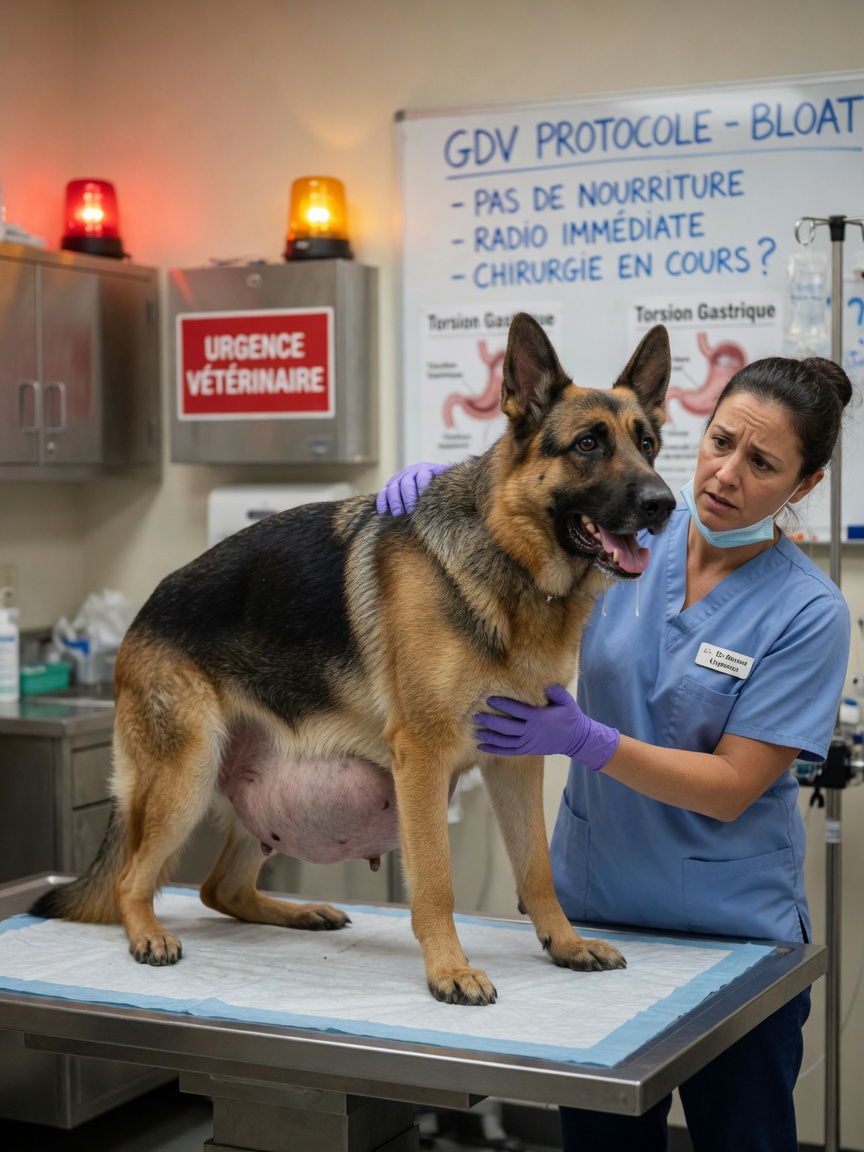
A life-threatening emergency seen predominantly in large and deep-chested breeds such as German Shepherds, Great Danes, Dobermanns, and Standard Poodles. The stomach fills with gas and rotates on itself. Signs include unproductive retching, a visibly distended abdomen, restlessness, and rapid deterioration. GDV requires emergency surgery — every minute counts.
Red Flags: When Vomiting Is an Emergency
- Repeated vomiting — more than three or four times in a few hours
- Vomiting blood (bright red or coffee-ground appearance)
- Unproductive retching with an enlarged abdomen (suspect GDV)
- Known or suspected ingestion of a toxic substance or foreign object
- Vomiting combined with severe lethargy, collapse, or pale/white gums
- Puppies or elderly dogs vomiting repeatedly
- No improvement after 24 hours
- Signs of dehydration: sunken eyes, dry gums, skin that does not spring back when gently pinched
Home Care for Mild Vomiting
If your dog vomits once or twice but remains alert, is not in distress, and shows no red flags above, you can try the following supportive measures at home:
- Withhold food for four to six hours to allow the stomach to settle (do not withhold water unless instructed by a vet)
- Offer small amounts of fresh water frequently to prevent dehydration
- Reintroduce food gradually with a bland diet — plain boiled chicken and white rice is commonly recommended
- Avoid rich, fatty, or spicy food during recovery
- Monitor your dog closely for any of the red flag signs listed above
Never give your dog human anti-nausea medication without veterinary advice. Many human medicines — including ibuprofen and paracetamol — are toxic to dogs.
See Your Vet If…
- Your dog vomits more than twice in a 24-hour period
- There is blood in the vomit
- Your dog is also showing diarrhoea, lethargy, or loss of appetite
- You suspect ingestion of a toxic substance or foreign object
- Your dog is a puppy, senior dog, or has a known health condition
- Your dog does not improve within 24 hours of home care
- Your dog appears to be in pain, is restless, or has a distended abdomen
What Will the Vet Do?
Your vet will take a thorough history, including what your dog may have eaten, any access to toxins, and the character and frequency of vomiting. Depending on findings, investigations may include blood tests, urine analysis, faecal examination for parasites (aligned with ESCCAP guidelines), abdominal X-rays, or ultrasound. Treatment ranges from fluid therapy and anti-nausea medication to surgery, depending on the underlying cause.
Early intervention nearly always leads to better outcomes. When in doubt, call your vet — they will help you decide whether a same-day visit is necessary or whether home monitoring is appropriate.