
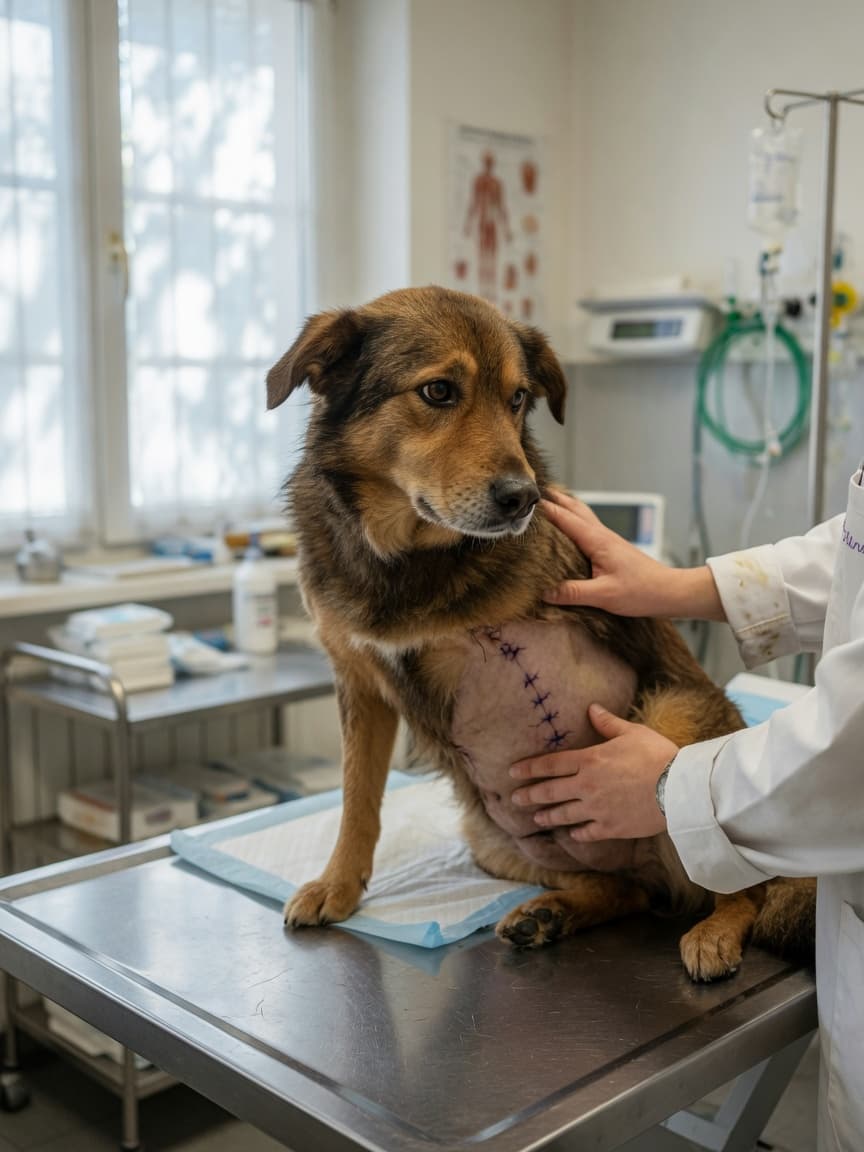
Dog Surgery Recovery: Day-by-Day Care Guide & What's Normal
When to call your vet immediately: Contact your vet without delay if you see excessive bleeding from the wound, swelling that grows rapidly, discharge that smells foul, your dog collapses or cannot stand, breathing becomes laboured, gums turn pale, white, blue, or grey, or your dog shows severe uncontrolled pain. These are emergencies — do not wait until morning.
The First 24 Hours: Coming Home After Surgery
The first 24 hours after anaesthesia are the most disorienting for your dog. Expect grogginess, unsteadiness, and reluctance to eat or drink — all normal residual effects of the anaesthetic drugs. Set up a quiet, warm, draught-free recovery space at ground level, away from stairs and other pets. A non-slip mat or folded blankets prevents slipping if your dog tries to stand before they are fully coordinated.
Offer a small amount of water when you arrive home. If your dog is calm and has not vomited, offer a quarter of their normal evening meal 2–3 hours after discharge. A small meal reduces the risk of post-anaesthesia nausea. Do not be alarmed if they refuse food entirely on day one — appetite typically returns by day two. Your dog may shiver for several hours; this is a common response to anaesthetic drugs and temperature fluctuation, not necessarily pain.
Pain management is critical. Your vet will send home a combination of analgesics — typically an NSAID (meloxicam, carprofen) and possibly a short course of opioid-based tablets or a patch. Give medication exactly as prescribed, with food to protect the stomach lining. Never give human pain relief (paracetamol, ibuprofen, aspirin) — these are toxic to dogs.
Days 2–5: Rest and Wound Monitoring
The first week is the highest-risk period for wound complications. Your two main jobs are enforcing rest and monitoring the wound. Lead exercise should be strictly limited to short toilet trips — no off-lead running, jumping, playing with other dogs, or climbing stairs, regardless of how energetic your dog appears. Dogs rarely feel as sore as they should be, and adrenaline from excitement can mask pain. Overactivity in the first week is the most common cause of wound breakdown, implant failure, and setback.
Check the wound at least twice daily. In the first 48 hours, mild redness, slight swelling, and a small amount of dried blood or clear/pink fluid at the suture line are normal. What is not normal: increasing rather than decreasing redness or swelling after day two, bright red or pulsating bleeding, green or cloudy discharge, wound edges that are gaping or have pulled apart, or skin that looks black or necrotic. Photograph the wound each day — it is much easier to spot changes when comparing photos.
The Elizabethan collar (cone) must stay on at all times unless directly supervised. Licking is the enemy of healing — even brief licking sessions can introduce bacteria and undo sutures. Inflatable or soft collars are more comfortable than traditional plastic cones and equally effective if fitted correctly.
Days 6–14: The Wound Heals, Patience Is Tested
By the end of the first week, most dogs feel dramatically better — which makes enforcing rest considerably harder. The wound may be itchy as it heals; this is normal and is caused by nerve regeneration and new tissue formation. Mild bruising appearing around the wound during days 3–7 is also common and not a cause for alarm; it results from blood tracking under the skin and gradually dissipates.
Most skin sutures or staples are removed at 10–14 days. Dissolvable internal sutures do not require removal. Attend the follow-up appointment even if the wound looks perfect — your vet will check that healing is progressing normally beneath the surface and adjust your activity restriction guidance. For orthopaedic surgeries such as TPLO or fracture repair, this appointment often includes X-rays to confirm bone healing before activity increases.
A 2022 study published in the Veterinary Surgery journal found that wound complications occurred in 12% of dogs following elective orthopaedic procedures, with licking being the single most identified owner-controllable risk factor. PubMed PMID 35502702.
Weeks 2–8: Graduated Return to Activity
Return to full activity is gradual and depends entirely on what surgery was performed. Soft-tissue procedures (spay, neuter, lump removal) typically allow a return to normal exercise by 10–14 days post-suture removal. Orthopaedic surgeries require much longer:
- TPLO (cruciate repair): Strict rest for 8 weeks, then a structured 8-week rehabilitation programme before off-lead exercise — total 16 weeks minimum
- Hip replacement: 8–12 weeks of restricted activity; specific physiotherapy programme from week 2
- Fracture repair: Varies by bone and method; typically 6–12 weeks before radiographic confirmation of healing
- Spinal surgery (hemilaminectomy for IVDD): 4–6 weeks strict rest, then progressive neurological rehabilitation
The AVMA's post-surgical care resource provides additional guidance on activity restriction timelines for common procedures.
Nutrition During Recovery
Surgery increases nutritional demands. Tissue repair requires adequate protein, vitamin C (collagen synthesis), zinc, and omega-3 fatty acids (anti-inflammatory). If your dog is on a balanced commercial diet, a temporary supplement boost during the healing phase can be worthwhile. Avoid dramatic diet changes in the immediate post-op period, as digestive upset compounds recovery stress.
Keeping your dog at or slightly below their ideal body weight is critical — especially for orthopaedic recoveries. Extra weight places mechanical stress on healing bone and sutures. Zooplus stocks veterinary recovery and mobility diets formulated to support healing while managing body condition. HolistaPet's hemp-based calming products may help manage anxiety during the enforced rest period — ask your vet whether they are appropriate alongside your dog's prescribed medications.
Managing a Dog That Won't Rest
This is one of the most challenging aspects of surgery recovery. Strategies that work:
- Crate rest: A crate large enough for your dog to stand and turn is the most effective way to enforce rest. Line it with comfortable bedding and offer food and water in puzzle feeders to provide mental stimulation.
- Scent games: Hidden treats searched for with the nose provide mental tiring without physical exertion.
- Calming supplements or prescription anxiolytics: For very active dogs, a short course of prescription medication (trazodone, gabapentin) can take the edge off post-surgical restlessness. Ask your vet.
- Separate from other pets: Play-chasing is impossible to prevent once started; temporary separation is kinder than repeated interruptions.
The Guardian published a helpful owner-focused guide on keeping dogs calm during confinement that is worth bookmarking before your dog's procedure.
Key Takeaways
- Grogginess, minimal appetite, and mild shivering on day one are normal anaesthetic after-effects.
- Licking the wound is the most preventable cause of post-surgical complications — the cone stays on.
- Wound redness and swelling should decrease from day 2 onward; any increase warrants a vet call.
- Sutures are typically removed at 10–14 days; always attend this appointment even if the wound looks fine.
- Orthopaedic procedures require 8–16 weeks of restricted activity — far longer than owners expect.
- Mental stimulation (scent games, puzzle feeders) helps manage a dog that is frustrated by enforced rest.
References
- Hayes G, et al. "Risk factors for wound complications following elective orthopaedic surgery in dogs." Veterinary Surgery. 2022;51(4):612–621. PubMed PMID 35502702
- Stenberg K, et al. "Postoperative pain assessment and management in dogs: a review." Veterinary Anaesthesia and Analgesia. 2020;47(5):561–578. PubMed PMID 32651036