
Why Dog Bite Wounds Are More Dangerous Than They Appear
A dog bite may look minor on the surface, yet the underlying tissue damage is frequently far more serious than the skin wound suggests. Dogs have powerful jaws that can crush muscle, rupture blood vessels, and drive bacteria deep into tissue — all while leaving only a small puncture mark on the skin. Whether your dog has been bitten by another dog or has bitten a person, understanding the true nature of these wounds is essential for preventing life-threatening infections.
Types of Dog Bite Injuries
Puncture Wounds
Puncture wounds occur when a tooth penetrates the skin and then withdraws, leaving a small entry hole. Because the skin closes quickly over the puncture, bacteria become trapped in the warm, oxygen-poor environment beneath — an ideal setting for rapid bacterial growth. This is one reason puncture wounds are among the most infection-prone injuries a dog can sustain.
Crush Injuries
Larger or more forceful bites result in crush injuries, where the jaw compresses tissue between two points of contact. Even when the skin appears intact, underlying muscle and connective tissue may be severely damaged. Crush injuries can cause bruising, internal bleeding, and dead (necrotic) tissue that acts as a breeding ground for bacteria.
Lacerations and Avulsions
Larger tears in the skin, sometimes involving the removal of a flap of tissue, are known as lacerations or avulsions. These wounds bleed more freely and are often more straightforward to assess, but they still carry significant infection risk.
Bacteria Responsible for Bite Wound Infections
The most common pathogens found in dog bite wounds include Pasteurella canis, Staphylococcus species, Streptococcus species, and various anaerobic bacteria. Pasteurella can cause rapid and aggressive cellulitis, sometimes progressing to a dangerous systemic infection within 24 hours of the bite. Anaerobic bacteria thrive in the deep, airless tissue created by puncture wounds and may cause gas-forming infections that require urgent surgical intervention.
First Aid Steps for Dog Bite Wounds
- Stay calm and restrain the injured animal safely. A dog in pain may bite further, even owners it knows well. Use a muzzle if one is available.
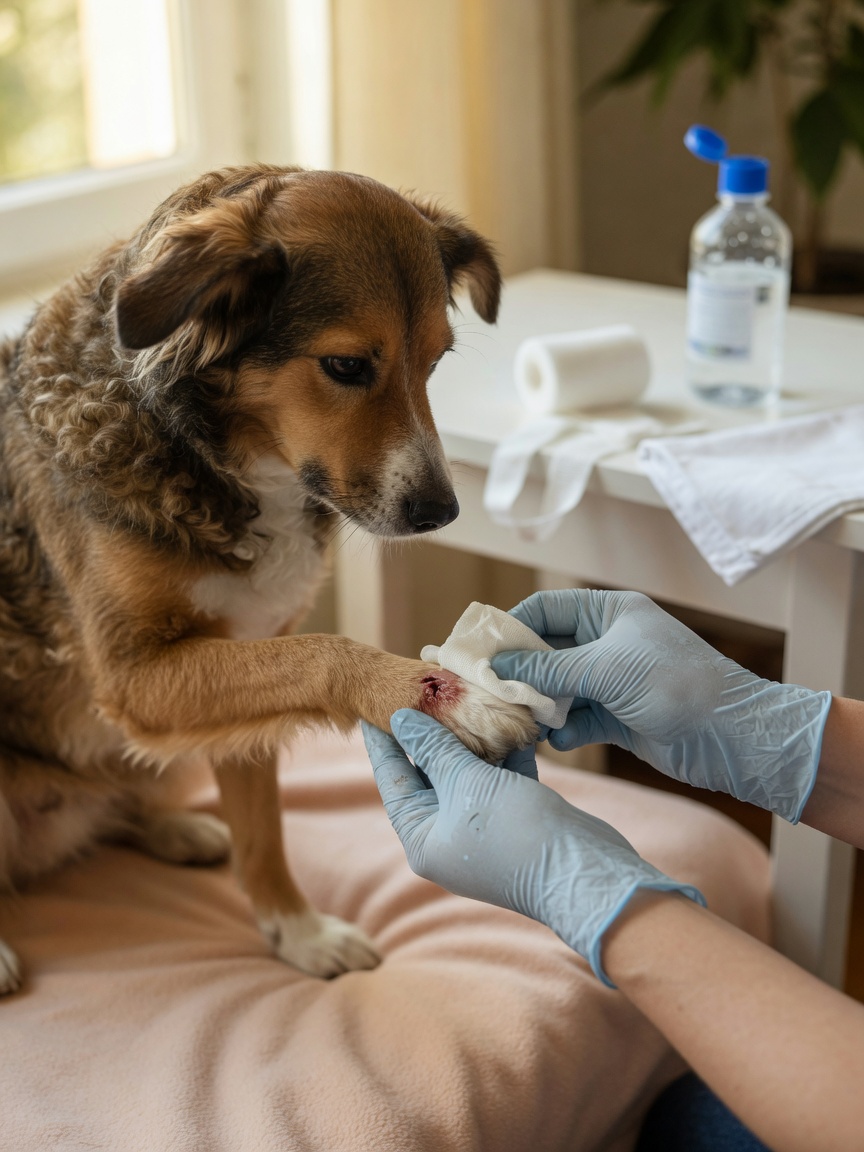
- Control any bleeding by applying gentle, firm pressure with a clean cloth or gauze pad for five to ten minutes.
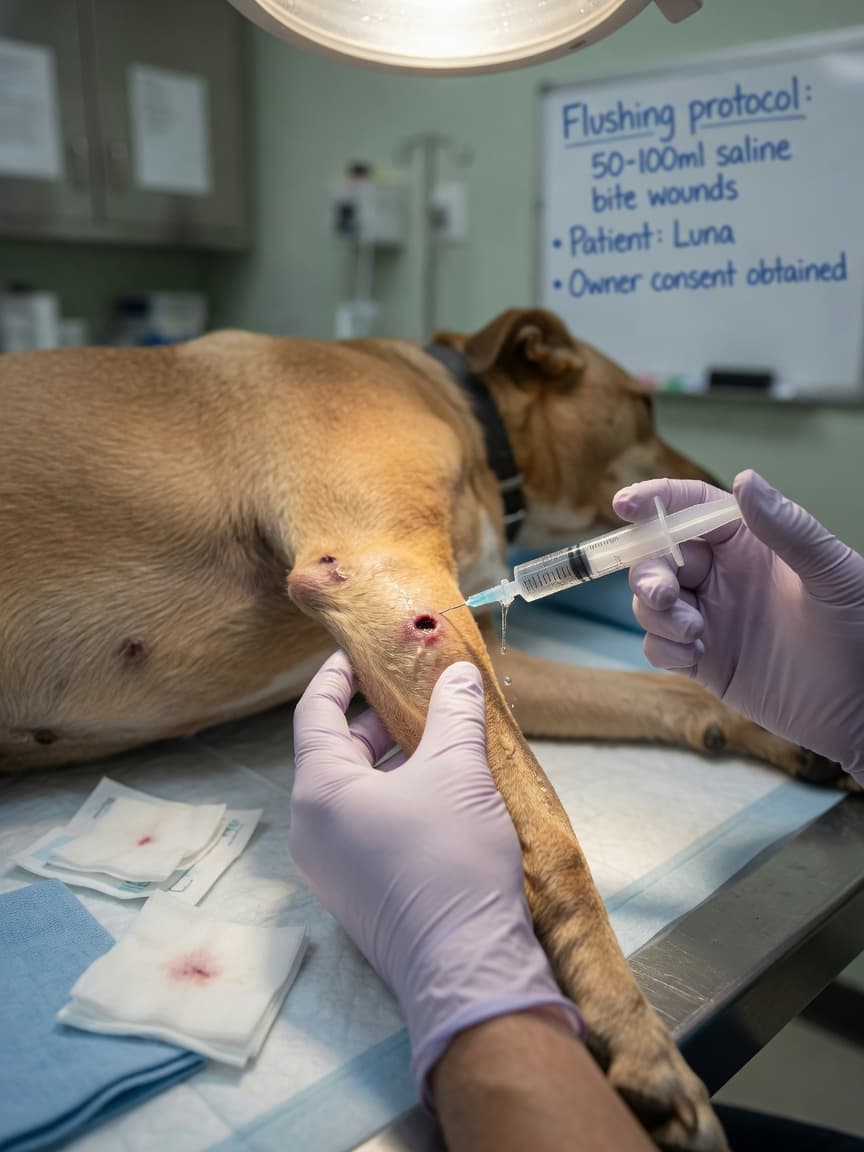
- Flush the wound thoroughly with saline solution — a syringe is ideal for directing the flow into puncture holes. Saline can be purchased at any pharmacy or from an online pet retailer such as Zooplus. Flush for at least one to two minutes per wound to physically displace bacteria.
- Do not attempt to close puncture wounds at home. Sealing bacteria inside a puncture wound dramatically increases the risk of abscess formation. Puncture wounds should be left open and assessed by a veterinarian.
- Do not apply alcohol or hydrogen peroxide directly to the wound, as these damage healthy tissue and impair healing.
- Cover the wound loosely with a clean dressing and take the animal to a veterinarian as soon as possible.
Veterinary Treatment of Bite Wounds
Antibiotics
The antibiotic of choice for dog bite wound infections across the UK and EU is Amoxicillin-Clavulanate, commonly dispensed under the brand name Synulox. This combination antibiotic is active against the broad range of bacteria typically found in bite wounds, including Pasteurella, Staphylococcus, and anaerobic species. Your veterinarian will determine the appropriate dose and course length based on your dog's weight and the severity of the wound.
Surgical Debridement and Wound Lavage
In cases involving deep puncture wounds, crush injuries, or wounds that have been left untreated for several hours, your vet may perform surgical debridement — the removal of dead or contaminated tissue. This is frequently done under sedation or general anaesthesia. The wound is then lavaged (irrigated) with large volumes of sterile saline under pressure to remove remaining debris and bacteria.
Drain Placement
Where significant dead space exists beneath the skin — commonly seen in dog-on-dog bites to the neck, back, or flank — a Penrose drain or similar device may be sutured into the wound to allow ongoing drainage of fluid and prevent abscess formation. Drains typically remain in place for three to five days.
Signs of Infection to Watch For
- Increasing swelling, redness, or warmth around the wound site
- Discharge of pus or foul-smelling fluid
- Pain on touching the area, or the dog flinching when the region is examined
- Fever, lethargy, or loss of appetite — signs of systemic infection
- The wound appearing to enlarge or deepen over time
If any of these signs develop after initial treatment, contact your veterinarian promptly. Infections that spread into the bloodstream (septicaemia) are life-threatening and require hospitalisation.
Zoonotic Risks — When Humans Are Bitten
If a person is bitten by a dog, the same bacteria pose a significant risk to human health. Pasteurella multocida in particular can cause rapid, spreading cellulitis in humans that requires urgent antibiotic treatment. Anyone bitten by a dog should wash the wound thoroughly with soap and running water for at least five minutes, then seek medical attention. In the UK, Capnocytophaga canimorsus, another bacterium found in dog saliva, poses a particular risk to immunocompromised individuals and can cause severe sepsis.
If you are concerned about a toxic substance being involved — for example, if a dog was bitten by a venomous animal — you can contact the Veterinary Poisons Information Service (VPIS) on 020 7305 5055. VPIS provides 24-hour advice to veterinary professionals on poisoning cases.
When to Seek Emergency Care
- Wounds to the neck, chest, or abdomen — these may involve vital structures
- Heavy or uncontrolled bleeding
- Signs of shock: pale gums, rapid breathing, collapse, or extreme weakness
- Multiple bites from a larger dog
- Any wound in a very young, elderly, or immunocompromised animal
- Suspected penetration of a body cavity
In these situations, do not wait — contact your nearest emergency veterinary practice immediately. Time is critical in preventing fatal outcomes from severe bite injuries.
Preventing Dog Bite Injuries
In multi-dog households, careful introduction of new animals, appropriate supervision during feeding and play, and management of resource-guarding behaviour significantly reduce the risk of serious bites. When walking your dog in public, always keep them on a lead in areas where unknown dogs may be present. Understanding canine body language — stiffening, fixed staring, a raised hackle line — allows you to remove your dog from a tense situation before a bite occurs.