
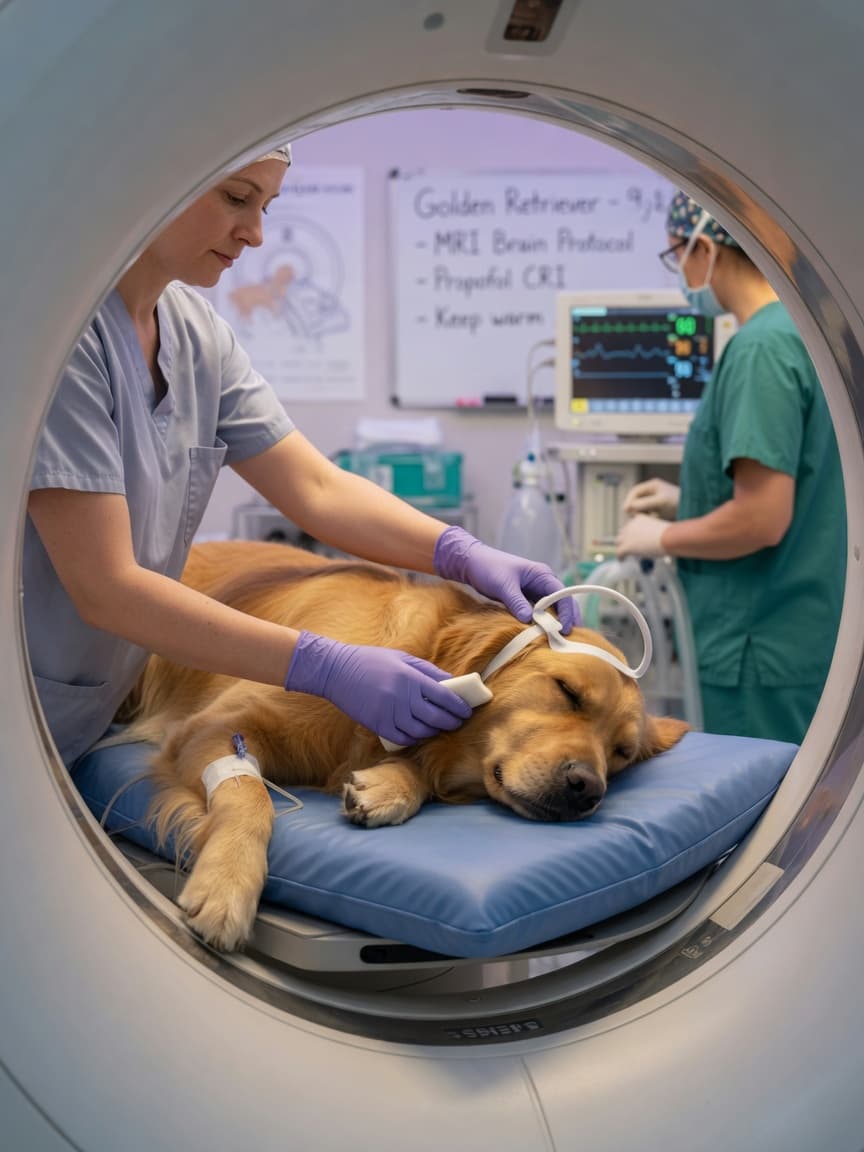
Dog MRI Scan: When Is It Needed, What to Expect & Cost
Quick Summary: An MRI (Magnetic Resonance Imaging) scan gives veterinarians an unparalleled view of soft tissues, the brain, spinal cord, and joints. It is most often recommended when neurological signs, unexplained pain, or suspected tumours cannot be diagnosed with X-rays or ultrasound alone. MRI requires general anaesthesia in dogs and costs between £800 and £2,500 in the UK (or $900–$3,000 in the US) depending on location and the area being scanned.
What Is a Veterinary MRI and How Does It Work?
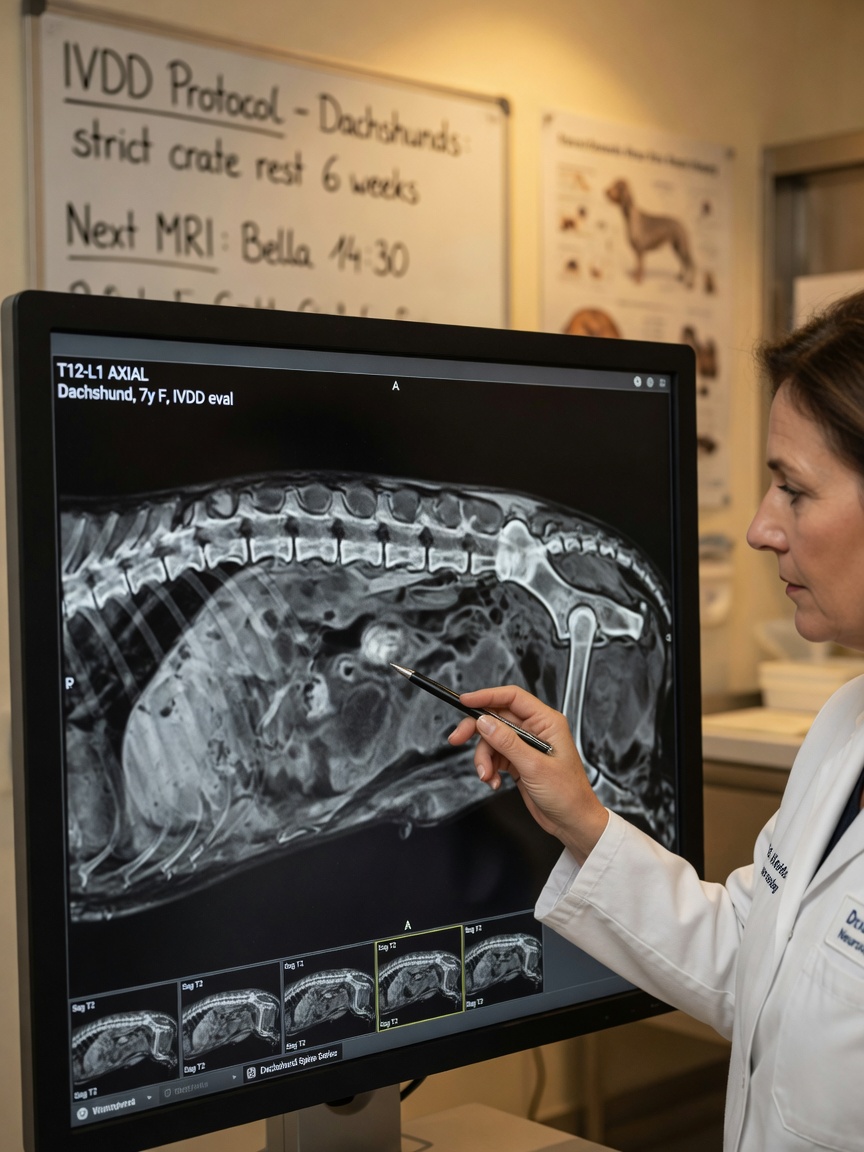
Magnetic Resonance Imaging uses powerful magnetic fields and radio waves to create detailed cross-sectional images of internal structures. Unlike X-rays, which use ionising radiation, MRI produces no radiation at all — making it particularly safe for repeated imaging. The scanner energises hydrogen atoms in body tissues and records the signals they emit as they return to rest. Different tissue types (fat, muscle, fluid, bone marrow) emit signals at different rates, producing high-contrast images that reveal subtle pathology invisible on conventional radiographs.
In veterinary medicine, MRI is the gold standard for evaluating the brain, spinal cord, inner ear, nasal cavity, and complex joint disorders such as osteochondrosis. The British Small Animal Veterinary Association (BSAVA) considers MRI essential for any dog presenting with unexplained seizures, progressive neurological deficits, or suspected intervertebral disc disease (IVDD) — the most common spinal emergency in small breeds like Dachshunds and French Bulldogs.
When Does a Vet Recommend an MRI for a Dog?
Your vet or veterinary neurologist may recommend MRI in the following situations:
- Seizures or epilepsy: MRI identifies structural causes such as brain tumours, inflammatory lesions, or hydrocephalus before a diagnosis of idiopathic epilepsy is confirmed.
- Sudden or progressive hind-leg weakness: Disc herniation, fibrocartilaginous embolism, and degenerative myelopathy all look different on MRI, guiding treatment decisions.
- Neck or back pain: When pain persists despite rest and anti-inflammatories, MRI can locate the exact disc or vertebra causing compression.
- Head tilt and vestibular signs: Differentiating inner-ear disease from a central lesion requires MRI of the brainstem and cerebellum.
- Nasal discharge or nosebleeds: MRI evaluates the full extent of nasal tumours and checks whether they have breached the cribriform plate.
- Soft-tissue masses: When a mass is adjacent to major vessels or nerves, MRI helps plan surgery or assess resectability.
A 2022 study published in PLOS ONE (PubMed PMID 35285522) found that MRI changed the working diagnosis in 34% of dogs referred with neurological signs compared with clinical examination alone, underlining its diagnostic impact.
Does My Dog Need to Be Sedated?
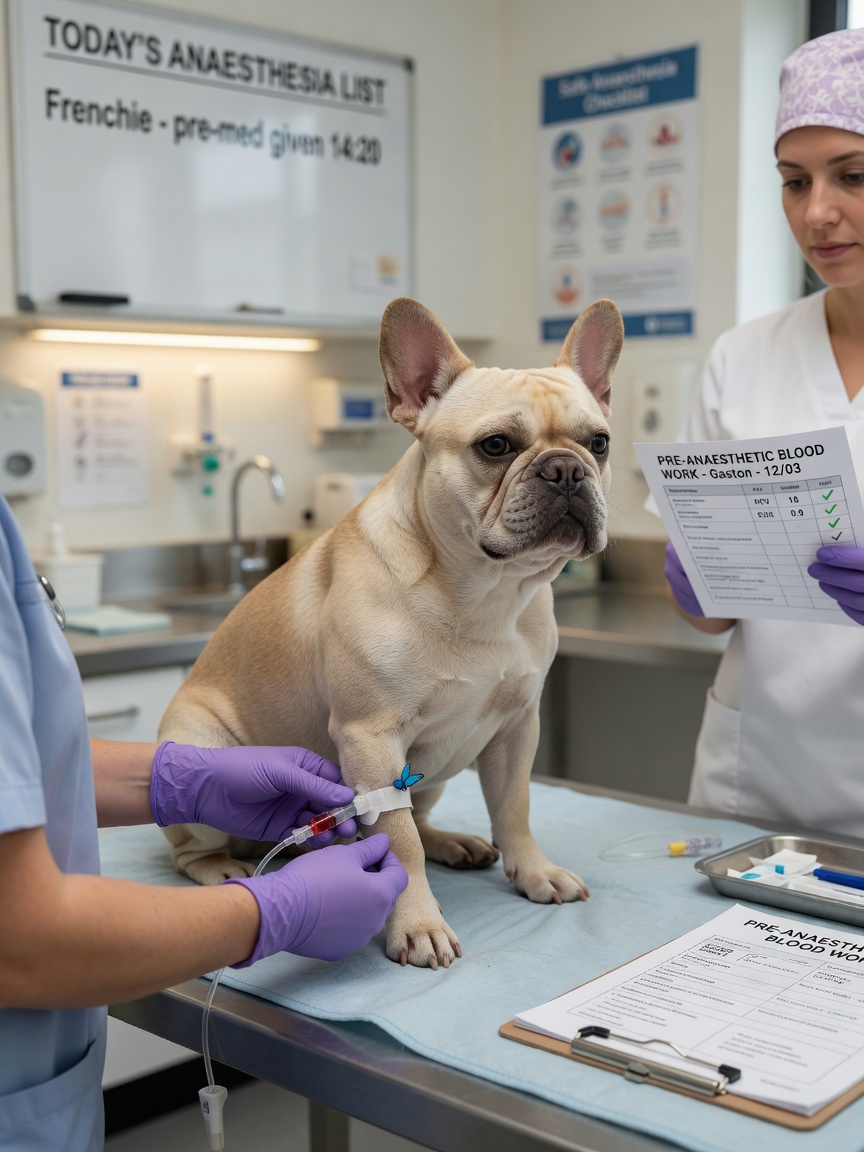
Yes — general anaesthesia is required for every canine MRI. Dogs cannot remain motionless inside the noisy scanner for 30–90 minutes without sedation, and even slight movement blurs the images irreparably. Before anaesthesia, your vet will carry out pre-anaesthetic blood work to check kidney and liver function and may recommend a chest X-ray for older patients. The anaesthetic itself is generally very safe in healthy dogs; risk increases in brachycephalic breeds (Bulldogs, Pugs) and in dogs with cardiac or respiratory conditions, which your specialist will discuss with you beforehand.
What Happens During the Scan?
On the day of the MRI your dog will fast from the previous evening. On arrival at the referral centre, a nurse places an intravenous catheter and the anaesthetist induces sedation. The dog is positioned on a padded table and slid into the cylindrical MRI bore. A contrast agent (gadolinium) is often injected mid-scan to highlight areas where the blood-brain barrier is disrupted — a hallmark of inflammation or tumour. The scan itself takes 30–75 minutes. Afterwards your dog recovers in a warm kennel and is typically discharged the same day, a little drowsy but comfortable. A veterinary neurologist or radiologist reviews the images and provides a written report, usually within 24 hours at referral centres.
How Much Does a Dog MRI Cost?
Costs vary considerably by country, region, and the area being imaged:
- UK: £800–£1,400 for a single body region; £1,200–£2,500 for the full spine
- USA: $900–$1,500 for brain; $1,500–$3,000 for spine
- Europe: €700–€1,800 depending on country and clinic
Anaesthesia, the contrast agent, and the radiologist's report are usually included. Pet insurance generally covers MRI when it is recommended by a vet for a covered condition; always check your policy's specialist referral clause. The American Veterinary Medical Association (AVMA) has guidance on financing veterinary care if cost is a concern.
MRI vs CT Scan: Which Does My Dog Need?
CT (computed tomography) is faster, cheaper (typically £350–£700), and superb for bone detail and lung assessment. MRI is slower, more expensive, but far superior for soft-tissue contrast — particularly for the brain, spinal cord, and cartilage. Many referral centres now offer both, and a neurologist will advise which is most appropriate. For suspected IVDD, MRI is strongly preferred; for fractures or nasal bone involvement, CT may be the first choice, with MRI following if soft-tissue extent needs clarification. ScienceDaily reported on advances in low-field portable MRI that may reduce costs in coming years.
Preparing Your Dog for an MRI
- Follow fasting instructions precisely (usually food withheld for 8–12 hours, water until 2 hours before).
- Remove any metal collar, ID tag, or harness before arrival — metal distorts MRI images.
- Inform the team of any previous adverse reactions to anaesthesia.
- Arrange for someone to drive you home; you will be stressed and your dog will be drowsy.
- Ask the specialist to walk you through the images — most are happy to do so.
Recovery support supplements containing omega-3 fatty acids and antioxidants can help dogs bouncing back from anaesthesia. Browse veterinary-approved dog supplements at Zooplus to support your pet's recovery at home.
Key Takeaways
- MRI is the gold standard for imaging the brain, spinal cord, and soft tissues in dogs.
- General anaesthesia is always required — pre-anaesthetic blood work is standard practice.
- Costs range from £800 to £2,500 in the UK; most pet insurance policies cover it when vet-recommended.
- MRI changed the diagnosis in roughly one in three neurological cases compared with clinical exam alone.
- CT is faster and cheaper but inferior for soft-tissue contrast; a specialist will advise which is appropriate.
- Same-day discharge is typical; your dog will be drowsy for a few hours post-anaesthesia.
Supporting your dog's recovery after anaesthesia is important. HolistaPet offers calming and wellness products formulated for dogs, including hemp-based options that may ease post-procedure anxiety. Always consult your vet before introducing new supplements.
References
- Gutierrez-Quintana R, et al. "Prevalence of MRI-detected abnormalities and their diagnostic impact in dogs with neurological signs." PLOS ONE. 2022;17(3):e0264988. PubMed PMID 35285522
- De Decker S, et al. "Intervertebral disc disease in dogs: a review of clinical signs, diagnosis and treatment." Veterinary Record. 2021;188(10):e42. PubMed PMID 33755259