
Why Is My Dog Limping?
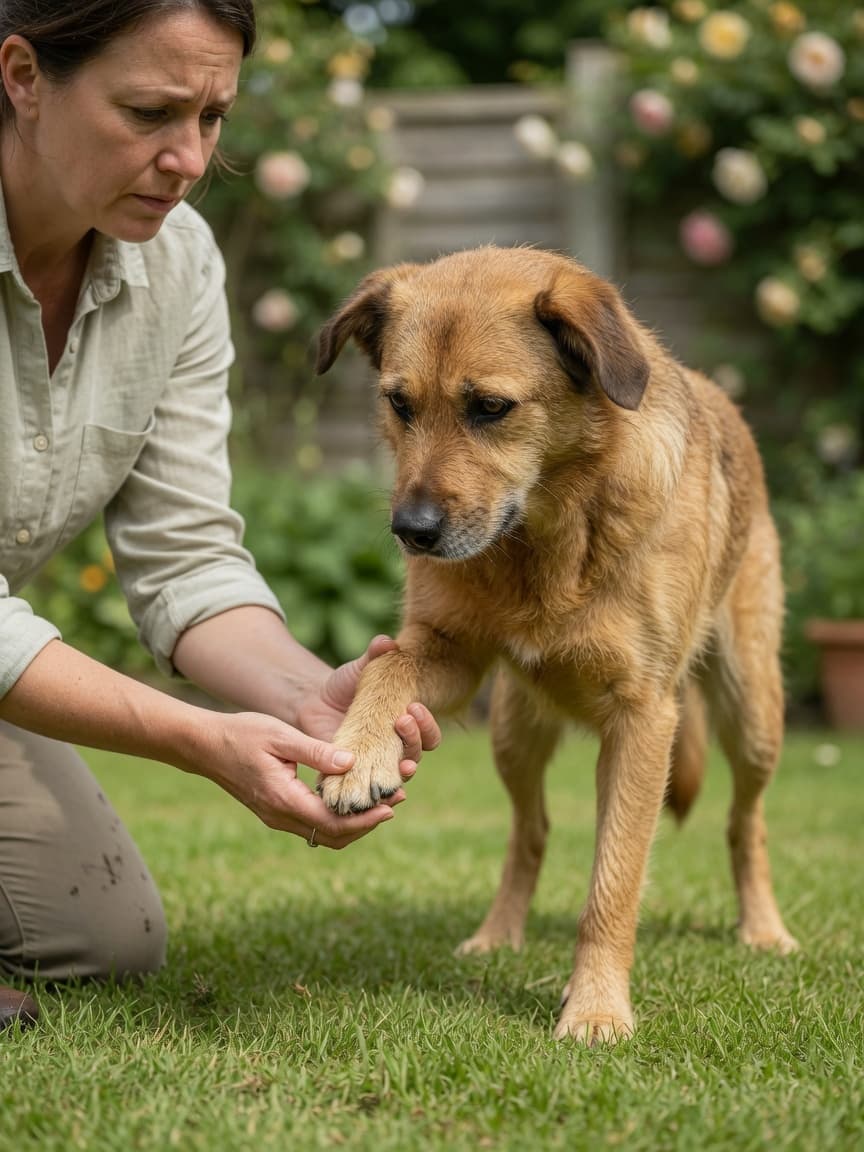
A limping dog is one of the most common reasons owners seek veterinary advice. Lameness can range from a barely perceptible hitch in the stride to a complete inability to bear weight on a limb. Understanding the likely cause depends on several factors: which leg is affected, whether the limp came on suddenly or developed gradually, the dog's age, breed, and size, and what other symptoms are present.
This guide walks through the most common causes of limping in dogs, ranked broadly by frequency, and explains the critical differences between front-leg and hind-leg lameness.
Common Causes of Limping in Dogs (Most to Least Frequent)
1. Paw Injuries
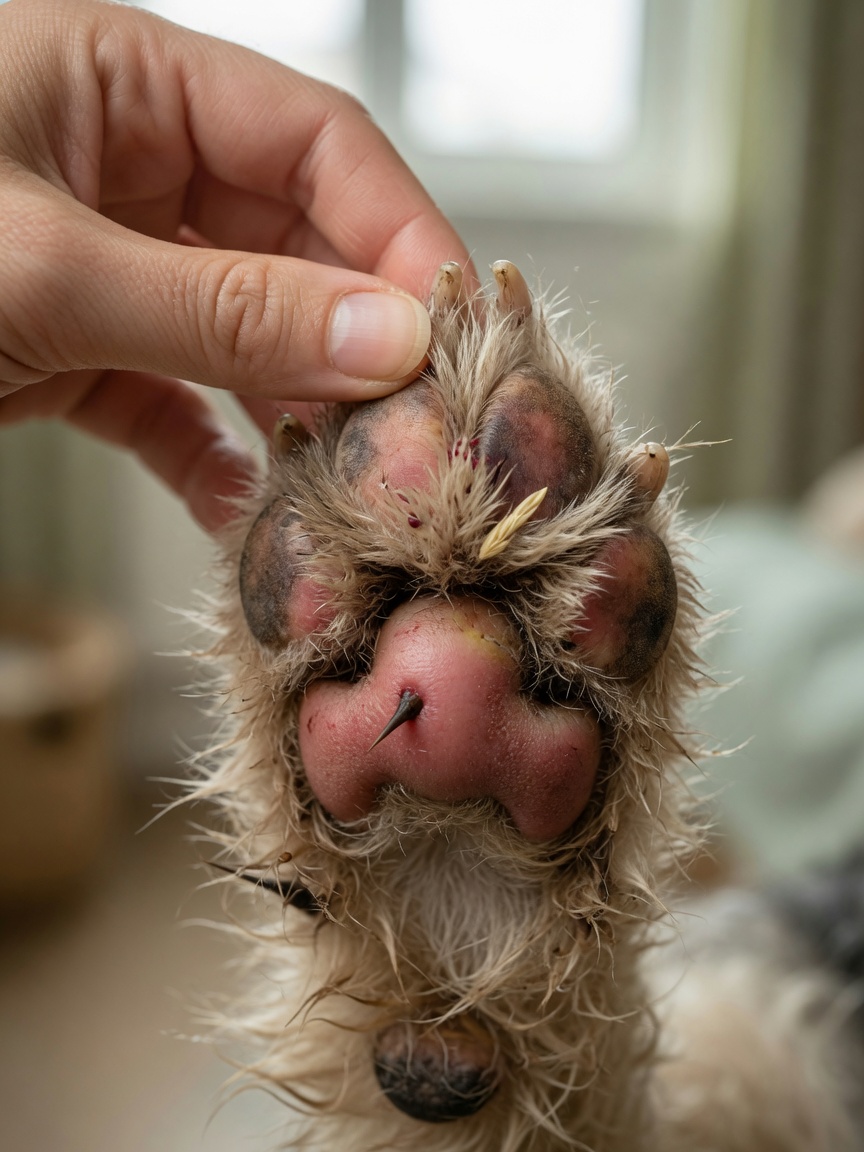
The most frequent cause of sudden-onset limping, particularly after outdoor exercise, is a problem with the paw. This includes cuts or lacerations from glass or stones, cracked or torn nails (which can be extremely painful), thorns or splinters embedded in the pads, burns from hot pavements in summer, or grass seeds burrowing between the toes — a very common problem in continental European countries during late spring and summer. Always check between the toes and pads first when your dog suddenly starts limping after a walk.
2. Muscle Strains and Soft Tissue Injuries
Dogs that are highly active, play fetch repetitively, or have a sudden burst of unaccustomed exercise frequently sustain muscle strains or minor soft tissue injuries. These typically cause moderate, weight-bearing lameness that improves with a day or two of rest. If the limp persists beyond 48–72 hours of restricted activity, a veterinary assessment is sensible.
3. Joint Problems: Arthritis and Hip/Elbow Dysplasia
Gradual-onset, intermittent lameness — particularly in middle-aged to older dogs, or in young large and giant breeds — is very often related to joint disease. Osteoarthritis (degenerative joint disease) is extremely common in dogs and causes progressive stiffness and pain, often worse after rest and in cold, damp weather. Hip dysplasia and elbow dysplasia are inherited developmental conditions common in breeds including German Shepherds, Labrador Retrievers, Golden Retrievers, and Rottweilers, and can cause lameness from puppyhood onwards. EU breeders are encouraged to use health testing schemes to reduce prevalence.
4. Cranial Cruciate Ligament (CCL) Rupture
Rupture or partial tearing of the cranial cruciate ligament (equivalent to the ACL in humans) is one of the most common orthopaedic injuries in dogs, particularly in Labrador Retrievers, Rottweilers, Staffordshire Bull Terriers, and overweight dogs of any breed. It typically affects the hind leg and causes sudden, severe hind-limb lameness, often after a twisting movement during play. The joint becomes unstable and surgery is usually required for a good long-term outcome.
5. Bone Fractures
Fractures typically follow trauma — a road traffic accident, a fall, or a collision. They cause sudden, severe, non-weight-bearing lameness, often with visible swelling and deformity. This is a veterinary emergency requiring immediate attention.
6. Lyme Disease and Other Tick-Borne Infections
In areas where ticks carrying Borrelia burgdorferi are present — which includes much of Central and Northern Europe, Scandinavia, and the UK — Lyme disease is a genuine cause of shifting-leg lameness in dogs. The joint inflammation it causes can move between legs over days or weeks, and is often accompanied by fever, lethargy, and loss of appetite. ESCCAP (the European Scientific Counsel Companion Animal Parasites) recommends year-round tick prevention in high-risk areas and advises owners to check dogs thoroughly after walks in woodland or long grass. Diagnosis is via a blood test.
7. Panosteitis (Growing Pains)
Large and giant breed puppies between five and fourteen months of age can develop panosteitis — a self-limiting inflammatory condition of the long bones that causes episodes of shifting lameness. It is painful but generally resolves without treatment as the dog matures, though pain relief is usually prescribed to keep the puppy comfortable.
8. Bone Cancer (Osteosarcoma)
Primary bone tumours, particularly osteosarcoma, are unfortunately not rare in large and giant breeds such as Great Danes, Irish Wolfhounds, Greyhounds, and Rottweilers. They typically cause progressive, worsening lameness in one limb, often with localised swelling and pain on palpation. Any large or giant breed dog over five years old with persistent, progressive lameness that does not improve with rest and pain relief should have X-rays taken to rule out this diagnosis.
Front Leg vs Hind Leg Limping: Key Differences
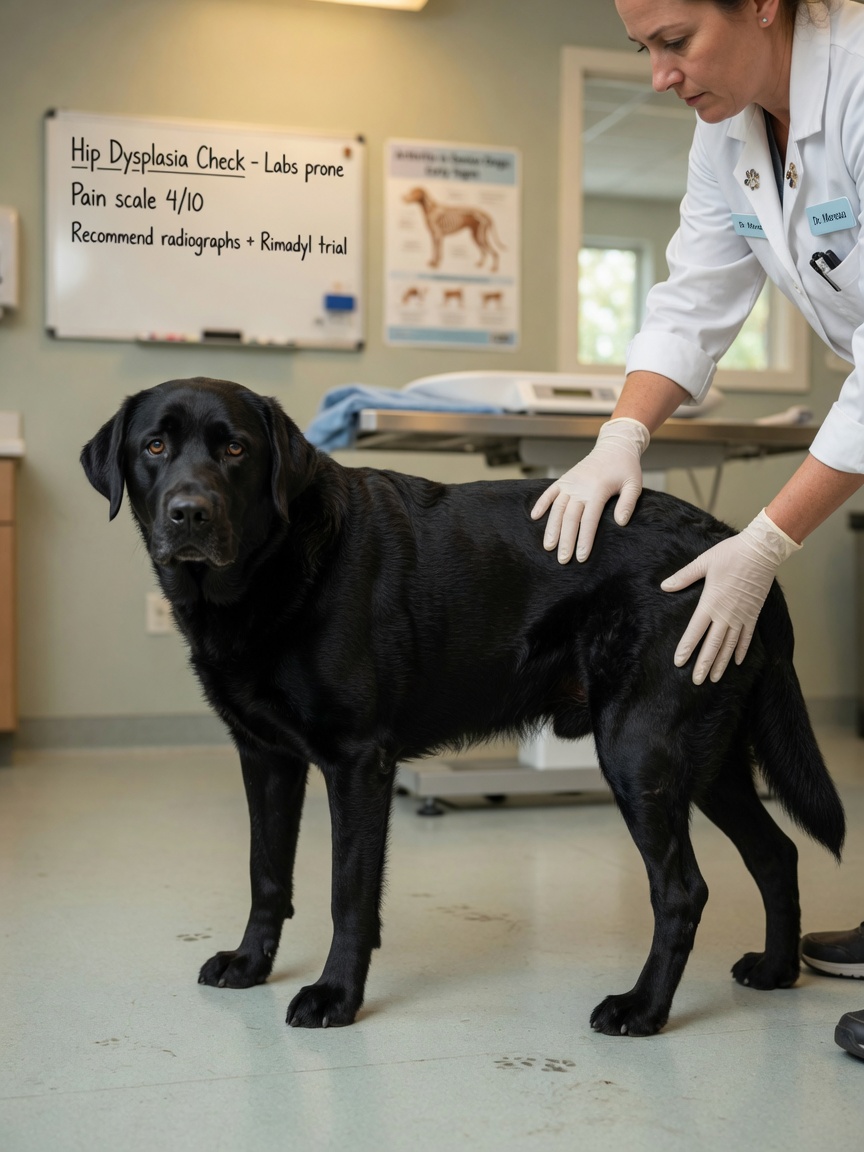
The affected leg can provide important diagnostic clues. Dogs with front-leg lameness typically dip their head downward when the sound leg strikes the ground, loading the good front leg. Dogs with hind-leg lameness hike their hip upward on the affected side as weight transfers to the sound rear leg.
Front-leg lameness is commonly associated with shoulder injuries, elbow dysplasia, bicipital tenosynovitis, paw injuries, and fractures of the radius or ulna. Hind-leg lameness is more typically linked to cruciate ligament disease, hip dysplasia, patella luxation (very common in small breeds such as Chihuahuas, Pomeranians, and Yorkshire Terriers), and hip or femoral fractures.
Patella luxation — where the kneecap slips out of its groove — often causes a characteristic "skipping" gait in small dogs, with the back leg suddenly held up for a few steps before returning to normal. It ranges from grade 1 (intermittent, rarely causes pain) to grade 4 (permanent luxation, requiring surgery).
Red Flags: Seek Immediate Veterinary Attention
- Complete non-weight-bearing on a limb, especially after trauma
- Visible bone, open wound, or severe swelling
- Obvious bone deformity or abnormal angulation of a limb
- Limping alongside fever, lethargy, or loss of appetite
- Sudden paralysis or weakness of the hindquarters
- Crying out in pain when the limb or back is touched
- Rapidly worsening lameness over hours
Home Care for Mild Limping
If your dog has mild weight-bearing lameness with no obvious trauma, wound, or swelling, and is otherwise eating, drinking, and behaving normally, it is reasonable to try 24–48 hours of restricted activity. This means lead-only walks for toileting, no jumping or running, and keeping the dog quiet and rested. Check the paw carefully for embedded material, cuts, or a broken nail.
Do not give human pain relief medications such as ibuprofen, aspirin, or paracetamol (acetaminophen) — all are toxic to dogs. If pain relief is needed, contact your vet for an appropriate veterinary NSAID.
Apply a cool compress wrapped in a cloth (never ice directly on skin) to any swollen area for 10–15 minutes at a time if the dog tolerates it.
See Your Vet If...
- Mild lameness has not improved after 48 hours of rest
- The dog is completely unable or unwilling to put weight on the leg
- There is visible swelling, heat, or deformity
- Lameness is shifting between different legs over days
- Your dog is a large or giant breed with progressive worsening lameness
- Your dog has had a known tick exposure and develops lameness with fever
- A puppy of a large breed develops recurring, shifting lameness between the ages of five and fourteen months
Early diagnosis makes a substantial difference to outcomes for many orthopaedic conditions. When in doubt, a vet consultation is always the right call.