
Understanding Your Dog's Coat Type
Not all dog coats are created equal. Whether you share your home with a sleek Boxer or a gloriously shaggy Afghan Hound, understanding your dog's specific coat type is the foundation of good grooming. The wrong brush, the wrong bathing schedule, or the wrong technique can damage the coat, irritate the skin, or simply waste your time. This guide covers the six main coat types, what each one needs, and how to approach grooming as a health check — not just a cosmetic routine.
The 6 Main Dog Coat Types
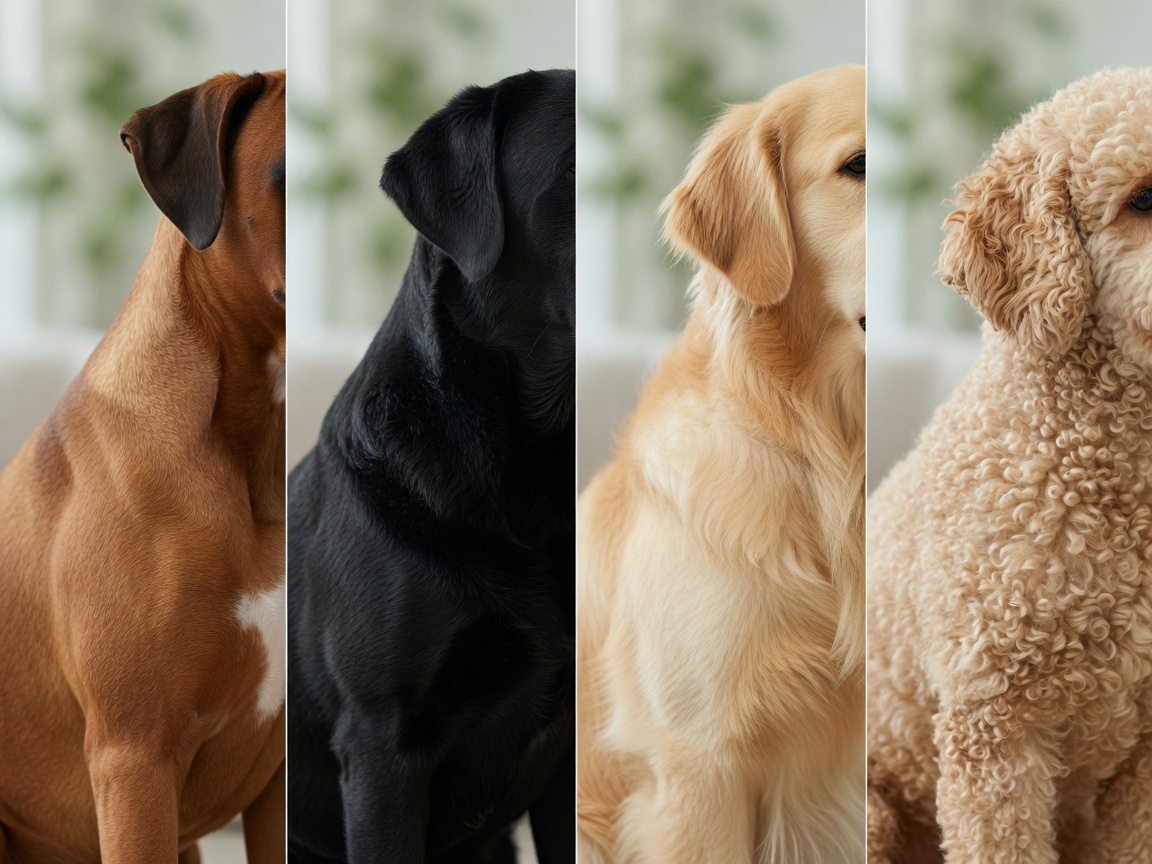
1. Smooth Coat (Boxer, Beagle, Dalmatian)
Smooth-coated dogs have short, close-lying fur with no undercoat. These are among the easiest coats to maintain, but they do shed — often more than owners expect, because the short hairs work their way into upholstery and clothing with surprising determination.
- Grooming frequency: Weekly brushing is sufficient
- Tools needed: Rubber grooming mitt or bristle brush
- Bathing frequency: Every 6–8 weeks, or when visibly dirty
- Moulting level: Moderate year-round
- Professional grooming: Rarely required
- Grooming cost estimate: Low — primarily tool investment only
Zooplus stocks a range of rubber grooming mitts well-suited to smooth coats, including options from Trixie and Kerbl that work effectively on wet or dry fur.
2. Short Coat (Labrador Retriever, German Shepherd)
Short-coated breeds often carry a dense double coat beneath a relatively close outer layer. The Labrador is a classic example — seemingly easy to groom but a prolific shedder, particularly during seasonal coat changes in spring and autumn.
- Grooming frequency: Twice weekly, more during seasonal moults
- Tools needed: Slicker brush, deshedding rake, rubber mitt
- Bathing frequency: Every 4–6 weeks
- Moulting level: High, especially in spring
- Professional grooming: Optional; a deshedding bath treatment is helpful twice yearly
- Grooming cost estimate: Low to moderate
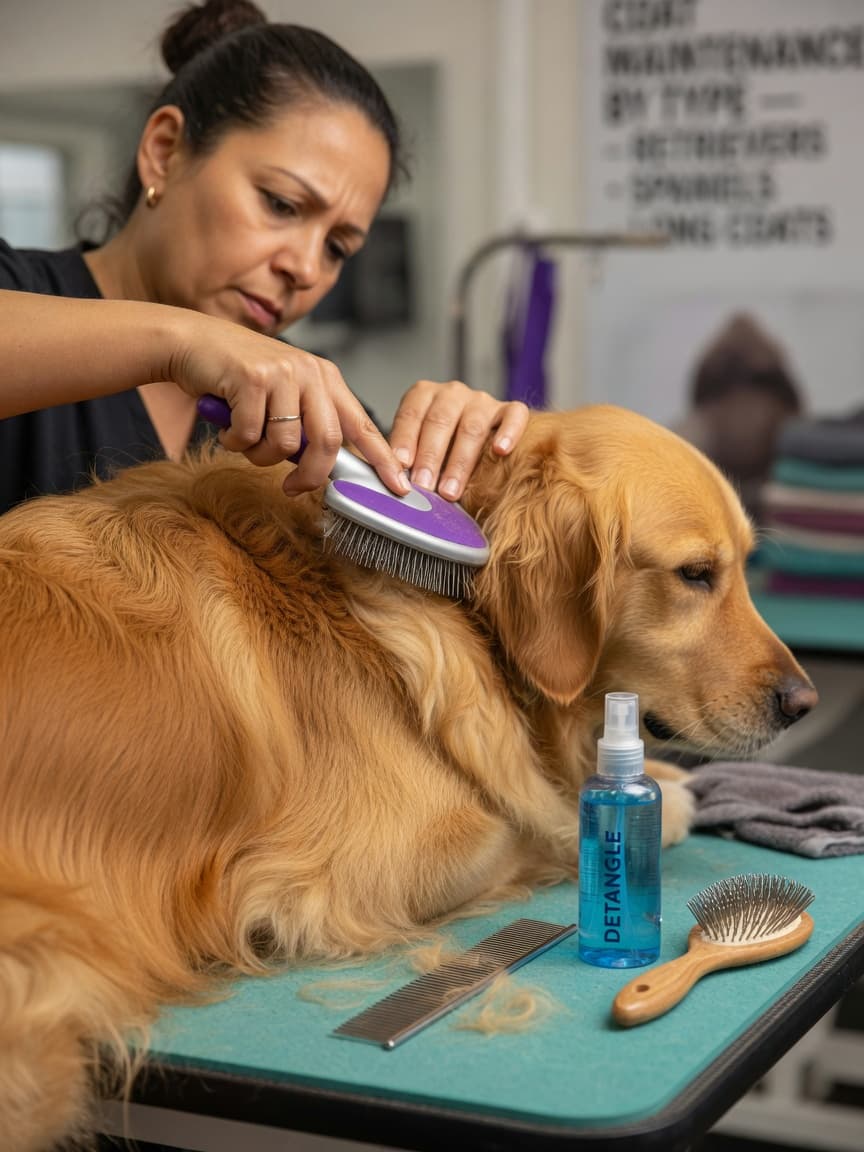
3. Medium Coat (Golden Retriever, Spaniel, Border Collie)
Medium-length coats can range from flat and silky to slightly wavy, and many carry a functional double layer that provided insulation for working dogs. These coats require more consistent attention to prevent tangles, particularly behind the ears, under the armpits, and around the collar.
- Grooming frequency: Three to four times per week
- Tools needed: Slicker brush, metal comb, detangling spray
- Bathing frequency: Every 4–6 weeks
- Moulting level: Moderate to high
- Professional grooming: Every 8–12 weeks recommended
- Grooming cost estimate: Moderate (€30–€60 per professional session depending on size)
4. Long Coat (Afghan Hound, Rough Collie, Shih Tzu)
Long-coated breeds are undeniably striking, but the maintenance commitment is substantial. Without regular grooming, these coats matt rapidly — and matts close to the skin can cause pain, restrict movement, and harbour parasites or skin infections beneath them.
- Grooming frequency: Daily brushing is essential
- Tools needed: Pin brush, wide-toothed metal comb, detangling spray, matt splitter
- Bathing frequency: Every 2–4 weeks
- Moulting level: Low to moderate (hair drops less but tangles more)
- Professional grooming: Every 6–8 weeks strongly recommended
- Grooming cost estimate: High (€50–€100+ per session for large breeds)
5. Wire or Rough Coat (Border Terrier, Schnauzer, Wire Fox Terrier)
The wire coat is coarse and bristly by design — originally bred to protect working terriers from dense undergrowth and harsh weather. These coats require a specific technique called hand-stripping, where dead hair is pulled out at the root rather than cut. Clipping a wire coat instead of stripping it causes the coat to soften and lose its characteristic texture over time.
- Grooming frequency: Weekly brushing; hand-stripping two to three times per year
- Tools needed: Stripping knife, slicker brush, metal comb
- Bathing frequency: Every 6–8 weeks
- Moulting level: Low — wire coats do not shed heavily
- Professional grooming: Essential for hand-stripping; find a groomer experienced with terrier breeds
- Grooming cost estimate: Moderate to high for stripping sessions
6. Curly or Wavy Coat (Poodle, Lagotto Romagnolo, Bichon Frise)
Curly coats are often promoted as low-shedding or hypoallergenic, and while it is true that loose hair tends to stay caught in the curl rather than falling onto your sofa, these coats are among the highest-maintenance. Without frequent brushing and regular clipping, curly coats matt extremely quickly.
- Grooming frequency: Daily brushing; clipping every 6–8 weeks
- Tools needed: Slicker brush, wide-tooth comb, clippers (for home maintenance between appointments)
- Bathing frequency: Every 3–4 weeks
- Moulting level: Very low visible shedding
- Professional grooming: Essential; budget for regular appointments throughout the year
- Grooming cost estimate: High (€45–€90 per session depending on breed size and style)
Grooming as a Health Check
Every grooming session is an opportunity to examine your dog from nose to tail. Run your hands through the coat and look out for the following:
- Lumps and bumps: New growths, cysts, or swellings beneath the skin that were not there before
- Parasites: Fleas leave black gritty debris (flea dirt) at the base of the fur; ticks attach around the head, neck, and groin
- Skin changes: Redness, scaling, thickened skin, or areas of hair loss that warrant veterinary attention
- Soreness: If your dog flinches, vocalises, or tries to move away during grooming in a specific area, note the location and investigate
- Ear health: Lift the ears during grooming — a dark discharge, odour, or excessive wax can indicate infection
Catching changes early during routine grooming means issues are addressed before they escalate. Many skin conditions, including early-stage parasitic infestations, are far easier to treat when identified promptly.
Choosing the Right Products
Grooming tool quality makes a genuine difference. Cheap brushes with poor pin quality can scratch the skin, while a well-made slicker brush glides through the coat without discomfort. Zooplus offers a comprehensive range of breed-appropriate brushes, combs, and grooming kits across all price points, with EU delivery and a wide selection of professional-grade brands such as Trixie, Flamingo, and Artero.
When selecting a shampoo, choose a product formulated specifically for dogs — human shampoo has an incorrect pH for canine skin and can strip natural oils. Look for gentle, soap-free formulations unless treating a specific condition.
When to See a Professional
Even experienced dog owners benefit from professional grooming for certain coat types. Groomers are trained to spot skin abnormalities, handle anxious dogs safely, and manage coats that have become matted. If you are new to a breed with complex grooming needs — particularly wire-coated terriers or any long-coated breed — consulting a professional groomer first is well worth the investment.
Written by Julia Wrenfield, vet-informed pet health editor at ForPetsHealthcare.