
Understanding the Siberian Husky's Unique Health Profile
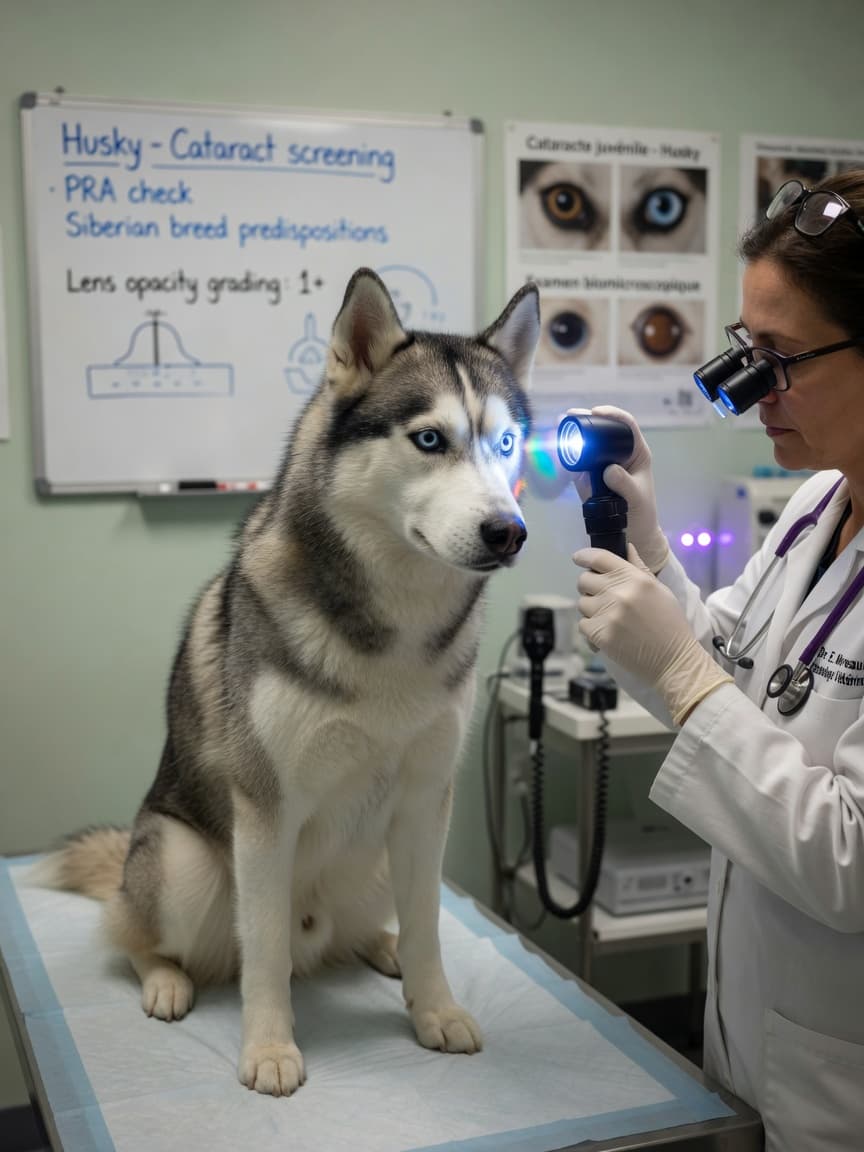
The Siberian Husky is a breed that commands attention — striking colouration, wolf-like features, and an energy that seems boundless even after hours of activity. Bred by the Chukchi people of north-eastern Siberia over thousands of years to pull sleds across vast frozen distances, these dogs are extraordinarily robust in many respects. But like every breed, they carry specific genetic vulnerabilities that owners need to understand. Two of the most important and distinctive are zinc-responsive dermatosis and a cluster of hereditary eye conditions that can threaten their vision.
Zinc Deficiency in Siberian Huskies: A Breed-Specific Problem
Zinc is an essential trace mineral involved in immune function, skin integrity, hormone regulation, and hundreds of enzymatic processes throughout the body. Most dogs absorb sufficient zinc from a balanced commercial diet without difficulty. Siberian Huskies are different. The breed has a well-documented hereditary impairment in zinc absorption from the gastrointestinal tract, meaning that even when dietary zinc intake is adequate, the body does not uptake it efficiently. The condition is called zinc-responsive dermatosis, Syndrome 1, or more specifically, hereditary zinc malabsorption.
What Zinc Deficiency Looks Like in Huskies
The clinical signs of zinc deficiency in Siberian Huskies are primarily dermatological, though other body systems are affected as the deficiency progresses. Symptoms typically become apparent in young adult dogs, often between one and three years of age, though they can emerge later.
- Crusting and scaling around the muzzle, eyes, ears, and chin — often described as having a greasy or waxy texture.
- Thickened, hyperkeratotic skin at the nose and paw pads, which can crack and become painful.
- Hair loss and poor coat quality in affected areas.
- Alopecia and skin redness at pressure points such as elbows and hocks.
- Secondary bacterial or fungal skin infections in the damaged areas.
- In severe or prolonged cases, lethargy, immune suppression, and poor wound healing.
These signs can be easily confused with other dermatological conditions — mange, fungal infection, allergic skin disease — which is why diagnosis requires a veterinary assessment and often a skin biopsy. The characteristic histological finding on biopsy is parakeratosis: abnormal retention of nuclei in the outermost skin cells, which is a hallmark of zinc-responsive skin disease.
Managing Zinc Deficiency
The name "zinc-responsive dermatosis" is encouraging: this condition typically responds well to zinc supplementation, and the improvement can be dramatic. Oral zinc supplementation — usually zinc sulphate or zinc gluconate — is the primary treatment and must continue for the dog's lifetime since the underlying absorption impairment does not resolve. Some dogs require intermittent injectable zinc during periods of stress, illness, or high physiological demand, such as during growth, pregnancy, or recovery from surgery.
Diet also plays a role. Some dietary components impair zinc absorption, particularly high levels of phytates found in plant-based proteins and high-cereal diets. A diet with highly digestible animal protein sources may support better zinc uptake. Calcium supplementation can also compete with zinc for absorption, so calcium-heavy supplements should be used cautiously in Huskies. Discussing dietary composition with a veterinary nutritionist is worthwhile for any Husky showing signs of zinc deficiency.
Eye Conditions in Siberian Huskies
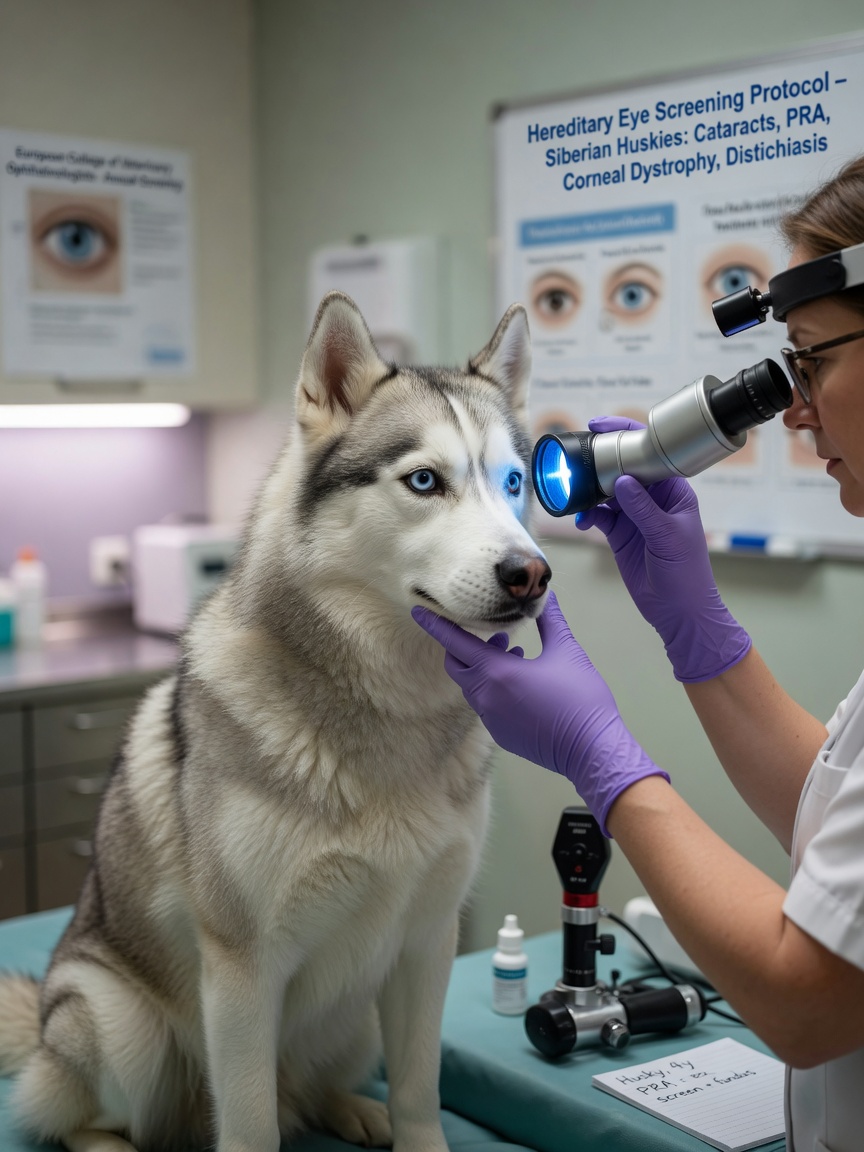
Siberian Huskies have a separate and significant predisposition to hereditary eye diseases. The breed's distinctive eyes — which may be blue, brown, or heterochromic (one of each) — are one of its most recognisable features, and protecting their function requires awareness of several specific conditions.
Hereditary Cataracts
Siberian Huskies are one of the breeds most commonly affected by hereditary cataracts — opacities of the lens that can impair or eliminate vision. Unlike age-related cataracts in other breeds, hereditary cataracts in Huskies can develop as early as three months of age and typically progress rapidly. They are bilateral — affecting both eyes — and are caused by an autosomal recessive genetic mutation identified in the breed. DNA testing is available for breeding dogs, and the British Veterinary Association recommends that all breeding Siberian Huskies be tested and clear animals prioritised.
Cataracts that cause significant visual impairment can be surgically removed by a veterinary ophthalmologist, with good outcomes when the retina remains healthy. Routine annual eye examinations by a certified ophthalmologist are recommended for all Huskies, whether or not breeding is planned.
Progressive Retinal Atrophy
Progressive retinal atrophy (PRA) is a family of inherited diseases that cause the photoreceptor cells of the retina to degenerate progressively over time, ultimately leading to complete blindness. In Siberian Huskies, the X-linked form of PRA is most relevant, meaning that males are more severely affected while females may be carriers with milder or no symptoms. There is currently no treatment to halt or reverse PRA, making early identification important for both welfare and breeding decisions. DNA testing is available and is strongly recommended.
Corneal Dystrophy
Corneal dystrophy is a condition in which abnormal deposits accumulate within the layers of the cornea, resulting in hazy or opaque patches on the eye surface. In Siberian Huskies, the epithelial-stromal form is most common and typically appears as a grey, crystalline opacity in the central or peripheral cornea. Most cases do not progress to significant visual impairment, but the condition is hereditary and should be considered when making breeding decisions. Regular veterinary eye examinations can monitor for progression.
Building a Health Management Plan for Your Siberian Husky
- Schedule annual eye examinations with a veterinary ophthalmologist from the first year of life, continuing throughout adulthood.
- If you acquired your Husky from a breeder, ask for DNA test results for hereditary cataracts and PRA. If these are unavailable, discuss testing with your vet.
- Inspect your Husky's skin and coat monthly. Scaling, crusting, or changes to the nose or paw pads should be investigated by a vet rather than attributed to seasonal dryness.
- Discuss diet composition with your vet or a veterinary nutritionist, particularly regarding zinc bioavailability.
- If your Husky is diagnosed with zinc-responsive dermatosis, establish a reliable supplementation routine and discuss with your vet which form of zinc is most appropriate.
- Do not supplement zinc without veterinary guidance — excessive zinc is toxic to dogs and can cause haemolytic anaemia and organ damage.
Siberian Huskies are resilient dogs with a deep history of working in some of the harshest conditions on earth. With informed ownership and proactive veterinary care, the health challenges specific to the breed are genuinely manageable — and the reward is a healthy, active companion that will match your energy and exceed your expectations for years to come.