
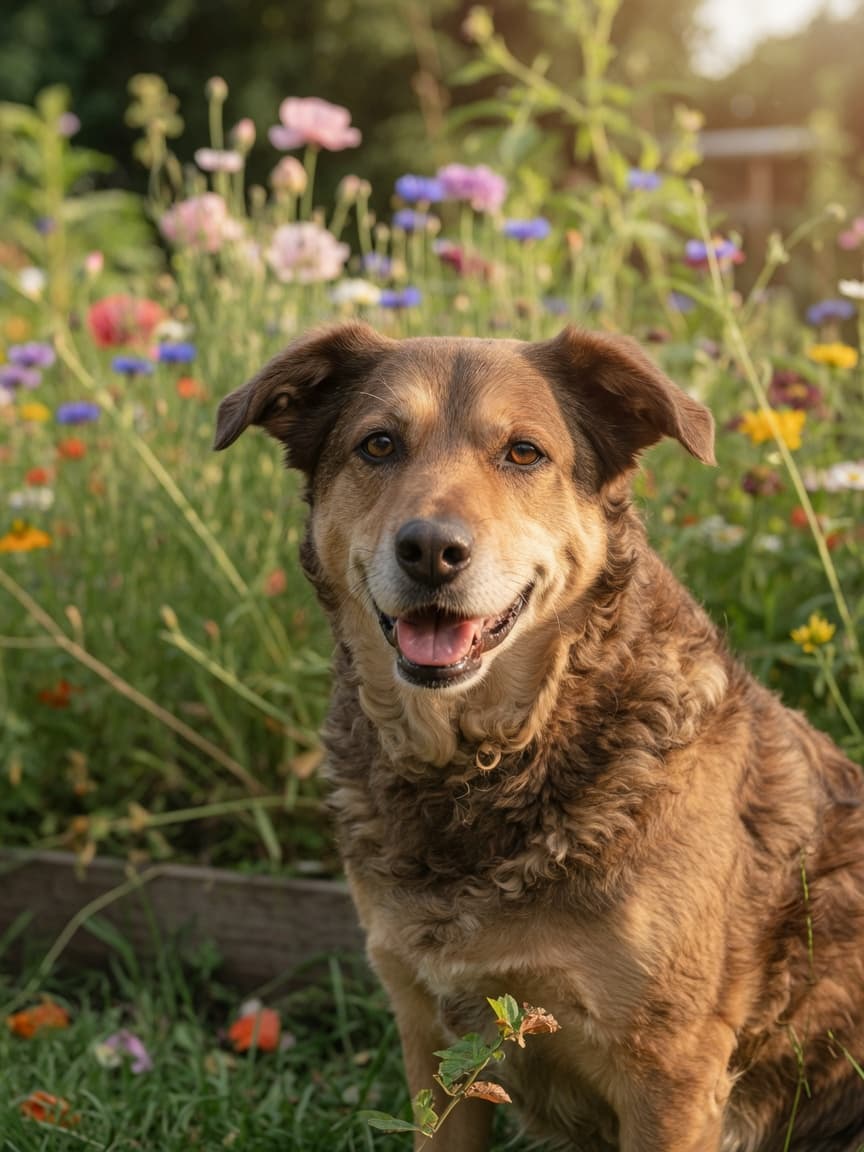
If you've ever looked into your dog's eyes and seen what appears to be a warm, contented smile, you've probably wondered: is my dog actually smiling because they're happy? The answer is more nuanced than a simple yes or no. Whilst dogs do display expressions that resemble human smiles, the science behind canine facial expressions reveals a fascinating and complex picture. Understanding what your dog's "smile" really means can deepen your bond with your pet and help you recognise their true emotional state.
The Science Behind Canine Facial Expressions
Dogs have approximately 100 different facial expressions, many of which are specifically designed for communicating with humans. Unlike wolves, which have largely maintained the same facial anatomy for thousands of years, dogs have evolved distinct muscles around their eyes and mouth. Research from the University of Portsmouth found that dogs have developed a pronounced inner eyebrow muscle that raises their eyebrows in a way that appeals to human caretakers. This suggests that many canine facial expressions have evolved specifically to communicate with us.
However, the "smile" your dog displays isn't quite the same as a human smile. Dogs cannot voluntarily control their mouths the way we do, so the expression you're seeing is rarely a deliberate emotional display in the way a human smile is.
What Does a Genuine Happy Dog Expression Look Like?
Rather than focusing solely on mouth position, you should look at your dog's entire face and body to gauge their emotional state:
- Relaxed mouth and jaw: A truly content dog has loose facial muscles, not a tightly pulled-back mouth
- Soft eyes: Happy dogs often have slightly squinted eyes and visible "crow's feet" wrinkles at the corners
- Raised inner eyebrows: This creates a warm, approachable expression that signals trust and affection
- Forward-facing ears: Ears in a natural, alert position (not pinned back) indicate relaxation and interest
- Loose, wagging tail: A soft, full-body wag (not stiff) is the gold standard for canine happiness
- Relaxed posture: An overall loose stance without tension indicates contentment
When a "Smile" Might Mean Something Else
It's crucial to understand that some expressions that look like smiles can actually indicate stress or submission. A dog that pulls their lips back and shows teeth whilst displaying other tense body language may be exhibiting a "stress grin" or "submissive smile" rather than expressing joy. These dogs typically have:
- Pinned-back ears
- Tense facial muscles
- A tucked tail
- Stiff body posture
Learning to distinguish between a genuine happy expression and a stress response is essential for understanding your dog's wellbeing.
The Role of Chemicals and Oxytocin
When dogs interact with their owners, their brains release oxytocin—the same "bonding hormone" that's released in humans. This neurochemical response genuinely makes your dog feel happy and connected. So whilst your dog may not be smiling in the human sense, they are experiencing genuine positive emotions when they're around you. The physical expression we interpret as a smile is often an outward manifestation of this biochemical happiness.
How to Keep Your Dog Genuinely Happy
Rather than focusing on whether your dog is "smiling," concentrate on ensuring their overall wellbeing:
- Provide regular exercise and mental stimulation
- Maintain a consistent, predictable routine
- Offer plenty of positive social interaction
- Ensure proper nutrition and healthcare
- Create a safe, comfortable living environment
- Use positive reinforcement training methods
Key Takeaways
Whilst your dog may appear to smile, it's important to understand that canine happiness is expressed through a combination of facial features and body language rather than a simple mouth shape. The good news is that when dogs are around their beloved owners, they genuinely experience positive emotions backed by real neurochemical changes. By learning to read your dog's complete body language and providing them with a happy, stimulating life, you'll know with certainty when your furry friend is truly content—smile or no smile.