
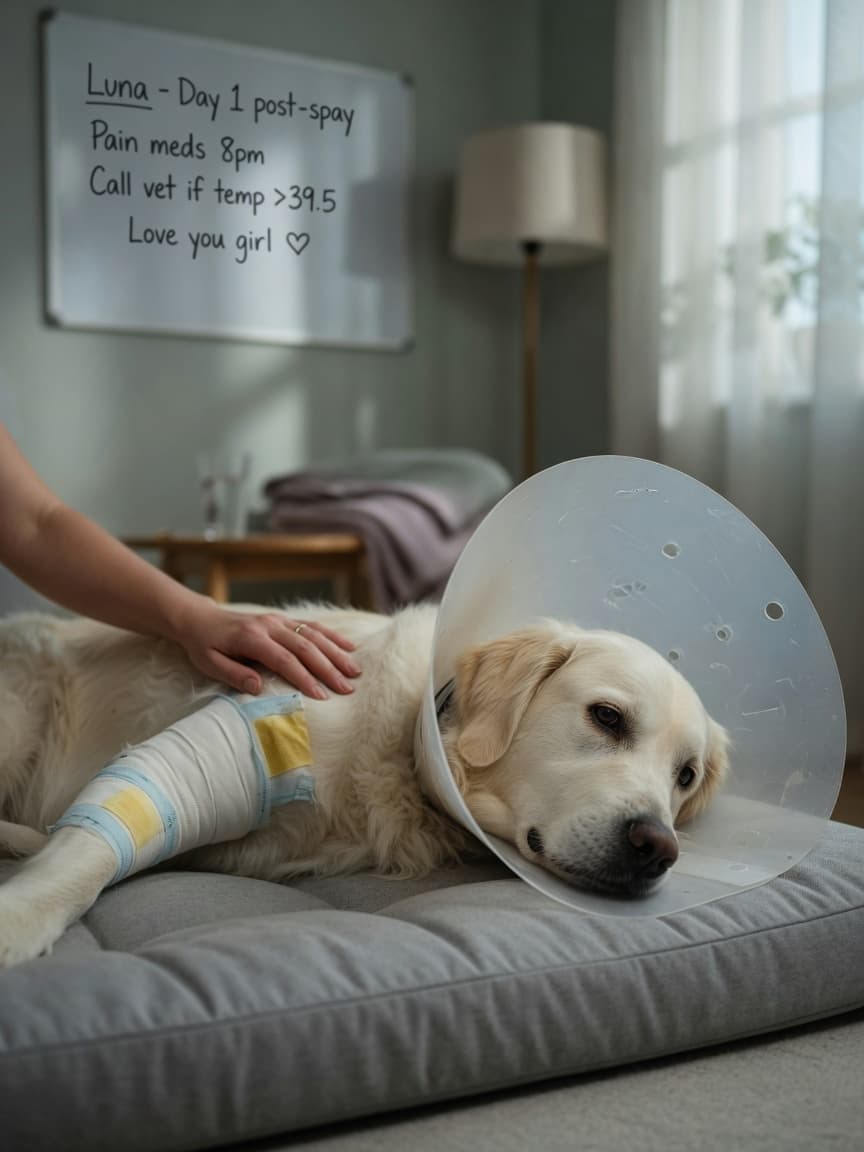
What to Expect When You Bring Your Dog Home
Collecting a dog from surgery can be an emotionally charged experience. Your pet may look groggy, confused, or distressed — all of which are normal consequences of general anaesthesia and a challenging day. The most important thing you can do in the first hour is provide a calm, quiet environment and resist the urge to fuss over your dog more than necessary. Excessive attention can actually increase anxiety in a recovering animal.
Your vet will provide specific discharge instructions tailored to your dog's procedure. These take precedence over any general guidance. The information here covers the principles of post-operative nursing that apply across most routine surgical recoveries.
The First Few Hours: Anaesthesia Recovery
Most dogs are significantly drowsy for several hours after anaesthesia. Some may also be nauseous, unsteady on their feet, or mildly disoriented. This is normal and typically resolves within 12 to 24 hours, though some older dogs take longer to clear anaesthetic agents from their system.
- Prepare a warm, clean, comfortable resting area at floor level so your dog cannot fall from an elevated surface
- Keep the environment quiet — dim lighting, no children running about, television turned low
- Keep other pets away initially, as they may not recognise the smell of their housemate after a hospital visit and can behave aggressively
- Check that your dog is breathing normally and that their gums are pink — pale, white, or blue gums require emergency veterinary contact
Offer water in small amounts once your dog is fully conscious and able to swallow normally. Most vets recommend withholding food for several hours post-surgery and then offering a small, bland meal in the evening if the dog is alert and comfortable.
Managing the Surgical Site
The wound will be closed with sutures, staples, skin glue, or a combination of these depending on the procedure. Your job in the first 72 hours is to monitor the site and protect it from interference.
What a healing wound should look like
- Mild redness and swelling immediately around the wound edges for the first 24 to 48 hours — this is normal inflammation
- Possibly a small amount of clear or slightly pink fluid seeping from the wound in the first day
- Gradual reduction in swelling and redness by day two and three
Signs that require veterinary contact
- Significant or increasing swelling, heat, or redness after the first 48 hours
- Yellow, green, or foul-smelling discharge
- The wound edges separating or sutures appearing to have pulled through
- Your dog repeatedly licking, chewing, or scratching at the site despite the use of a collar
- Any bleeding that soaks through dressings or does not stop with gentle pressure within five minutes
The Elizabethan Collar: Non-Negotiable
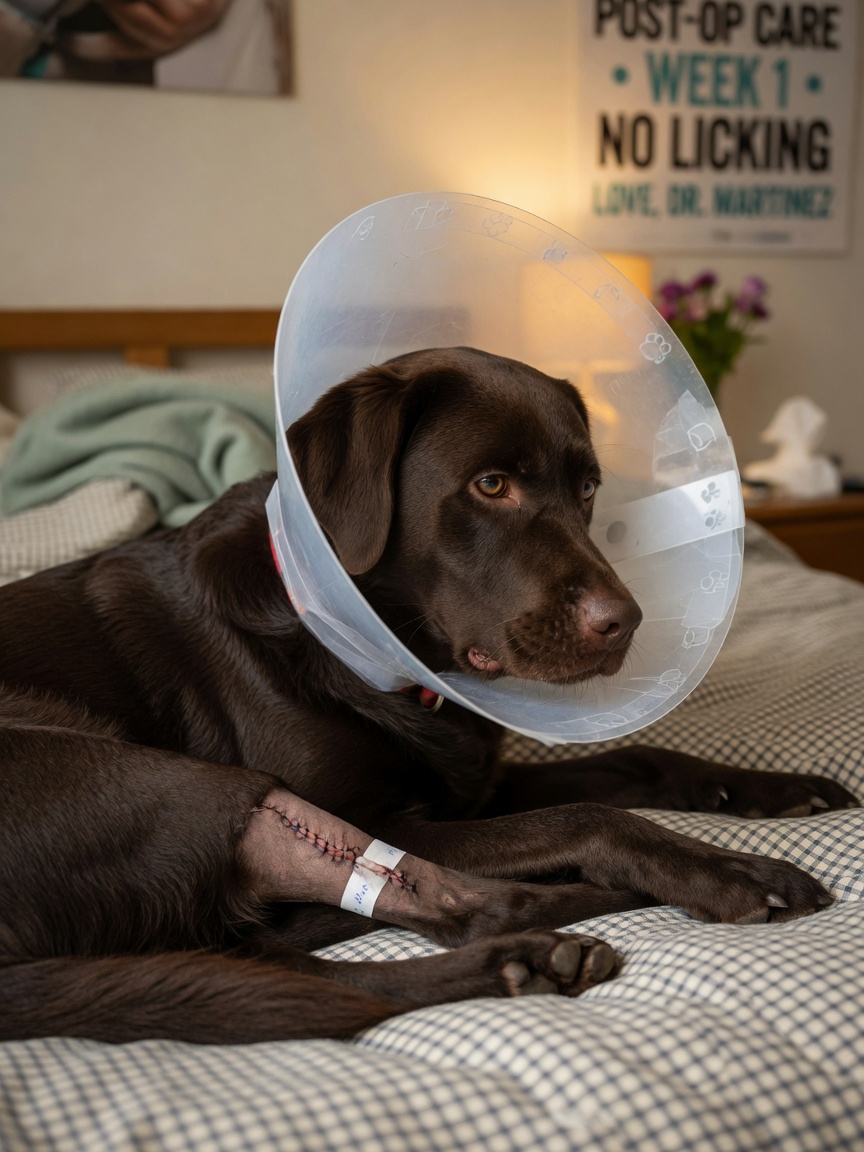
The Elizabethan collar — that wide cone that most dogs find deeply objectionable — is one of the most important tools in post-operative care. Dogs that manage to lick or chew at surgical sites can remove sutures, introduce infection, and cause wound breakdown that results in a second procedure. The cone must be worn continuously, including during sleep, for as long as your vet advises.
If your dog is struggling significantly with a traditional hard plastic cone, discuss alternatives with your vet. Soft foam cones, inflatable collars, and recovery suits can all be effective for certain wound locations, but they must actually prevent access to the wound — not just be more comfortable while still allowing licking.
Pain Management and Medication
Post-operative pain is well managed in modern veterinary practice, and most dogs go home with appropriate analgesia. Administer all prescribed medications exactly as directed and complete the full course even if your dog appears comfortable and well. Stopping pain relief too early can allow break-through pain to set in.
Signs that your dog's pain is not well controlled include: restlessness or inability to settle, vocalisation, guarding or flinching when the surgical area is approached, reluctance to move, or panting without an obvious cause. Contact your vet promptly if you observe these — there are adjustments that can be made.
Never give human pain medication to a dog without veterinary direction. Ibuprofen and paracetamol are both toxic to dogs. Even aspirin, sometimes thought of as benign, can cause serious gastrointestinal bleeding in dogs and should not be given without explicit veterinary approval.
Activity Restriction: The Hardest Part
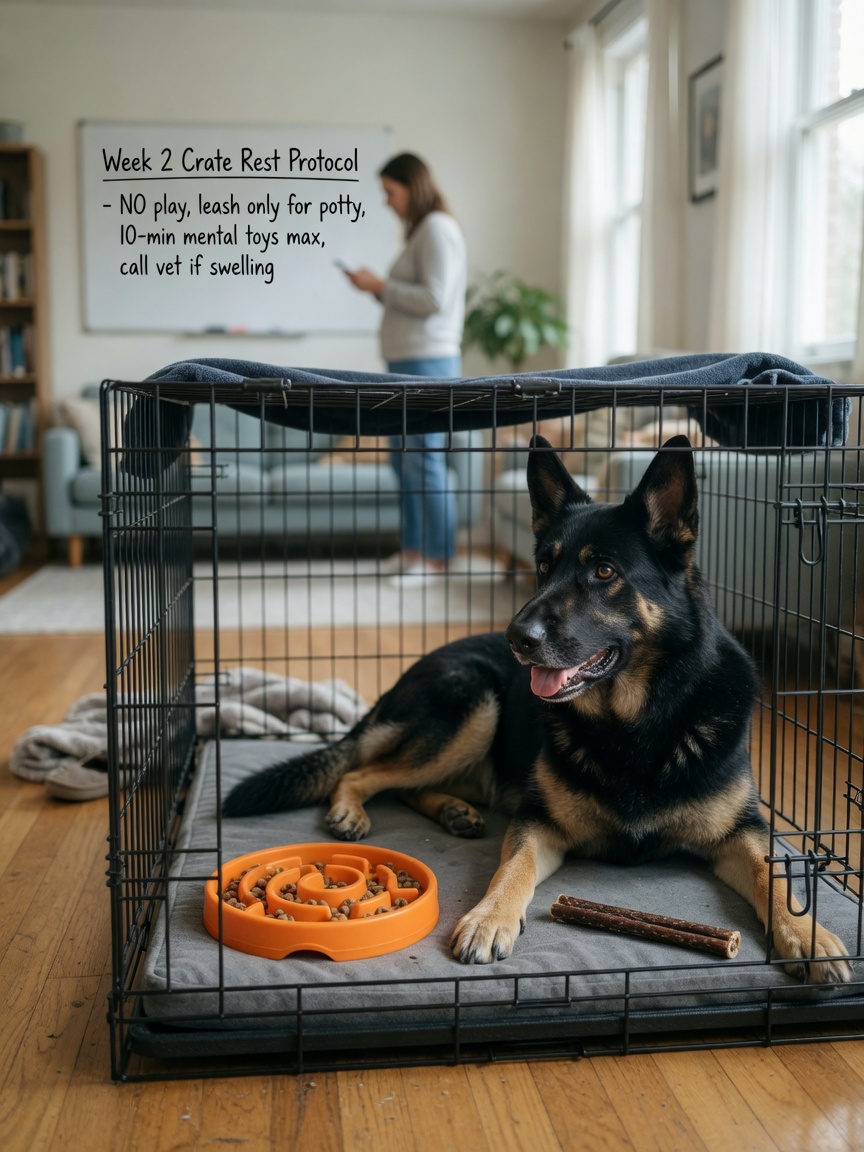
Keeping a dog sufficiently rested after surgery is genuinely one of the greatest challenges of post-operative care. Dogs do not understand that their internal tissues need time to repair, and many bounce back to apparent normality far faster than their healing tissues can withstand.
- Lead walks only for toileting — no off-lead running, jumping, or playing
- No stairs if the procedure involved the abdomen, spine, or hindlimbs
- No interaction with other dogs that could lead to rough play
- Crate rest may be recommended for orthopaedic procedures — this is usually essential, not optional
Mental enrichment can help manage a bored, energetic dog during restricted rest. Lick mats, slow feeders, gentle training exercises that can be done lying down, and chew treats are all valuable tools for keeping the mind occupied without putting strain on the body.
Feeding and Hydration
Appetite is often reduced for 24 to 48 hours after surgery, and this is normal. Offer small, easily digestible meals — plain boiled chicken and rice is a good short-term option if your dog's regular food is not appealing. Ensure fresh water is always available and accessible in the resting area.
Contact your vet if your dog has not eaten anything at all by 48 hours post-surgery, is vomiting repeatedly, or shows signs of abdominal discomfort such as bloating, restlessness, or an inability to find a comfortable position. These can indicate post-operative complications that need prompt assessment.