
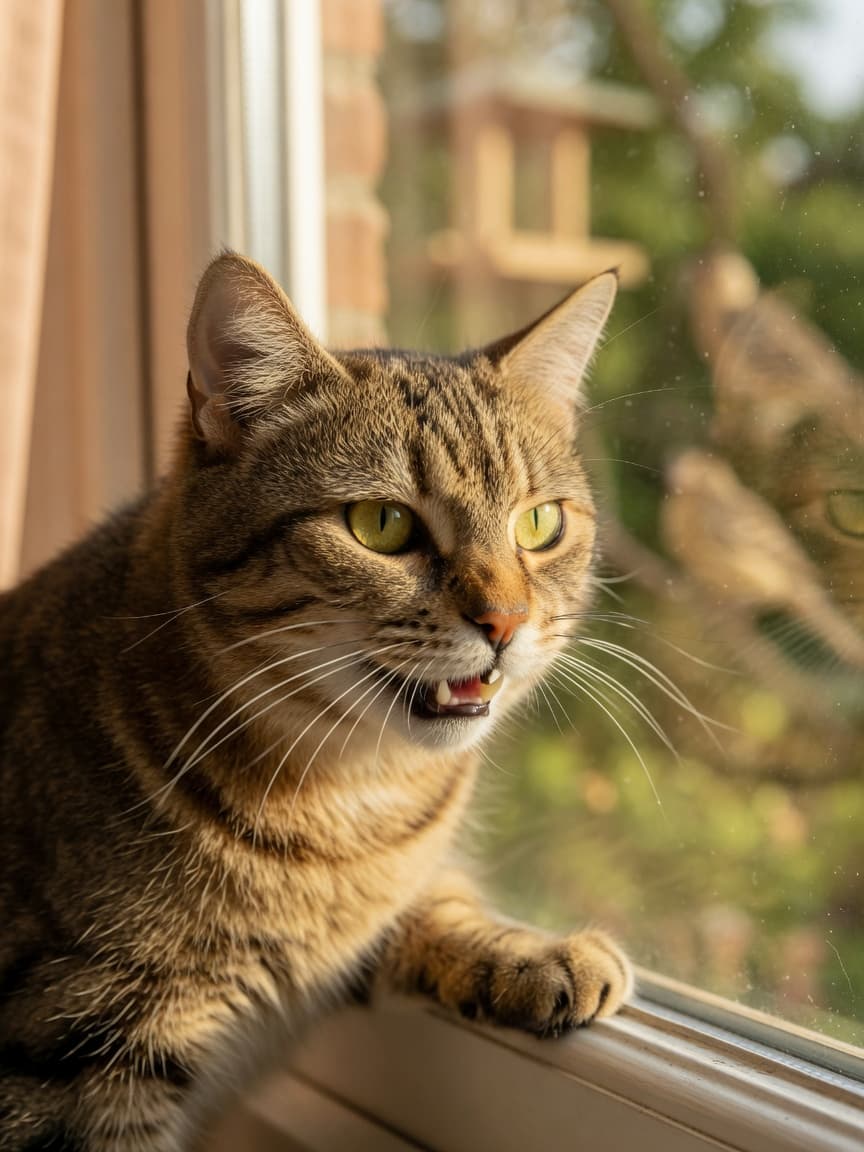
The Sound That Mystifies Cat Owners
You have almost certainly heard it: your cat is sitting at the window, watching a bird on a branch or a pigeon on the pavement, and suddenly they produce a strange, rapid, staccato clicking sound — jaw trembling, teeth chittering, sometimes accompanied by a chirping trill. It sounds almost mechanical, quite unlike anything else in a cat's vocal repertoire. Many owners describe it as a cross between a machine gun and a bird call, and they are not far wrong.
This behaviour, known variously as chattering, chittering, chirping, or jaw-quivering, is one of the most intriguing and widely observed in domestic cats. Despite how common it is, the precise function of the sound remains a subject of genuine scientific debate — and the leading theories are more fascinating than you might expect.
What Sounds Are Involved?
Before exploring the why, it is worth understanding exactly what sounds cats produce in these moments. The feline vocal repertoire is surprisingly broad, and several distinct sounds appear during predatory window-watching sessions.
The Chatter
The chatter is the most recognisable element: a rapid, repetitive clacking or clicking of the teeth, often with the jaw trembling visibly. It is produced when the mouth is held slightly open and the teeth are brought together in quick succession. The sound is quite unlike a meow or a purr — it is sharp and percussive.
The Chirrup and Trill
Alongside the chatter, cats often produce chirruping sounds — short, melodic vocalisations with a rising inflection, somewhere between a meow and a bird call. Trills are similar but tend to be more sustained and musical. These sounds are typically used by mother cats to communicate with kittens, which adds another layer of interest to their appearance during predatory arousal.
The Chirp
A pure chirp is a brief, high-pitched sound that closely mimics the contact calls of small birds. This particular sound is at the heart of one of the most intriguing theories about why cats make these noises at all.
The Leading Theory: Frustrated Predatory Impulse
The most widely cited explanation among animal behaviourists — including prominent figures such as Jackson Galaxy — is that chattering represents a release of frustrated predatory drive. When a cat spots prey that is out of reach, separated by glass or distance, the entire predatory sequence is activated: the cat sees the prey, orients towards it, and the body prepares to stalk, pounce, and deliver the killing bite. But the sequence cannot be completed. The prey is inaccessible.
The chattering may be a form of motor overflow — an involuntary expression of the tension between an activated predatory system and the physical impossibility of acting on it. The jaw movement itself is thought to echo the specific bite cats use to dispatch small prey: a rapid, precise strike delivered to the back of the neck or skull. The muscles involved in this killing bite may be involuntarily activating as the cat watches prey it cannot reach.
This theory is supported by the fact that chattering almost exclusively occurs in the context of observing prey — birds, squirrels, insects, and occasionally toys that trigger the same predatory arousal. It is rarely heard in other contexts.
An Alternative Theory: Prey Mimicry
A more provocative hypothesis emerged from fieldwork conducted in the Amazon rainforest, published in a report by researchers at the Wildlife Conservation Society. Scientists observed wild pied bare-faced tamarins reacting to calls produced by a puma-like cat — calls that appeared to mimic the sounds of the tamarins themselves. The suggestion was that some wild cats may use sound mimicry to lure curious prey closer.
If domestic cats' chirping sounds genuinely resemble bird contact calls — and some acoustic analyses suggest they may — it is possible that this behaviour has a function in attracting prey, even if that function is rarely if ever effective in a domestic setting. This theory remains speculative and contested, but it adds a compelling dimension to the discussion.
Is Chattering Normal Behaviour?
Absolutely. Chattering and chirping at birds, insects, or other prey viewed through a window is a completely normal feline behaviour. It does not indicate that your cat is distressed, bored, or unhealthy. If anything, it reflects a highly alert, engaged, and cognitively stimulated animal responding appropriately to predatory stimuli.
Window perches, bird feeders positioned where an indoor cat can observe them, and window bird boxes are all enrichment tools that make excellent use of this natural predatory interest without requiring the cat to actually hunt. Many cats spend hours contentedly watching and chattering at bird feeders — providing mental stimulation that contributes positively to their welfare.
When Vocalisation Changes Could Signal a Health Issue
Whilst chattering in the context described above is entirely normal, a change in a cat's overall vocalisation patterns — particularly new or unusual sounds — can occasionally point to a health concern that warrants attention.
Dental Pain
Cats with dental disease, broken teeth, or oral pain sometimes produce new jaw movements or sounds. If your cat is making chattering or clicking sounds when not watching prey — particularly during eating, grooming, or at rest — this could suggest dental discomfort. Accompanying signs might include pawing at the mouth, dropping food, or reluctance to eat hard kibble.
Respiratory Issues
Unusual clicking, wheezing, or rattling sounds during breathing — as opposed to during predatory arousal — may indicate upper respiratory infection, asthma, or other airway conditions. These sounds tend to be present during regular breathing rather than specifically triggered by the sight of prey.
If you notice vocalisation that occurs outside of predatory contexts, persists over time, or is accompanied by other changes such as changes in appetite, lethargy, or difficulty breathing, a veterinary consultation is the appropriate next step.
Summary
The chirping and chattering your cat produces when watching birds is a normal, fascinating expression of their predatory instincts — one that likely originates in frustrated hunting drive and may involve elements of prey mimicry. It is one of the behaviours that most clearly reveals the wild predator living within your domestic companion, and understanding it can only deepen your appreciation of what makes cats such remarkable animals.