
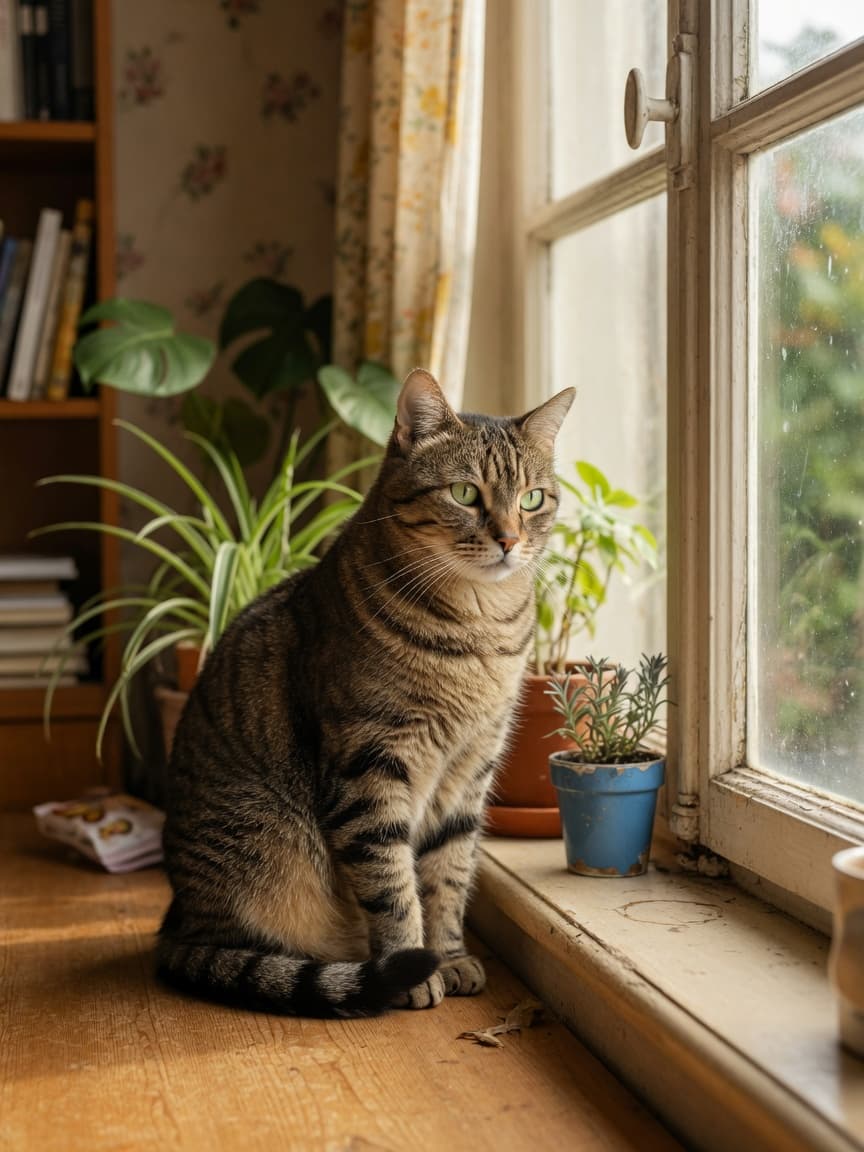
What Constipation Looks Like in Cats
Cats are discreet creatures, and their litter tray habits often go unnoticed until something goes wrong. Constipation — defined as infrequent, difficult, or absent defecation — is more common in cats than many owners realise, and it ranges in severity from a mild, self-resolving episode to a serious condition that can become life-threatening if left untreated.
A healthy cat typically defecates once or twice a day, though some cats naturally go every other day. The stools should be firm but not hard, relatively easy to pass, and free from blood or excessive mucus. Any significant deviation from your cat's personal baseline is worth paying attention to.
Signs That Your Cat May Be Constipated
- Visiting the litter tray frequently but producing little or nothing
- Straining or crouching for prolonged periods without result
- Vocalising during attempts to defecate
- Hard, dry, or pebble-like stools when anything is produced
- Reduced appetite or complete refusal to eat
- Lethargy and general reluctance to move
- A distended or visibly uncomfortable abdomen
- Occasional liquid or mucus-tinged stools passed around a hard blockage — often mistaken for diarrhoea
That last point is particularly worth noting. Liquid seeping around an impacted mass of faeces can look exactly like diarrhoea, leading owners to treat the wrong problem entirely. If your cat appears to be straining rather than having loose stools, constipation is the more likely culprit.
Common Causes of Constipation in Cats
Dehydration is the single most common cause of constipation in cats. Cats evolved as desert animals with a naturally low thirst drive, and many domestic cats do not drink adequate water — especially those fed a predominantly dry food diet. Without sufficient moisture in their diet, the colon reabsorbs water from the faecal matter, resulting in hard, difficult-to-pass stools.
Other common causes include:
- Insufficient dietary fibre to promote normal gut motility
- Hairballs blocking the colon rather than the stomach
- Orthopedic pain that makes squatting uncomfortable, particularly in older cats with arthritis
- Pelvic injuries that have narrowed the pelvic canal
- Neurological conditions affecting gut nerve function
- Megacolon — a chronic condition in which the colon becomes permanently dilated and loses the ability to contract properly
- Stress, particularly around litter tray issues — a dirty tray, a new location, or competition from other cats
- Certain medications, including opioids and some antacids
- Kidney disease and hypercalcaemia, both of which affect hydration and gut function
When to See a Vet vs Manage at Home
Mild constipation of less than 48 hours duration in a cat who is otherwise well can often be addressed at home. Longer-standing constipation, any sign of pain, vomiting alongside straining, or a history of megacolon all require veterinary input before attempting home treatment.
Severe constipation — the medical term is obstipation — occurs when the colon becomes so impacted that the cat cannot pass stool at all. This is a veterinary emergency requiring manual evacuation under anaesthesia. Attempting to resolve severe impaction at home is dangerous and should never be attempted.
Safe Home Options for Mild Constipation
Increasing hydration is always the first step. Switch to wet food or add warm water to your cat's meals. A pet water fountain can significantly increase voluntary water intake in cats who are reluctant drinkers. This simple change alone resolves many mild cases.
Dietary fibre supplementation can help in cats with recurring mild constipation. Pure pumpkin puree — not the sweetened pie filling — is a well-tolerated option that provides soluble fibre without significant caloric load. One to two teaspoons mixed into food is a typical starting amount. Psyllium husk, in very small quantities, can have a similar effect but must always be given with adequate water, otherwise it can make impaction worse.
Lactulose is a synthetic sugar laxative that works by drawing water into the colon, softening stools and stimulating motility. It is widely used in veterinary practice and is considered one of the safer long-term options. It can be obtained from your vet and is typically given mixed into food.
Miralax (polyethylene glycol 3350) is another osmotic laxative that some vets recommend for ongoing management, particularly in cats with megacolon. It should only be used under veterinary guidance, as the correct dose varies by individual cat.
What to Avoid
Not all laxatives suitable for humans or even dogs are safe for cats. Mineral oil is often suggested in older home remedy guides but should be avoided — cats cannot taste it, are likely to inhale it, and it blocks absorption of fat-soluble vitamins with prolonged use. Castor oil and senna are too harsh for cats and can cause severe cramping and diarrhoea.
Enemas are occasionally suggested as a home remedy but carry real risks. Phosphate enemas in particular are toxic to cats and can be rapidly fatal. Even warm water enemas can cause harm if administered incorrectly. Enemas should only be performed by a veterinarian.
Long-Term Prevention
Cats with recurring constipation benefit enormously from a high-moisture diet as their primary nutritional strategy. Regular exercise encourages gut motility — interactive play sessions of fifteen to twenty minutes daily make a tangible difference. Grooming reduces the volume of swallowed hair. Ensuring the litter tray is always clean and in a quiet, accessible location removes one of the most common behavioural barriers to regular defecation.
For older cats, routine blood tests can catch underlying conditions such as kidney disease or hypercalcaemia early, well before constipation becomes entrenched.