
Christmas Plants Toxic to Pets: Poinsettia, Holly, Mistletoe & More
Christmas brings an influx of beautiful plants into our homes — poinsettias from well-meaning visitors, holly wreaths on the door, mistletoe hung in doorways, and amaryllis bulbs flowering on the windowsill. Many of these festive botanicals have been part of winter celebrations for centuries, long before we understood their chemistry. For households with pets, knowing which plants pose a real danger — and which are more nuisance than threat — helps you make informed decisions about what to bring indoors.
Poinsettia: GI Irritant, Not a Death Sentence
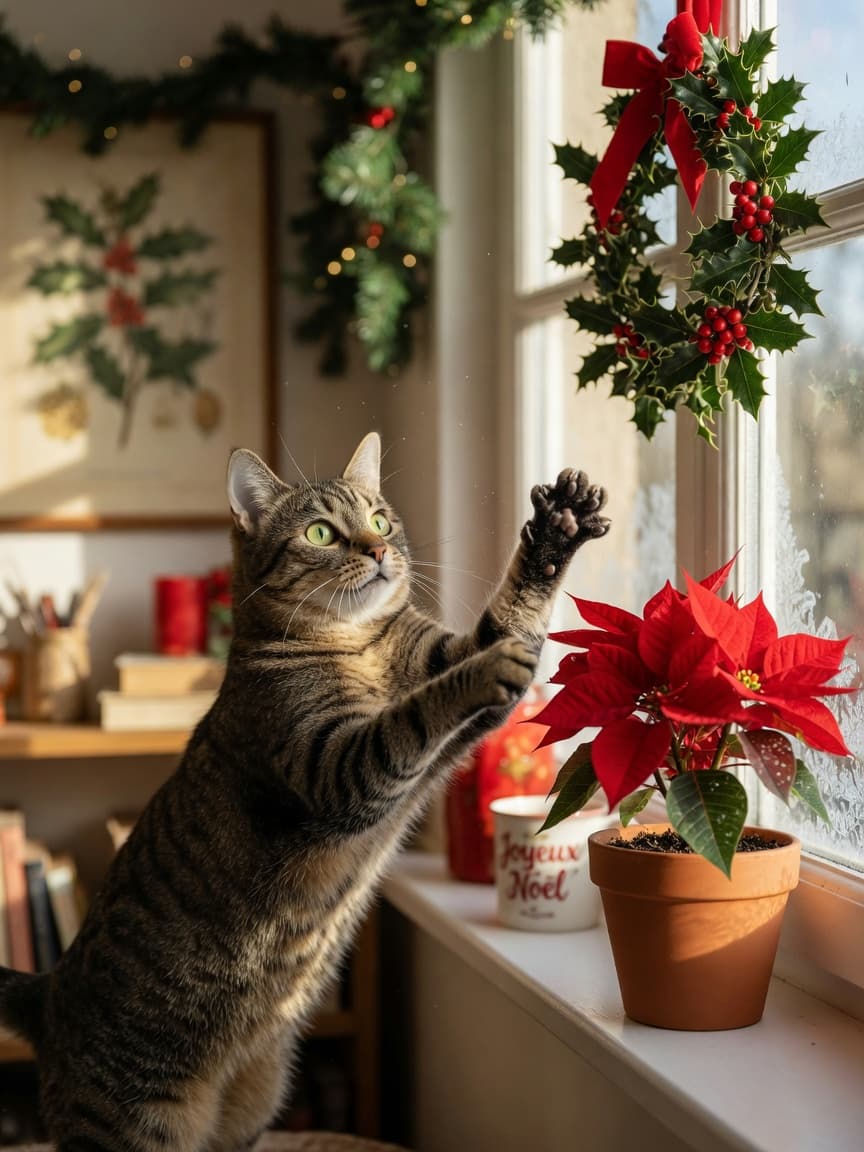
Poinsettia (Euphorbia pulcherrima) has a somewhat exaggerated reputation for toxicity. The milky white latex sap it produces is irritating to mucous membranes and the gastrointestinal tract, but poinsettia is not acutely lethal to dogs or cats. A pet that chews on poinsettia leaves or bracts is likely to experience:
- Drooling and hypersalivation
- Vomiting and mild diarrhoea
- Skin and eye irritation on contact with sap
Symptoms are self-limiting and typically resolve without veterinary intervention. That said, discomfort is real, and significant ingestion in a small animal warrants a vet call. The plant is best kept out of reach as a matter of routine, particularly for cats who may chew on leaves out of curiosity.
Holly: More Toxic Than Its Reputation Suggests
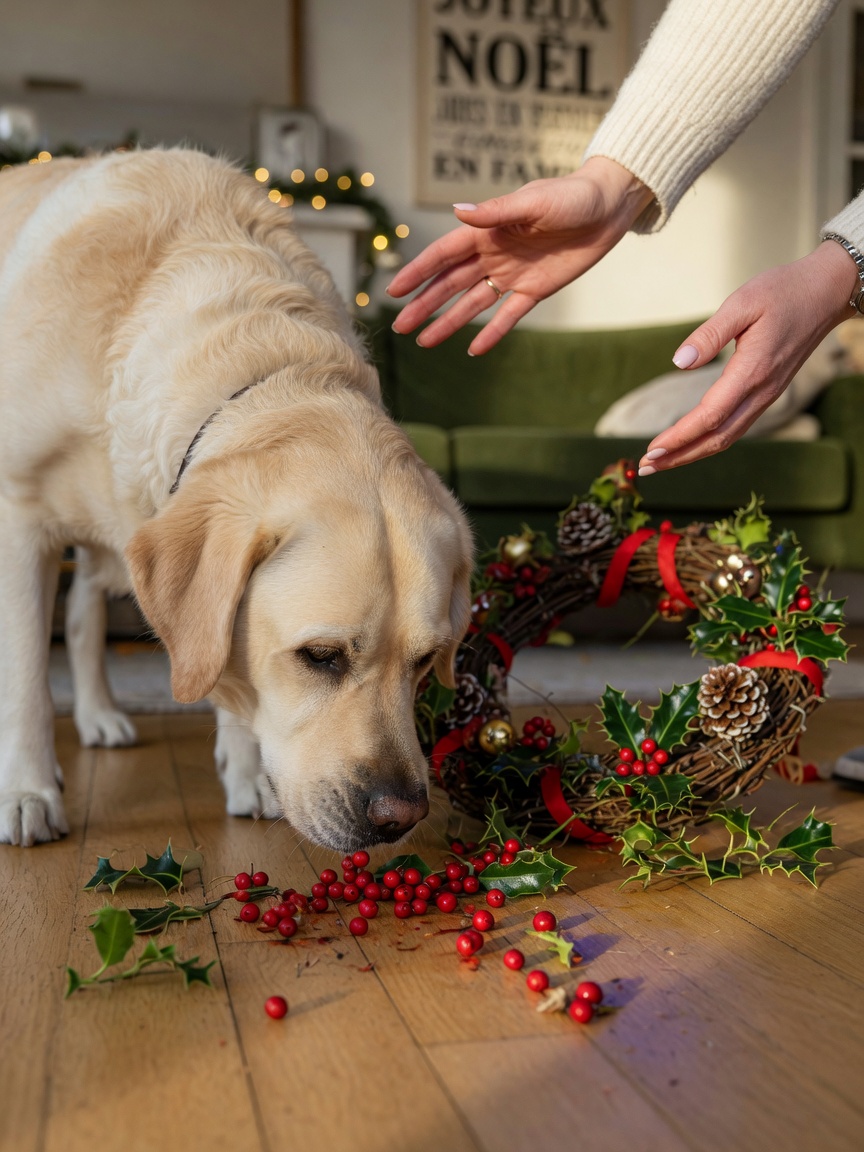
Holly (Ilex aquifolium and related species) is more genuinely hazardous than poinsettia and is frequently underestimated. The berries, leaves, and bark contain saponins, methylxanthines, and cyanogens that cause:
- Vomiting (often forceful and repeated)
- Diarrhoea, sometimes bloody
- Lethargy and depression
- Head-shaking and lip-smacking (signs of oral irritation)
- In larger ingestions: ataxia (incoordination) and more severe systemic effects
Holly berries are particularly attractive to dogs because of their bright red colour and the fact that they fall easily from wreaths and decorations. Keep holly wreaths and arrangements well out of reach, and vacuum fallen berries promptly. Any suspected ingestion of holly berries in a small dog or cat should prompt a veterinary call.
Mistletoe: Cardiovascular Effects in Large Doses
There are two main types commonly seen at Christmas: European mistletoe (Viscum album) and American mistletoe (Phoradendron leucarpum). American mistletoe is considered more toxic than the European variety. Both contain lectins and phoratoxins that affect multiple body systems.
Signs of mistletoe ingestion include gastrointestinal upset (vomiting, diarrhoea), but in larger ingestions — particularly of the berries — cardiovascular effects such as bradycardia (abnormally slow heart rate), hypotension, and in severe cases collapse can occur. Neurological signs including seizures have been reported with significant ingestion.
Traditional mistletoe is hung in doorways, which puts it at a height where berries can fall and be consumed by dogs walking underneath, or accessed by jumping cats. Use artificial mistletoe as a safe alternative, or hang real mistletoe very high and in a mesh bag that prevents berry loss.
Amaryllis: Highly Toxic to Both Cats and Dogs
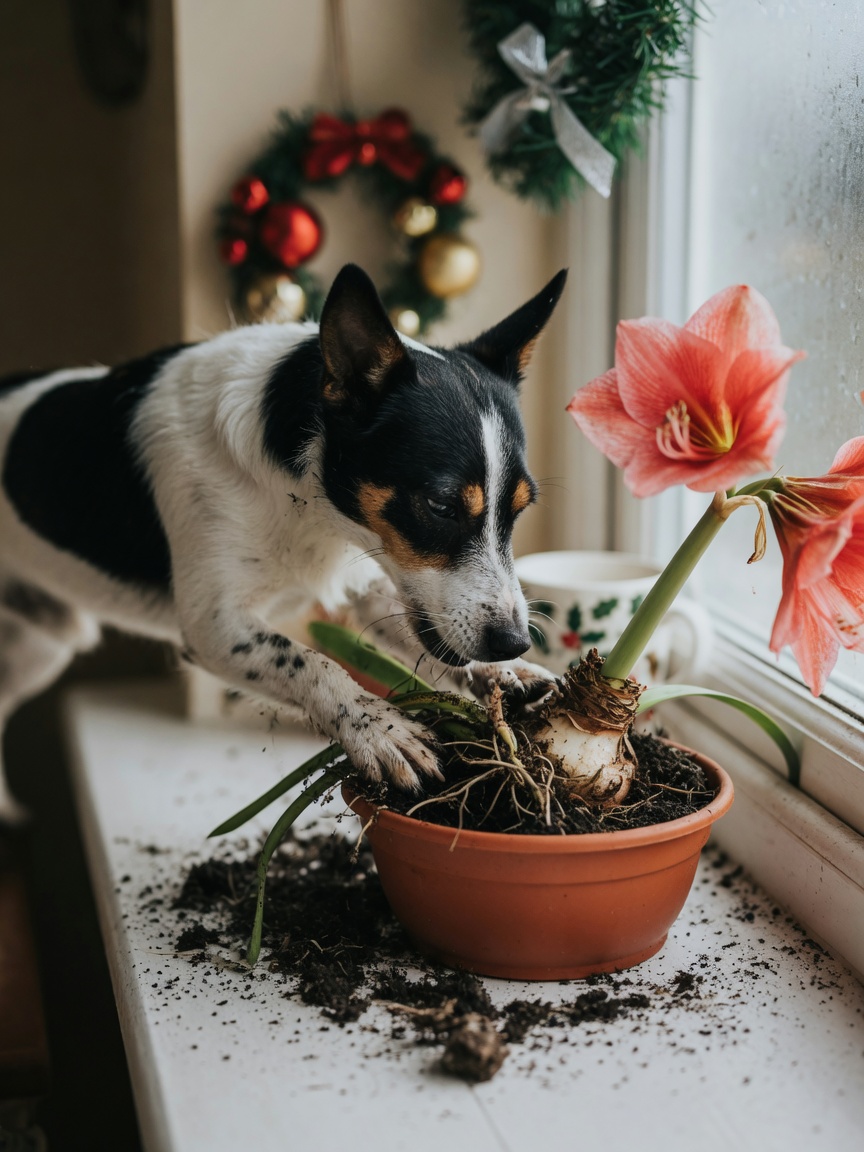
The amaryllis (Hippeastrum spp.) is a popular Christmas houseplant, prized for its dramatic flowering. All parts of the plant contain phenanthridine alkaloids — including lycorine — with the bulb being the most concentrated source of toxin. Ingestion causes:
- Profuse vomiting and diarrhoea
- Hypersalivation and abdominal pain
- Lethargy and depression
- Tremors and, in severe cases, seizures
- Hypotension (low blood pressure)
The bulb is particularly dangerous because dogs may dig it out of its pot. If you grow amaryllis, keep it in a room your pets cannot access, or choose silk alternatives for decoration. Any ingestion should be treated as an emergency, particularly in cats and small dogs.
Christmas Tree Water: Bacteria and Fertilisers
The water in the reservoir at the base of a live Christmas tree is often overlooked as a hazard, but it presents two distinct risks:
Bacteria: Stagnant warm water in a dark reservoir is an ideal bacterial breeding ground. Drinking this water can cause gastrointestinal illness in pets.
Fertilisers and preservatives: Many commercial Christmas tree preservatives and "tree food" products added to the water contain fertiliser salts, fungicides, and sugar compounds that are toxic to pets in sufficient quantity. Even without additives, tree sap leaching into the water makes it irritating to the GI tract.
The solution is simple: cover the tree water reservoir completely with a tree skirt weighted at the edges, a fitted cover, or aluminium foil shaped around the base, so pets cannot access it at all.
Safe Alternatives and Placement Tips
You don't have to give up festive greenery to keep pets safe — you simply need to make thoughtful choices:
- Safe plant alternatives: Christmas cacti (Schlumbergera), orchids, and spider plants are non-toxic options that provide greenery without risk.
- Artificial versions: High-quality silk or plastic holly, mistletoe, and poinsettia look realistic and eliminate the toxicity risk entirely.
- Height and barriers: Place real toxic plants on high shelves, mantelpieces, or in rooms with doors that remain closed. Do not assume "out of reach" for cats — they can access almost any surface.
- Fallen material: Check daily under wreaths, table arrangements, and the Christmas tree for fallen berries, needles, or leaves, and remove them before pets can find them.
Safe festive gifts for your pet: Instead of risky holiday plants, treat your dog or cat to something they'll genuinely enjoy. Browse a wide range of seasonal toys, festive chews, and gift sets for pets at Zooplus — the pet-safe way to celebrate.
For a complete reference of toxic and non-toxic plants, consult the ASPCA Toxic Plant Database and the AVMA Holiday Pet Safety guide.
Key Takeaways
- Poinsettia causes GI irritation but is rarely dangerous — its toxicity is commonly overstated.
- Holly berries are more genuinely toxic and can cause repeated vomiting, diarrhoea, and systemic effects.
- Mistletoe — especially American mistletoe — can cause cardiovascular and neurological effects in larger ingestions.
- Amaryllis is highly toxic to both cats and dogs; the bulb is the most dangerous part.
- Cover the Christmas tree water reservoir — stagnant water and preservative additives are harmful to pets.
- Artificial plant alternatives and careful placement eliminate most plant-related holiday risks.
References
1. Fitzgerald KT, Vera R. "Reported toxicoses in the dog and cat — an overview of common holiday plant toxicoses." Topics in Companion Animal Medicine. PMID: 21147473
2. Poppenga RH. "Risks associated with herbal remedies and plant ingestion in small animals." Veterinary Clinics of North America: Small Animal Practice. PMID: 11721762