

Can Dogs Eat Almonds? (Not Recommended — Here's Why)
Almonds are a beloved snack for humans — packed with healthy fats, protein, and vitamin E. It's natural to wonder whether sharing a few with your dog is harmless. The short answer is: it's better not to. While almonds won't poison your dog the way macadamia nuts or grapes can, they pose a real set of risks that nutritionists and veterinarians consistently advise against.
It's a question many well-meaning pet owners ask. Let me walk you through exactly why almonds are a problematic choice for dogs, what signs to watch for, and what to give your dog instead.
Why Almonds Are Problematic for Dogs

Dogs process fats very differently from humans. Their digestive systems are not designed to handle large quantities of dietary fat in a single sitting, and almonds are approximately 50% fat by weight. Even a small handful of almonds can represent a significant fat load for a medium-sized dog.
Unlike humans, dogs who consume excessive fat in one meal are at risk of developing pancreatitis — an inflammation of the pancreas that can range from mild discomfort to a life-threatening condition. Symptoms of pancreatitis include vomiting, diarrhea, lethargy, hunched posture, and loss of appetite. Smaller breeds and dogs with a history of digestive issues are particularly vulnerable.
Beyond the fat content, almonds present a significant choking hazard. Dogs tend to swallow food without thoroughly chewing it, and the size and shape of an almond is precisely the kind of object that can become lodged in the esophagus, trachea, or intestines. This is especially concerning for small dog breeds.
The Salt and Seasoning Problem
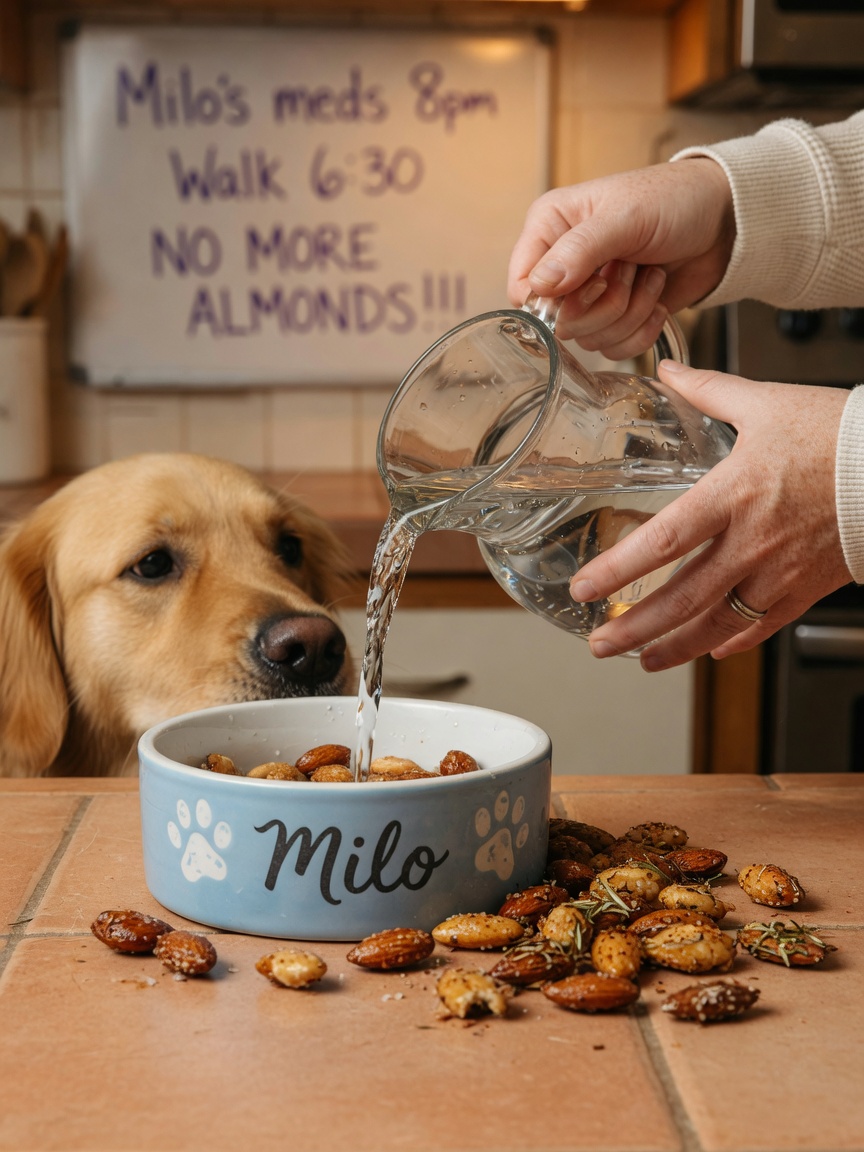
Most almonds sold for human consumption are salted, smoked, honey-roasted, or flavored with spices like garlic or onion powder. These additives make almonds even more dangerous for dogs. Excess sodium can lead to dehydration, excessive thirst, and in serious cases, sodium ion poisoning. Garlic and onion compounds are genuinely toxic to dogs and can cause damage to red blood cells even in small amounts.
Even plain, unsalted almonds carry the fat and choking risks described above, but flavored varieties layer on additional hazards that elevate the danger substantially.
What About Almond Butter or Almond Milk?
Almond butter and almond milk are occasionally presented as safer alternatives. The risk picture is slightly different but still worth scrutiny. Plain, unsweetened almond butter contains the same high fat content as whole almonds. A small lick as an occasional treat is unlikely to cause harm, but regular feeding is not advisable.
Almond milk is heavily diluted, so the fat content per serving is lower — but many commercial almond milks contain added sugars, vanilla flavoring, or xylitol, which is an artificial sweetener that is extremely toxic to dogs. Always check the ingredient label before letting your dog sample any human food product.
Signs Your Dog Has Eaten Too Many Almonds
If your dog manages to get into a bag of almonds, here's what to watch for in the hours that follow:
- Vomiting or retching
- Diarrhea or loose stools
- Lethargy or unusual quietness
- Bloating or a visibly distended abdomen
- Pawing at the mouth or neck (possible obstruction)
- Hunched posture or reluctance to move (possible pancreatitis)
If you observe any of these symptoms, especially in combination, contact your veterinarian. A single almond is unlikely to cause serious harm in a healthy adult dog of average size, but multiple almonds — particularly salted or flavored ones — warrant monitoring and potentially a vet visit.
Better Alternatives to Almonds for Dogs
Your dog doesn't need nuts. There are many healthy, dog-safe snacks that provide similar nutritional benefits without the risks. Blueberries, carrot sticks, and cucumber slices are excellent low-calorie options that most dogs enjoy. If you want to offer something with more protein or fat content similar to nuts, look for treats specifically formulated for dogs.
Browse dog-safe treats on Zooplus — there are excellent options with natural ingredients that satisfy your dog's snack cravings without the digestive risks that come with almonds.Can Puppies Eat Almonds?
No. Puppies are even more vulnerable than adult dogs. Their digestive systems are still developing, they are at higher choking risk due to smaller airways, and their pancreas is less equipped to handle high-fat foods. Keep almonds and all nuts away from puppies entirely.
The Bottom Line on Dogs and Almonds
Almonds occupy a gray zone — they won't immediately poison your dog, but they offer no meaningful nutritional benefit to dogs while carrying real risks: pancreatitis from fat content, choking hazards from their hard texture, and sodium or toxicity risks from flavorings. The responsible choice is to skip almonds entirely and reach for one of the many snacks that are genuinely good for your dog.
Key Takeaways
- Almonds are not toxic to dogs but are not safe either — the risk-to-benefit ratio is poor.
- High fat content in almonds can trigger pancreatitis, a painful and potentially serious condition.
- Hard almond texture poses a choking and intestinal obstruction risk, especially for small breeds.
- Salted, flavored, or honey-roasted almonds carry additional hazards from sodium and toxic additives like garlic powder.
- Choose dog-formulated treats instead — they are safer, better-tasting for dogs, and nutritionally appropriate.
References
- Xenoulis PG, Steiner JM. "Lipid metabolism and hyperlipidemia in dogs." The Veterinary Journal. 2010;183(1):12-21. PMID: 19028128
- Watson P. "Pancreatitis in dogs and cats: definitions and pathophysiology." Journal of Small Animal Practice. 2015;56(1):3-12. PMID: 25586990
Written by Julia Wrenfield, Pet Wellness Researcher