
- Birds hide illness until very advanced — symptoms appearing = urgent vet visit
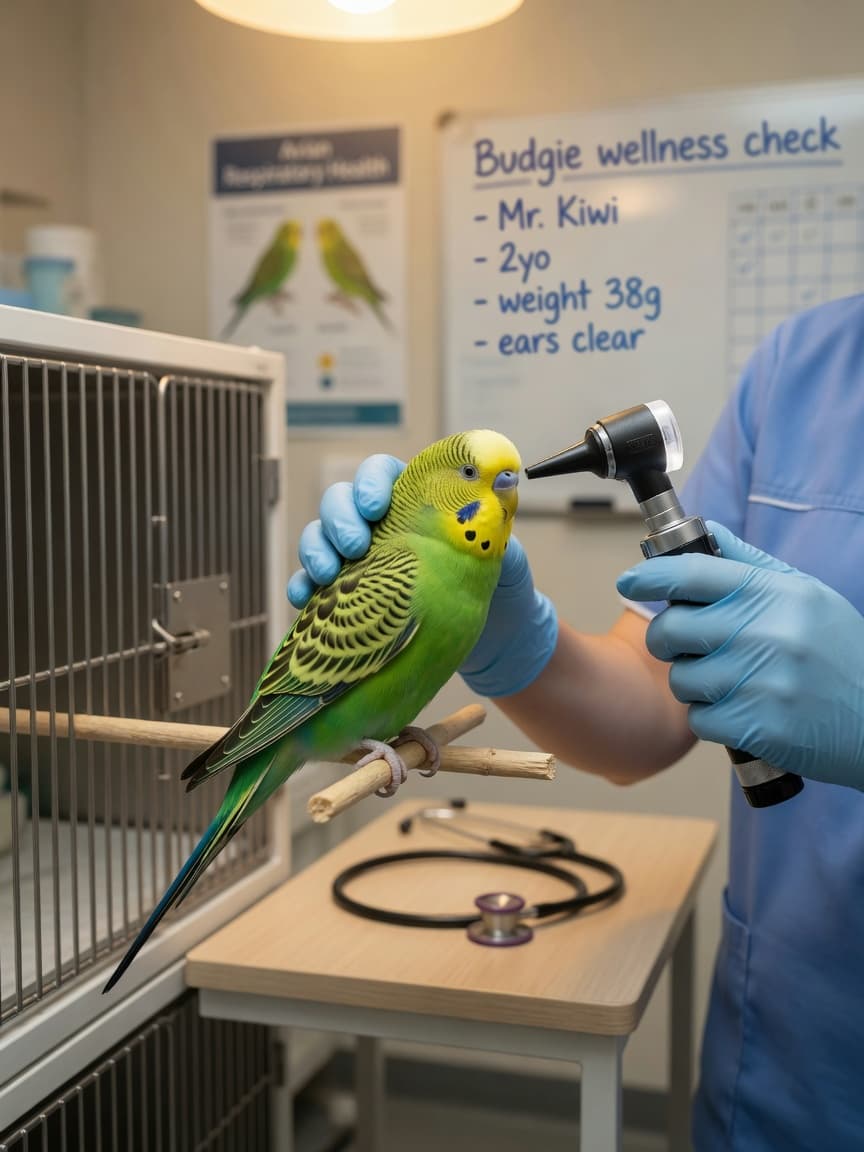
- Requires an avian/exotic animal specialist vet, not a regular vet
- Diet: pellets preferred over pure seed mix; add fresh vegetables
- Toxic foods: avocado, onion, garlic, chocolate, caffeine, xylitol
- Environmental hazard: Teflon/PTFE fumes can kill birds within minutes
- Common diseases: psittacosis, avian polyomavirus, scaly face mite, French moult
Budgerigar Health Guide: Common Diseases & Diet
By Julia Wrenfield, Pet Wellness Researcher
Budgerigars — commonly called budgies or parakeets — are among the most popular pet birds in the world, and for good reason. They are intelligent, social, surprisingly complex in their communication, and genuinely affectionate with attentive owners. But budgies are also fragile in ways that catch many first-time bird owners off guard. Understanding their health vulnerabilities, what diseases look like (and crucially, how late they typically appear), and how to feed them correctly can be the difference between a budgie that lives 8–12 years and one that dies prematurely from preventable causes.
Budgerigars and all pet birds require a veterinarian with specific avian medicine training. Avian anatomy, physiology, and pharmacology are fundamentally different from mammals. Drug dosages that are safe in dogs can be lethal in birds. Many common small animal vets do not have the training, equipment, or drug stocks to treat birds safely. Find an avian or exotic specialist before your bird becomes ill — emergency searches for an avian vet in a crisis are stressful and may cost your bird its life.
The Critical Problem: Birds Hide Illness Until It's Advanced
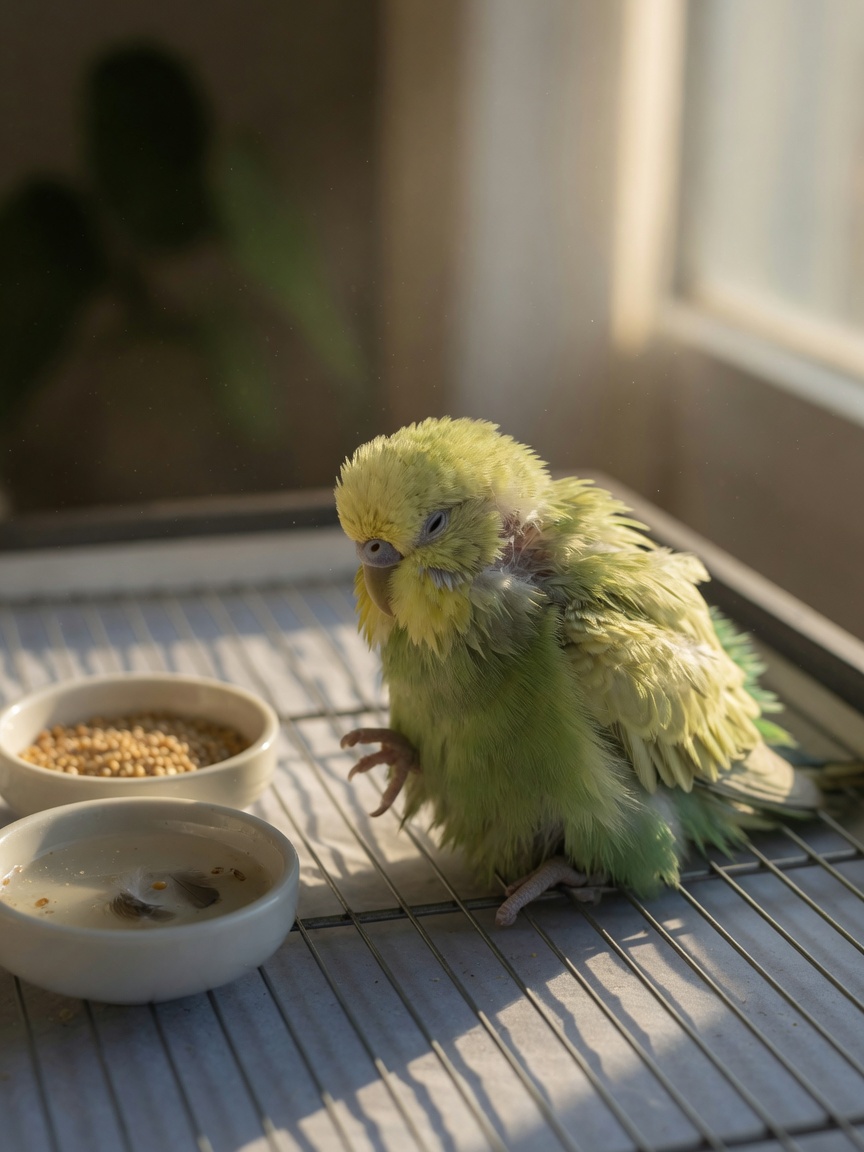
This is the most important thing to understand about bird health, and it is not intuitive. In the wild, a visibly sick bird is a bird that predators target. As a result, prey species including budgerigars have evolved to suppress outward signs of illness until they physically cannot do so any longer. By the time a budgie is sitting fluffed up on the cage floor, lethargic, with closed or partially closed eyes — what most owners might call "looking a little under the weather" — the bird has typically been ill for a significant time and is in a serious or critical state.
This means that any visible sign of illness in a budgie is an urgent signal, not a "wait and see" situation. A bird that looks sick is a bird that needs veterinary attention today, not in a few days. Do not wait overnight to see if it improves. An avian vet who has capacity that day should be your first call.
Common Diseases in Budgerigars
Psittacosis (Chlamydiosis / Parrot Fever)
Caused by the intracellular bacterium Chlamydia psittaci, psittacosis is one of the most important budgie diseases because it is also a zoonosis — it can infect humans. In budgies, symptoms include respiratory signs (nasal discharge, labored breathing, tail bobbing with each breath), conjunctivitis, lethargy, and green or yellow droppings. Many budgies are asymptomatic carriers. Treatment with doxycycline is effective but requires a full course of 45 days. Importantly, psittacosis is a legally notifiable disease in many countries.
Avian Polyomavirus
A viral disease particularly devastating to young budgies and chicks in aviary settings. Infected juvenile birds may develop abnormal feathering, abdominal distension, hemorrhage under the skin, and death — often sudden. Older birds may become carriers with minimal symptoms. There is no specific treatment; supportive care only. Vaccination is available in some countries and is recommended for aviary birds.
French Moult
Caused by avian polyomavirus in young fledglings, French moult results in abnormal loss of the primary flight and tail feathers shortly after they emerge. Affected birds cannot fly — they are called "runners" or "creepers." Mildly affected birds may regrow some feathers over time; severely affected birds remain flightless permanently. There is no treatment beyond supportive care and good nutrition.
Scaly Face (Knemidokoptes pilae)
A parasitic mite infestation causing the characteristic crusty, honeycomb-patterned encrustations around the beak, cere (the area above the beak), eye region, legs, and feet. If left untreated, the mite burrows deeper and can cause permanent beak deformity. Treatment is straightforward — ivermectin or moxidectin applied by an avian vet — and when caught early, prognosis is excellent. The lesions are unmistakable once you know what to look for: a rough, scaly, white-grey crust replacing the smooth skin.
Recognizing Signs of Illness: What to Watch For
Given that budgies hide illness, you need to know what "not quite right" looks like before it reaches crisis:
- Fluffed feathers outside of sleep or extreme cold — a budgie that sits fluffed during the day is not well
- Sitting on the cage floor — healthy budgies perch; a bird on the floor is usually too weak to perch normally
- Labored or audible breathing — tail bobbing with each breath, open-beak breathing, clicking or wheezing sounds
- Discharge from nostrils, eyes, or around the cere
- Abnormal droppings — green, yellow, or watery dropping components (understanding normal budgie droppings takes some observation of your healthy bird)
- Weight loss — difficult to see under feathers; regular gentle handling and weighting with a kitchen scale is the only reliable way to catch this early
- Changes in vocalization — a bird that suddenly becomes quiet when it is normally chatty
- Regurgitation that is not normal pair-bonding behavior — budgies do regurgitate as a social behavior, but uncontrolled or frequent regurgitation is abnormal
Diet: Why Seed-Only Is Not Enough
Seed mixes are universally available and most budgies eat them voraciously — which creates a false sense of adequacy. The problem is that seeds, particularly the high-fat seeds budgies prefer (millet, sunflower), are nutritionally incomplete. A budgie eating seed only is receiving excessive fat, insufficient protein for molting and feather quality, inadequate vitamins A and D, and minimal fiber-bound nutrients. Over years, seed-only diets lead to fatty liver disease, obesity, and immune compromise.
Pellets are the nutritionally superior base for a budgie's diet. Specially formulated avian pellets provide balanced nutrients without the ability to selectively eat only the high-fat favorite seeds. Transitioning a seed-addicted budgie to pellets takes patience — many birds resist the unfamiliar texture initially. Gradual introduction mixed with familiar seeds, combined with hunger motivation, usually succeeds over 2–4 weeks.
Safe Foods for Budgies
Fresh vegetables and some fruit are valuable supplements to the pellet base:
- Leafy greens: spinach (sparingly), rocket, kale, romaine lettuce, endive, dandelion leaves
- Carrot: grated or in small sticks; high beta-carotene; most budgies enjoy it
- Broccoli: florets and stems, rich in vitamin C and calcium
- Bell pepper: excellent vitamin C source; red and orange varieties often preferred
- Apple: always remove seeds (cyanogenic compounds); skin is fine after washing
- Cucumber and courgette: hydrating, gentle on the system
Foods That Are Toxic to Budgies
The following must never be offered under any circumstances:
- Avocado — persin is rapidly fatal to birds; even small amounts can kill
- Onion and garlic — cause hemolytic anemia and digestive burns
- Chocolate and caffeine — theobromine and caffeine are both cardiotoxic to birds
- Xylitol — found in sugar-free gum, some nut butters, and baked goods; acutely toxic to birds and many other animals
- Alcohol — even trace amounts are toxic
- Apple seeds, cherry pits, peach stones — cyanogenic glycosides
- Rhubarb — oxalic acid toxicity
- Raw dried beans — contain hemagglutinin, toxic when uncooked
Environmental Hazards: What Most Owners Don't Know
The home environment contains dangers for budgies that owners may not have encountered elsewhere. The most lethal is polytetrafluoroethylene (PTFE), commonly known as Teflon, the non-stick coating on frying pans and other cookware. When overheated (above approximately 260°C / 500°F), Teflon releases fumes that are invisible and odorless to humans but acutely lethal to birds. A bird in the same building as an overheating non-stick pan can die within minutes. Never cook with Teflon-coated pans in a home where birds are kept, or ensure the bird's room is completely separated by closed doors and excellent ventilation.
Other environmental hazards include scented candles, air fresheners (particularly aerosol types), cigarette smoke, incense, and cleaning product fumes. Birds have an extremely efficient respiratory system that, while excellent for their high metabolic demands, makes them extraordinarily vulnerable to airborne toxins. Many birds have died from plug-in air fresheners placed near their cage by well-meaning owners.
Find quality budgie pellets, seed mixes, and safe treats at Zooplus →
Vet-recommended food options for healthy, long-lived budgerigars.
Key Takeaways
- Birds hide illness instinctively — by the time symptoms are visible, the condition is usually advanced. Any sign of illness requires same-day vet contact.
- An avian specialist vet is essential — regular vets may not have the training to treat birds safely.
- Common diseases include psittacosis (zoonotic), avian polyomavirus, French moult, and scaly face mite.
- Seed-only diets are nutritionally inadequate — pellets should form the dietary base, supplemented with fresh vegetables.
- Toxic foods: avocado, onion, garlic, chocolate, caffeine, xylitol — never offer these.
- Teflon/PTFE fumes from overheated non-stick pans kill birds within minutes — never use non-stick cookware in a home with birds.
- Air fresheners, scented candles, and aerosol sprays can also be lethal — keep the bird's environment air-clean.
References
- Ritchie BW, Harrison GJ, Harrison LR. Avian Medicine: Principles and Application. Wingers Publishing; 1994. PMID context: foundational avian medicine reference covering psittacosis, polyomavirus, parasitic infections, and nutritional disease in Melopsittacus undulatus and related Psittaciformes.
- Jaensch SM, Cullen L, Raidal SR. "Psittacosis in cagebirds." Aust Vet J. 1998;76(12):811–816. PMID: 9872222. [Clinical and epidemiological data on Chlamydia psittaci prevalence and presentation in captive budgerigars and other psittacine birds in Australia.]