
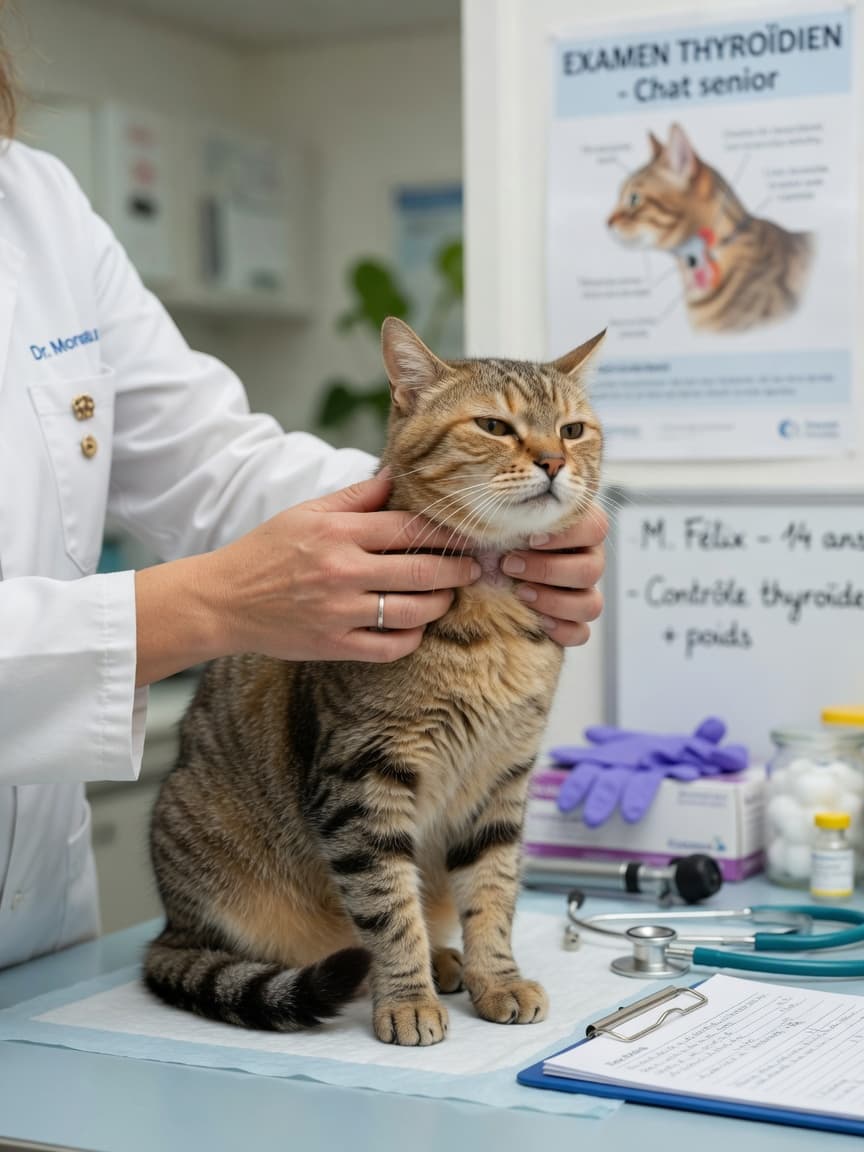
What Is Hyperthyroidism in Cats?
Hyperthyroidism is caused by the overproduction of thyroid hormones, principally thyroxine (T4) and triiodothyronine (T3), from an enlarged thyroid gland. It is the most common endocrine disorder in older cats, affecting an estimated one in ten cats over the age of ten years in the United Kingdom. Despite its prevalence, the underlying cause remains poorly understood, though dietary factors, environmental exposures (including certain chemicals in cat food tins and fire retardants in carpets and furniture), and genetic predisposition are all thought to play a role.
In approximately 70% of cases, both thyroid lobes are affected — a condition known as bilateral thyroid adenoma. In the remaining cases, only one lobe is abnormal (unilateral disease). Thyroid carcinoma — a malignant form — accounts for fewer than 2% of feline hyperthyroidism cases, making this predominantly a benign, albeit complex, condition.
Recognising the Clinical Signs
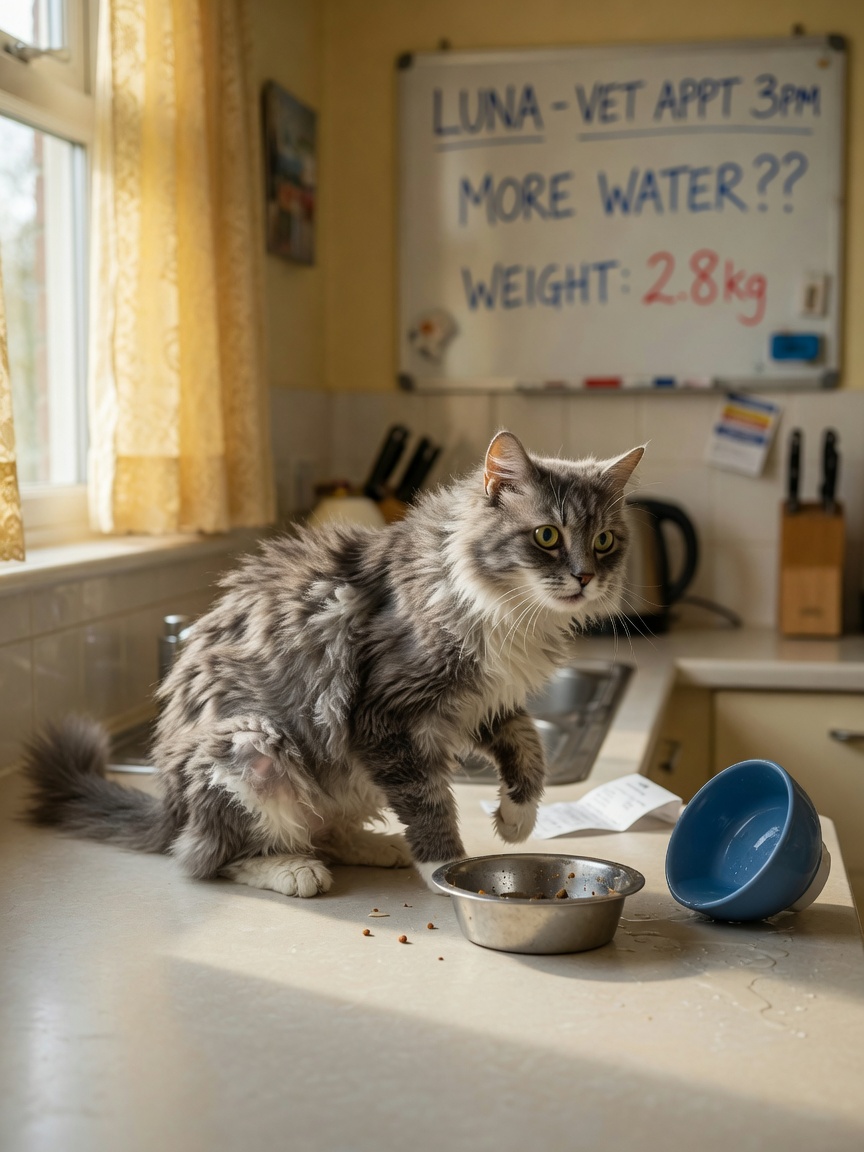
The clinical signs of hyperthyroidism in cats are driven by the systemic effects of excess thyroid hormone, which accelerates metabolism across every organ system. Signs typically develop gradually over many months and are easily mistaken for normal ageing. Classic signs include:
- Weight loss despite a ravenous or increased appetite — this combination is one of the hallmark findings and should always prompt thyroid investigation in an older cat
- Hyperactivity, restlessness, or seeming "younger" or more active than expected for the cat's age
- Vomiting, often shortly after eating
- Diarrhoea, sometimes with increased faecal volume
- Increased thirst and urination (polydipsia and polyuria)
- A poor, unkempt coat or increased grooming-related hair loss
- Vocalisation, particularly at night
On physical examination, the vet may detect a palpable mass in the neck, representing the enlarged thyroid lobe or lobes. Cardiac changes are extremely common and clinically significant: excess thyroid hormone has a direct stimulatory effect on the heart, leading to tachycardia (elevated heart rate, often above 240 beats per minute), a systolic heart murmur, and over time, hypertrophic cardiomyopathy — thickening of the heart muscle wall. These cardiac changes can be life-threatening if the condition remains untreated.
T4 as the First Diagnostic Test
The first-line test for suspected hyperthyroidism is a total T4 measurement from a blood sample. In the majority of hyperthyroid cats, the total T4 is clearly elevated above the laboratory reference range, and in these cases the diagnosis is essentially confirmed when the clinical picture is consistent.
However, a normal T4 result does not reliably rule out hyperthyroidism in cats with compatible clinical signs. This is one of the most important diagnostic pitfalls in feline endocrinology. Total T4 levels in cats with hyperthyroidism can fluctuate significantly throughout the day, temporarily falling into the normal range even in truly hyperthyroid animals. A single blood sample taken at the wrong time can therefore produce a falsely reassuring result.
Additionally, cats with concurrent non-thyroidal illness — such as chronic kidney disease, inflammatory bowel disease, or neoplasia — can have their T4 levels suppressed by those diseases, masking an underlying hyperthyroid state. This phenomenon means that in cats with multiple concurrent conditions, normal T4 does not provide the same reassurance it might in an otherwise healthy animal.
Free T4 and Confirmatory Testing
When total T4 is normal but clinical suspicion remains high, free T4 measured by equilibrium dialysis (fT4ed) is the most useful next step. Free T4 represents the biologically active, unbound fraction of circulating thyroxine. Because it is not influenced by protein binding abnormalities or suppressed as readily by concurrent illness, free T4 is more sensitive for detecting hyperthyroidism than total T4, though it is also slightly less specific.
The combination of a high-normal total T4 and an elevated free T4, in a cat with compatible symptoms, is strongly supportive of hyperthyroidism. Free T4 should always be interpreted alongside total T4 and clinical signs rather than in isolation.
Repeating a total T4 measurement after two to four weeks in a mildly symptomatic cat is another reasonable approach, as the fluctuating nature of T4 in early hyperthyroidism means a subsequent sample is more likely to capture an elevated value.
Thyroid Scintigraphy (Thyroid Scan)
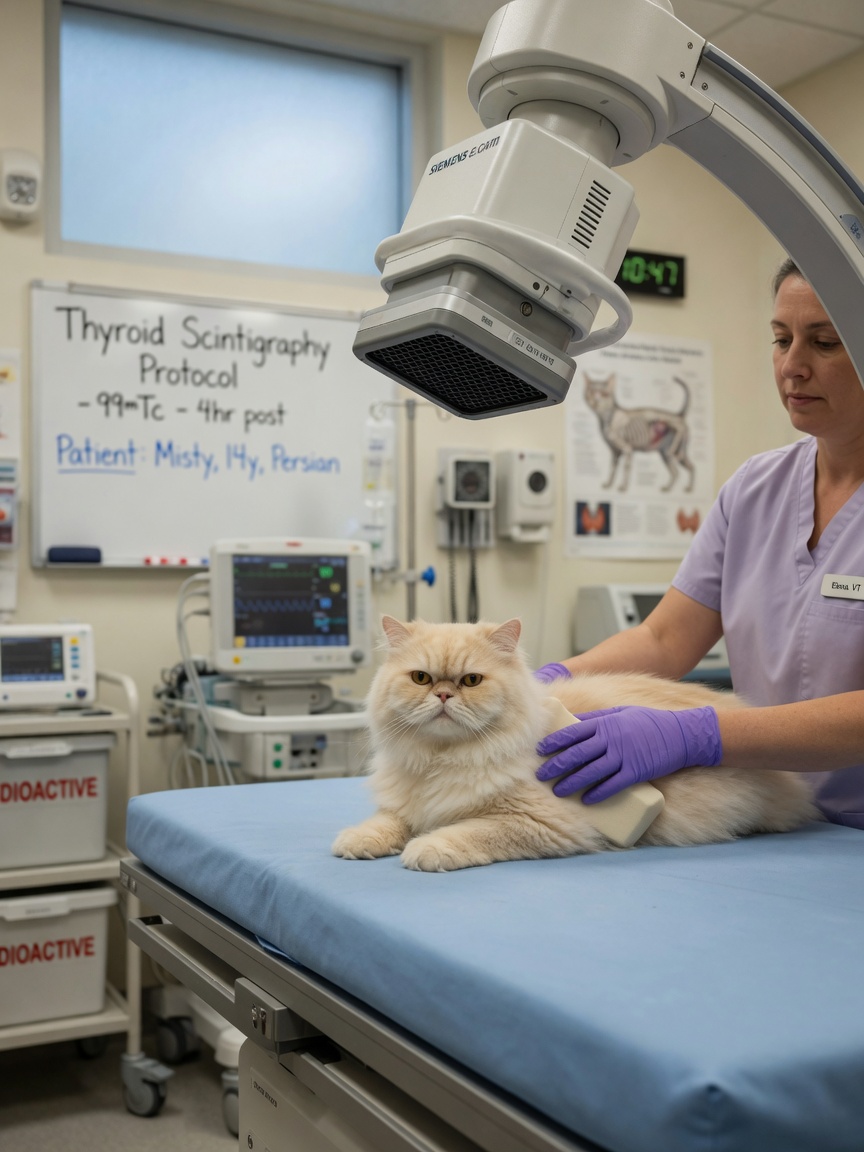
For complex or ambiguous cases, thyroid scintigraphy — a nuclear medicine imaging technique — provides the most detailed anatomical and functional information about the thyroid gland. A small amount of radioactive technetium (pertechnetate) is administered intravenously and taken up by thyroid tissue. A gamma camera then images the distribution of radioactivity in the neck and chest.
Scintigraphy is particularly valuable for:
- Confirming the presence and location of abnormal thyroid tissue
- Identifying ectopic thyroid tissue in the chest, which can cause persistent hyperthyroidism if overlooked during surgical thyroidectomy
- Distinguishing unilateral from bilateral disease before surgery
- Detecting thyroid carcinoma based on aberrant tracer distribution
Thyroid scans are only available at specialist referral centres, but they are considered the gold standard for pre-treatment planning in cats where the anatomy or extent of disease is uncertain.
The Complicating Role of Concurrent CKD
Chronic kidney disease (CKD) and hyperthyroidism frequently coexist in older cats, and their interaction creates one of the most challenging clinical scenarios in feline medicine. Hyperthyroidism artificially elevates the glomerular filtration rate (GFR) — essentially masking underlying kidney dysfunction by making the kidneys appear to work better than they actually are. Blood creatinine, a marker of kidney function, may be normal or even low in a hyperthyroid cat with significant underlying CKD.
When hyperthyroidism is treated and thyroid hormone levels fall, GFR decreases and the true state of kidney function is unmasked. In some cats, treating hyperthyroidism reveals severe, previously hidden CKD. For this reason, it is recommended that when possible, a reversible form of hyperthyroid treatment — such as medical management with methimazole or carbimazole — is trialled first. Kidney function should be reassessed after four to six weeks of treatment before committing to a permanent option such as radioactive iodine therapy or surgery.
Next Steps After Diagnosis
Once hyperthyroidism is confirmed, treatment options include daily oral medication (methimazole or carbimazole), a prescription low-iodine diet, surgical thyroidectomy, or radioactive iodine therapy. Each approach has distinct advantages and limitations, and the right choice depends on the cat's overall health, the owner's circumstances, and whether concurrent disease is present. A discussion with your vet or a veterinary internal medicine specialist will help identify the most appropriate path forward for your individual cat.