
Bengal Cat Health: Genetic Conditions, Diet and Activity Needs
Bengal cats are unlike almost any other domestic breed in terms of energy, intelligence and physical capability. Descended from crosses between domestic cats and Asian leopard cats, they retain a wilder athleticism that sets them apart in both appearance and behaviour. This hybrid heritage influences not only their temperament but also their health profile, and understanding both is essential for anyone sharing their home with one.
Progressive Retinal Atrophy in Bengals
One of the most significant genetic health concerns in Bengal cats is a specific form of progressive retinal atrophy known as Bengal PRA or PRA-b. This is caused by a mutation distinct from those found in other breeds and leads to degeneration of the photoreceptors in the retina. Affected cats typically begin losing their vision in early adulthood, with many becoming severely visually impaired or completely blind by the time they are a few years old.
A DNA test is available for the Bengal-specific PRA mutation, and ethical breeders routinely screen all breeding cats. Cats with two copies of the mutation (homozygous) will develop the condition; those with one copy (carriers) generally do not, but can produce affected kittens if bred with another carrier. When purchasing a Bengal kitten, always ask to see documentation confirming that both parents tested clear or are carriers at most — never two carriers bred together.
Signs of Vision Loss to Watch For
- Hesitation or reluctance to jump in low-light conditions
- Bumping into furniture at dusk or in dim rooms
- Enlarged pupils that respond slowly to light changes
- Increased caution when navigating familiar spaces
- Changes in behaviour, including anxiety or clinginess
There is currently no treatment to halt or reverse PRA. However, cats that lose their vision gradually often adapt remarkably well, particularly when their environment remains consistent and predictable.
Hypertrophic Cardiomyopathy
Like many pedigree breeds, Bengals can develop hypertrophic cardiomyopathy (HCM), in which the heart muscle thickens and cardiac function is compromised. The exact genetic basis of HCM in Bengals is not as well characterised as in Maine Coons, meaning there is no reliable breed-specific genetic test available at present. Screening via echocardiogram remains the most practical approach.
Annual cardiac assessments from around two years of age are advisable, particularly if there is any family history of HCM in the breeding line. Early detection allows for medical management that can slow progression and improve quality of life significantly.
Tritrichomonas Foetus
Bengal cats, like other pedigree breeds frequently kept in cattery environments, can be susceptible to infection with Tritrichomonas foetus, a protozoal organism that colonises the large intestine and causes chronic, foul-smelling diarrhoea. It is spread via faecal-oral transmission and can persist in catteries where multiple cats share litter trays.
Many cats with T. foetus infection will clear the organism naturally over time, but this can take months or years, during which the diarrhoea significantly affects quality of life. A specific antibiotic, ronidazole, is used to treat the infection, though this is an off-licence use of the drug and requires careful veterinary supervision. Diagnosis is confirmed through PCR testing of a faecal sample.
Diet: Matching Nutrition to a High-Energy Breed
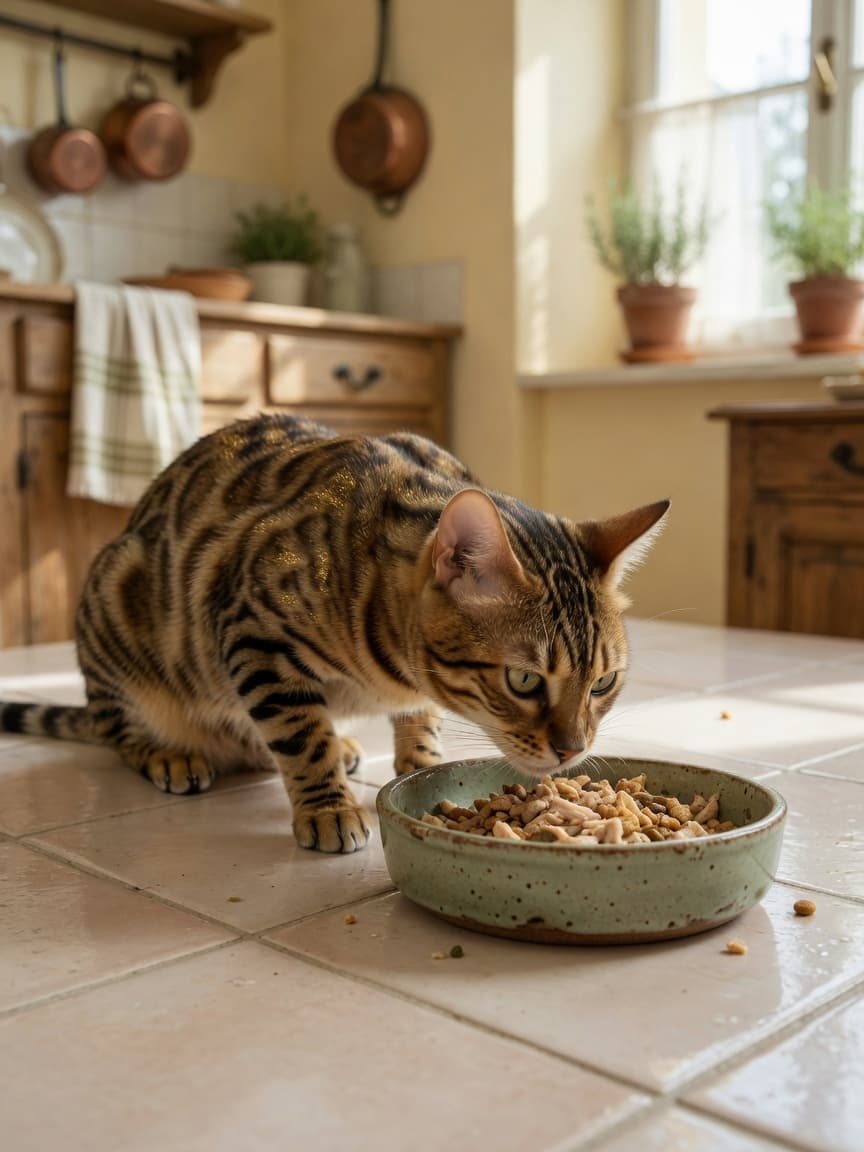
Bengals are metabolically active cats that tend to maintain lean body condition more readily than sedentary breeds. Their nutritional needs reflect this. A high-protein diet based on quality animal sources is appropriate for Bengals, and many owners and nutritionists find that these cats thrive on a raw or minimally processed diet. While raw feeding carries its own hygiene and nutritional balance considerations, there is a genuine rationale for providing Bengals with a diet closer to what their hybrid ancestry evolved on.
Key Dietary Principles for Bengals
- Prioritise named animal proteins as the primary ingredient — chicken, turkey, rabbit, or fish
- Keep carbohydrate levels low; Bengals, like all cats, are obligate carnivores
- Ensure adequate taurine, which is essential for cardiac and retinal health in cats
- Provide fresh water at all times; Bengals often enjoy drinking from running water sources
- Avoid artificial additives, fillers, and low-quality protein sources where possible
If you choose to feed a raw diet, work with a veterinary nutritionist to ensure the recipe is properly balanced. Imbalanced raw diets can cause serious deficiencies or toxicities over time despite appearing natural and wholesome.
Activity Needs: This is Not a Sedentary Cat
Bengals require substantial physical and mental stimulation to remain healthy and well-behaved. A Bengal that is bored or under-stimulated will find its own entertainment, often in ways that are destructive or disruptive. These cats are capable climbers, hunters, and problem solvers, and their environment should reflect this.
- Provide tall cat trees and shelving systems that allow vertical exploration
- Rotate puzzle feeders and interactive toys regularly to maintain novelty
- Many Bengals enjoy leash walks when trained from an early age
- Some Bengals can be trained to retrieve or respond to cues much like dogs
- Water play is frequently enjoyed — do not be surprised if your Bengal investigates the sink or bath
Physical activity supports healthy weight, joint health, and cardiovascular function. A Bengal that has adequate outlets for its energy is a calmer, healthier, and considerably less destructive companion.
Routine Health Monitoring
Annual veterinary check-ups should include assessment of cardiac health, dental condition, and body weight. Because PRA can develop without obvious signs in the early stages, periodic ophthalmic examination is worthwhile. Faecal testing for protozoal organisms is sensible if your Bengal has any history of digestive upset.
Bengals are robust cats that, with appropriate care and responsible breeding choices, can enjoy long, active, healthy lives well into their teens.