
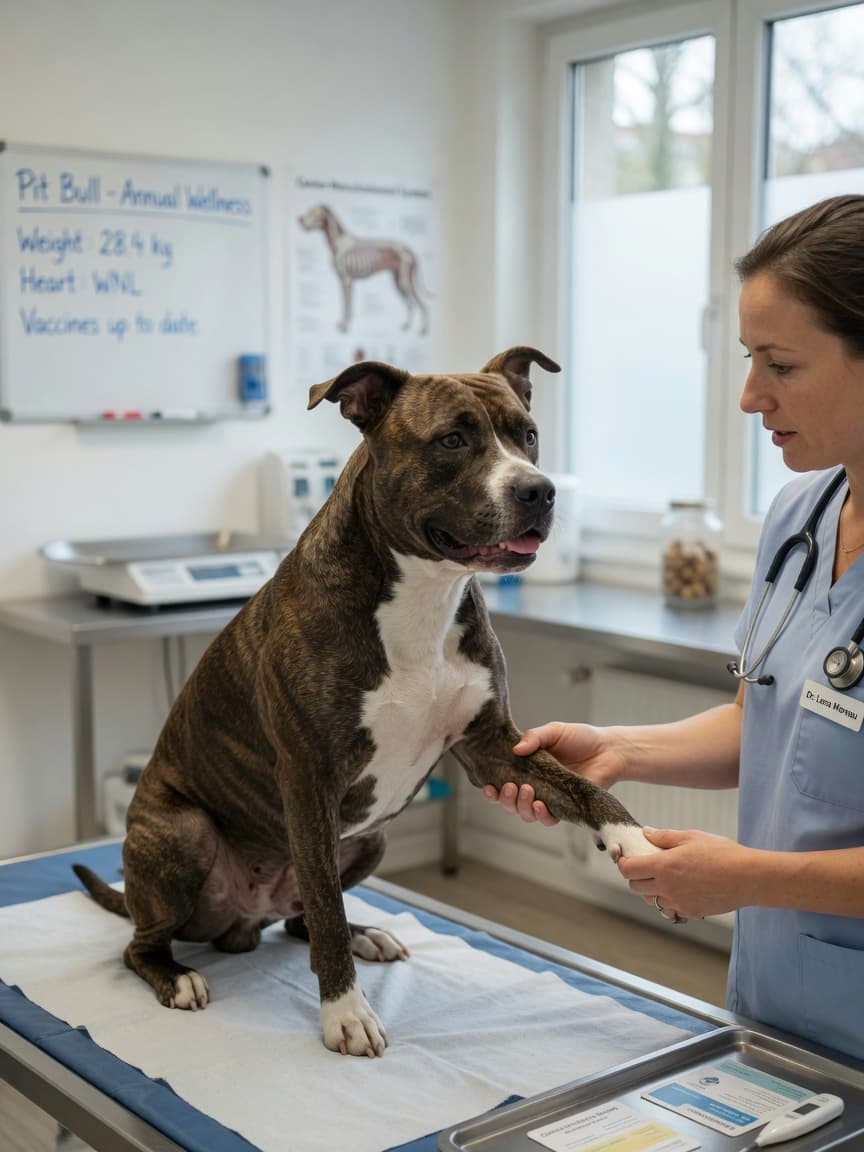
The American Pit Bull Terrier is a muscular, intelligent, and affectionate breed best suited to active owners who can provide consistent training, structured socialisation, and plenty of physical outlets. Loyal and often deeply bonded to their families, this breed thrives on companionship rather than isolation. One key health headline: skin allergies and certain joint conditions are commonly reported in the breed, making proactive care an important part of ownership.
Breed Overview
- Size: Medium-large; typically 30–60 lbs (14–27 kg), with a compact, muscular build
- Lifespan: Generally 12–16 years
- Coat: Short, smooth, single-layer coat in a wide variety of colours and patterns
- Origin: Developed in the United States and United Kingdom during the 19th century, descending from bull-baiting and terrier stock originally bred for farm work and companionship
Temperament & Family Fit
The American Pit Bull Terrier is characteristically people-oriented, often described by owners and behaviourists as affectionate, eager to please, and highly attuned to their household. Many individuals show a strong desire for physical closeness, frequently seeking lap space despite their size. This is not a breed that tends to do well left alone for long stretches; boredom and under-stimulation can quickly translate into destructive behaviour or anxiety-related issues.
With appropriate early socialisation, the breed can get on well with familiar children and adults, and many are gentle and patient with people they know. However, like many terrier-type breeds, some individuals can display a strong prey drive or reduced tolerance towards unfamiliar dogs, so careful, gradual introductions and lifelong management around unknown animals are sensible precautions rather than signs of a "bad" dog. Prospective owners should also be aware that this breed is subject to specific legislation in some regions, and it is worth researching local rules before committing to ownership.
Given their intelligence and sensitivity, American Pit Bull Terriers can be prone to stress if routines are inconsistent or if they experience prolonged separation from their family. Recognising early signs of dog anxiety — such as pacing, excessive licking, or destructive chewing when left alone — allows owners to intervene with training and environmental adjustments before patterns become entrenched.
Health Issues in American Pit Bull Terriers
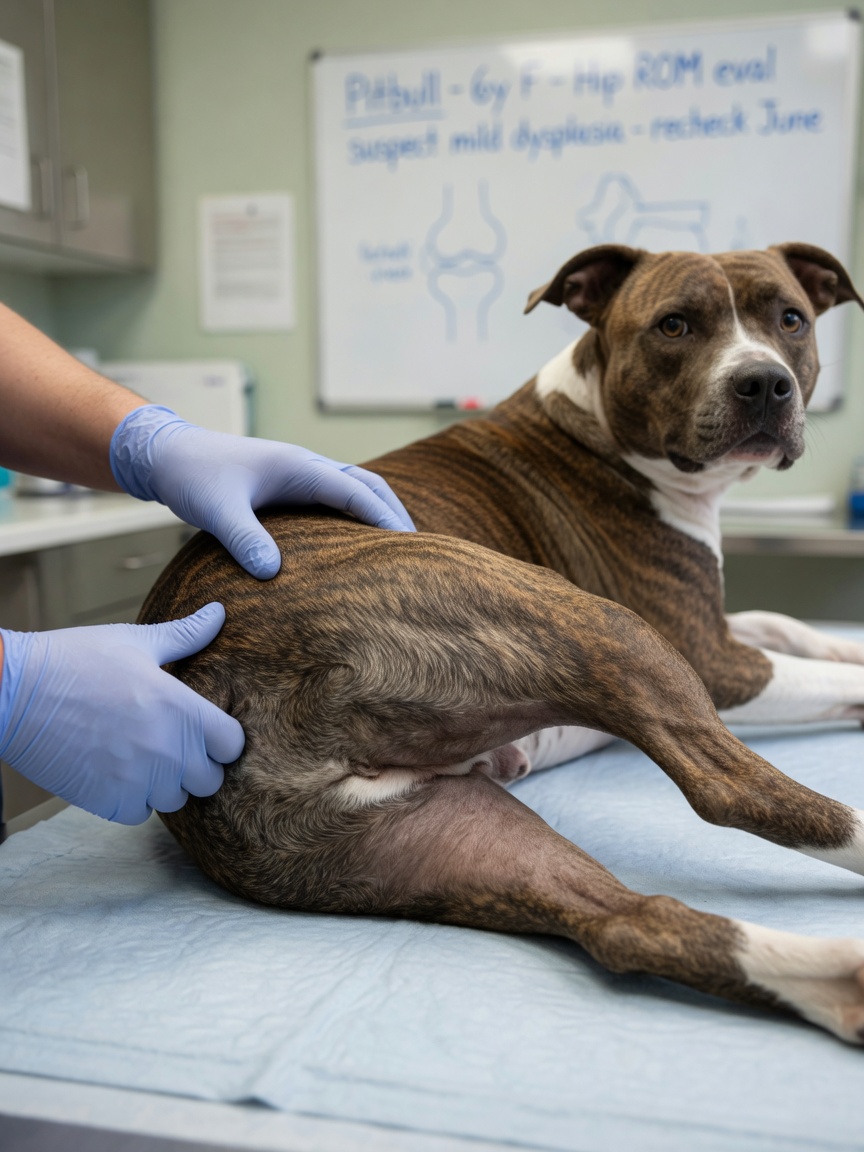
Overall, the breed is considered fairly robust, but as with all pedigree and purpose-bred dogs, there are several conditions that are more frequently documented in the breed. Being aware of these allows for earlier detection and better long-term outcomes.
Hip Dysplasia
Hip dysplasia is a developmental condition in which the ball-and-socket joint of the hip does not form or fit together correctly, leading to instability and, over time, wear-related joint damage. It is commonly reported in medium and larger breeds, including the American Pit Bull Terrier, and has both genetic and environmental contributing factors, such as growth rate and body condition during puppyhood.
Early signs can include a reluctance to jump or climb stairs, a "bunny-hopping" gait when running, stiffness after rest, or intermittent lameness in one or both hind legs. Some dogs compensate so well that signs are subtle until middle age.
Owners can support joint health by maintaining a lean body condition throughout life, avoiding excessive high-impact exercise during the rapid growth phase, and discussing hip scoring or screening with a vet, particularly if considering breeding. Following a responsible puppy growth stages guide can help avoid overloading developing joints. If dysplasia is diagnosed, weight management, controlled exercise, and joint-support strategies become central to care, and further guidance can be found in resources on arthritis in dogs management, since dysplastic joints often go on to develop secondary osteoarthritis.
Allergic Skin Disease (Atopy and Food Sensitivities)
Skin problems, including atopic dermatitis and food-related sensitivities, are frequently reported in the breed. Because the coat is short and fine, skin issues can also be more visually obvious than in heavily coated breeds.
Typical early signs include recurrent paw licking or chewing, face rubbing, red or inflamed skin folds, recurrent ear infections, and generalised itchiness that may worsen seasonally (suggesting environmental allergy) or occur year-round (which can point towards a food-related component).
Management usually involves identifying and reducing exposure to triggers where possible, maintaining good skin barrier health through appropriate grooming and diet, and working with a vet on a diagnostic plan, which may include elimination diet trials or allergy testing. Owners exploring dietary contributions to skin issues may find it helpful to read about the dog skin allergies guide and consider whether a hypoallergenic dog food guide approach is appropriate under veterinary guidance. Chronic, unmanaged skin allergies can significantly affect quality of life, so early veterinary input is worthwhile rather than relying solely on over-the-counter remedies.
Demodectic Mange
Demodex mites are normal residents of canine skin in small numbers, but some dogs — including some American Pit Bull Terriers, particularly as puppies or young adults — develop an overgrowth that leads to hair loss and skin inflammation, thought to relate to an individual or inherited aspect of immune regulation.
Signs often begin as small patches of hair loss, sometimes around the face or forelimbs, with or without redness or scaling. Localised cases can resolve on their own, but generalised demodicosis requires veterinary treatment.
Any unexplained patchy hair loss, especially in a young dog, warrants a vet visit for skin scrapings or other diagnostics, since early treatment tends to produce better outcomes and reduces the risk of secondary skin infections.
Congenital Heart Conditions
Certain congenital heart abnormalities, including aortic stenosis and other structural heart concerns, have been documented in the breed. Cardiomyopathies such as dilated cardiomyopathy (DCM) are less consistently linked to this breed specifically compared with some others, but any breed can be affected by a range of cardiac conditions, so general awareness is still useful.
Signs of underlying heart disease can be subtle in early stages and may include reduced stamina, unusual tiring during exercise, coughing, or fainting episodes. In some cases, a vet may first detect a heart murmur during a routine check-up before any outward signs are noticeable.
Routine veterinary examinations that include cardiac auscultation are valuable, particularly in puppies (to catch congenital issues early) and in older dogs. Any new exercise intolerance, collapse, or laboured breathing should prompt a prompt veterinary assessment.
Cerebellar Ataxia and Other Inherited Neurological Conditions
Some lines of American Pit Bull Terrier have been associated with inherited neurological conditions affecting coordination, broadly grouped under ataxia. These are less common than the skin and joint issues above but are worth knowing about.
Early signs can include an unsteady, wobbly gait, tremors, or difficulty with balance that becomes noticeable as a puppy grows, rather than following an injury.
Because these conditions are generally inherited, responsible breeding practices — including health testing of breeding stock where tests are available — are the main preventive tool. Owners noticing coordination issues in a young dog should seek veterinary and, where appropriate, veterinary neurology input for an accurate diagnosis.
Obesity and Weight-Related Strain
While not a "disease" in the traditional sense, excess weight is a common and largely preventable contributor to joint strain, reduced stamina, and a shortened healthy lifespan in muscular breeds like this one, which can appear deceptively lean under muscle even when carrying extra fat.
Signs include difficulty feeling the ribs under a light layer of fat, loss of a visible waist from above, and reduced enthusiasm for exercise.
Regular body condition scoring, portion control, and consistent exercise are the simplest and most effective preventive measures, and are especially important given this breed's predisposition to joint issues.
Nutrition & Feeding
American Pit Bull Terriers generally do well on a complete and balanced diet appropriate to their life stage, activity level, and body condition. Because the breed is muscular and often highly active, protein quality matters, but this does not necessarily mean an excessively high-protein diet is required for every individual — needs vary with age, activity, and health status.
Puppies benefit from a diet formulated for growth that supports steady, controlled development rather than rapid weight gain, which can place extra strain on developing joints. As dogs age into their senior years, adjusting calorie intake and considering joint-supportive nutrients becomes more relevant; the best dog food senior dogs guide offers useful general principles for this life stage transition.
For dogs with suspected food sensitivities, a structured, vet-guided elimination trial is more reliable than repeatedly switching commercial diets. Simple additions like plain cooked chicken are sometimes used in home-prepared or elimination diets; the article on can dogs eat chicken covers safe preparation. Some owners also ask about supportive additions such as probiotics for digestive or skin health, and the evidence around this is summarised in probiotics for dogs evidence, though these should complement, not replace, core veterinary advice for diagnosed conditions.
Fresh water should always be available, and treats — while useful for the breed's trainability — should be factored into daily calorie totals to avoid gradual weight gain.
Grooming & Care
The short, single coat of the American Pit Bull Terrier is low-maintenance in terms of length but does shed, often more noticeably during seasonal coat changes. Weekly brushing with a rubber curry brush or grooming mitt helps remove loose hair and distributes natural skin oils, which can support overall coat and skin condition.
Routine care should also include regular nail trimming, ear checks (particularly important given the breed's tendency towards allergic skin issues, which can predispose to ear inflammation), and attention to dental hygiene. Establishing a consistent routine following a dog dental care guide from a young age can help reduce the build-up of plaque and tartar, supporting long-term oral health.
Bathing should be done as needed rather than on a strict schedule, using a gentle, dog-appropriate shampoo, since over-bathing can dry out the skin and potentially aggravate any underlying allergic tendencies.
Exercise & Training Needs
This is a breed with substantial physical and mental energy requirements. Daily exercise — ideally combining structured walks, off-lead play in secure areas where permitted, and interactive games — helps maintain healthy body weight, muscle tone, and joint support, while also reducing the likelihood of boredom-driven behaviour.
Training is generally most successful using positive reinforcement methods, capitalising on the breed's intelligence and eagerness to work with their handler. Early, consistent socialisation with a range of people, environments, and — with sensible management — other dogs is one of the most valuable investments an owner can make, given the breed's terrier instincts and strength as an adult.
Mental stimulation matters as much as physical exercise: puzzle feeders, scent work, and structured training sessions can help satisfy this breed's need for engagement, particularly useful for dogs prone to anxiety or restlessness when under-stimulated.
FAQs
Are American Pit Bull Terriers naturally aggressive?
Temperament is influenced far more by upbringing, socialisation, and individual personality than by breed alone. Many American Pit Bull Terriers are affectionate and eager to please; however, like any powerful breed, they benefit from committed training and management, particularly around unfamiliar animals.
How much exercise does this breed really need?
Most adult American Pit Bull Terriers do well with at least an hour of combined physical activity and mental stimulation daily, though individual needs vary with age and health. Puppies and senior dogs require adjusted, lower-impact routines.
Is this breed prone to skin problems?
Allergic skin disease and related issues, such as recurrent ear infections or itchy paws, are commonly reported in the breed. Early veterinary input and consistent skin care can help manage flare-ups effectively.
What is the average lifespan, and how can I support healthy ageing?
Many American Pit Bull Terriers live between 12 and 16 years. Maintaining a lean body weight, providing regular joint-friendly exercise, staying current with veterinary check-ups, and adjusting diet in later life all contribute meaningfully to long-term wellbeing.
This guide is intended for general informational purposes and does not replace individual veterinary advice. Always consult a qualified veterinary professional regarding the specific health needs of your dog.