
Von Julia Wrenfield, Fachautorin für Haustiergesundheit — Juni 2025
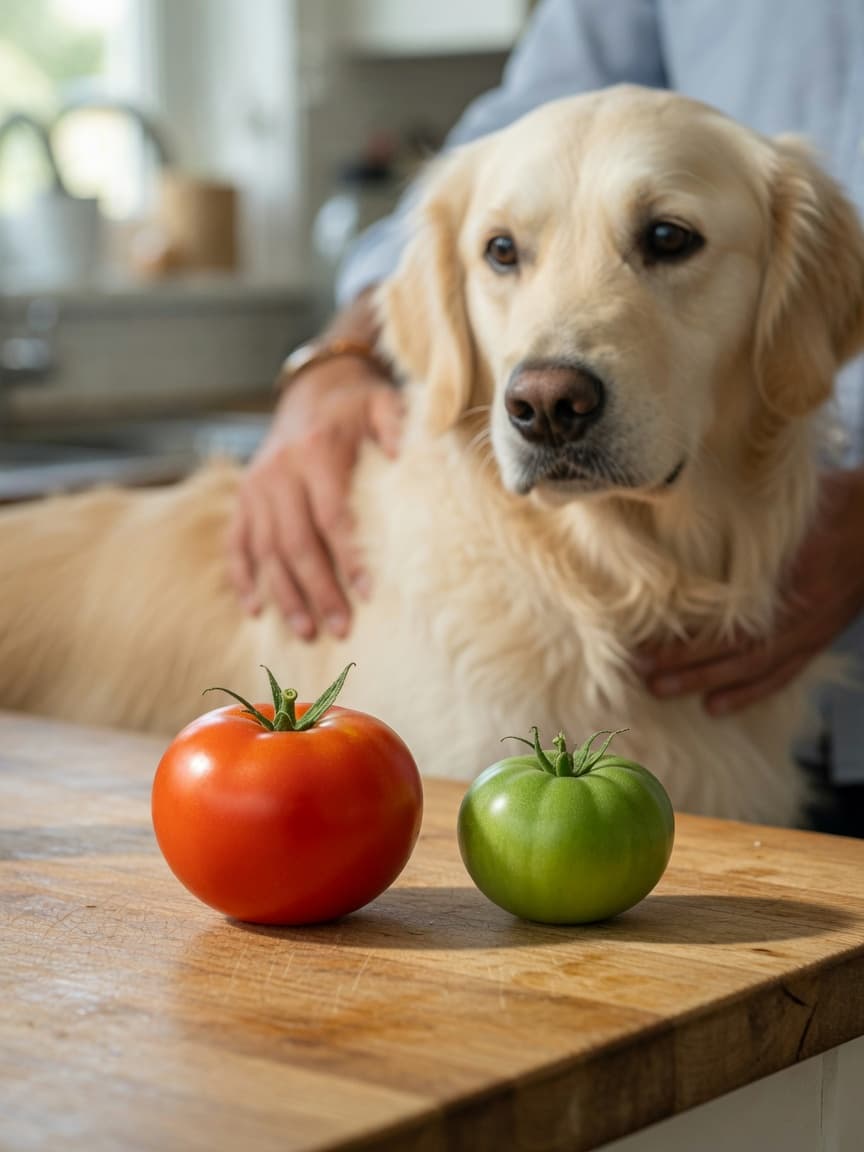
Eine reife, rote Tomate in kleinen Mengen ist für Ihren Hund wahrscheinlich unbedenklich. Allerdings enthalten grüne oder unreife Tomaten Solanin und Tomatin — Verbindungen, die für Hunde giftig sind. Tomatenpflanzen (Blätter, Stängel und unreife Früchte) sind dangerous und sollten vollständig außer Reichweite gehalten werden. Die Unterscheidung zwischen Frucht und Pflanze ist entscheidend.
Tomaten gehören zu den am meisten missverstandenen Lebensmitteln in der Hundeernährung. Einige Quellen sagen, sie seien völlig unbedenklich; andere warnen vor ihrer Toxizität. Die Wahrheit liegt, wie so oft, im Detail. Der Reifegrad der Tomate und der betroffene Pflanzenteil entscheiden über den Unterschied zwischen einem harmlosen Snack und einem tierärztlichen Notfall.
Diese Unterscheidung ist besonders wichtig für Hundebesitzer, die Tomaten zu Hause anbauen — der Zugang zum Garten für Tomatenpflanzen ist ein echtes Sicherheitsrisiko, das viele Haustierbesitzer übersehen.
Sind Tomaten sicher für Hunde?
Die Antwort hängt ganz davon ab, von welchem Teil der Tomatenpflanze Sie sprechen:
Reife rote Tomaten (die Frucht)
Vollständig reife, rote Tomaten gelten grundsätzlich in kleinen Mengen als sicher für Hunde. Sie sind kalorienarm, enthalten Lycopin (ein starkes Antioxidans) und liefern bescheidene Mengen an Vitamin C, Kalium und Folat. Je reifer die Tomate, desto niedriger ist die Konzentration potenziell problematischer Verbindungen. Viele namhafte kommerzielle Hundefuttermarken enthalten Tomate oder Tomatenpulpe als Zutat, was ein guter Hinweis auf ihre grundsätzliche Sicherheit in angemessenen Mengen ist.
Allerdings ist Tomate kein Lebensmittel, das Sie aktiv in die Ernährung Ihres Hundes aufnehmen müssen. Falls Ihr Hund heimlich einen Bissen einer reifen Tomate stiehlt, gibt es keinen Grund zur Besorgnis. Aber bewusstes Füttern großer Mengen ist unnötig und könnte bei empfindlichen Hunden aufgrund der Säure zu leichtem Magen-Darm-Unbehagen führen.
Grüne und unreife Tomaten
Hier beginnt die echte Gefahr. Grüne und unreife Tomaten enthalten erhebliche Konzentrationen von Solanin und Tomatin — Alkaloid-Verbindungen, die zur Familie der Nachtschattengewächs-Toxine gehören. Diese Verbindungen sind ein natürlicher Schutzmechanismus der Pflanze und nehmen erheblich ab, wenn die Tomate reift und rot wird.
Bei Hunden kann die Aufnahme von Solanin und Tomatin verursachen:
- Magen-Darm-Beschwerden (Erbrechen, Durchfall, Bauchschmerzen)
- Lethargie und Schwäche
- Zittern oder Muskelschwäche
- Herzeffekte (unregelmäßiger Herzschlag) in schweren Fällen
- Mangel an Koordination
Tomatenpflanzen (Blätter, Stängel und Ranken)
Der gefährlichste Teil der Tomate ist überhaupt nicht die Frucht — es ist die Pflanze selbst. Tomattenblätter, Stängel und Ranken enthalten sehr hohe Konzentrationen von Tomatin und Solanin. Bereits kleine Mengen Pflanzenmaterial können eine signifikante Toxizität bei Hunden verursachen. Ein Hund, der im Garten an einer Tomatenpflanze kaut, kann möglicherweise genug aufnehmen, um dringende tierärztliche Hilfe zu benötigen.
Falls Sie Tomaten zu Hause anbauen, stellen Sie sicher, dass Ihr Garten sicher eingezäunt ist oder verwenden Sie Hochbeete, auf die Ihr Hund nicht zugreifen kann. Dies gilt auch, wenn die Tomaten an der Pflanze reif sind — die Blätter und Stängel bleiben in allen Wachstumsstadien giftig.
Nährwertvorteile von reifen Tomaten für Hunde
Obwohl Tomaten keine notwendige Ergänzung zur Hundeernährung darstellen, bieten reife Tomaten einen echten Nährwert:
- Lycopin: Ein Carotinoid-Antioxidans, das Tomaten ihre rote Farbe verleiht. Forschungen beim Menschen deuten darauf hin, dass Lycopin die Herz-Kreislauf-Gesundheit unterstützt und krebshemmende Eigenschaften hat; während hundesspezifische Forschung begrenzt ist, ist der Antioxidansvorteil plausibel.
- Vitamin C: Unterstützt die Immunfunktion und wirkt als Freiradikal-Fänger.
- Kalium: Unterstützt eine gesunde Herz- und Muskelfunktion.
- Folat: Wichtig für Zellteilung und DNA-Synthese.
- Kalorienarm: Eine mittlere Tomate enthält nur etwa 22 Kalorien, was sie zum schuldfreien gelegentlichen Snack macht.
- Hoher Wassergehalt: Über 90% Wasser, das zur Hydration beiträgt.
Wie man Tomaten Ihrem Hund sicher serviert
Falls Sie sich entscheiden, Tomaten mit Ihrem Hund zu teilen, befolgen Sie diese Richtlinien sorgfältig:
- Verwenden Sie nur vollständig reife, rote Tomaten. Die Frucht sollte gleichmäßig rot sein und keine grünen Flecken haben. Verwerfen Sie alle Tomaten, die auch nur teilweise grün oder unreif sind.
- Entfernen Sie alle Stängel, Blätter und den grünen Kelch (die blättrige Krone oben an der Frucht). Diese enthalten konzentrierte Mengen an Tomatin.
- Geben Sie nur das Fruchtfleisch. Kleine Stücke reines Tomatenfruchtfleisch, bei Bedarf ohne Samen (Samen sind nicht giftig, aber einige Hunde finden sie schwer verdaulich).
- Servieren Sie ungekocht. Kein Salz, Weiterlesen