
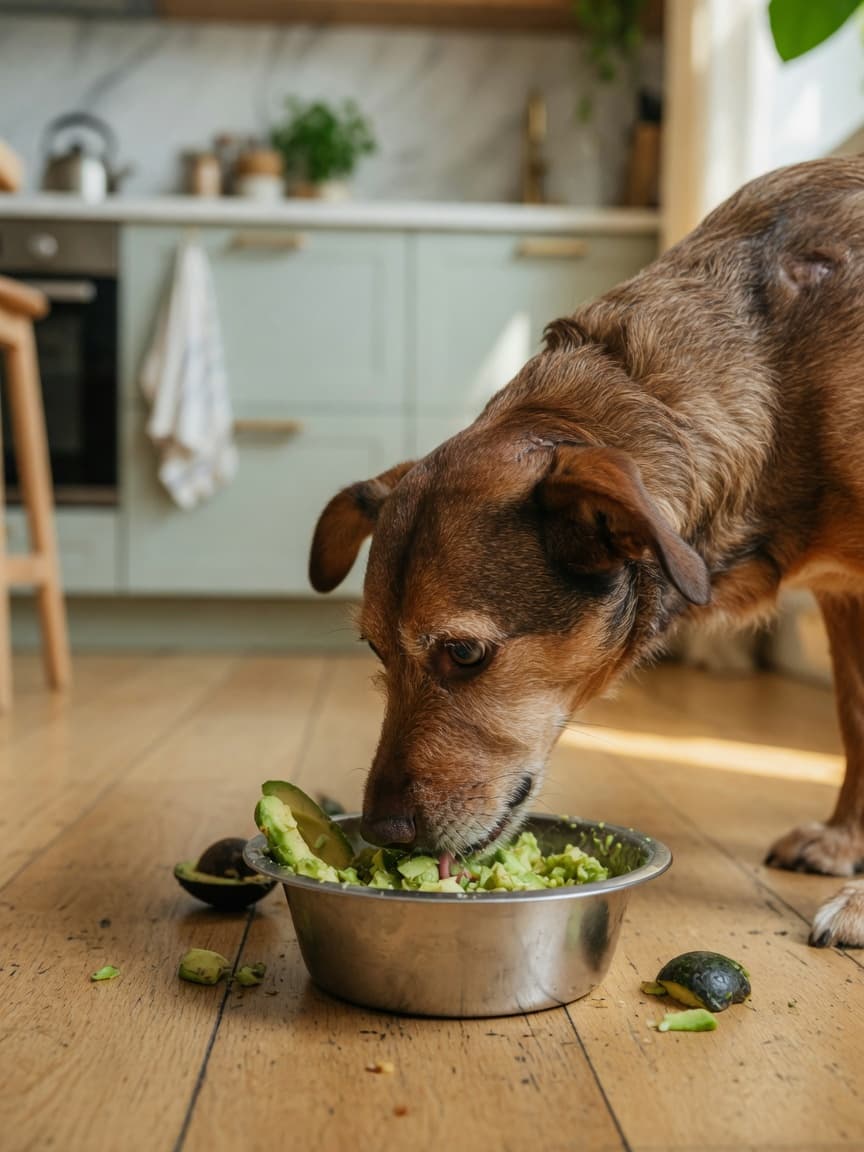
Dürfen Hunde Avocado essen? Nein — sie ist giftig und potenziell tödlich
Von Julia Wrenfield, Forscherin für das Wohlbefinden von Haustieren — 24. Juni 2026
Alle Teile der Avocadopflanze — das Fruchtfleisch, die Schale, der Kern und die Blätter — enthalten Persin, ein fungizides Toxin, das bei Hunden schwerwiegende Gesundheitsprobleme verursacht. Der Kern stellt zusätzlich eine schwere Erstickungs- und Darmverschlussgefahr dar. Wenn Ihr Hund Avocado gefressen hat, kontaktieren Sie sofort Ihren Tierarzt.
Wenn Ihr Hund gerade Avocado gefressen hat:
- ASPCA Animal Poison Control Center: +1 (888) 426-4435
- Pet Poison Helpline: +1 (855) 764-7661
- Ihre örtliche Notfalltierklinik
Die Avocado hat als Superfood für den Menschen einen nahezu mythischen Status erlangt. Reich an gesunden Fetten, Kalium und Folat, scheint sie das perfekte natürliche Lebensmittel zu sein, das man mit einem geliebten Haustier teilen kann. Doch was für den Menschen wirklich nahrhaft ist, kann für Hunde wirklich gefährlich sein. Avocado enthält eine Verbindung, die Hunde nicht sicher metabolisieren können, und die Folgen einer Exposition reichen von schweren gastrointestinalen Beschwerden bis hin zu lebensbedrohlichen Herzschäden. Zu verstehen, warum Avocado giftig ist — und alle versteckten Wege zu erkennen, auf denen Hunde damit in Kontakt kommen — ist für jeden Hundehalter unerlässlich.
Warum ist Avocado für Hunde gefährlich?
Der primäre Giftstoff in der Avocado ist ein Fettsäurederivat namens Persin. Persin ist eine fungizide Verbindung, die von der Avocadopflanze als natürlicher Abwehrmechanismus gegen Pilzinfektionen produziert wird. Während Menschen und die meisten anderen Säugetiere Persin ohne schädliche Auswirkungen metabolisieren können, fehlen Hunden die notwendigen enzymatischen Stoffwechselwege, um es sicher abzubauen.
Entscheidend ist: Persin ist in der gesamten Avocadopflanze vorhanden, nicht nur in einem Teil:
- Blätter: Die höchste Konzentration an Persin findet sich in den Blättern des Avocadobaums. Wenn Sie zu Hause eine Avocadopflanze haben, stellen Sie sicher, dass Ihr Hund absolut keinen Zugang zu heruntergefallenen oder erreichbaren Blättern hat.
- Schale: Die dunkle äußere Schale der Avocado enthält erhebliche Mengen an Persin. Hunde, die die Schale fressen — die eine ledrige Textur hat, die manche Hunde ansprechend finden — sind einem hohen Risiko ausgesetzt.
- Fruchtfleisch: Ja, sogar das grüne Fruchtfleisch, das Menschen essen. Die Konzentration von Persin im Fruchtfleisch ist niedriger als in der Schale oder den Blättern, aber sie ist nicht null, und sie reicht aus, um eine Toxizität zu verursachen — insbesondere bei kleineren Hunden oder wenn größere Mengen verzehrt werden.
- Kern (Samen): Der große zentrale Kern enthält Persin und birgt zwei unabhängige Gefahren: chemische Toxizität und physische Gefahr. Der Kern ist groß, glatt und genau in der richtigen Größe, um im Rachen, Magen oder Darm eines Hundes stecken zu bleiben — was einen lebensbedrohlichen Verschluss verursacht, der eine Notoperation erfordert.
- Rinde und Wurzeln: Enthalten ebenfalls Persin. Relevant, wenn Sie einen Avocadobaum in Ihrem Garten haben.
Die Toxizität von Persin bei Hunden ist in der veterinärmedizinischen Literatur gut dokumentiert. Es handelt sich nicht um ein grenzwertiges oder anekdotisches Risiko — es ist eine bestätigte, reproduzierbare toxische Wirkung.
Was passiert, wenn mein Hund Avocado frisst?
Das klinische Bild der Avocado-Toxizität bei Hunden hängt vom verzehrten Teil, der aufgenommenen Menge und der Größe des Hundes ab. Hier ist, was Tierärzte beobachten:
Gastrointestinale Effekte (am häufigsten)
Die ersten und beständigsten Anzeichen einer Persin-Toxizität sind gastrointestinal:
- Erbrechen — beginnt oft innerhalb von 12–24 Stunden nach der Aufnahme
- Diarrhö — kann schwerwiegend sein und zu Dehydratation führen
- Abdominale Beschwerden — der Hund kann unruhig sein, winseln oder sich dagegen wehren, am Bauch berührt zu werden
- Inappetenz
- Übelkeit — übermäßiger Speichelfluss, Lippenlecken oder Grasfressen
Kardiovaskuläre Effekte (schwerwiegend)
Hier wird die Avocado-Toxizität besonders alarmierend. Es ist dokumentiert, dass Persin Myokardschäden verursacht — eine direkte toxische Verletzung des Herzmuskels. Veterinärstudien haben dokumentiert:
- Myokarditis: Entzündung des Herzmuskels, die die Fähigkeit des Herzens, Blut effektiv zu pumpen, beeinträchtigen kann
- Herzrhythmusstörungen: Unregelmäßige Herzschlagmuster, die lebensbedrohlich sein können
- Akute Herzinsuffizienz: In schweren Fällen, insbesondere bei Exposition gegenüber hohen Dosen oder bei kleinen Hunden
- Ödem: Flüssigkeitsansammlung in der Brust (Pleuraerguss) oder im Abdomen (Aszites), wenn das Herz und das Kreislaufsystem das normale Flüssigkeitsgleichgewicht nicht aufrechterhalten
Kardiovaskuläre Effekte sind möglicherweise nicht sofort erkennbar und können sich über 24–48 Stunden nach der Aufnahme entwickeln. Diese verzögerte Präsentation ist ein Grund, warum eine Avocado-Vergiftung unterschätzt werden kann — wenn der Besitzer merkt, dass der Hund ernsthaft krank ist, kann der Herzschaden bereits erheblich sein.
Respiratorische Effekte
Wenn sich aufgrund einer kardiovaskulären Beeinträchtigung Flüssigkeit um die Lungen ansammelt, können Hunde Folgendes entwickeln:
- Erschwerte Atmung oder Atemnot
- Husten
- Zyanose (bläulich verfärbtes Zahnfleisch) in schweren Fällen
Physische Obstruktion durch den Kern
Selbst wenn eine Persin-Toxizität irgendwie vermieden wird, stellt der Avocadokern seinen eigenen Notfall dar. Wenn ein Hund den Kern im Ganzen oder in großen Fragmenten verschluckt:
- Ösophagusobstruktion: Der Hund erstickt und kann nicht atmen — dies ist ein unmittelbarer Notfall, bei dem Minuten zählen
- Magenobstruktion: Der Kern bleibt im Magen stecken, was anhaltendes Erbrechen, Schmerzen und Unfähigkeit zu fressen verursacht
- Intestinale Obstruktion: Wenn der Kern den Magen passiert, kann er sich im Darm festsetzen, was eine chirurgische Entfernung erfordert
Anzeichen einer Obstruktion umfassen wiederholtes unproduktives Würgen, extreme Unruhe, Speicheln, Kratzen am Maul und Kollaps. Dies erfordert sofortiges tierärztliches Eingreifen — warten Sie nicht.
Was tun, wenn Ihr Hund Avocado gefressen hat
Handeln Sie sofort. Verfolgen Sie bei der Aufnahme von Avocado keinen „Abwarten und Beobachten“-Ansatz.
Schritt 1: Beurteilen Sie, was gefressen wurde
Bestimmen Sie schnell: Welcher Teil der Avocado? Wie viel? Wie lange her? War der Kern beteiligt? Diese Angaben sind für den Tierarzt entscheidend, um die Dringlichkeit und den Behandlungsplan einzuschätzen.
Schritt 2: Rufen Sie Ihren Tierarzt oder die Giftnotrufzentrale an
Rufen Sie sofort an — auch wenn Ihr Hund im Moment in Ordnung zu sein scheint. Die Symptome können verzögert auftreten. Ein Tierarzt kann beraten, ob zu Hause Erbrechen ausgelöst werden soll (nur unter fachkundiger Anleitung) oder ob Sie sofort kommen sollen.
Schritt 3: Warten Sie nicht auf Symptome
Wenn der Kern verschluckt wurde, gehen Sie unverzüglich zu einem Notfalltierarzt. Eine Obstruktion kann sich rasch verschlechtern. Wenn nur Fruchtfleisch oder Schale verzehrt wurde, kann der Tierarzt überwachen oder Aktivkohle empfehlen — aber diese Entscheidung muss von einem Fachmann kommen.
Schritt 4: Die stationäre Behandlung kann Folgendes umfassen
- Induzierte Emesis (wenn innerhalb des Aufnahmezeitfensters und kein Risiko einer Kernobstruktion besteht)
- Aktivkohle zur Verringerung der weiteren Toxinabsorption
- IV-Flüssigkeiten zur Hydratation und kardiovaskulären Unterstützung
- Herzüberwachung (EKG)
- Diuretika bei Flüssigkeitsansammlung
- Endoskopie oder Operation, wenn eine Kernobstruktion bestätigt wird
Versteckte Avocadoquellen in Lebensmitteln für Menschen
Viele Hundehalter wissen nicht, wie weit verbreitet Avocado in alltäglichen Lebensmitteln vorkommt. Seien Sie wachsam bei:
- Guacamole — oft bei gesellschaftlichen Zusammenkünften zugänglich gelassen und ein häufiges Vergiftungsszenario
- Avocado-Toast und Sandwiches, die auf zugänglichen Oberflächen liegen gelassen wurden
- Salate mit Avocadostücken
- Restaurantreste — viele Gerichte enthalten Avocado als Garnitur oder Zutat
- Babynahrung mit Avocadopüree
- Einige handelsübliche Hundeleckerlis, die als „mit Avocado-Geschmack“ vermarktet werden — prüfen Sie, dass diese ausschließlich Avocadoöl verwenden, nicht persinhaltiges Fruchtfleisch. Hinweis: Avocadoöl gilt im Allgemeinen als risikoärmer, da Persin überwiegend wasserlöslich ist, aber wir empfehlen dennoch, es vorsichtshalber vollständig zu meiden.
- Avocado ist aufgrund von Persin giftig für Hunde, einer Verbindung, die in jedem Teil der Pflanze vorkommt — Fruchtfleisch, Schale, Kern, Blätter, Rinde und Wurzeln.
- Persin verursacht Erbrechen, Diarrhö und — am schwerwiegendsten — myokardiale (Herzmuskel-)Schäden.
- Der Avocadokern ist ein gesonderter physischer Notfall: Er kann tödliches Ersticken oder eine intestinale Obstruktion verursachen.
- Die Symptome können bis zu 24–48 Stunden verzögert auftreten, wodurch der „Abwarten und Beobachten“-Ansatz gefährlich wird.
- Wenn Ihr Hund irgendeinen Teil einer Avocado gefressen hat, kontaktieren Sie sofort einen Tierarzt.
- Seien Sie wachsam bei Guacamole, Avocado-Toast, Salaten und anderen Lebensmitteln für Menschen, die für Ihren Hund zugänglich sind.
- Es gibt keine unbedenkliche Menge — jede Avocado-Exposition birgt ein Risiko.
Literatur
- Buoro IB, Nyamwange SB, Chai D, Munyua SM. "Putative avocado toxicity in two dogs." Onderstepoort Journal of Veterinary Research. 1994;61(1):107–109. PMID: 7991582.
- Stadler P, van Rensburg IB. "Clinical and pathological findings in two dogs with suspected avocado (Persea americana) poisoning." Journal of the South African Veterinary Association. 1994;65(2):89–93. PMID: 7823484.
- Oelrichs PB, Ng JC, Seawright AA, Ward A, Schäffeler L, MacLeod JK. "Isolation and identification of a compound from avocado (Persea americana) leaves which causes necrosis of the acinar epithelium of the lactating mammary gland and the myocardium." Natural Toxins. 1995;3(5):344–352. PMID: 8581318.