
Das beste Katzenfutter für die Harnwegsgesundheit: Worauf Sie achten sollten
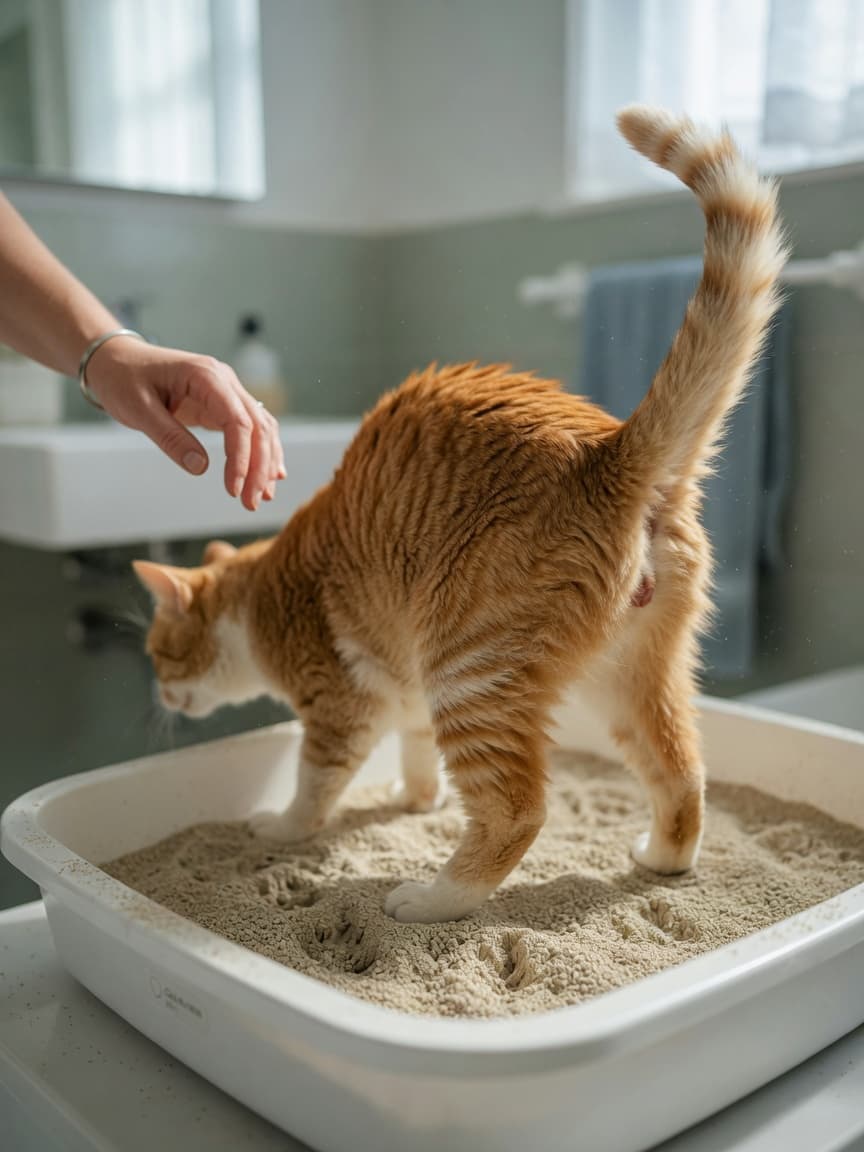
Eine Katze, die sich in der Katzentoilette anstrengt, sie wiederholt mit wenig Ergebnis aufsucht oder beim Versuch zu urinieren schreit, ist eine Katze in Not – und möglicherweise in Gefahr. Harnwegsprobleme gehören zu den häufigsten Gesundheitsproblemen bei Hauskatzen, und was eine Katze frisst, hat einen direkten, messbaren Einfluss auf die Gesundheit der Harnwege. Das Verständnis des Zusammenhangs zwischen Ernährung und Harnwegserkrankungen der Katze kann Haltern helfen, fundierte Entscheidungen zu treffen, bevor es zu einem Notfall kommt.
Die feline Erkrankung der unteren Harnwege (FLUTD) verstehen
FLUTD ist ein Oberbegriff, der mehrere Erkrankungen der Harnblase und Harnröhre umfasst: Kristallbildung (Urolithiasis), Entzündung ohne Infektion (idiopathische Zystitis), Harnwegsinfektionen und – bei Katern – lebensbedrohliche Harnröhrenobstruktionen. Die häufigste Form, die etwa 55–65 % der Fälle ausmacht, ist die idiopathische Zystitis, bei der keine zugrunde liegende körperliche Ursache gefunden werden kann und Stress als wesentlicher Auslöser gilt.
Kristallbedingte Erkrankungen machen einen erheblichen Teil der restlichen Fälle aus. Zwei Kristallarten dominieren die Harnwegsfälle bei Katzen, und sie erfordern entgegengesetzte ernährungsbezogene Ansätze – weshalb es entscheidend ist zu wissen, welchen Typ Ihre Katze hat, bevor Sie ein Harnwegsfutter auswählen.
Struvit- vs. Oxalatkristalle: Warum das wichtig ist
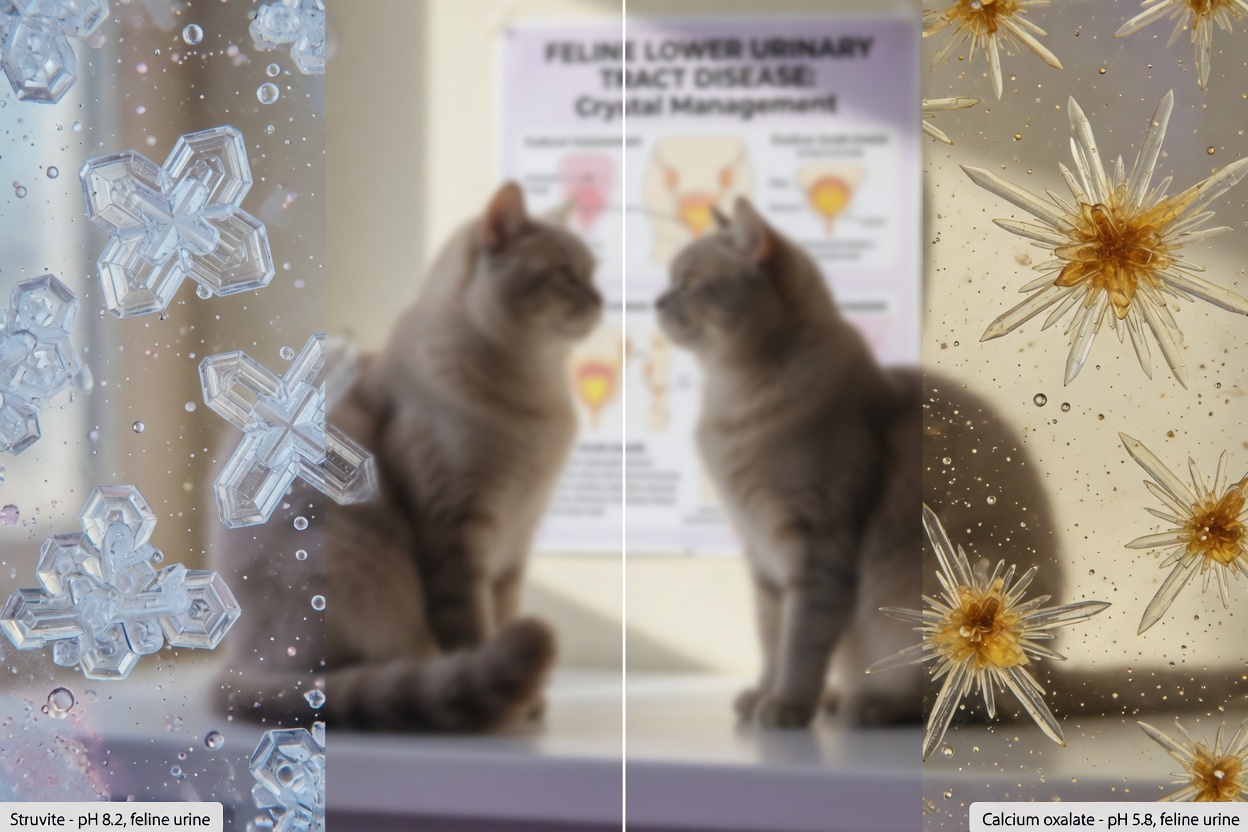
Struvitkristalle (Magnesiumammoniumphosphat) bilden sich in alkalischem Urin (pH über 6,8). Sie treten häufiger bei jüngeren Katzen, weiblichen Katzen und Katzen auf, die Futter mit hohem Magnesium- und Phosphorgehalt fressen. Die gute Nachricht: Struvit ist der auf die Ernährung besser ansprechende Kristalltyp – das Ansäuern des Urins auf einen pH-Wert von 6,0–6,5 und die Reduzierung des Magnesiums in der Nahrung löst Struvitkristalle auf und verhindert ihr erneutes Auftreten.
Kalziumoxalatkristalle bilden sich in saurem Urin (pH unter 6,0) und sind häufiger bei älteren Katzen, Katern und bestimmten Rassen einschließlich Persern, Himalayas und Scottish Folds. Diese Kristalle können nicht durch die Ernährung aufgelöst werden – sie müssen chirurgisch entfernt werden, wenn sie Steine bilden. Die Behandlung konzentriert sich auf die Verdünnung des Urins und die Haltung des pH-Werts in einem neutralen Bereich (6,4–6,6), um neues Kristallwachstum zu verhindern. Das Oxalatrisiko steigt bei übermäßiger Kalziumzufuhr über das Futter, Vitamin-C-Supplementierung und eingeschränkter Wasseraufnahme.
Die Rolle der Feuchtigkeit: Nassfutter vs. Trockenfutter
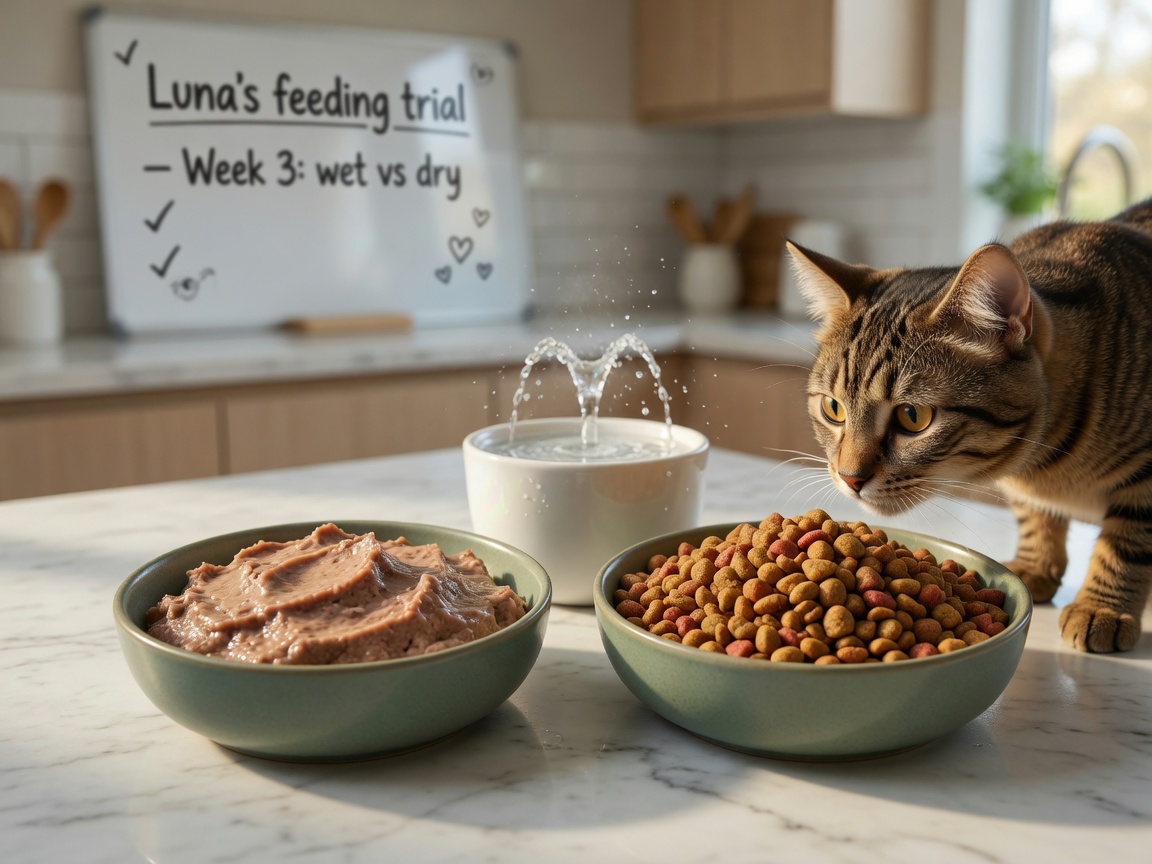
Wenn es eine ernährungsbezogene Maßnahme mit nahezu universeller Unterstützung für die feline Harnwegsgesundheit gibt, dann ist es die Erhöhung der Urinverdünnung – und der wirksamste Weg dorthin ist Nassfutter. Katzen haben sich in trockenen Umgebungen entwickelt und haben einen geringen Dursttrieb; sie sind darauf ausgelegt, den Großteil ihrer Feuchtigkeit aus Beute zu beziehen, nicht aus einem Wassernapf. Trockenfutter enthält typischerweise nur 8–12 % Feuchtigkeit, während Nassfutter 75–80 % enthält.
Dieser Unterschied ist bedeutsam. Katzen, die Nassfutter fressen, produzieren Urin mit einem spezifischen Gewicht von etwa 1,025–1,035, verglichen mit 1,045–1,080 bei Katzen, die hauptsächlich Trockenfutter fressen. Verdünnterer Urin bedeutet geringere Konzentrationen kristallbildender Mineralstoffe, weniger Reizung der Blasenschleimhaut und eine weniger günstige Umgebung für bakterielles Wachstum. Mehrere Studien haben gezeigt, dass der Umstieg von Trocken- auf Nassfutter das Wiederauftreten von Harnwegsereignissen bei Katzen mit idiopathischer Zystitis und kristallbedingter Erkrankung verringert.
Wenn eine Katze Nassfutter verweigert oder eine reine Nassfütterung unpraktisch ist, hat sich in Studien gezeigt, dass Trinkbrunnen die freiwillige Wasseraufnahme bei Katzen spürbar erhöhen – die Bewegung und das Geräusch von fließendem Wasser lösen den Trinkinstinkt aus.
Magnesium, Phosphor und Harn-pH
Bei struvitanfälligen Katzen ist der Magnesiumgehalt der am genauesten betrachtete Mineralstoff. Frühe Forschungen in den 1980er-Jahren belegten, dass Magnesium in der Nahrung direkt zur Bildung von Struvitkristallen in alkalischem Urin beiträgt. Die Heimtierfutterindustrie reagierte, indem sie den Magnesiumgehalt in vielen kommerziellen Futtermitteln senkte und den Urin durch Manipulation der Proteinquellen und zugesetzte Harnansäuerungsmittel (ammonium chloride, DL-methionine) ansäuerte.
Harnwegsgesundheitsdiäten, die auf Struvit ausgerichtet sind, zielen typischerweise auf Folgendes ab:
- Magnesium: <0,12 % Trockenmasse (TM)
- Phosphor: 0,5–0,8 % TM (kontrolliert, nicht eliminiert)
- Natrium: leicht erhöht, um die Wasseraufnahme anzuregen
- Ziel-pH-Wert des Urins: 6,0–6,4
Diäten zum Management von Oxalat konzentrieren sich dagegen darauf, Phosphor moderat zu halten, überschüssiges Kalzium und Vitamin C zu vermeiden, einen neutralen pH-Wert aufrechtzuerhalten und die Feuchtigkeit zu maximieren. Natrium wird eingesetzt, um die Wasseraufnahme und die Urinverdünnung zu fördern.
Vergleichstabelle: Arten von Katzenfutter für die Harnwegsgesundheit
| Futtertyp | Am besten geeignet für | Feuchtigkeit | pH-Ziel | Rezept erforderlich? | Beispiele |
|---|---|---|---|---|---|
| Verschreibungspflichtiges Harnwegsfutter (Struvit/Oxalat) | Diagnostizierte Kristallerkrankung | Nass oder trocken | 6,0–6,5 | Ja | Hill's c/d, Royal Canin Urinary S/O |
| Rezeptfreies Harnwegspflege-Nassfutter | Vorbeugung, leichte FLUTD-Vorgeschichte | Hoch (75–80 %) | 6,2–6,6 | Nein | Purina Pro Plan UR, Blue Buffalo Urinary |
| Nassfutter mit hohem Feuchtigkeitsgehalt (ohne Harnwegs-Auslobung) | Allgemeine Vorbeugung, Urinverdünnung | Hoch (75–80 %) | Variabel | Nein | Die meisten Nassfutter in Pastetenform |
| Trockenfutter mit Harnwegs-Fokus | Katzen, die Nassfutter verweigern | Niedrig (8–12 %) | 6,0–6,4 | Manche ja, manche nein | Hill's c/d trocken, Royal Canin Urinary trocken |
| Roh-/Frischfutter (ausgewogen) | Vorbeugung; einige Katzen mit idiopathischer Zystitis | Sehr hoch (65–75 %) | Variabel | Nein | Kommerzielle Rohfuttermarken |
Verschreibungsdiäten vs. rezeptfreie Optionen
Verschreibungspflichtige Harnwegsdiäten (Hill's Prescription Diet c/d, Royal Canin Urinary S/O, Purina Pro Plan UR) sind auf spezifische Mineralstoff- und pH-Ziele formuliert, die durch Fütterungsversuche überprüft wurden. Sie sind die geeignete Wahl für Katzen mit einer bestätigten Diagnose einer Kristallerkrankung oder wiederkehrenden schweren Harnwegsereignissen. Sie sollten unter tierärztlicher Aufsicht verwendet werden, da ihre Mineralstoffprofile (insbesondere Natriumwerte und pH-Ansäuerung) mit anderen Gesundheitszuständen einschließlich Nierenerkrankung und Hypertonie interagieren können.
Rezeptfreie Harnwegspflegefuttermittel sind geeignet zur Vorbeugung bei Katzen mit einer Vorgeschichte leichter FLUTD oder als Vorsichtsmaßnahme bei Katzen mit hohem Risiko (übergewichtig, Wohnungskatze, männlich, mittleren Alters). Sie kontrollieren typischerweise Magnesium und Phosphor und fördern eine moderate Urinansäuerung, sind aber nicht so präzise formuliert wie verschreibungspflichtige Optionen und haben nicht die gleiche klinische Validierung durchlaufen.
Stress als Harnwegsauslöser
Die idiopathische Zystitis – die häufigste Form der FLUTD – steht in engem Zusammenhang mit Stress. Eine Entzündung der Harnblase kann unabhängig von Kristallen, Infektion oder jeder identifizierbaren körperlichen Ursache auftreten. Häufige Stressfaktoren sind Mehrkatzenhaushalte, Konkurrenz um die Katzentoilette (die Faustregel ist eine Toilette pro Katze plus eine), Veränderungen der Routine, Baulärm, neue Haustiere oder Personen und sogar Änderungen bei Futter oder Streu.
Umweltanreicherung, Feliway-Diffuser und sicherzustellen, dass Katzen Zugang zu hohen Sitzwarten und Verstecken haben, sind Managementstrategien mit Evidenz. Die Ernährung allein wird eine stressbedingte Zystitis nicht lösen; die Umgebung der Katze anzugehen ist ebenso wichtig.
Praktische Warnzeichen für Harnwegsprobleme
Erkennen Sie diese Anzeichen frühzeitig – eine Harnröhrenobstruktion bei Katern ist ein lebensbedrohlicher Notfall:
- Häufige Besuche der Katzentoilette mit wenig oder keinem produzierten Urin
- Anstrengen oder Schreien beim Urinieren
- Blut im Urin (rosa oder rote Färbung)
- Urinieren außerhalb der Katzentoilette, insbesondere auf kühlen Oberflächen (Fliesen, Badewanne)
- Übermäßiges Lecken des Genitalbereichs
- Lethargie, Erbrechen oder Appetitlosigkeit zusammen mit einem der oben genannten Punkte
- FLUTD umfasst mehrere Erkrankungen – Struvitkristalle, Oxalatkristalle, idiopathische Zystitis und Infektion – und die Ernährungsempfehlungen unterscheiden sich je nach Typ.
- Struvit bildet sich in alkalischem Urin; Oxalat bildet sich in saurem Urin. Eine Diät, die dem einen hilft, kann den anderen verschlimmern.
- Die Erhöhung der Feuchtigkeitsaufnahme durch Nassfutter ist die einzige universell vorteilhafteste Ernährungsänderung für die feline Harnwegsgesundheit.
- Kontrolliertes Magnesium und Phosphor mit gezieltem Urin-pH (6,0–6,5) ist der Eckpfeiler von Diäten zur Struvitvorbeugung.
- Stress ist ein wesentlicher Treiber der idiopathischen Zystitis; das Umweltmanagement ist ebenso wichtig wie die Ernährung.
- Verschreibungspflichtige Harnwegsdiäten erfordern tierärztliche Anleitung und sollten nicht ohne Diagnose der spezifischen Erkrankung verwendet werden.
- Forrester SD, Towell TL. Feline idiopathic cystitis. Vet Clin North Am Small Anim Pract. 2015;45(4):783–806. PMID: 26002792
- Lekcharoensuk C, Osborne CA, Lulich JP. Epidemiologic study of risk factors for lower urinary tract diseases in cats. J Am Vet Med Assoc. 2001;218(9):1429–35. PMID: 11345305
- Buckley CM, Hawthorne A, Colyer A, Stevenson AE. Effect of dietary water intake on urinary output, specific gravity and relative supersaturation for calcium oxalate and struvite in the cat. Br J Nutr. 2011;106(Suppl 1):S128–30. PMID: 22005434