
Saúde do Chihuahua: Doença Cardíaca, Dentária e Hipoglicemia
Atualizado em junho de 2026
- Esperança de vida: 14–18 anos
- Principais riscos de saúde: doença da válvula mitral, doença periodontal, luxação da patela, hipoglicemia, hidrocefalia
- Testes genéticos recomendados: avaliação da patela, auscultação cardíaca, exame oftalmológico, avaliação da fontanela aberta
O Chihuahua é a raça de cão mais pequena do mundo e, no entanto, em termos de personalidade, vivem de forma verdadeiramente grande. Destemidos, leais e, por vezes, ferozmente opinativos, os Chihuahuas podem viver vidas notavelmente longas — muitos atingem os 15–18 anos com bons cuidados. O seu tamanho diminuto, no entanto, concentra várias preocupações de saúde graves num pacote muito pequeno. A doença cardíaca, os problemas dentários e as vulnerabilidades metabólicas são os tópicos de saúde mais importantes para todos os donos de Chihuahuas compreenderem.
Problemas de Saúde Mais Comuns nos Chihuahuas
A doença da válvula mitral (MVD) é a principal causa de morte em Chihuahuas com mais de oito anos de idade, tal como acontece em muitas raças pequenas. A doença periodontal é quase universal, refletindo o apinhamento de uma dentição adulta completa numa mandíbula minúscula. A luxação da patela (rótula que desliza) afeta uma proporção significativa da raça, variando de subclínica a gravemente debilitante. A hipoglicemia — descida perigosa do açúcar no sangue — é uma preocupação crítica em cachorros e em Chihuahuas adultos muito pequenos. A hidrocefalia (acumulação de líquido no cérebro) ocorre com maior frequência nesta raça do que na maioria, e as fontanelas abertas (pontos moles no crânio que não fecham) estão associadas a esta condição.
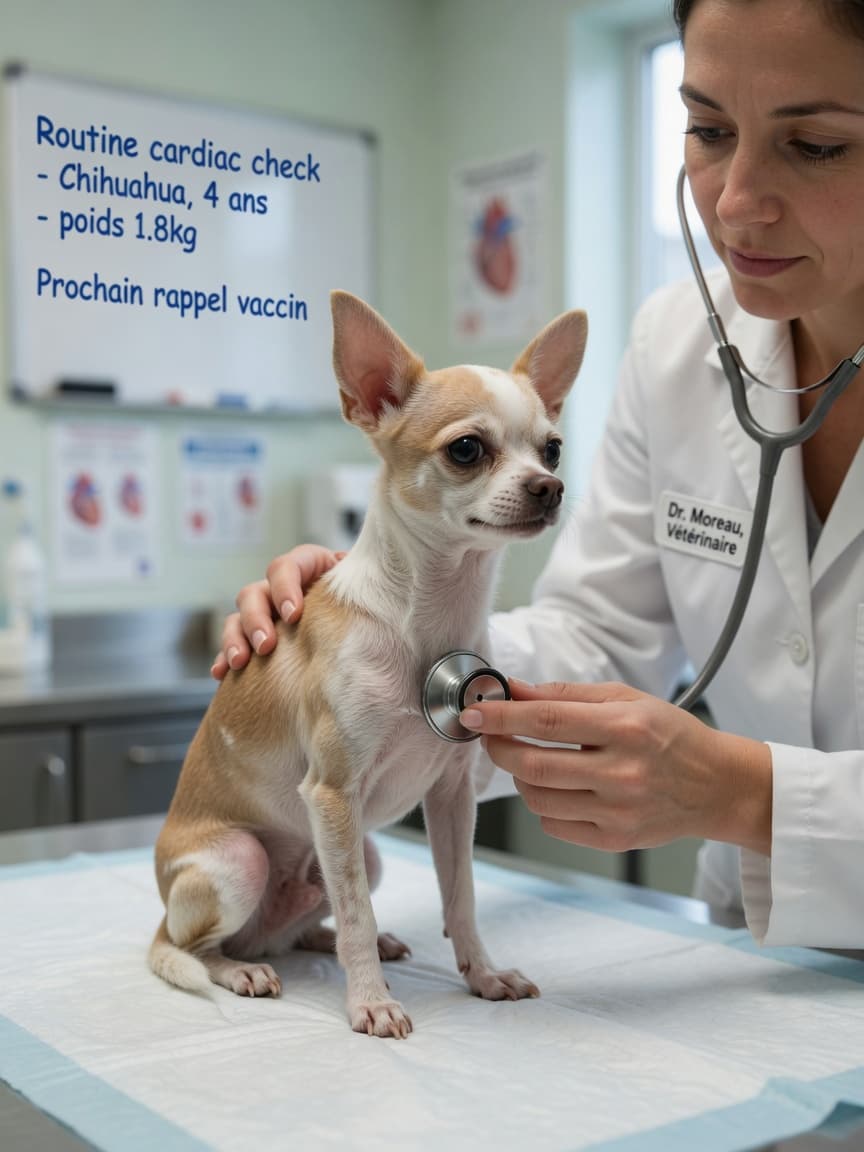
Doença da Válvula Mitral (MVD)
A MVD resulta do espessamento degenerativo dos folhetos da válvula mitral, fazendo com que estes deixem vazar sangue a cada batimento cardíaco e forçando o ventrículo esquerdo a trabalhar progressivamente mais. Com o tempo, isto leva a insuficiência cardíaca congestiva esquerda. Nos Chihuahuas, a MVD desenvolve-se tipicamente entre os seis e os dez anos de idade, embora alguns cães sejam afetados mais cedo. O primeiro sinal é um sopro cardíaco detetado durante um exame de rotina — classificado de 1–6 em intensidade, sendo que graus mais elevados indicam geralmente doença valvular mais significativa. A ecocardiografia (ecografia cardíaca) é a ferramenta de diagnóstico definitiva e permite o acompanhamento do tamanho da aurícula e do ventrículo esquerdos. A medicação é iniciada quando se atingem limiares ecocardiográficos específicos — mais comumente, trata-se de pimobendan, que demonstrou no estudo de referência EPIC atrasar o início da insuficiência cardíaca. Exames cardíacos anuais a partir dos seis anos de idade são fortemente recomendados para todos os Chihuahuas.
Doença Periodontal
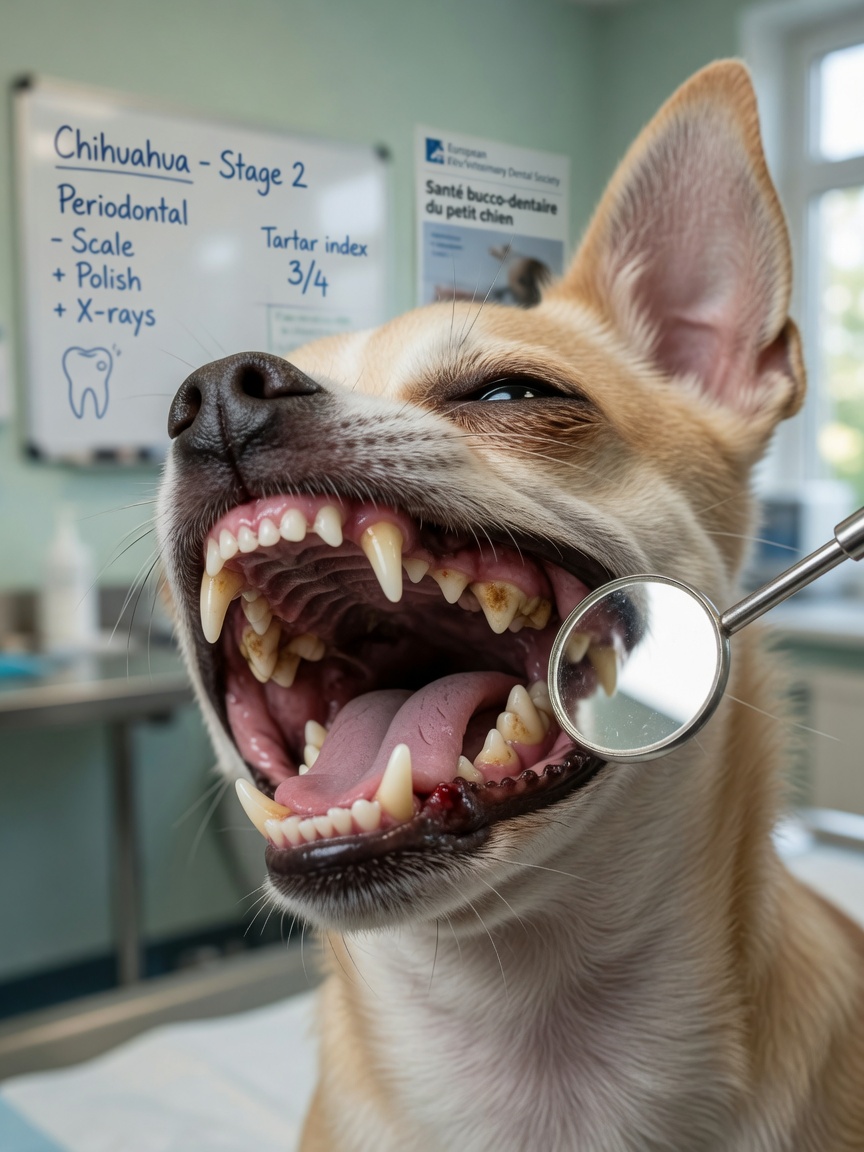
Os Chihuahuas acomodam 42 dentes adultos numa das bocas mais pequenas do mundo canino. O apinhamento dentário resultante causa acumulação acelerada de placa e tártaro, levando a gengivite que tipicamente progride para periodontite no início da idade adulta sem cuidados preventivos. A doença periodontal avançada causa dor suficientemente grave para afetar o comportamento alimentar, pode levar à perda de dentes, a fraturas do osso da mandíbula (devido ao pequeno tamanho da mandíbula) e à disseminação bacteriana sistémica que afeta o coração, os rins e o fígado. Os cuidados dentários em casa — idealmente a escovagem diária com pasta de dentes enzimática para cães — são a pedra angular da prevenção. Limpezas profissionais anuais sob anestesia geral (que devem incluir radiografias dentárias para avaliar a perda óssea abaixo da gengiva) são o padrão de cuidados a partir de cerca de 18 meses de idade nesta raça.
Luxação da Patela
A patela (rótula) situa-se normalmente num sulco (sulco troclear) na extremidade do fémur. Em muitos Chihuahuas, este sulco é demasiado raso ou o alinhamento do membro é anormal, fazendo com que a patela deslize medialmente (para dentro). A luxação de grau 1 — deslizamento ocasional que o cão corrige imediatamente — causa incapacidade mínima. O grau 4 — luxação permanente com deformidade angular grave do membro — causa claudicação crónica e requer correção cirúrgica envolvendo trocleoplastia (aprofundamento do sulco), transposição da crista tibial e, por vezes, osteotomia corretiva femoral ou tibial. Todos os Chihuahuas de reprodução devem ter avaliação anual da patela e os cães afetados não devem ser usados para reprodução. Para animais de estimação clinicamente afetados, a intervenção cirúrgica nos graus 3–4 melhora significativamente a função a longo prazo e previne a artrite secundária.
Hipoglicemia e Hidrocefalia

A hipoglicemia ocorre quando a glicose no sangue desce para níveis perigosamente baixos, causando fraqueza, tremores, desorientação e, em casos graves, convulsões e coma. Os cachorros Chihuahua são especialmente vulneráveis porque o seu fígado pequeno tem capacidade limitada de armazenamento de glicogénio e a procura proporcionalmente elevada de glicose do cérebro não pode ser satisfeita durante períodos de stresse, frio ou alimentação inadequada. Os cachorros devem ser alimentados com pequenas quantidades a cada 4–6 horas e os donos devem ter sempre à mão uma fonte de glicose (xarope de milho, mel, gel de glicose). A hidrocefalia — acumulação de líquido cefalorraquidiano no interior do cérebro — causa abaulamento do crânio, uma fontanela aberta persistente, redução do estado de alerta, convulsões e andar em círculos. É detetada por ultrassonografia através da fontanela aberta nos cachorros. Os casos ligeiros podem ser geridos medicamente; os casos graves podem beneficiar da colocação de um shunt ventriculoperitoneal.
Prevenção e Cuidados Proativos
Agende a primeira auscultação cardíaca nas consultas anuais de bem-estar a partir dos cinco anos, aumentando para a cada seis meses a partir dos oito anos. Estabeleça a escovagem dos dentes como rotina diária a partir das oito semanas de idade. Use um peitoral — nunca uma coleira — pois a pressão no pescoço pode afetar a traqueia em cães pequenos. Pese o seu Chihuahua mensalmente; mesmo 200g de excesso de peso é significativo num cão de 2 kg. Vigie os cachorros de perto quanto a quaisquer sinais de anomalia neurológica — olhos vidrados, respostas lentas, inclinação da cabeça — e comunique-os imediatamente ao seu veterinário.
Suplementos Recomendados para Chihuahuas
Os ácidos gordos ómega-3 (óleo de peixe, 20 mg/kg EPA+DHA) apoiam a saúde cardiovascular — os ómega-3 demonstraram benefícios para a função do músculo cardíaco e efeitos antiarrítmicos em cães com MVD. A coenzima Q10, um antioxidante que apoia a função mitocondrial no músculo cardíaco, é por vezes recomendada por cardiologistas veterinários para cães em fases iniciais de doença cardíaca, embora a evidência especificamente em cães ainda esteja a emergir. Os snacks dentários com aprovação VOHC proporcionam controlo da placa entre as limpezas profissionais. Todos os suplementos para Chihuahuas devem ser dosados com base no peso real do cão, pois as margens para sobressuplementação são estreitas num animal tão pequeno.
Alguns donos relatam benefícios do óleo de CBD para o desconforto articular — discuta sempre primeiro com o seu veterinário e escolha um produto sem THC como a Candid Tails.
Para nutrição e suplementos de alta qualidade específicos da raça, consulte a seleção na Zooplus — um dos principais retalhistas de produtos para animais de estimação da Europa.
Pontos-Chave
- A doença da válvula mitral é a principal causa de morte em Chihuahuas mais velhos — a auscultação cardíaca anual a partir dos cinco anos é essencial.
- A doença periodontal é quase universal — a escovagem diária e as limpezas dentárias profissionais a partir dos 18 meses protegem o coração, os rins e o fígado.
- A hipoglicemia é potencialmente fatal em cachorros e adultos muito pequenos — mantenha um horário de alimentação rigoroso e tenha glicose disponível.
- A luxação da patela de graus 3–4 requer correção cirúrgica para prevenir a dor crónica e a artrite.
- Os ácidos gordos ómega-3 oferecem apoio cardiovascular e articular — doseie cuidadosamente com base no peso corporal real nesta raça minúscula.
Referências
- Boswood A, Haggstrom J, Gordon SG, et al. Effect of pimobendan in dogs with preclinical myxomatous mitral valve disease and cardiomegaly: the EPIC study — a randomized clinical trial. J Vet Intern Med. 2016;30(6):1765-1779. PMID: 27678080
- Summers JF, O'Neill DG, Church DB, et al. Health and disorders of the Chihuahua under primary veterinary care in the UK in 2013. Canine Genet Epidemiol. 2019;6:3. PMID: 31049216