
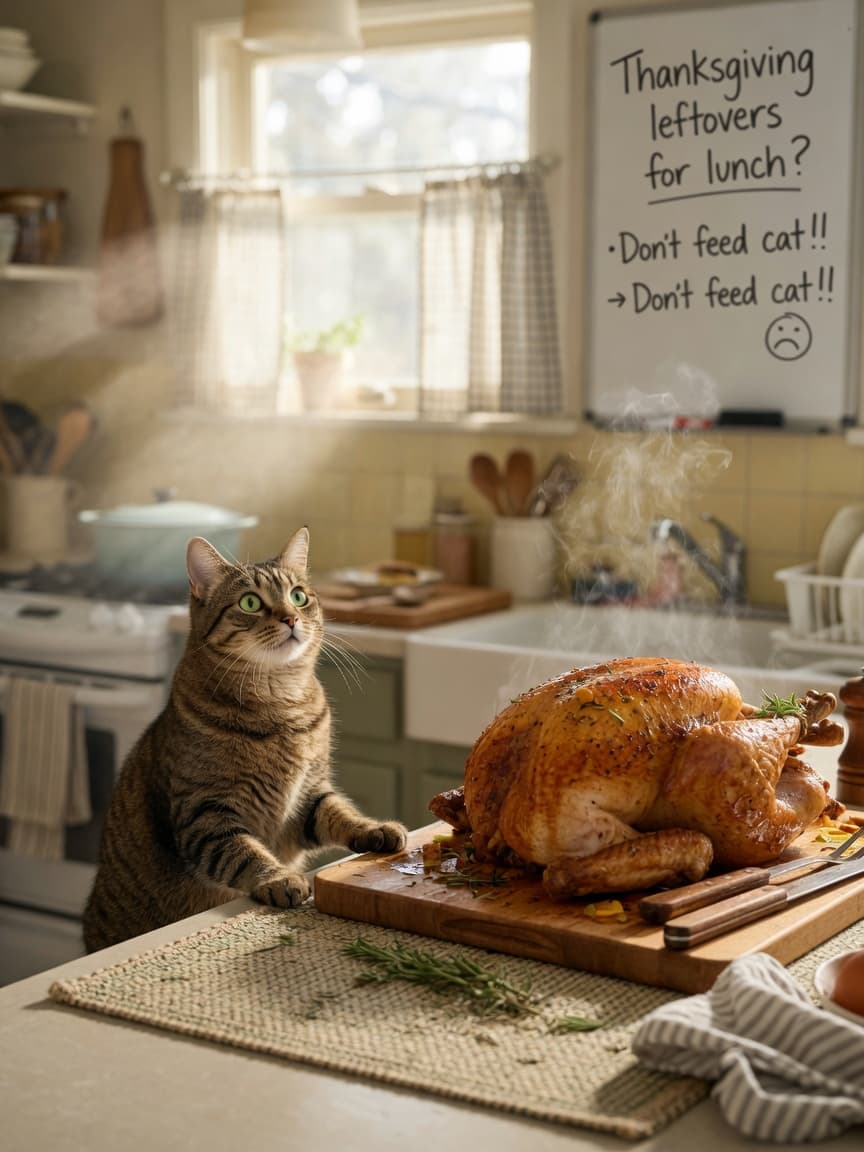
Os Gatos Podem Comer Peru? Guia Completo de uma Nutricionista
A cada época festiva, milhões de donos de gatos se deparam com um par de olhos felinos curiosos fixos na assadeira. E isso levanta uma pergunta perfeitamente razoável: os gatos podem comer peru? A resposta curta é sim — mas os detalhes sobre como é preparado é o que faz a diferença entre uma guloseima segura e uma visita ao veterinário de emergência.
Por Que o Peru é uma Boa Opção para Gatos
Os gatos são carnívoros obrigatórios. Isto não é simplesmente uma preferência dietética — é uma realidade biológica fundamental. Ao contrário dos onívoros, os gatos não têm a maquinaria metabólica para derivar eficientemente energia ou nutrientes essenciais de fontes vegetais. Eles necessitam de nutrientes pré-formados à base de animais, incluindo taurina, ácido araquidônico e vitamina A na sua forma de retinol. O peru, como proteína animal magra, oferece exatamente o tipo de nutrição para o qual o corpo de um gato foi construído.
O peru também é amplamente utilizado como ingrediente em ração para gatos comercial — o que é em si um sinal útil. Cientistas de alimentos e nutricionistas veterinários que formulam dietas felinas regularmente incluem peru como fonte de proteína devido à sua digestibilidade e perfil de aminoácidos. Oferecer ao gato um pequeno pedaço de peru cozido simples é, essencialmente, dar-lhe um alimento que o seu corpo já sabe como processar.
Benefícios Nutricionais do Peru para Gatos
O peito de peru cozido simples oferece aos gatos vários nutrientes significativos:
- Alto teor de proteína: O peito de peru tem aproximadamente 29 gramas de proteína por 100 gramas — uma das carnes mais magras e com maior teor de proteína disponíveis.
- Taurina: O peru contém taurina naturalmente presente, o aminoácido essencial que os gatos devem obter da alimentação. A taurina apoia a função cardíaca, saúde retiniana e saúde reprodutiva nos gatos.
- Vitaminas B: O peru é rico em niacina (B3), B6 e B12, que apoiam a função do sistema nervoso e o metabolismo energético.
- Selênio e zinco: Ambos os minerais encontrados no peru apoiam a função imunitária e a saúde da pele.
- Baixo teor de gordura (carne branca): O peito de peru é significativamente mais magro do que a carne escura, tornando-o uma opção mais segura para gatos propensos a ganho de peso ou com antecedentes de pancreatite.
Carne Branca vs. Carne Escura
Ao oferecer peru ao gato, a carne branca — particularmente o peito — é a escolha preferida. A carne escura contém significativamente mais gordura, que em excesso pode sobrecarregar o sistema digestivo de um gato e contribuir para pancreatite ao longo do tempo. Embora uma pequena quantidade de carne escura seja improvável de causar danos num gato adulto saudável, tornar a carne branca a opção padrão mantém o teor de gordura gerenciável e a guloseima genuinamente benéfica.
O Perigo dos Ossos Cozidos
Isto é inegociável: nunca dê ao gato ossos de peru cozidos. Quando os ossos de ave são cozidos, ficam frágeis e lascam-se em fragmentos afiados em vez de dobrarem ou quebrarem de forma limpa. Estes fragmentos podem perfurar o esófago, estômago ou intestinos — uma emergência que coloca a vida em risco. Os ossos crus de ave são geralmente mais flexíveis e são usados em alguns protocolos de alimentação crua sob orientação veterinária, mas os ossos cozidos de qualquer tipo devem sempre ser mantidos longe dos gatos.
Por Que a Pele Deve Ser Removida
A pele de peru pode parecer uma adição inofensiva, mas é problemática por duas razões. Em primeiro lugar, é extraordinariamente rica em gordura — muito mais do que a própria carne. Um pequeno pedaço de pele de peru pode desencadear um episódio de pancreatite, particularmente em gatos com excesso de peso ou com um sistema digestivo sensível. Em segundo lugar, a pele é muitas vezes onde os temperos e as gorduras de cozinha se concentram. Mesmo que pense que o peru foi minimamente temperado, a pele tende a absorver e reter o máximo de sabor — o que significa o máximo de tempero. Remova a pele antes de oferecer qualquer peru ao seu gato.
Ver alimentos para gatos en Zooplus →E Quanto ao Peru de Férias com Recheio e Tempero?
O peru temperado de férias está definitivamente fora de questão. O perigo mais comum é alho e cebola, ambos os quais são tóxicos para gatos em qualquer dose. Alho e cebola contêm tiossulfatos e compostos organosulfurados que danificam as células vermelhas do sangue felino, causando anemia hemolítica. Os sintomas podem não aparecer imediatamente — podem desenvolver-se ao longo de vários dias — tornando fácil confundir
```