
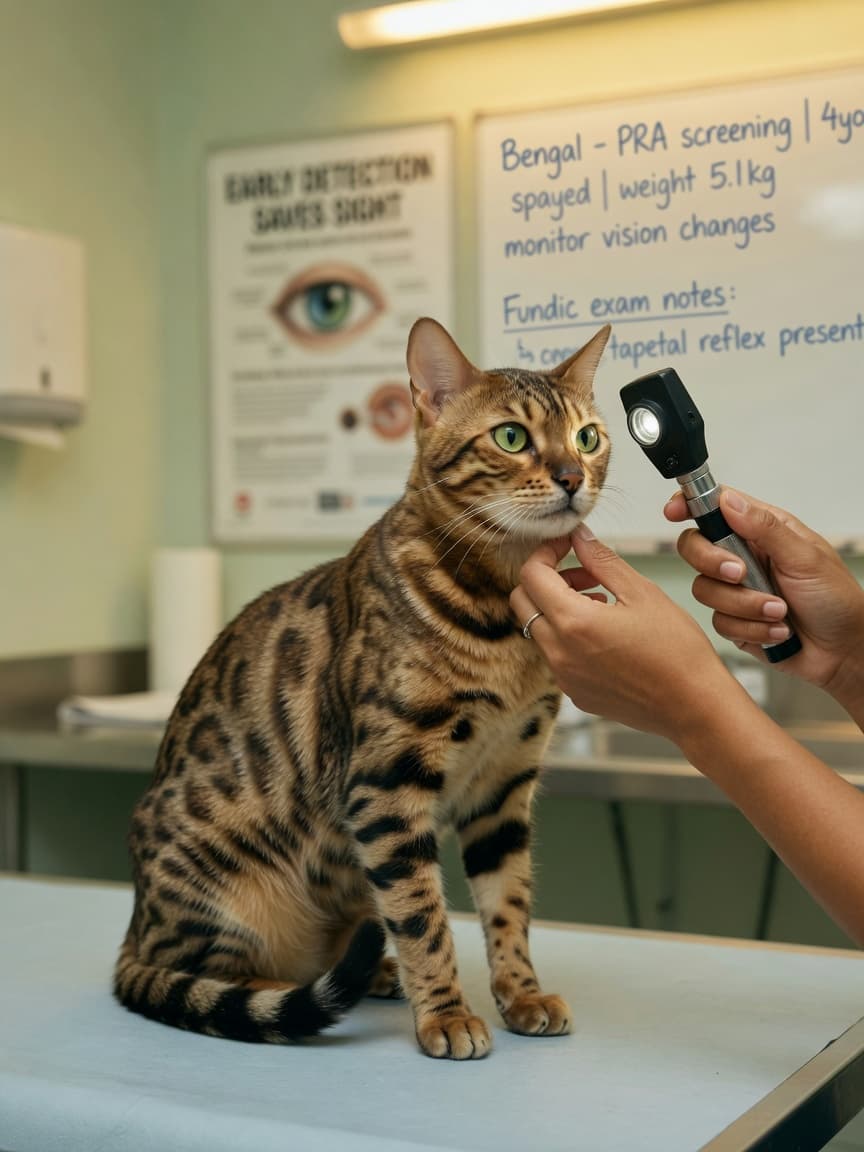
Saúde do Gato Bengal: PRA-b, HCM e Necessidades de Enriquecimento
- Esperança de vida: 12–16 anos
- Peso: 3,5–7 kg
- Principais riscos: PRA-b (atrofia progressiva da retina), HCM, Tritrichomonas foetus (parasita GI)
- Testes de DNA disponíveis: PRA-b, HCM (algumas linhas)
- Síndrome do gatinho com tórax achatado: monitorizar em recém-nascidos
O Bengal é uma raça híbrida de uma beleza impressionante, desenvolvida cruzando gatos domésticos com o Gato Leopardo Asiático (Prionailurus bengalensis). O resultado é um gato com uma estética selvagem — padrões de casaco com rosetas e marmoreado, corpo musculoso e atlético, olhos verde luminosos ou dourados — combinado com um temperamento doméstico em linhas bem socializadas. Os Bengals são altamente energéticos, muito inteligentes e emocionalmente exigentes. Também são propensos a um conjunto específico de preocupações de saúde hereditárias e infecciosas que os proprietários devem gerir proativamente. Eis o que precisa de saber.
Atrofia Progressiva da Retina Tipo b (PRA-b): Um Gene de Cegueira Testável por DNA
A Atrofia Progressiva da Retina tipo b (PRA-b) é uma doença hereditária dos olhos encontrada especificamente em gatos Bengal e causada por uma mutação no gene CEP290. A condição segue um padrão de herança autossómica recessiva, significando que um gato deve herdar duas cópias do gene defeituoso — uma de cada progenitor — para desenvolver a doença. Os gatos com uma cópia (portadores) têm visão normal mas podem transmitir a mutação aos seus descendentes.
A PRA-b causa a deterioração progressiva dos fotoreceptores de bastonetes e cones na retina. O primeiro sinal é normalmente a cegueira noturna (nyctalopia), pois as células de bastonetes — responsáveis pela visão com pouca luz — deterioram-se primeiro. Ao longo de meses a anos subsequentes, as células de cones também se deterioram, resultando em cegueira completa, normalmente aos 3–5 anos em indivíduos severamente afectados.
Um teste de DNA validado está comercialmente disponível. Criadores de Bengal responsáveis testam todos os gatos de reprodução e evitam cruzamentos PRA-b/PRA-b. Ao adquirir um gatinho Bengal, peça cópias dos resultados do teste PRA-b de ambos os progenitores. Não existe tratamento ou cura para PRA-b, mas os gatos que ficam cegos por esta condição podem adaptar-se de forma notável num ambiente doméstico estável e consistente.
Cardiomiopatia Hipertrófica (HCM)
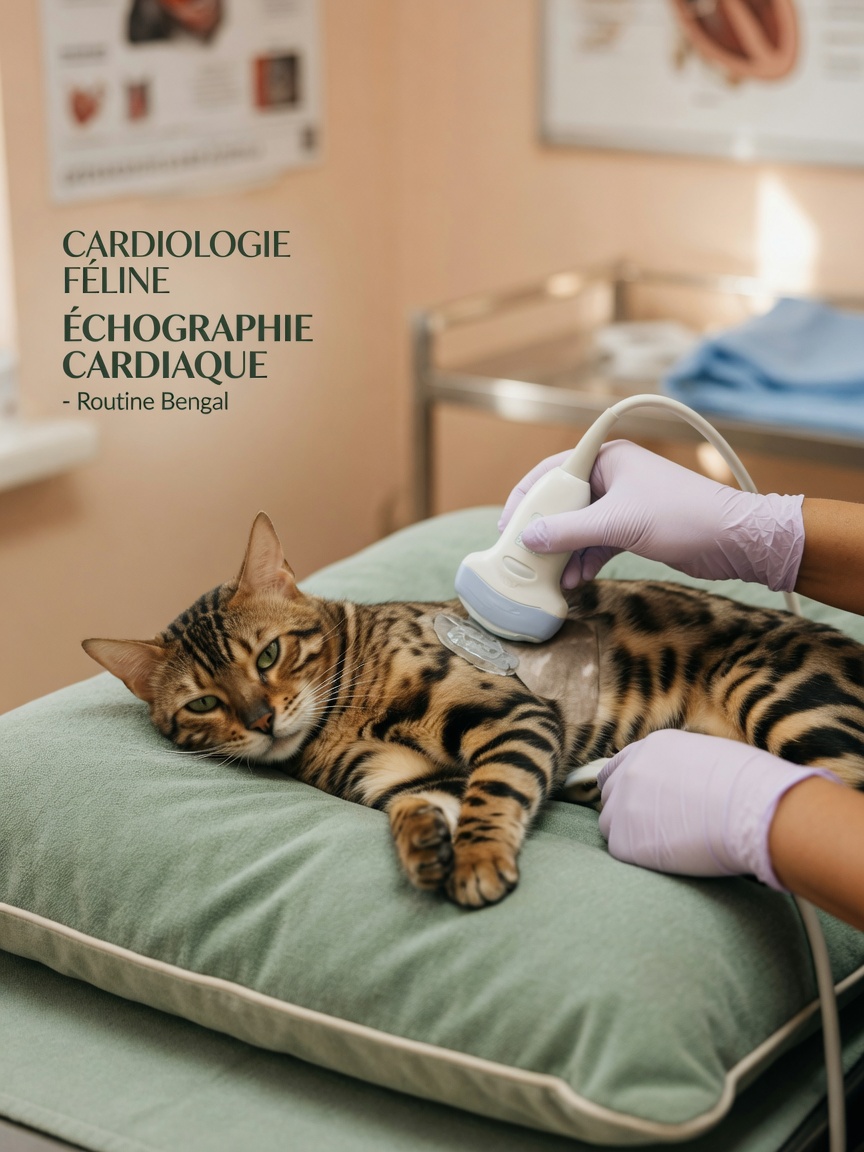
Como a maioria das raças de gatos de pedigree, os Bengals são susceptíveis à Cardiomiopatia Hipertrófica. A HCM em Bengals não tem uma única mutação bem caracterizada como a variante MYBPC3 em Maine Coons, o que limita a utilidade dos testes de DNA actuais para esta condição na raça. O rastreio ecocardiográfico continua a ser a ferramenta principal.
Os proprietários de Bengal devem começar ultrassons cardíacos anuais aos 2 anos de idade. Os Bengals com HCM confirmada requerem gestão cuidadosa: a sua elevada energia e tendência para se envolverem em atividade vigorosa podem colocar tensão adicional num coração comprometido. O seu cardiologista veterinário aconselhará sobre modificação da atividade e qualquer gestão farmacológica indicada.
Síndrome do Gatinho com Tórax Achatado (FCKS)
A Síndrome do Gatinho com Tórax Achatado é uma deformidade estrutural observada em recém-nascidos de Bengal na qual o tórax é anormalmente comprimido, dando à caixa torácica uma aparência achatada em vez da secção transversal arredondada normal. Os gatinhos severamente afectados lutam para respirar e amamentar, e muitos não sobrevivem ao período neonatal. Os gatinhos levemente afectados podem recuperar espontaneamente conforme crescem e a caixa torácica se expande, embora devam ser cuidadosamente monitorizados por um veterinário.
A base genética exata do FCKS em Bengals não está totalmente estabelecida. Criadores com experiência na condição frequentemente notam que aparece de forma esporádica em vez de seguir um padrão de Mendel simples. Se está a criar Bengals, trabalhe com um veterinário que tenha experiência neonatal felina e esteja preparado para cuidados de suporte intensivo — alimentação suplementar, suporte de posicionamento e calor — para gatinhos afectados.
Tritrichomonas Foetus: Um Parasita Gastrointestinal Comum
Tritrichomonas foetus (TF) é um parasita protozoário que coloniza o intestino grosso de gatos e é desproporcionalmente prevalente em Bengals, particularmente aqueles provenientes de gatis ou ambientes multi-gato. TF causa diarreia crónica e intermitente de intestino grosso que é frustradamente resistente aos tratamentos anti-parasitários padrão. As fezes são tipicamente moles, malcheirosas e podem conter muco ou sangue.
O diagnóstico requer um teste PCR específico em amostras fecais — TF é frequentemente ignorado em flutuação fecal padrão ou esfregaço direto. O antibiótico ronidazol é actualmente o tratamento mais eficaz, embora possa ter efeitos neurológicos em doses elevadas e deve ser usado sob supervisão veterinária rigorosa. A descontaminação ambiental também é importante, pois TF pode persistir em ambientes húmidos.
Qualquer Bengal com fezes cronicamente moles que falhe em responder à modificação dietética ou tratamento anti-parasitário padrão deve ser testado especificamente para Tritrichomonas foetus.
Enriquecimento: Não é Opcional para o Bem-Estar do Bengal
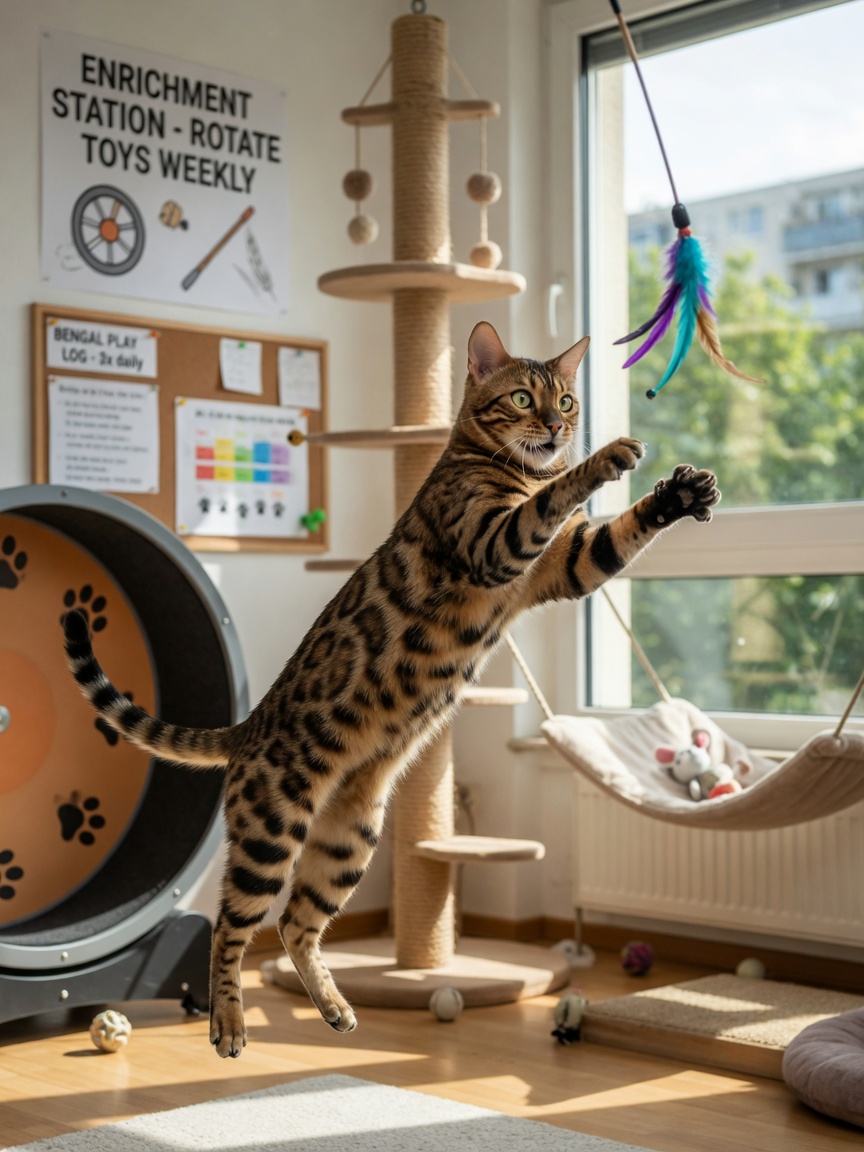
Os Bengals são animais de inteligência ao nível profissional. Sem adequada estimulação mental e física, desenvolvem problemas comportamentais — atividade destrutiva, agressão e doença relacionada ao stress incluindo alopecia psicogénica (sobre-asseio induzido pelo stress). Um Bengal num ambiente vazio é um Bengal infeliz e doente.
Requisitos mínimos de enriquecimento: pelo menos duas sessões de brincadeira interativa de 20 minutos diários usando brinquedos de varinha ou iscas de penas; uma roda de gato ou estrutura de escalada grande; poleiros de janela com vistas para o exterior; alimentadores tipo puzzle para todas as refeições; e idealmente um espaço exterior seguro e fechado ou acesso ao exterior com treino de coleira. Os Bengals mantidos como animais de estimação únicos em ambientes não estimulantes têm alto risco de stress crónico.
Alimente o lado selvagem do seu Bengal com nutrição premium. Compre ração para gatos de alta proteína na Zooplus →
Principais Conclusões
- PRA-b é um gene de cegueira autossómico recessivo — ambos os progenitores devem ser testados por DNA antes de se reproduzirem
- HCM requer rastreio ecocardiográfico anual a partir dos 2 anos; não existe teste de DNA validado para Bengals
- A síndrome do gatinho com tórax achatado é rara mas séria — trabalhe com criadores experientes e vet familiarizado com cuidados neonatais
- Tritrichomonas foetus é comum em Bengals — requer teste PCR específico, não é detetado em flutuação fecal padrão
- O enriquecimento não é um luxo: Bengals sem estimulação adequada desenvolvem problemas comportamentais graves e stress crónico