
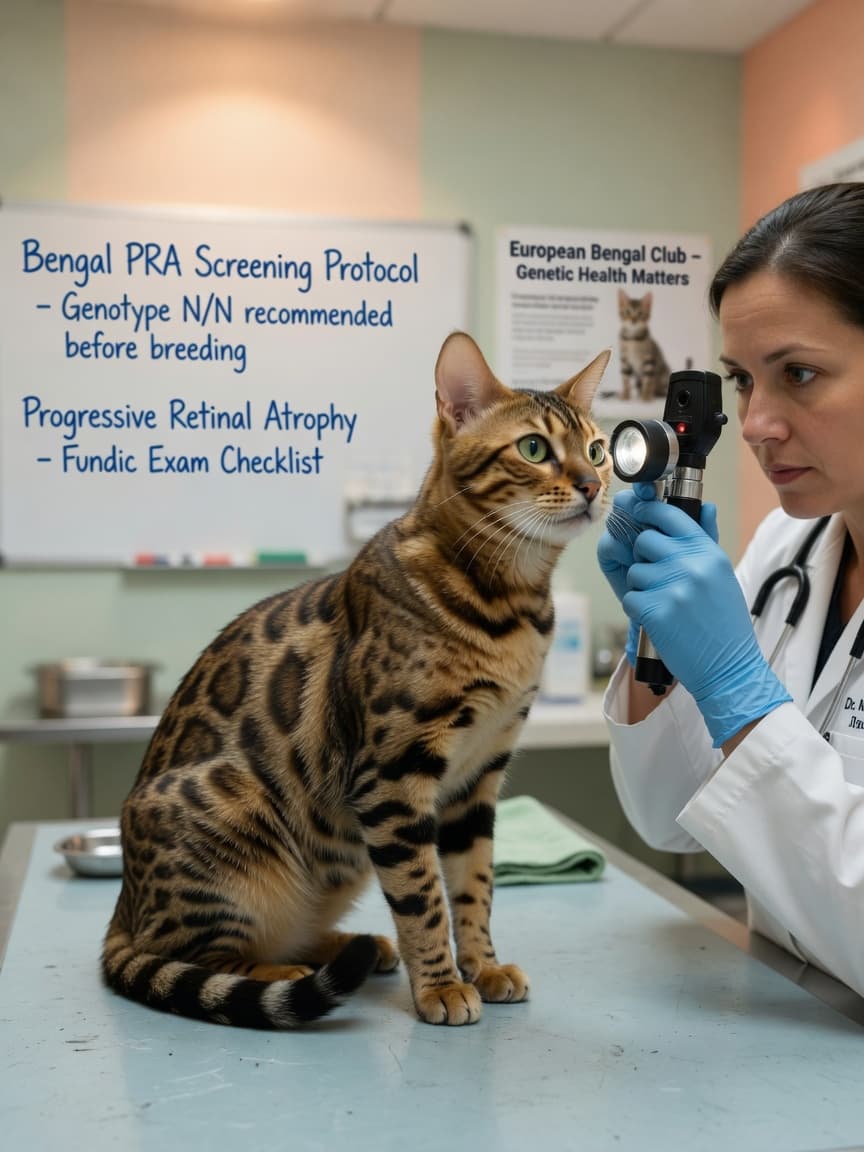
Bengal Cat Health Problems: A Guide for European Owners
The Bengal cat is a hybrid breed developed from crosses between the Asian leopard cat (Prionailurus bengalensis) and domestic cats. Bengals are energetic, intelligent, and visually striking — their spotted or marbled coats give them the look of a miniature wild cat. While Bengals are generally robust cats, the breed is predisposed to a number of specific genetic conditions that prospective owners and breeders should understand.
Progressive Retinal Atrophy (PRA-b)
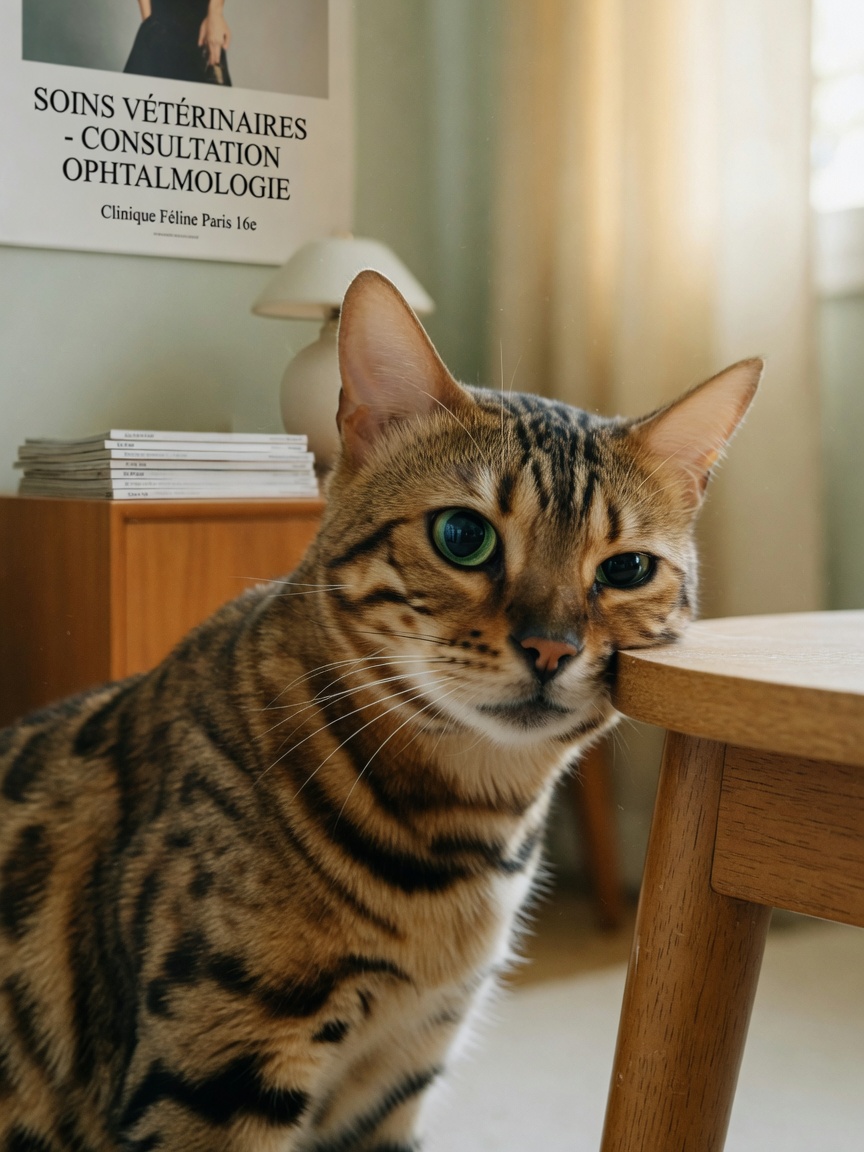
The most significant genetic health concern in Bengals is PRA-b — a form of progressive retinal atrophy caused by a mutation in the CEP290 gene. This condition causes the gradual degeneration of the photoreceptor cells in the retina, beginning with the rod cells (responsible for low-light vision) and progressing to affect cone cells (responsible for colour and daylight vision), eventually resulting in complete blindness.
PRA-b is inherited in an autosomal recessive pattern — a cat must inherit two copies of the mutation (one from each parent) to develop the disease. Cats with one copy (carriers) are unaffected but can pass the mutation to offspring. DNA testing is widely available at European veterinary genetics laboratories and is essential for all breeding Bengals.
Early signs of PRA-b include:
- Reluctance to move in dim light or unfamiliar areas at night
- Dilated pupils in normal lighting
- Increased reflectiveness (tapetal hyperreflectivity) visible in the eyes
- Bumping into furniture, particularly when room lighting changes
There is no treatment for PRA-b. Affected cats can adapt well to blindness in a consistent home environment, but prevention through responsible breeding is paramount. Reputable Bengal breeders in the UK, Germany, France, and the Netherlands test all breeding cats for PRA-b and will provide certificates to buyers.
Hypertrophic Cardiomyopathy (HCM)
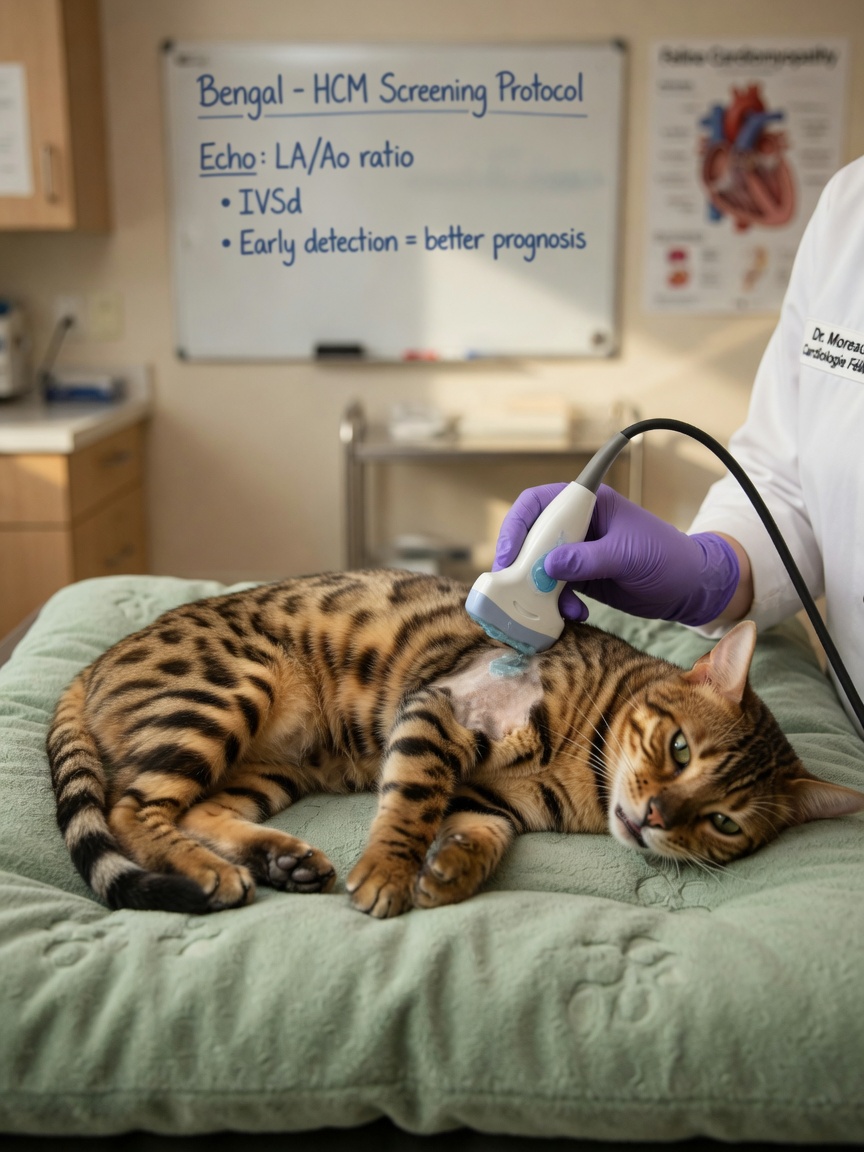
Like many pedigree cat breeds, Bengals have an elevated risk of hypertrophic cardiomyopathy — abnormal thickening of the heart muscle that impairs cardiac function. Unlike Maine Coons, where a specific MYBPC3 mutation has been identified, the genetic basis of HCM in Bengals is less well characterised, and there is no breed-specific DNA test available.
Echocardiographic (cardiac ultrasound) screening of breeding cats is therefore important in Bengals. Annual or biannual echocardiograms by a veterinary cardiologist can detect thickening before clinical signs develop. Signs of HCM in Bengals include rapid breathing, lethargy, exercise intolerance, and sudden hindlimb paralysis (aortic thromboembolism). Any of these signs warrants emergency veterinary attention.
Pyruvate Kinase Deficiency (PK Deficiency)
Pyruvate kinase (PK) deficiency is an inherited enzyme deficiency that causes haemolytic anaemia — premature destruction of red blood cells. It is caused by a mutation in the PKLR gene and is inherited in an autosomal recessive pattern. Affected cats develop chronic, intermittent anaemia that causes lethargy, weakness, reduced exercise tolerance, and, in some cases, abdominal enlargement due to a swollen spleen and liver.
DNA testing is available and should be performed on all breeding Bengals. The Bengal specific mutation is distinct from the one affecting Abyssinian cats, so breed-specific testing is important. A cat must carry two copies of the mutation to be clinically affected; carriers are healthy but should not be mated with other carriers.
Bengal Nose (Nasal Planum Crusting)
Some Bengal cats develop a crusty, scaly, or dry texture to the nasal planum (the skin of the nose tip). This condition — sometimes referred to informally as "Bengal nose" — can range from mild and cosmetic to more severe, where cracking and peeling cause discomfort. The exact cause is not fully understood; possible explanations include a breed predisposition to a form of hereditary nasal parakeratosis. Affected cats benefit from regular gentle moisturising of the nasal planum with a suitable product recommended by a vet.
Distal Neuropathy
A specific neurological condition known as distal neuropathy has been described in Bengal cats. It causes weakness and incoordination in the hindlimbs, beginning in early adulthood. The condition appears to be progressive in some individuals. The genetic basis is not fully established, and there is currently no DNA test available. Breeders should avoid reproducing from affected animals or those with affected relatives.
Tritrichomonas Foetus Infection
Bengals that are purchased from breeders with high cat density (cattery environments) are at elevated risk of Tritrichomonas foetus, a protozoal intestinal parasite that causes chronic, malodorous large bowel diarrhoea. The infection is particularly persistent and difficult to eliminate. Diagnosis requires specific PCR testing of faecal samples. Treatment with ronidazole can be effective, though this drug is not licensed for use in cats in all EU countries and requires specialist veterinary advice.
Responsible Bengal Ownership in Europe
When purchasing a Bengal kitten in Europe, prioritise breeders who:
- Provide DNA test certificates for PRA-b and PK deficiency for both parents
- Conduct regular echocardiographic screening of breeding cats
- Are registered with a recognised breed club (TICA or GCCF in the UK, LOOF in France, FIFE-affiliated clubs in Germany and Scandinavia)
- Raise kittens in a home environment with appropriate socialisation
Premium Bengal-appropriate diets with high protein content and no artificial additives are available at Zooplus. Bengals are highly active cats that benefit from environmental enrichment, puzzle feeders, and interactive play to maintain physical and mental wellbeing.