
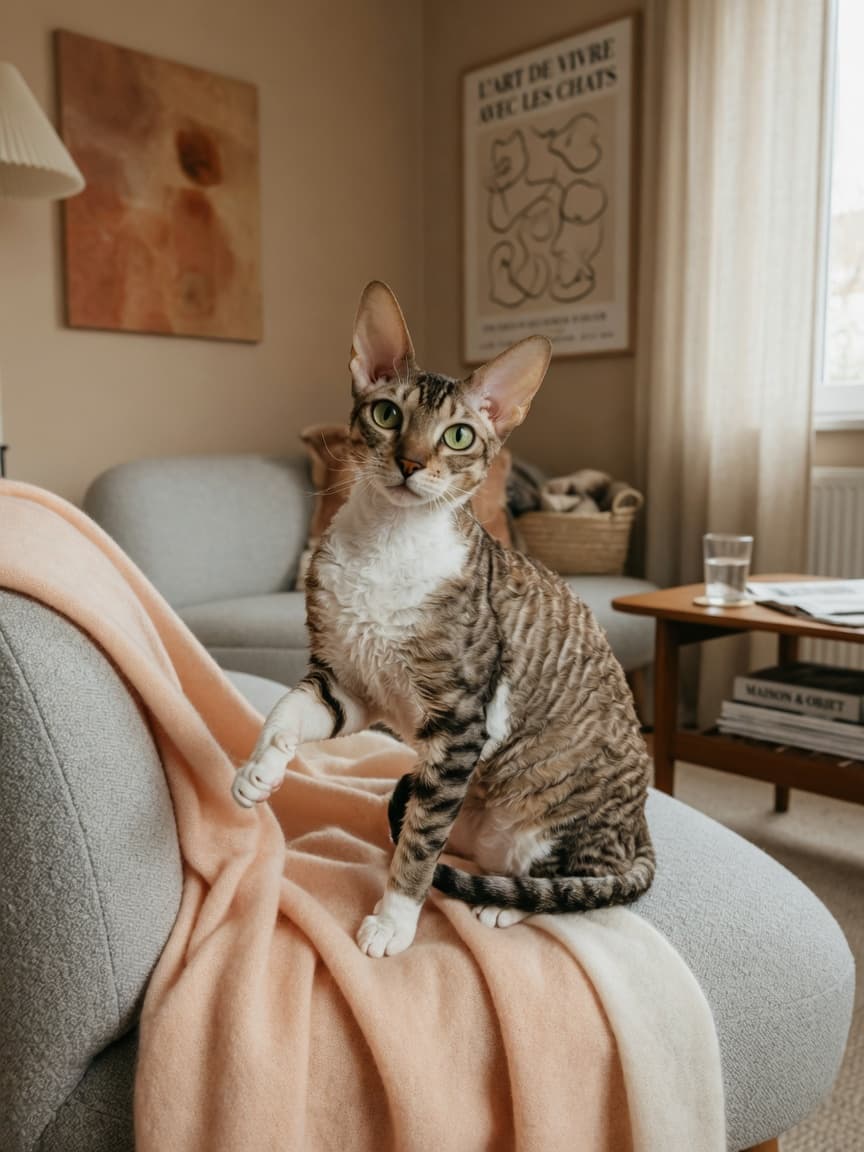
Il Cornish Rex è un gatto slanciato, eccezionalmente affettuoso, più adatto alle famiglie che desiderano un compagno interattivo e orientato alle persone piuttosto che un ornamento indipendente da grembo. La sua caratteristica distintiva è un mantello morbido e ondulato privo di peli di guardia, che gli conferisce un aspetto particolare ma significa anche che sente il freddo e necessita di un po' più di attenzione ambientale rispetto a un tipico gatto a pelo corto. La principale considerazione sanitaria per la razza è una predisposizione documentata a una condizione di debolezza muscolare ereditaria (miopatia), insieme ai problemi articolari e cardiaci osservati più in generale nella popolazione felina.
Panoramica della razza
- Taglia: da piccola a media, in genere 2,5–4,5 kg, con una struttura ossea fine e atletica
- Aspettativa di vita: comunemente indicata in 12–16 anni con buone cure
- Mantello: corto, morbido e costantemente ondulato (a onde marcè) senza peli di guardia visibili; si presenta in un'ampia gamma di colori e disegni
- Origine: Cornovaglia, Inghilterra, originato da una mutazione genetica naturale in una cucciolata di fattoria negli anni Cinquanta
Temperamento e adattabilità alla famiglia
I Cornish Rex sono noti per essere vivaci, orientati alle persone e spesso descritti come «simili ai cani» per la loro prontezza nel salutare, seguire e interagire con i membri della famiglia. Tendono a legarsi strettamente ai proprietari e spesso cercano grembi caldi, spalle e coperta — in parte per personalità, in parte per un autentico bisogno di calore dato il loro mantello sottile. Questo li rende una buona scelta per le famiglie che vogliono un gatto coinvolto e socievole che ama far parte della vita quotidiana, comprese le case con bambini che sanno maneggiarli con delicatezza, e altri animali sicuri di sé.
Sono intelligenti e giocosi fino all'età adulta, conservando spesso la curiosità da gattino e il gusto per arrampicarsi, inseguire e i giochi di tipo puzzle. I proprietari che possono offrire interazione regolare, spazio verticale e arricchimento tendono a ottenere il meglio dal temperamento di questa razza. I Cornish Rex in genere non prosperano se lasciati soli per periodi molto lunghi, poiché noia e solitudine possono portare a comportamenti di ricerca di attenzione come vocalizzare o esplorare in modo distruttivo.
Problemi di salute nei Cornish Rex
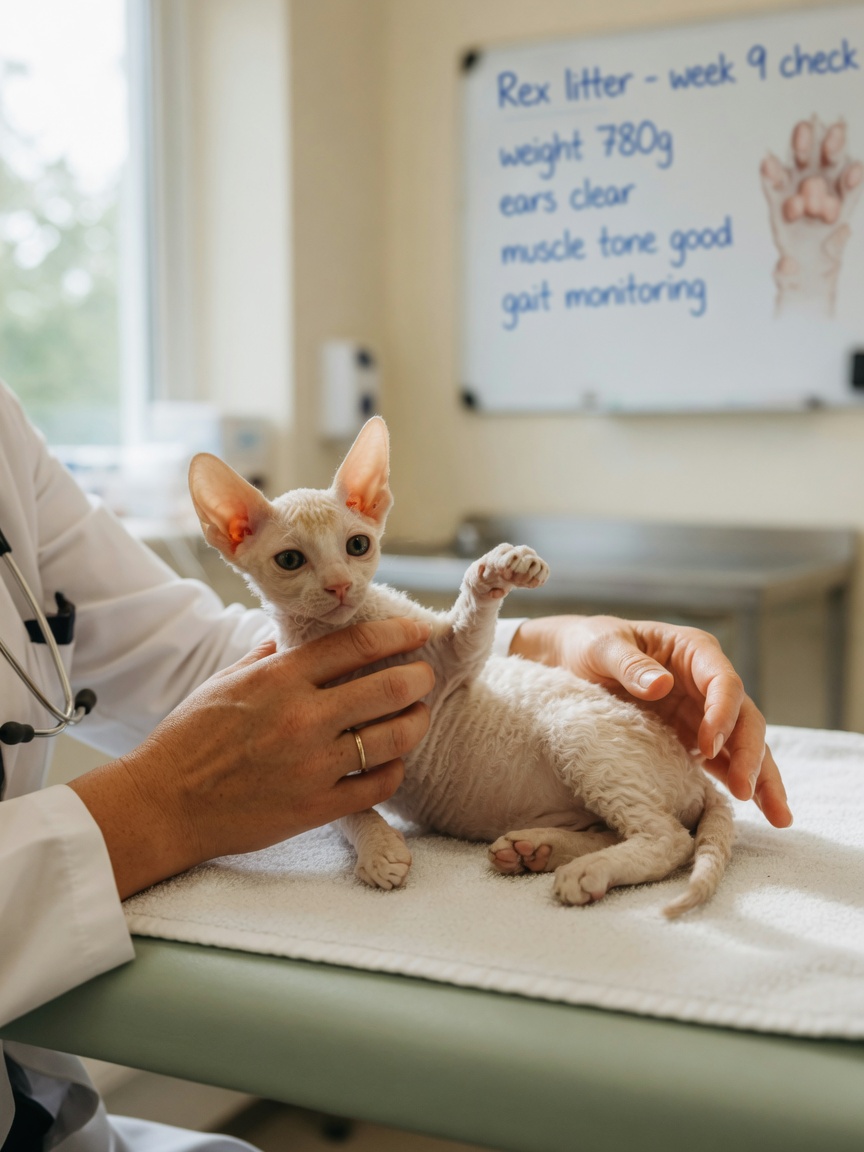
Il Cornish Rex è generalmente considerato una razza robusta, ma come per qualsiasi gatto di razza plasmato da un patrimonio genetico fondatore relativamente ristretto, alcune condizioni sono segnalate più frequentemente rispetto alla popolazione felina generale. Essere consapevoli di queste permette ai proprietari di individuare i segni precoci e collaborare in modo proattivo con il veterinario.
Miopatia ereditaria (ipotonica)
Si tratta di una condizione muscolare collegata alla stessa base genetica responsabile del mantello riccio della razza, ed è una delle problematiche più specificamente documentate nei gatti di tipo Rex. I gattini affetti hanno tono e forza muscolare ridotti, che possono manifestarsi come un'andatura insolita e barcollante, difficoltà a tenere la testa sollevata, affaticamento dopo uno sforzo lieve o una postura incurvata. I segni vengono di solito notati precocemente nell'età del gattino, a volte già a poche settimane di vita.
Non esiste una cura per la forma ereditaria, ma molti gatti affetti possono condurre una vita ragionevolmente confortevole con una gestione di supporto, che comprende un ambiente domestico tranquillo, facile accesso al cibo e alle lettiere, e un attento monitoraggio veterinario per le complicanze. Gli allevatori seri dovrebbero essere in grado di discutere il quadro sanitario dei genitori di un gattino, e qualsiasi gattino nuovo che mostri debolezza muscolare, tremori o un'andatura anomala dovrebbe essere valutato tempestivamente da un veterinario.
Lussazione della rotula
La lussazione della rotula — in cui la rotula scivola fuori dalla sua sede normale — è segnalata nel Cornish Rex più spesso che in alcune altre razze, probabilmente in relazione alla loro struttura ossea fine e leggera. I segni precoci includono un saltello o un balzo occasionale nella zampa posteriore, una zoppia breve che si risolve rapidamente, o riluttanza a saltare da un'altezza che il gatto gestiva facilmente in precedenza.
I casi lievi possono essere gestiti in modo conservativo con il controllo del peso e un ambiente domestico che eviti salti ripetitivi ad alto impatto su superfici dure. Una lussazione più pronunciata o ricorrente può richiedere una valutazione veterinaria per un'eventuale correzione chirurgica. I proprietari che notano qualsiasi problema articolare dovrebbero anche informarsi sui principi generali di salute articolare e gestione della mobilità, molti dei quali — come il controllo del peso, ambienti favorevoli alle articolazioni e una revisione veterinaria precoce — si applicano a tutte le specie anche se la condizione di riferimento è più ampiamente studiata nei cani.
Displasia dell'anca
Sebbene ben più nota nelle razze canine di taglia grande, la displasia dell'anca è stata segnalata anche nel Cornish Rex, probabilmente in relazione alla loro struttura ossea insolitamente leggera. Questa condizione comporta uno sviluppo anomalo dell'articolazione dell'anca, che può portare a lassità, disagio e, col tempo, ad alterazioni da usura. Gli indicatori precoci includono un'andatura a saltelli da coniglio, riluttanza a saltare o arrampicarsi, rigidità dopo il riposo, o un livello di attività ridotto rispetto al carattere abituale del gatto.
La diagnosi in genere prevede un esame fisico e, se necessario, radiografie dell'anca. La gestione si concentra di solito sul mantenimento di un peso corporeo magro, sulla fornitura di aree di riposo morbide e di supporto, e sull'evitare salti eccessivi dall'alto durante la crescita. I gatti che mostrano rigidità persistente o cambiamenti nell'andatura dovrebbero sempre essere esaminati da un veterinario piuttosto che ritenuti semplicemente «in rallentamento».
Cardiomiopatia ipertrofica (HCM)
L'HCM — un ispessimento del muscolo cardiaco — è la condizione cardiaca più comunemente segnalata in molti gatti di razza e non di razza, e il Cornish Rex non è esente da questa predisposizione felina generale. Le fasi iniziali spesso non mostrano alcun sintomo evidente, ed è per questo che l'HCM a volte viene rilevata solo durante un controllo veterinario di routine tramite un soffio cardiaco o un ritmo irregolare. Con il progredire della condizione, i segni possono includere respiro affannoso, letargia, appetito ridotto o, nei casi più avanzati, collasso improvviso.
I controlli veterinari di routine, in particolare quando i gatti entrano nella mezza età, sono il modo più pratico per individuare precocemente l'HCM. I veterinari possono raccomandare screening cardiaci periodici (come l'ecografia) per gli individui a rischio, in particolare quelli provenienti da linee con una storia nota di malattie cardiache. Non c'è modo per i proprietari di prevenire l'HCM, ma la diagnosi precoce consente una gestione e un monitoraggio più informati.
Sensibilità cutanea e termoregolazione
Poiché i Cornish Rex sono privi dei peli di guardia che proteggono la pelle della maggior parte dei gatti, la loro pelle può essere più esposta ai fattori ambientali, tra cui le scottature solari sulle aree chiare o a mantello sottile e una tendenza generale a sentire il freddo più rapidamente rispetto alle razze a mantello denso. Alcuni proprietari segnalano anche un'incidenza leggermente più alta di irritazione cutanea o pelle reattiva, quindi qualsiasi grattamento persistente, arrossamento, desquamazione o diradamento del pelo oltre il normale aspetto rado del mantello della razza merita un controllo veterinario. Alcuni dei principi generali trattati in questa guida alle sensibilità cutanee e alle reazioni cutanee allergiche — come identificare i fattori scatenanti, evitare prodotti per la toelettatura aggressivi e rivolgersi precocemente al veterinario — sono ampiamente pertinenti anche se si concentra sui cani.
Le cure pratiche includono fornire una cuccia calda, evitare l'esposizione prolungata al sole diretto e usare prodotti per la pelle adatti ai gatti (non umani) solo sotto guida veterinaria se si sviluppa irritazione.
Nutrizione e alimentazione
I Cornish Rex sono spesso descritti come caratterizzati da un metabolismo veloce e da un appetito robusto rispetto alle loro dimensioni, in parte attribuito al costo energetico del mantenimento del calore corporeo con un mantello sottile. Questo significa che il controllo delle porzioni resta importante — un malinteso comune è che un Rex «ingordo» abbia bisogno di cibo illimitato, quando in realtà l'obesità pone uno sforzo extra sulle articolazioni già predisposte a problemi come la lussazione della rotula e la displasia dell'anca in questa razza.
Una dieta completa e bilanciata adeguata allo stadio di vita è il fondamento di una buona pratica alimentare. I gattini hanno esigenze di sviluppo specifiche, e comprendere i modelli di sviluppo normale tramite una risorsa come questa guida ai principi nutrizionali per le fasi di crescita può aiutare i proprietari a capire perché l'alimentazione adeguata alla fase di crescita è importante, anche se è scritta pensando ai cuccioli di cane. Man mano che i Cornish Rex entrano negli anni senior, gli aggiustamenti della densità calorica, dei nutrienti di supporto alle articolazioni e della digeribilità diventano da discutere con un veterinario, seguendo un ragionamento simile a quello delineato nelle risorse sulle considerazioni sull'alimentazione degli anziani.
Alcuni proprietari esplorano anche integrazioni di supporto intestinale come i probiotici, in particolare in occasione di transizioni alimentari o dopo un disturbo gastrointestinale; un contesto generale basato sulle evidenze su questo argomento si trova nelle discussioni sull'uso dei probiotici e sulle evidenze a supporto, con qualsiasi applicazione ai gatti da confermare preferibilmente con un veterinario, poiché non tutti i prodotti sono formulati o dosati in modo appropriato per l'uso felino.
Toelettatura e cura
Nonostante (o proprio a causa di) il loro mantello insolito, i Cornish Rex richiedono relativamente poca manutenzione per la toelettatura. Il loro pelo fine e ondulato non ha lunghi peli di guardia che trattengono sporco o formano nodi, quindi una delicata passata con un panno o una spazzola morbida ogni una o due settimane è di solito sufficiente per rimuovere i peli morti e distribuire gli oli naturali. Il bagno è raramente necessario a meno che la pelle non diventi visibilmente grassa, cosa che può accadere in questa razza più che in alcune altre a causa della struttura del mantello.
Poiché sono a sangue caldo ma con poco mantello, molti Cornish Rex apprezzano — e cercano — calore extra: letti riscaldati, coperte, davanzali soleggiati (con limiti di esposizione al sole ragionevoli) e contatto stretto con i proprietari. Le orecchie dovrebbero essere controllate regolarmente, poiché alcuni gatti di tipo Rex possono accumulare più cerume rispetto alle razze a mantello denso, e le unghie dovrebbero essere tagliate di routine come per qualsiasi gatto da interno.
Esigenze di esercizio e addestramento
Si tratta di una razza attiva e agile che ama arrampicarsi, inseguire e il gioco interattivo ben oltre i tipici anni da gattino. Alberi per gatti, posatoi alle finestre e giocattoli a rotazione aiutano a soddisfare il loro bisogno sia di attività fisica sia di stimolazione mentale. I Cornish Rex spesso imparano a riportare, a camminare con la pettorina o a rispondere a segnali semplici, e molti proprietari scoprono che rispondono bene all'addestramento basato sul rinforzo positivo data la loro intelligenza e la prontezza a coinvolgersi.
A causa delle loro predisposizioni articolari, è sensato fornire modi sicuri e a minor impatto per arrampicarsi e giocare — mobili robusti e ben ancorati piuttosto che incoraggiare salti ripetuti da altezze significative su pavimenti duri. Sessioni di gioco regolari e moderate tendono ad adattarsi meglio a questa razza rispetto a esplosioni infrequenti ad alta intensità.
Domande frequenti
I Cornish Rex sono ipoallergenici?
Nessun gatto è veramente ipoallergenico, compreso il Cornish Rex. Il loro mantello fine e a bassa muta può significare meno peli visibili in casa, ma gli allergeni che scatenano la maggior parte delle reazioni umane provengono dalle secrezioni cutanee e dalla saliva piuttosto che dalla sola lunghezza del pelo, quindi chi soffre di allergie dovrebbe passare del tempo con la razza prima di impegnarsi.
I Cornish Rex devono indossare vestiti?
Alcuni proprietari usano maglioni per gatti o coperte con il freddo, in particolare per individui anziani, malati o molto sensibili, poiché il mantello sottile della razza offre un isolamento limitato. Non è essenziale per ogni gatto, ma mantenere la casa confortevolmente calda e fornire una cuccia accogliente è una base ragionevole.
Quanta toelettatura serve realmente a un Cornish Rex?
Notevolmente meno di quanto la maggior parte delle persone si aspetti. Una spazzolata o una passata leggera ogni una o due settimane, insieme ai controlli di routine di orecchie e unghie, è generalmente sufficiente, poiché il mantello è privo del sottopelo denso che causa infeltrimento in molte altre razze.
Il Cornish Rex è una buona scelta per un proprietario di gatti alla prima esperienza?
Possono esserlo, a condizione che il proprietario sia preparato a un gatto interattivo e socievole che vuole compagnia e stimolazione mentale piuttosto che lunghi periodi di indipendenza. Comprendere le predisposizioni sanitarie specifiche della razza e impegnarsi in controlli veterinari regolari aiuterà qualsiasi nuovo proprietario, esperto o meno, a prendersi cura bene di un Cornish Rex.
Questa guida è destinata unicamente a scopi informativi generali e non sostituisce il parere veterinario individuale. Consultare sempre un veterinario qualificato per quanto riguarda le esigenze sanitarie specifiche, la diagnosi o il trattamento del proprio animale.