
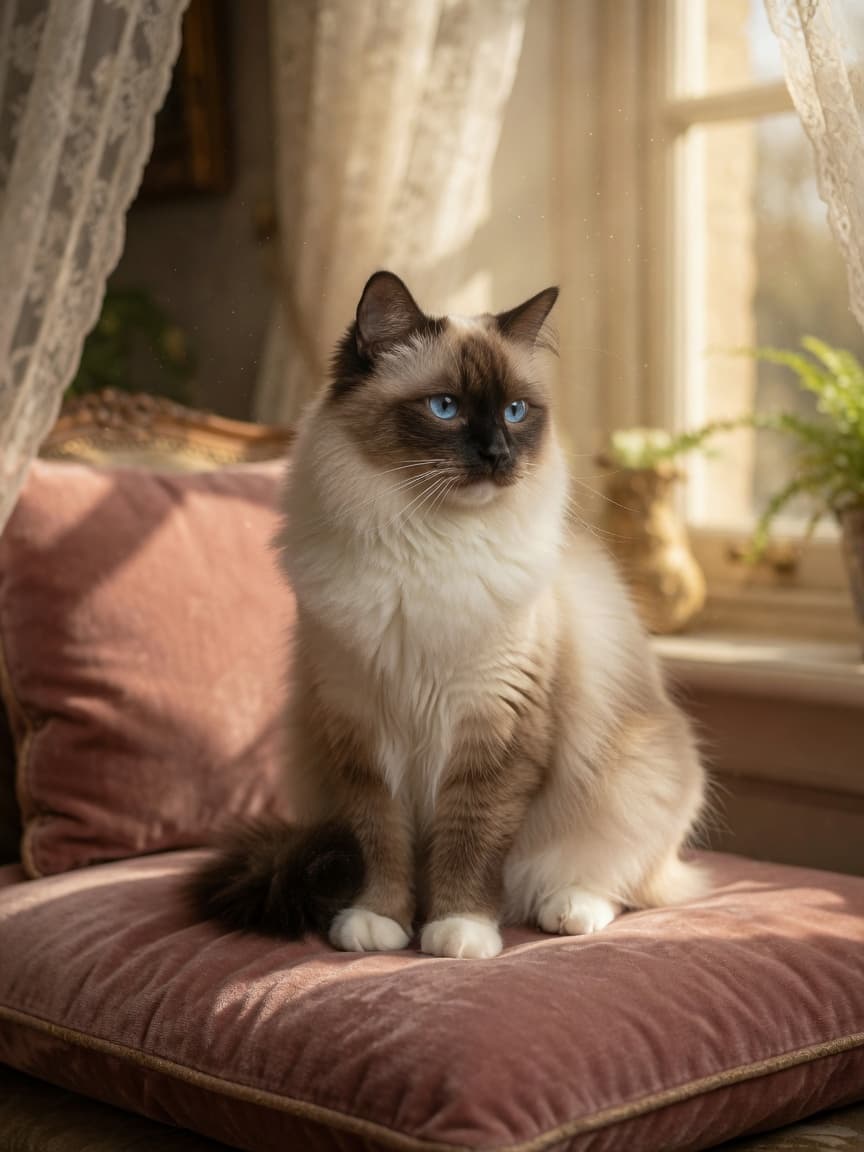
Il birmano è un gatto a pelo semilungo, dolce e affettuoso, apprezzato per i suoi occhi blu intensi, il manto setoso a bassa perdita di pelo e la natura placida, il che lo rende una scelta eccellente sia per le famiglie sia per i proprietari alle prime armi. Conosciuto come il "Sacro di Birmania", questa razza è generalmente robusta e longeva, sebbene i futuri proprietari debbano essere consapevoli che i birmani presentano un rischio aumentato di malattia renale ereditaria e di alcune patologie cardiache per le quali gli allevatori responsabili effettuano oggi lo screening.
Panoramica della razza
- Taglia: Da media a grande, in genere 4-7 kg, con i maschi sensibilmente più pesanti delle femmine
- Aspettativa di vita: Comunemente indicata in 12-16 anni con buone cure
- Manto: Semilungo, setoso, a pelo singolo con sottopelo minimo; disegno colourpoint con distintivi "guanti" bianchi su tutte e quattro le zampe
- Origine: Si ritiene si sia sviluppato in Birmania (Myanmar) con associazioni ai templi, sebbene la razza moderna sia stata costituita e raffinata in Francia all'inizio del XX secolo
Temperamento e idoneità alla vita familiare
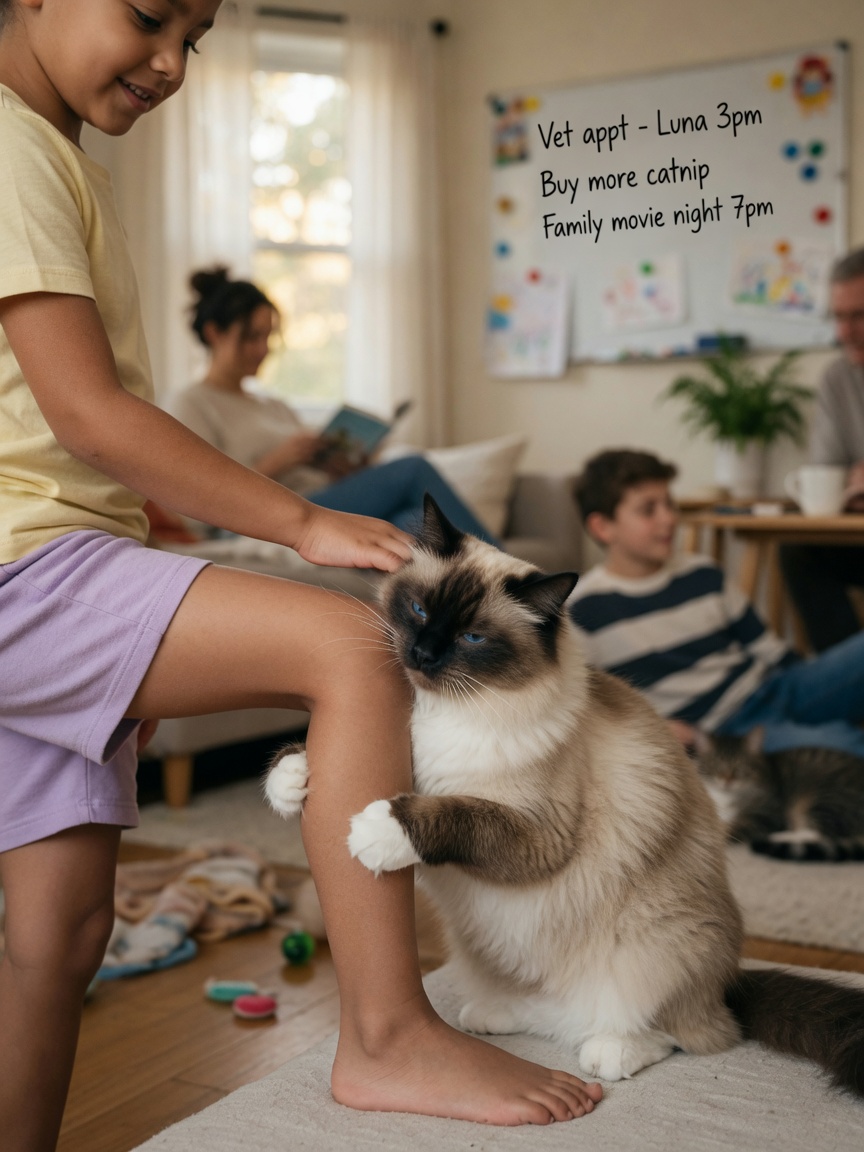
I birmani sono ampiamente descritti come gatti calmi, socievoli e orientati alle persone, che trovano il loro benessere nella compagnia piuttosto che nell'indipendenza. Tendono a formare legami stretti con ogni membro del nucleo familiare, compresi i bambini e gli altri animali domestici, e di solito tollerano la manipolazione, il che li rende una scelta popolare per le famiglie. A differenza di alcune razze orientali più vocali, i birmani sono generalmente di voce soave e comunicano con dolci trilli piuttosto che con richieste insistenti.
Questa non è una razza che sopporta bene di essere lasciata sola per lunghi periodi. I birmani sono noti per voler essere coinvolti nella vita quotidiana della casa, spesso seguendo i proprietari da una stanza all'altra, e alcuni individui possono diventare ansiosi o sviluppare comportamenti di ricerca di attenzione se poco stimolati. In genere vanno d'accordo con cani e altri gatti se presentati in modo sensato, e i loro livelli di energia moderati fanno sì che amino le sessioni di gioco senza essere inesorabilmente attivi come alcune razze. La loro natura accomodante li rende inoltre ben adatti alle case con più animali, purché le presentazioni siano graduali e ogni animale abbia le proprie risorse.
Problemi di salute nei gatti birmani
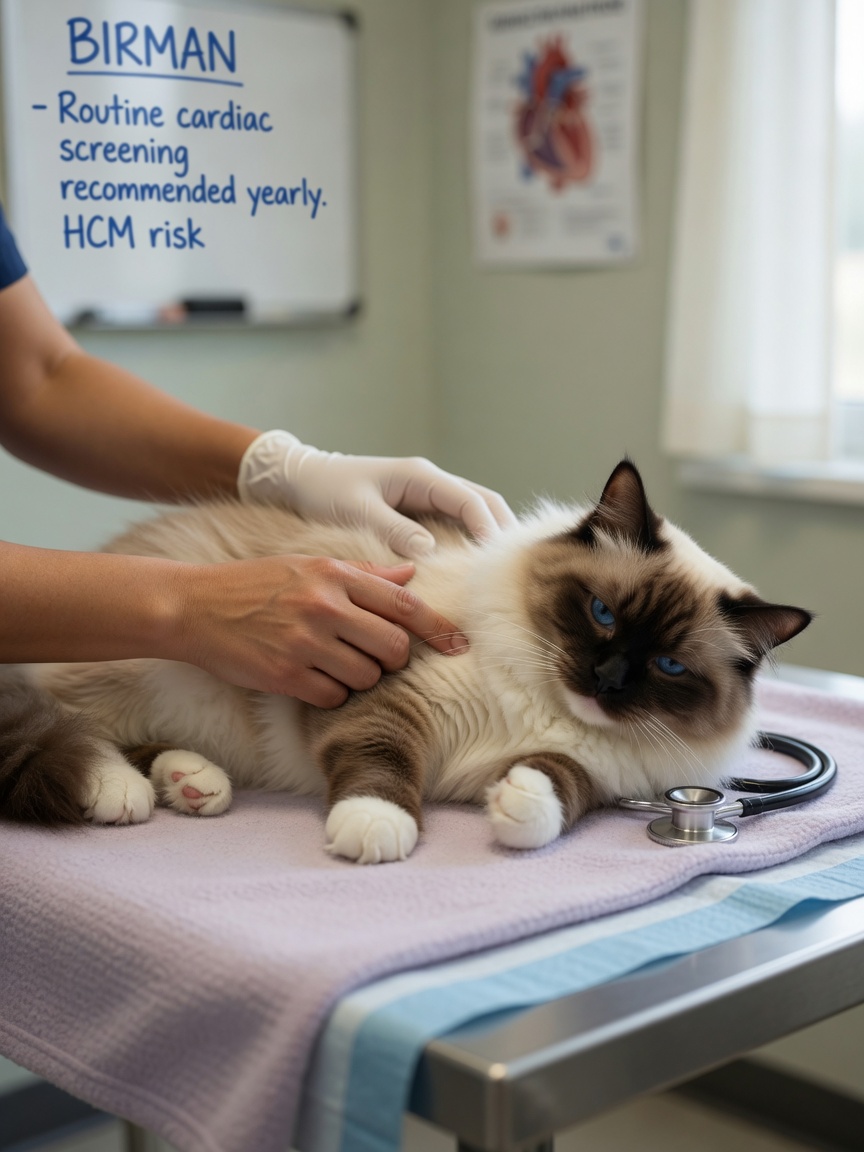
I birmani sono generalmente una razza robusta, ma come per la maggior parte dei gatti di razza, alcune condizioni compaiono più frequentemente all'interno della razza. Gli allevatori responsabili in genere sottopongono a screening i gatti da riproduzione per alcuni di questi problemi, e la consapevolezza aiuta i proprietari a cogliere i segni precoci.
Cardiomiopatia ipertrofica felina (HCM)
La HCM è una malattia in cui il muscolo cardiaco si ispessisce, riducendo la capacità del cuore di pompare il sangue in modo efficiente. È una delle patologie cardiache più comunemente segnalate in molti gatti di razza e non di razza, e i birmani sono tra le razze in cui è stata documentata. I segni precoci possono essere sottili o del tutto assenti nelle fasi iniziali, motivo per cui la malattia a volte viene individuata solo durante un controllo veterinario di routine, quando si rileva un soffio cardiaco o un ritmo irregolare. Nei casi più avanzati, i proprietari possono notare respiro faticoso, letargia, appetito ridotto o collasso improvviso. Controlli veterinari regolari, inclusa l'auscultazione cardiaca, e lo screening con ecocardiogramma per i gatti da riproduzione sono i principali strumenti disponibili per la diagnosi precoce. Non esiste un modo dietetico o basato su integratori per invertire la HCM, quindi il monitoraggio veterinario è la priorità.
Amiloidosi renale e malattia renale
I birmani sono tra le razze in cui sono stati segnalati problemi renali ereditari o familiari, inclusa l'amiloidosi renale (una condizione in cui depositi proteici anomali si accumulano nel tessuto renale e ne compromettono la funzione). La malattia renale cronica più in generale può inoltre svilupparsi con l'età in qualsiasi gatto. I segni precoci sono spesso vaghi e possono includere aumento della sete, aumento della minzione, perdita di peso o un manto opaco. Poiché la malattia renale tende a progredire lentamente, lo screening annuale del sangue e delle urine diventa sempre più prezioso quando i gatti raggiungono la mezza età, consentendo ai veterinari di cogliere i cambiamenti nei valori renali prima che i segni clinici diventino evidenti. Mantenere una buona idratazione, somministrare una dieta appropriata ed evitare farmaci non necessari che stressano i reni sono precauzioni sensate.
Dermoidi corneali
Si tratta di una condizione congenita, cioè presente dalla nascita, in cui una piccola chiazza di tessuto simile alla pelle (a volte comprensiva di peli) cresce sulla superficie dell'occhio, più spesso sulla cornea. È stata documentata con una certa frequenza nei birmani rispetto alla popolazione felina generale. I proprietari possono notare una piccola chiazza rilevata o pelosa sull'occhio, lo strizzare gli occhi, una lacrimazione eccessiva o un'irritazione visibile fin dalla giovane età. I casi lievi possono non richiedere trattamento, ma i dermoidi che causano irritazione persistente o compromettono la vista vengono di solito asportati chirurgicamente. Qualsiasi gattino che mostri irritazione oculare, una consistenza insolita dell'occhio o un ammiccamento eccessivo dovrebbe essere visitato tempestivamente da un veterinario.
Suscettibilità alla peritonite infettiva felina (FIP)
Alcune razze di pedigree, tra cui i birmani, sono state segnalate in modo aneddotico per una possibile predisposizione alla FIP, una malattia grave e spesso fatale causata da una forma mutata del coronavirus felino. Si tratta ancora di un ambito di ricerca in corso piuttosto che di scienza consolidata, e la suscettibilità è probabilmente influenzata da genetica, stress e densità di alloggiamento in ambienti con più gatti, piuttosto che dalla sola razza. I segni precoci sono spesso aspecifici, tra cui febbre che non risponde agli antibiotici, letargia, appetito ridotto e talvolta un addome gonfio per accumulo di liquidi. Poiché i sintomi si sovrappongono a molte altre malattie, la diagnosi di solito richiede un'indagine veterinaria che combina esami del sangue, diagnostica per immagini e talvolta analisi dei liquidi. Mantenere basso lo stress, in particolare nelle case con più gatti o nelle gattiere, e mantenere una buona igiene sono precauzioni generali sensate.
Displasia dell'anca
Sebbene sia di gran lunga più nota nei cani, la displasia dell'anca (in cui l'articolazione dell'anca non si forma correttamente, causando instabilità e successiva usura articolare) è stata occasionalmente segnalata nei birmani e in altre razze feline più grandi e con ossatura più pesante. I segni precoci nei gatti possono essere facili da non notare perché i gatti spesso mascherano il disagio articolare, ma i proprietari possono osservare riluttanza a saltare, rigidità dopo il riposo o un cambiamento nei livelli di attività. Il controllo del peso è uno dei modi più efficaci per ridurre lo sforzo articolare nei gatti predisposti a questa condizione, e i principi generali sul supporto della salute articolare e della mobilità discussi nella nostra guida alla gestione dell'artrite sono ampiamente pertinenti anche quando si pensa alla cura articolare a lungo termine nei gatti, anche se quella risorsa è scritta pensando ai cani.
Nutrizione e alimentazione
I birmani non hanno esigenze dietetiche uniche specifiche della razza, ma la loro tendenza verso una corporatura robusta e muscolosa significa che il controllo delle porzioni è importante, in particolare perché la sterilizzazione in genere riduce il fabbisogno calorico del gatto. Somministrare un alimento commerciale per gatti completo e bilanciato, appropriato alla fase di vita, è il fondamento di una buona nutrizione, con gattini, adulti e anziani che hanno fabbisogni energetici e nutritivi diversi. Quando i birmani entrano negli anni della senilità, e date le considerazioni renali documentate della razza, molti proprietari collaborano con il veterinario per valutare una dieta formulata per sostenere gli organi che invecchiano; sebbene quella particolare risorsa sia scritta per i cani, i principi di fondo del supporto nutrizionale per gli animali anziani riguardo alla qualità controllata delle proteine, ai livelli di fosforo e agli ingredienti facilmente digeribili sono concetti che i veterinari applicano anche quando discutono le diete per gatti anziani.
L'acqua fresca dovrebbe essere sempre disponibile e, a causa della predisposizione renale della razza, alcuni proprietari trovano che incorporare il cibo umido insieme o al posto delle crocchette secche aiuta ad aumentare l'assunzione complessiva di liquidi. Qualsiasi gatto che mostri cambiamenti nella sete, nell'appetito o nelle abitudini della lettiera dovrebbe essere valutato da un veterinario piuttosto che gestito solo attraverso modifiche della dieta. La salute digestiva è un altro ambito da monitorare, e alcuni proprietari esplorano aggiunte alla dieta a supporto dell'intestino; le evidenze sull'integrazione con probiotici, sebbene ricercate principalmente nei cani, riflettono un più ampio ambito di interesse nella nutrizione degli animali da compagnia su cui i veterinari vengono sempre più interrogati anche per i gatti, e qualsiasi aggiunta di questo tipo dovrebbe essere prima discussa con un veterinario.
Aspetti pratici dell'alimentazione
Più pasti piccoli piuttosto che uno o due abbondanti tendono ad adattarsi meglio al sistema digerente felino e possono aiutare a prevenire l'eccesso di cibo. I premi dovrebbero rimanere una piccola percentuale delle calorie giornaliere totali, e i proprietari dovrebbero prestare attenzione con i cibi umani tossici per i gatti, come cipolle, aglio, uva e cioccolato.
Toelettatura e cura
Nonostante abbiano un manto lungo e setoso, i birmani sono relativamente poco esigenti da toelettare rispetto ad altre razze a pelo lungo, in gran parte perché sono privi di un sottopelo denso e sono meno soggetti all'infeltrimento. Una spazzolata settimanale è di solito sufficiente per rimuovere il pelo morto e prevenire i grovigli, sebbene durante i periodi di muta stagionale una toelettatura più frequente aiuti a gestire il pelo sparso in casa. Si dovrebbe prestare particolare attenzione all'area dietro le orecchie, sotto le ascelle e intorno ai calzoni, dove i nodi sono più propensi a formarsi.
Il taglio periodico delle unghie, i controlli delle orecchie e la cura dentale completano il resto di una routine di toelettatura sensata. I birmani generalmente tollerano la manipolazione, il che rende più facili la toelettatura e le visite veterinarie per tutta la vita. Il bagno occasionale di solito non è necessario, ma può essere utile per i gatti che si ungono o si sporcano il manto. I proprietari dovrebbero anche tenere d'occhio i distintivi "guanti" bianchi, controllando regolarmente eventuali macchie, irritazioni o ferite che altrimenti potrebbero passare inosservate sotto il pelo.
Alcuni proprietari di gatti soggetti a sensibilità cutanee o problemi del manto trovano utile comprendere i principi più ampi della salute della pelle; sebbene il nostro articolo sulle allergie cutanee sia scritto da una prospettiva canina, il concetto generale secondo cui i problemi della pelle possono derivare da dieta, parassiti o allergeni ambientali si applica a tutte le specie, e qualsiasi prurito persistente, arrossamento o perdita di pelo in un birmano dovrebbe spingere a una valutazione dermatologica veterinaria piuttosto che a supposizioni.
Esigenze di esercizio e addestramento
I birmani hanno un livello di attività moderato; amano il gioco interattivo, arrampicarsi e appollaiarsi in punti elevati, ma in genere non sono iperattivi come alcune razze orientali. Fornire un albero per gatti, tiragraffi e giocattoli a rotazione aiuta a tenerli mentalmente impegnati, in particolare data la loro natura sociale e l'avversione a essere ignorati per lunghi periodi. Le mangiatoie puzzle possono essere un modo utile per combinare la stimolazione mentale con il pasto, rallentando l'alimentazione e fornendo arricchimento contemporaneamente.
Poiché i birmani sono intelligenti e desiderosi di interagire con i proprietari, molti rispondono bene a brevi sessioni di addestramento basate sul rinforzo, incluso il camminare al guinzaglio per i gatti introdotti gradualmente e positivamente a una pettorina, o semplici segnali come venire quando chiamati. La coerenza e la pazienza funzionano assai meglio di qualsiasi forma di punizione, che tende a erodere la fiducia in questa razza sensibile. Come per qualsiasi gatto in crescita, comprendere le fasi generali dello sviluppo può aiutare i proprietari a impostare aspettative realistiche su livelli di energia, stile di gioco e finestre di addestramento; sebbene la nostra guida alle fasi di crescita sia stata scritta pensando ai cuccioli, l'idea più ampia che il comportamento e le esigenze di esercizio cambino attraverso fasi di sviluppo distinte vale anche per i gattini che maturano in birmani adulti.
FAQ
I birmani sono ipoallergenici?
Nessuna razza felina è davvero ipoallergenica, compresi i birmani. Alcuni proprietari riferiscono meno reazioni grazie al manto singolo della razza e alla minore perdita di pelo rispetto ai gatti a pelo lungo con manto denso, ma le proteine allergeniche sono prodotte nella saliva e nella pelle, non solo nel pelo, quindi le persone sensibili possono comunque reagire. Chiunque abbia allergie dovrebbe passare del tempo con un birmano adulto prima di impegnarsi a prenderne uno.
I birmani hanno bisogno di un gatto compagno?
I birmani sono altamente socievoli e in genere stanno bene in compagnia felina o canina, in particolare se i proprietari sono fuori casa per molte ore. Tuttavia, molti birmani prosperano anche come unici animali, purché i loro umani diano loro molta attenzione quotidiana e gioco interattivo, poiché il loro bisogno fondamentale è la compagnia piuttosto che specificamente la compagnia felina.
Quanta toelettatura serve davvero a un birmano?
Notevolmente meno di quanto molti si aspettino per un gatto a pelo lungo. Una spazzolata settimanale è di solito sufficiente per mantenere il manto in buone condizioni, grazie al sottopelo minimo della razza, sebbene una toelettatura più frequente durante le stagioni di muta aiuti a ridurre il pelo sparso in casa.
Qual è il problema di salute più importante da chiedere a un allevatore?
Lo screening cardiaco (per la HCM) e qualsiasi informazione disponibile sulla salute renale all'interno della linea di riproduzione sono generalmente considerate le domande più importanti da porre, insieme ai test sanitari generali e alla visione dei genitori del gattino, ove possibile.
Questa guida è destinata esclusivamente a scopi informativi generali e non sostituisce un consiglio veterinario personalizzato. Consultate sempre il vostro veterinario riguardo alle esigenze specifiche di salute, nutrizione e cura del vostro gatto.