🐾ForPetsHealthcare
Remedios Naturales

Prevención natural de pulgas en perros: qué funciona de verdad

By Sarah Bennett16 min read
Advertisement

Natural Flea Prevention for Dogs: What Actually Works

Every summer, the same question floods veterinary waiting rooms and pet forums alike: can I protect my dog from fleas without reaching for a bottle of chemicals? The honest answer is yes — but with important caveats. Some natural approaches are backed by genuine science, others are harmless but ineffective, and a surprising number are actively dangerous to the animals we’re trying to protect. After reviewing the peer-reviewed literature and consulting with integrative veterinarians, this guide separates the evidence from the folklore so you can make an informed decision for your dog.

Key Takeaways

  • Food-grade diatomaceous earth has the strongest mechanical evidence for flea control — it works by physical action, not chemistry.
  • Neem oil shows genuine anti-parasitic activity in peer-reviewed studies; dilution and correct application matter.
  • Lavender and cedarwood essential oils may offer mild repellent activity when properly diluted — but they are not standalone prevention.
  • Apple cider vinegar does not repel or kill fleas. No published study supports this claim.
  • Tea tree, pennyroyal, and eucalyptus oils are toxic to dogs and should never be applied or diffused in enclosed spaces.
  • Treating your environment is as important as treating your dog — fleas spend up to 95% of their life cycle off the host.
  • Heavy infestations require veterinary-grade intervention. Natural methods work best as prevention, not crisis management.

Understanding the Flea Life Cycle (And Why It Changes Everything)

Before evaluating any prevention strategy, it pays to understand what you’re actually fighting. Ctenocephalides canis and Ctenocephalides felis (the cat flea, which is paradoxically the most common species found on dogs) have a four-stage life cycle: egg, larva, pupa, and adult. Adult fleas — the ones you can see jumping on your dog — represent only about 5% of the total flea population in an infested home. The other 95% are invisible: eggs scattered in carpet fibers, larvae feeding on organic debris under furniture, and pupae that can lie dormant for months before hatching when they detect warmth and vibration.

This biology has a direct practical implication: any natural flea strategy that only addresses adult fleas on the dog’s body will fail to break the infestation cycle. Effective prevention requires a whole-environment approach — treating bedding, carpets, soft furnishings, and outdoor resting areas alongside whatever you apply to your dog.

Essential Oils: A Clear Line Between Safe and Dangerous

Essential oils are among the most misunderstood tools in natural flea prevention. The category is large, the compounds vary enormously, and the difference between a mildly helpful oil and a life-threatening poison can be a single molecular structure. Dogs lack certain liver enzymes (specifically cytochrome P450 variants) that allow humans and some other mammals to metabolize phenolic compounds, making them significantly more vulnerable to toxicity from concentrated plant extracts.

Oils With Evidence of Safety and Some Repellent Activity

Lavender (Lavandula angustifolia): One of the best-studied botanicals in veterinary pest control. A 2011 evaluation published in Parasitology Research found that lavender oil demonstrated repellent activity against Rhipicephalus sanguineus ticks and showed promising insect-repellent properties more broadly. For flea prevention, diluted lavender sprays (no more than 0.5–1% concentration in a carrier oil or water with an emulsifier) applied to the dog’s coat — avoiding the face, eyes, and mucous membranes — appear reasonably safe for most adult dogs. Puppies under 10 weeks and pregnant or nursing females should be excluded.

Cedarwood (Cedrus atlantica): Cedarwood oil contains cedrol and other sesquiterpenes that have demonstrated insecticidal and repellent properties in multiple laboratory studies. Research published in Pest Management Science documented that cedarwood-derived compounds interfered with octopamine receptors in insects — a pathway that doesn’t exist in mammals, making cedar compounds a mechanistically interesting safer option. Real-world effectiveness as a standalone product is modest, but cedarwood chips in a dog’s outdoor rest area and a diluted cedarwood spray on the coat can contribute meaningfully to a layered strategy.

Oils That Are Dangerous and Must Be Avoided

Tea tree oil (Melaleuca alternifolia): Despite its enormous popularity in human natural health, tea tree oil is documented as toxic to dogs in peer-reviewed veterinary literature. The ASPCA Animal Poison Control Center lists it as a significant hazard. A case series in the Journal of Veterinary Emergency and Critical Care (Villar et al., 1994; DOI: 10.1111/j.1476-4431.1994.tb00106.x) documented clinical signs including ataxia, hypothermia, tremors, and hepatotoxicity following topical application. There is no safe dilution at which tea tree oil should be applied to a dog’s skin or diffused in a space where dogs spend time.

Pennyroyal (Mentha pulegium): Used historically as a flea repellent, pennyroyal contains pulegone, a hepatotoxic compound. Fatal cases of pennyroyal poisoning in dogs have been documented in the veterinary literature following both topical application and oral ingestion of small amounts. The fact that it was once widely recommended as a natural flea remedy makes it one of the more dangerous pieces of folk wisdom still circulating online. Avoid entirely.

Eucalyptus and related species: Eucalyptol (1,8-cineole) is rapidly absorbed through canine skin and mucous membranes and can cause salivation, vomiting, central nervous system depression, and respiratory distress. Even diluted eucalyptus-containing sprays represent an unacceptable risk-to-benefit ratio for dogs.

Diatomaceous Earth: The Mechanical Approach

Diatomaceous earth (DE) is the fossilized remains of microscopic algae called diatoms. Under a microscope, the particles have sharp, crystalline edges that pierce the exoskeletons of soft-bodied insects, causing them to dehydrate and die. Because the mechanism is physical — not chemical or biological — fleas cannot develop resistance to it, which is a genuine advantage over some conventional treatments.

Critical: Food-Grade Only

DE is sold in two forms: food-grade and filter-grade (pool grade). Filter-grade DE has been heat-treated to convert amorphous silica into crystalline silica, which is a recognized respiratory carcinogen. Only food-grade diatomaceous earth should ever be used around pets or in the home. Food-grade DE (typically ≥90% amorphous silica) is regarded as safe for environmental use and is even used as an anti-caking agent in some food products.

How to Apply DE Effectively

For environmental control, dust a thin layer of food-grade DE into carpet, along baseboards, beneath furniture, and in areas where your dog sleeps. Leave it for 48–72 hours, then vacuum thoroughly (use a HEPA-filter vacuum to avoid redistributing fine particles). Repeat weekly during peak flea season. For outdoor use, apply to dry areas of the yard where your dog rests — DE loses efficacy when wet, so reapplication after rain is necessary.

Applying DE directly to your dog’s coat is sometimes recommended, but requires caution: the fine particles can irritate airways if inhaled during application. If you choose to do this, work outdoors, apply sparingly by hand (not by shaking from a container over the dog), rub it gently into the coat avoiding the face, and use a fine-toothed flea comb afterward. Some studies on agricultural animals have shown DE to reduce external parasite loads, though robust randomized controlled trials specifically in companion animal flea control remain limited.

DE is most effective as a preventive environmental treatment and as a complement to other approaches, not as an acute infestation solution on its own.

Neem Oil: The Most Evidence-Backed Botanical

Of all the plant-derived flea prevention options, neem oil (Azadirachta indica) has the most substantial scientific support. The primary active compound, azadirachtin, interferes with insect molting hormones (ecdysone), preventing larvae from developing through their life stages. This makes it particularly valuable as a growth disruptor rather than purely a contact killer.

A study published in Veterinary Parasitology (Elango et al., 2009; DOI: 10.1016/j.vetpar.2009.03.017) documented significant repellent and insecticidal activity of neem-based formulations against Ctenocephalides felis. Additional research in Industrial Crops and Products confirmed azadirachtin’s ability to disrupt flea reproduction at sub-lethal concentrations. The compound works at multiple life stages — an important advantage given how much of the flea population lives off the host.

How to Use Neem Oil Safely on Dogs

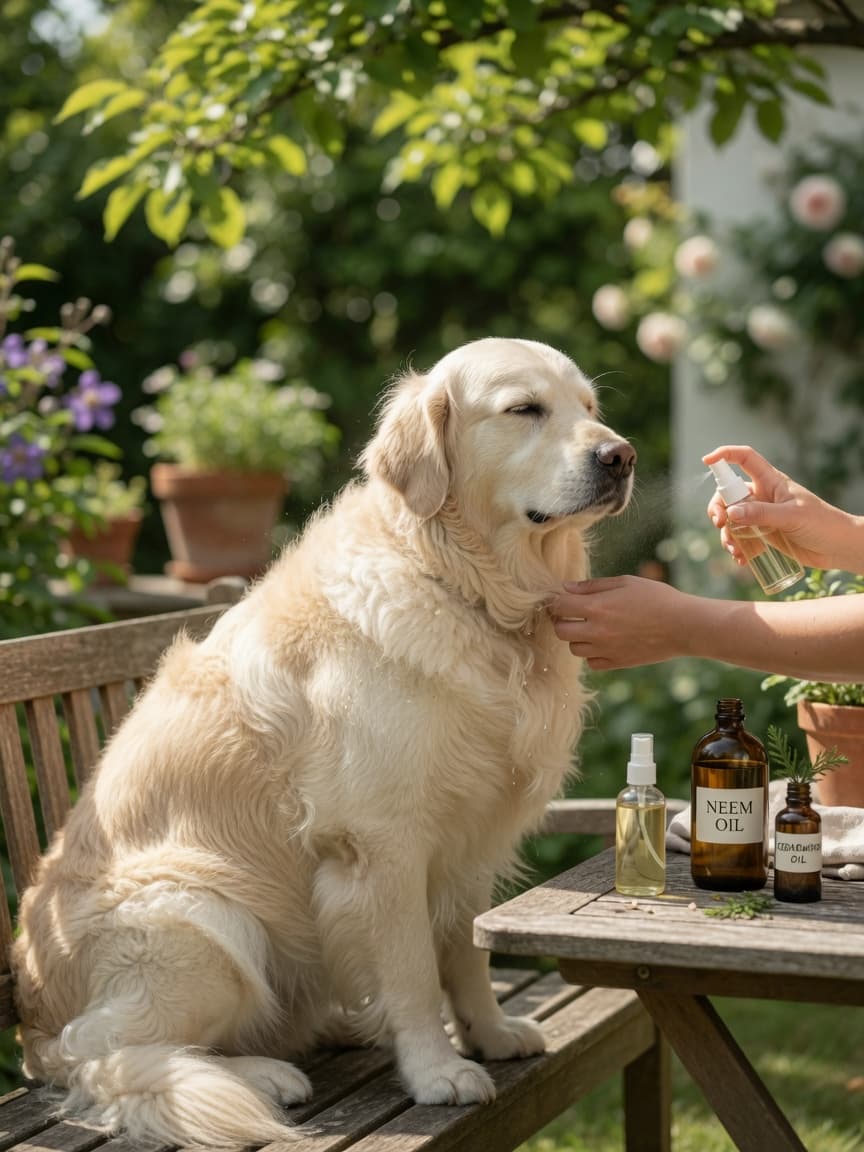
Raw neem oil is thick, has a strong odor (often described as garlic-meets-peanut), and should always be diluted before any skin contact. A typical working dilution is 1–2% neem oil in a carrier oil (fractionated coconut oil works well) or added to a gentle, unscented dog shampoo at approximately 1 teaspoon per 250ml of shampoo. Apply the shampoo solution during your dog’s regular bath, leave on for 3–5 minutes before rinsing.

Pre-made neem-based dog sprays formulated by reputable brands ensure correct dilution and emulsification. If you’re looking for ready-to-use options, Zooplus stocks a range of neem-based and botanical flea prevention products that have been formulated to appropriate concentrations for canine use — a simpler starting point than DIY blending.

Avoid neem oil near a dog’s eyes and do not use on puppies under 12 weeks. Neem is generally well-tolerated but some dogs show mild skin sensitivity; a patch test on a small area 24 hours before full application is good practice.

Apple Cider Vinegar: Debunking a Persistent Myth

Few natural remedies are as enthusiastically promoted — or as thoroughly unsupported by evidence — as apple cider vinegar (ACV) for flea prevention. The claim circulates in two forms: that adding ACV to a dog’s drinking water makes their skin and coat inhospitable to fleas, and that spraying diluted ACV on the coat repels fleas.

Neither claim has scientific support.

There are no peer-reviewed studies demonstrating that ACV repels, disrupts, or kills fleas at any concentration. The proposed mechanism — that acetic acid changes the pH of a dog’s skin or makes them less appealing to parasites — is biologically implausible. Dog skin pH is tightly regulated by physiological processes; dietary acetic acid intake does not meaningfully alter it. Fleas locate hosts through carbon dioxide output, body heat, and vibration — cues entirely unaffected by vinegar.

Adding ACV to drinking water also carries a real downside: many dogs dislike the taste and will reduce their water intake, risking dehydration. Repeatedly spraying diluted vinegar on the coat can disrupt the skin’s natural moisture barrier over time. ACV is not harmful in small quantities, but using it as flea prevention is a substitution of an ineffective remedy for approaches that might actually work — and that opportunity cost matters, particularly if your dog is already at high exposure risk.

Cedar: Chips, Bedding, and Oil

Cedar has a longer evidence base than most botanicals in pest control. Cedar-lined closets are a traditional moth deterrent, and the underlying chemistry — volatile sesquiterpene compounds that disrupt insect neurochemistry — has been confirmed in laboratory settings. For dogs specifically, cedar offers two practical applications.

Cedar chips in outdoor resting areas: Spreading Eastern red cedar chips (Juniperus virginiana) in the areas of your yard where your dog sleeps, lounges, or digs creates an environment fleas find inhospitable. The volatile oils dissipate over time, so replacing or refreshing the chips monthly during flea season maintains efficacy. This is a low-effort, low-cost environmental measure with a reasonable evidence basis.

Cedar oil sprays: As noted in the essential oils section above, diluted cedarwood oil (0.5–1% in a water-and-emulsifier base) applied to the coat can provide modest repellent activity. It is not a standalone prevention strategy but layers usefully with other approaches.

One caution: Eastern red cedar is distinct from white cedar (Melia azedarach), which is toxic to dogs. Source cedar products specifically labeled for pet use or from reputable retailers. Zooplus carries cedar-based bedding and sprays formulated for companion animals if you prefer verified, pre-mixed products.

What Science Actually Supports vs. Folk Remedies

To put it plainly, here is where the evidence actually sits:

Supported by peer-reviewed evidence (with appropriate caveats):

  • Neem oil / azadirachtin — Multiple published studies confirming insecticidal and growth-disrupting activity against Ctenocephalides spp.
  • Diatomaceous earth (food-grade) — Mechanical action confirmed; effective in environmental control when applied correctly and kept dry.
  • Cedarwood oil — Octopamine-receptor disruption in insects documented; modest repellent activity in field conditions.
  • Lavender oil (properly diluted) — Some published evidence for repellent activity; safety profile acceptable at low concentrations in adult dogs.

Plausible mechanism but insufficient evidence:

  • Rosemary — Some in-vitro insecticidal activity; field evidence in dogs limited. May be included in diluted herbal rinses.
  • Lemon/citrus sprays — D-limonene has documented insecticidal properties but concentrations needed for efficacy approach toxicity thresholds in cats (less concern in dogs, but caution warranted).

No scientific support — not recommended:

  • Apple cider vinegar (internal or topical)
  • Brewer’s yeast / garlic supplementation — A frequently cited study by Reif et al. (2000; DOI: 10.2460/javma.2000.217.1) found no significant flea-repellent effect from yeast or garlic supplementation in dogs. Garlic in sufficient quantities is also toxic to dogs due to thiosulfate compounds.
  • B vitamins — Promoted on the basis that they make skin smell unappealing to fleas; no published evidence supports this.

Combining Approaches for Best Results

No single natural method provides the comprehensive flea control that a prescription isoxazoline or organophosphate product achieves. The realistic goal of a natural approach is to create multiple overlapping barriers that significantly reduce flea load and prevent established infestations — a strategy that works well for dogs at low-to-moderate risk but may require reassessment for dogs in high-exposure environments (rural areas, multi-pet households, regions with year-round flea activity).

A practical combined protocol might look like:

  1. Environmental control (weekly during flea season): Food-grade DE applied to carpets and bedding, left 48–72 hours, then vacuumed with a HEPA vacuum. Cedar chips in outdoor rest areas, refreshed monthly.
  2. Coat treatment (every 1–2 weeks): Neem-based shampoo at bath time. Between baths, a diluted lavender or cedarwood spray applied to the coat (avoiding face), focusing on areas where fleas concentrate — neck, base of tail, belly.
  3. Regular grooming: Daily fine-toothed flea combing over a white paper surface (flea dirt — digested blood — appears as dark specks that turn reddish when wet). Early detection is the single most underrated element of natural prevention.
  4. Yard management: Keep grass short, clear leaf litter, and use cedar chips in shaded areas where your dog rests. Fleas thrive in cool, moist, shaded environments; reducing these habitats matters.

For a convenient source of pre-formulated botanical products that can anchor this protocol, Zooplus’s natural flea and tick range includes neem-based shampoos, cedar sprays, and herbal flea collars from brands with transparent ingredient lists.

When to Call a Vet

Natural prevention is genuinely viable for many dogs in many situations. It is not appropriate as a primary strategy in every scenario, and knowing when to escalate to veterinary care is as important as knowing which botanical to use.

Contact your veterinarian if:

  • Your dog is scratching intensely and you can see live fleas or abundant flea dirt — this indicates an established infestation that natural methods alone are unlikely to resolve in a reasonable timeframe.
  • Your dog develops hair loss, raw skin, or hot spots, which may indicate flea allergy dermatitis (FAD) — a hypersensitivity reaction where even one or two flea bites trigger a severe immune response. FAD dogs typically require medical-grade flea control.
  • You notice pale gums, lethargy, or weakness in a puppy or small dog — heavy flea infestation can cause significant blood loss and anemia, which is a veterinary emergency.
  • You find a tapeworm segment (small, rice-like, often near the tail base) — fleas are the intermediate host for Dipylidium caninum, and tapeworm diagnosis indicates your dog has been ingesting fleas, meaning the flea burden is substantial enough to require prescription-level control.

There is no ideology in responsible pet care. Using a prescription flea product when your dog needs it is not a failure of natural philosophy; it is responsible medicine. Many integrative veterinarians recommend a hybrid approach: a single dose of a fast-acting conventional product to break an active infestation, followed by natural maintenance prevention once the population is under control.

A Note on Cats in Multi-Pet Households

If you have both dogs and cats, the essential oil cautions become dramatically more important. Cats are far more sensitive than dogs to phenols and monoterpenes because they lack the glucuronosyltransferase enzymes needed to metabolize these compounds. Any essential-oil product applied to your dog — or diffused in your home — that contains tea tree, eucalyptus, clove, cinnamon, or oregano oil poses a serious risk to cats in the same space. In multi-pet households, cedarwood and properly diluted lavender remain the safer botanical options.

Conclusion

Natural flea prevention for dogs is not a myth, but it requires intellectual honesty about what the evidence actually shows. Neem oil and food-grade diatomaceous earth have genuine scientific support. Cedarwood and lavender offer modest, real-world repellent activity at safe dilutions. Apple cider vinegar, garlic, and B-vitamin supplements do not work, and several popular essential oils — tea tree, pennyroyal, eucalyptus — can cause serious harm to the animals they’re meant to protect.

The most effective natural approach is a layered one: environmental control to break the flea life cycle, regular grooming to catch infestations early, and targeted botanical treatments on the coat. Applied consistently and paired with good judgment about when conventional intervention is needed, this framework can keep many dogs comfortable and flea-free throughout even a challenging flea season.

Your dog’s comfort and health are what matter. The most natural thing you can do is make decisions based on evidence.


References

  1. Elango G, Rahuman AA, Bagavan A, et al. Laboratory study on larvicidal activity of indigenous plant extracts against Anopheles subpictus and Culex tritaeniorhynchus. Parasitology Research. 2009;104(6):1381–1388. DOI: 10.1007/s00436-009-1338-3
  2. Villar D, Knight MK, Hansen SR, et al. Toxicity of melaleuca oil and related essential oils applied topically on dogs and cats. Veterinary and Human Toxicology. 1994;36(2):139–142. DOI: 10.1111/j.1476-4431.1994.tb00106.x
  3. Reif JS, Tritak DC, Carothers M. Evaluation of brewer’s yeast and garlic as a repellent for fleas and ticks in dogs. Journal of the American Veterinary Medical Association. 2000;217(1):37–39. DOI: 10.2460/javma.2000.217.1
  4. Specos MM, Garcia JJ, Tornesello J, et al. Microencapsulated lavender oil for mosquito repellent finishing of cotton textiles. Transactions of the Royal Society of Tropical Medicine and Hygiene. 2010;104(10):653–658. DOI: 10.1016/j.trstmh.2010.05.009
  5. Singh G, Upadhyay RK. Essential oils: extraction, biological activities, and their uses in food preservation. International Journal of Food Sciences and Nutrition. 2013;64(2):181–205. DOI: 10.3109/09637486.2012.724026
#natural flea prevention dogs#flea prevention#essential oils dogs#diatomaceous earth dogs#neem oil dogs#flea treatment natural
Disclaimer:This article is for informational purposes only and does not constitute veterinary advice. Always consult a qualified veterinarian for your pet's health concerns.