
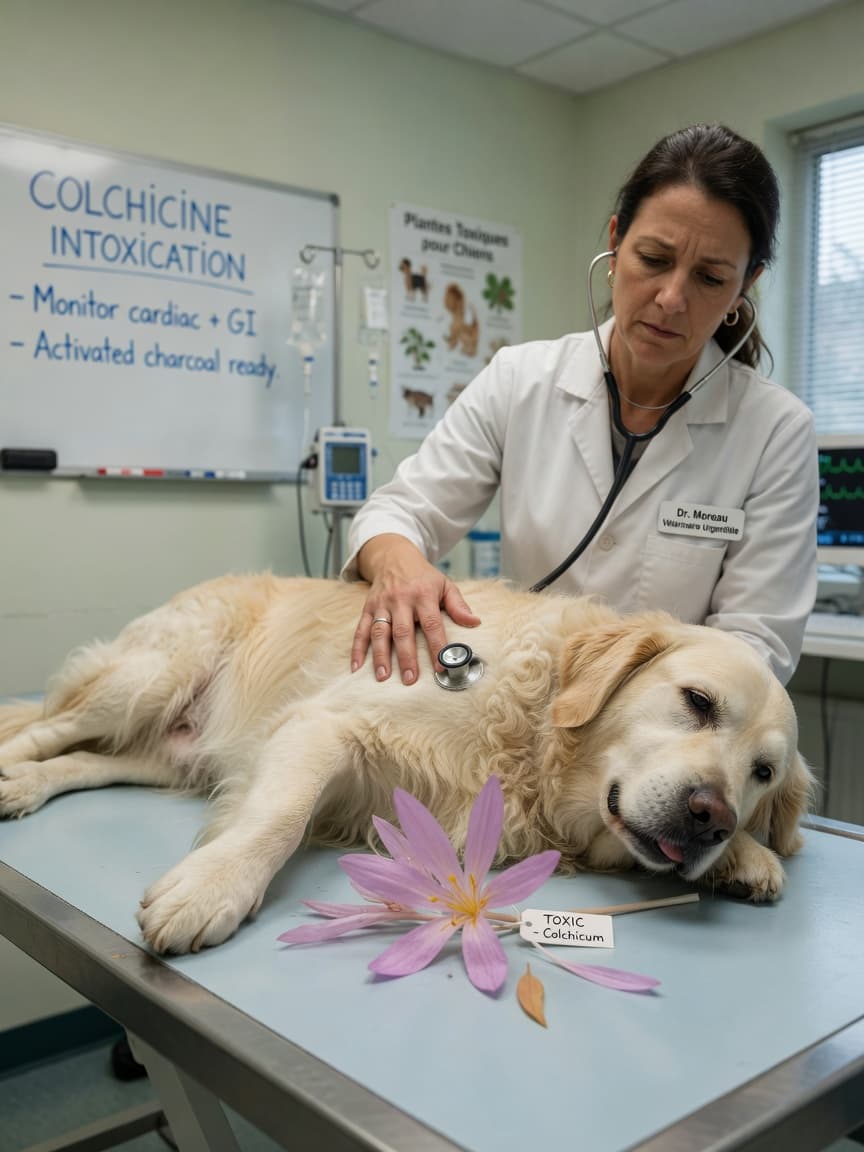
¿Es tóxico el cólquico de otoño para los perros?
Actualizado: junio de 2026
La planta que mata en silencio: el cólquico de otoño
El cólquico de otoño (Colchicum autumnale) es una planta engañosamente bella. Sus delicadas flores de color lila rosado brotan a finales del verano y en otoño, a menudo sin hojas que las acompañen (el follaje aparece por separado en primavera y luego se marchita antes de que florezca la planta, una llamativa peculiaridad botánica que le ha dado a la planta el apodo de "damas desnudas"). Se cultiva habitualmente en jardines, se naturaliza en prados y se encuentra en diversas plantaciones paisajísticas de Europa y Norteamérica.
Es también una de las plantas más peligrosas que puede comer un perro. Los toxicólogos veterinarios sitúan al cólquico de otoño entre los peligros vegetales de máxima prioridad para los animales de compañía, no solo por la gravedad de la toxicidad, sino por una característica que lo hace especialmente traicionero: la aparición retardada de los síntomas. Un perro puede comer cólquico de otoño y parecer completamente normal durante 2-3 días mientras que, internamente, ya se está produciendo un daño celular devastador. Cuando por fin aparecen los síntomas, el perro puede estar en fallo multiorgánico y, llegados a ese punto, las opciones de tratamiento están muy limitadas.
Esta planta exige que se la tome en serio. Si existe alguna posibilidad de que tu perro haya comido cólquico de otoño, no puedes permitirte esperar y observar.
Importante: cólquico de otoño frente a crocus de primavera: conoce la diferencia
Hay una distinción importante que todo dueño de mascotas debe comprender: Colchicum autumnale (cólquico de otoño, también llamado azafrán de los prados) es categóricamente más peligroso que los crocus de floración primaveral (Crocus spp.) que se encuentran en los jardines. Los crocus de primavera pueden causar una irritación gastrointestinal leve si se ingieren, pero no se asocian con la toxicidad multiorgánica catastrófica del cólquico de otoño.
Identificar con qué planta ha tenido contacto tu perro es fundamental para el triaje. El cólquico de otoño suele florecer entre agosto y octubre, produciendo flores de color púrpura o rosa con seis pétalos que emergen directamente del suelo sin tallo ni hojas visibles. Si no estás seguro de cerca de qué planta ha estado tu perro, trátalo como si fuera cólquico de otoño y solicita orientación profesional de inmediato.
Colchicina: una toxina que destruye las células
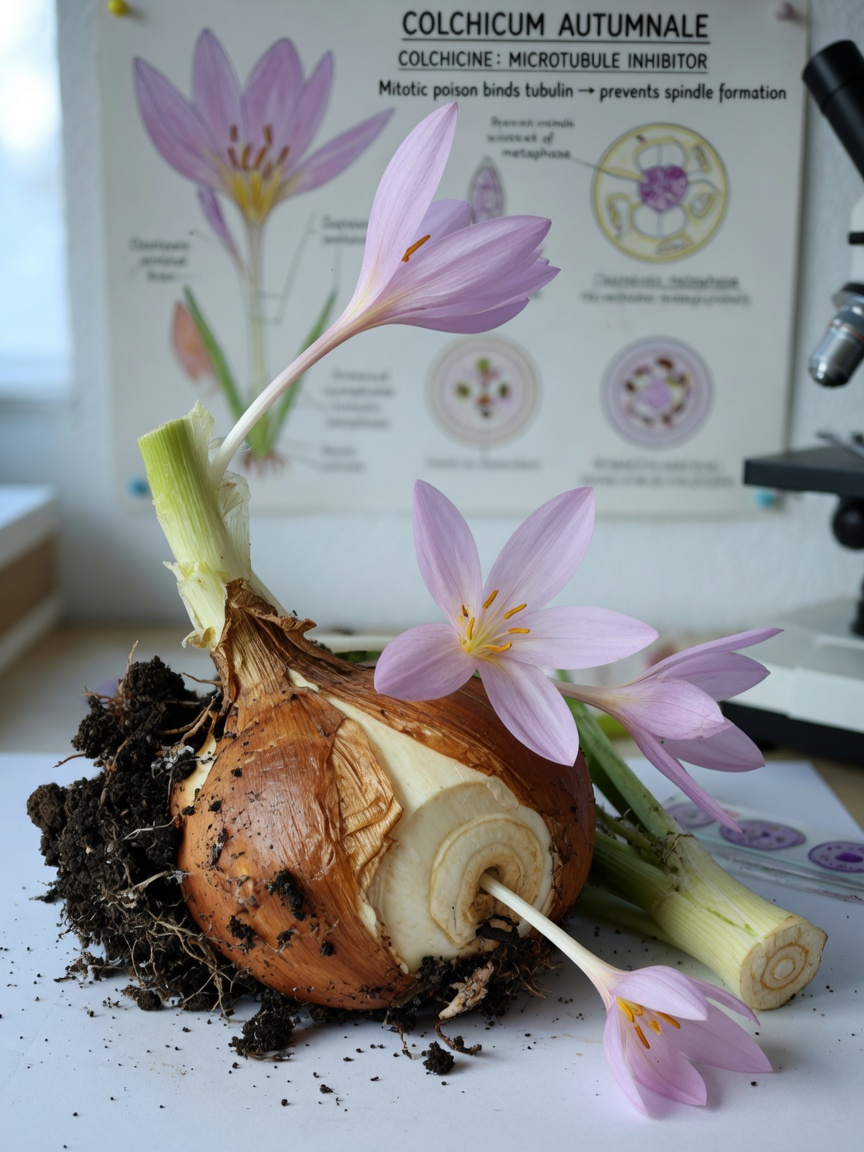
Todas las partes de la planta del cólquico de otoño —la flor, las hojas, las semillas y, especialmente, el bulbo o cormo— contienen colchicina, uno de los alcaloides vegetales más potentes que conoce la ciencia. Cabe destacar que la colchicina también se utiliza como fármaco en humanos (para tratar la gota y ciertas enfermedades inflamatorias), lo que nos proporciona datos farmacológicos inusualmente detallados sobre exactamente cómo actúa y lo devastadora que puede ser una sobredosis.
La colchicina actúa uniéndose a la tubulina, una proteína que forma el andamiaje estructural (los microtúbulos) que las células necesitan para dividirse y funcionar. Al alterar el ensamblaje de los microtúbulos, la colchicina detiene la división celular: es, en efecto, un agente antimitótico. En el uso médico, esta propiedad se aprovecha en dosis muy pequeñas y cuidadosamente controladas. En una intoxicación, el efecto es catastrófico e indiscriminado.
Los tejidos más devastados por la toxicidad de la colchicina son aquellos que dependen en mayor medida de una división celular rápida:
- La médula ósea: que produce todas las células sanguíneas. La intoxicación por colchicina provoca supresión de la médula ósea, lo que conduce a pancitopenia (niveles peligrosamente bajos de todos los tipos de células sanguíneas). Esto significa que el perro pierde la capacidad de combatir infecciones (pocos glóbulos blancos), se vuelve anémico (pocos glóbulos rojos) y pierde la capacidad de coagular la sangre (pocas plaquetas).
- El tracto gastrointestinal: el revestimiento intestinal se renueva constantemente mediante una rápida división celular. La colchicina devasta este revestimiento, provocando diarrea hemorrágica grave y sangrado gastrointestinal.
- Múltiples órganos: el fallo renal, el fallo hepático y el colapso cardiovascular pueden derivar de los efectos combinados de la toxicidad directa de la colchicina y del daño secundario por shock, hemorragia y sepsis.
- El sistema nervioso: pueden producirse depresión respiratoria y disfunción neuromuscular.
La aparición retardada: por qué el cólquico de otoño es especialmente traicionero
Lo que diferencia la toxicidad del cólquico de otoño de muchas otras intoxicaciones por plantas es el retraso temporal entre la ingestión y la aparición de síntomas graves. Después de que un perro coma cólquico de otoño:
- Fase 1 (primeras horas): síntomas gastrointestinales iniciales: vómitos, diarrea, dolor abdominal. Pueden resolverse o disminuir al cabo de unas horas, lo que hace creer a los dueños que la crisis ha pasado.
- Fase 2 (mejoría aparente, que dura de 1 a 3 días): el perro puede parecer que se recupera en cierta medida. Esta es la fase más peligrosa, porque el perro parece estar mejor mientras la colchicina causa un daño devastador a la médula ósea y a los órganos a nivel celular. Esta ventana de mejoría aparente puede llevar a los dueños, e incluso a algunos clínicos poco familiarizados con la toxicidad por colchicina, a bajar la guardia.
- Fase 3 (2-5 días después de la ingestión): deterioro catastrófico. El fallo multiorgánico se hace clínicamente evidente. La diarrea sanguinolenta grave reaparece o empeora drásticamente. La supresión de la médula ósea se manifiesta a través de anemia grave, hemorragias y fallo inmunitario. El perro puede desarrollar fallo respiratorio, shock cardiovascular y convulsiones. Sin un soporte veterinario intensivo, la muerte es probable.
Este patrón trifásico es similar al que observan los especialistas en intoxicación por colchicina en humanos en los casos de sobredosis y, en las personas, incluso con los mejores cuidados intensivos modernos, la sobredosis de colchicina conlleva una tasa de mortalidad significativa. La fase retardada es lo que hace que el cólquico de otoño sea especialmente mortal: cuando se hace evidente toda la gravedad de la intoxicación, la ventana terapéutica a menudo ya se ha cerrado.
Síntomas a los que estar atento
Informa a tu veterinario de inmediato de cualquiera de los siguientes signos tras una exposición conocida o sospechada al cólquico de otoño:
- Vómitos (pueden ser con sangre)
- Diarrea (puede ser sanguinolenta u oscura/alquitranada)
- Dolor abdominal y distensión
- Salivación excesiva
- Debilidad y letargo, que pueden empeorar drásticamente tras una mejoría aparente inicial
- Encías pálidas (indicativas de anemia o shock)
- Sangrado por cualquier localización (nariz, encías, recto), que indica fallo plaquetario
- Fiebre alta seguida de hipotermia (a medida que la infección se instala debido a la depleción de glóbulos blancos)
- Dificultad para respirar
- Temblores o convulsiones
- Colapso
Actuación de urgencia: no hay tiempo que perder
Si tu perro ha comido cólquico de otoño, o si encuentras restos de planta mordisqueada y hay cólquico de otoño en el entorno, actúa de inmediato, incluso si tu perro parece estar perfectamente normal:
- Llama a tu veterinario o al Control de Intoxicaciones de la ASPCA al (888) 426-4435 ahora mismo. No esperes a que aparezcan los síntomas. La aparición retardada significa que tu perro puede sentirse bien mientras la intoxicación avanza.
- Si tu veterinario te aconseja llevar al perro a la consulta, hazlo sin demora. La descontaminación temprana (inducción del vómito y/o carbón activado) es más eficaz en la estrecha ventana anterior a que se produzca una absorción significativa.
- Lleva una muestra o una foto de la planta.
- Anota la hora y la cantidad estimada ingerida.
- Aunque tu perro parezca mejorar después de los síntomas iniciales, NO consideres que la crisis ha terminado. Vuelve a tu veterinario para realizar análisis de sangre de seguimiento y evaluar la función de la médula ósea y la salud de los órganos.
En la clínica veterinaria: no existe un antídoto específico para la colchicina. El tratamiento consiste en cuidados de soporte agresivos: descontaminación si es segura y oportuna, fluidoterapia intravenosa, transfusiones de sangre si la anemia es grave, transfusiones de plaquetas, antibióticos para prevenir la sepsis derivada del fallo inmunitario, protectores gastrointestinales y monitorización intensiva. Se trata de cuidados de nivel UCI y, incluso con el mejor tratamiento disponible, el pronóstico de los perros con una toxicidad significativa por colchicina es reservado a malo. La intervención temprana mejora enormemente los resultados.
Cómo prevenir la intoxicación por cólquico de otoño
Aprende a identificar el cólquico de otoño. Elimínalo de cualquier espacio de jardín accesible para tus perros. Cuando pasees a finales del verano y en otoño, mantente vigilante cerca de los bordes de jardines, plantaciones de prados y parques donde el cólquico de otoño pueda naturalizarse. Los bulbos, que pueden persistir en el suelo durante años, deben desenterrarse; no basta con retirar la parte aérea de la planta. No compostes material de cólquico de otoño en una zona accesible para los perros.
Si quieres tener bulbos con flor en un jardín apto para perros, elige alternativas confirmadas como seguras y verifícalas en la base de datos de plantas no tóxicas de la ASPCA. Ninguna planta ornamental, por bella que sea, merece el riesgo que supone el cólquico de otoño.
Puntos clave
- El cólquico de otoño (Colchicum autumnale) es extremadamente tóxico para los perros. Contiene colchicina, que provoca un daño celular catastrófico que conduce a la destrucción gastrointestinal, al fallo multiorgánico y a la supresión de la médula ósea.
- Los síntomas siguen un patrón trifásico engañoso: síntomas gastrointestinales iniciales, mejoría aparente durante 1-3 días y, después, un deterioro multiorgánico catastrófico. El retraso es mortal: los perros pueden parecer estar bien mientras avanza un daño interno grave.
- NO confundas el cólquico de otoño con los crocus de floración primaveral: las variedades de primavera son mucho menos peligrosas.
- No existe antídoto. La única intervención eficaz es la descontaminación temprana antes de que se produzca la absorción, junto con cuidados de soporte intensivos.
- Se trata de una urgencia que pone en peligro la vida. Llama a tu veterinario o al Control de Intoxicaciones de la ASPCA al (888) 426-4435 de inmediato, incluso si tu perro parece estar bien. No esperes a que aparezcan los síntomas.
- Retira todo el cólquico de otoño, incluidos los bulbos, de cualquier espacio accesible para tus perros.
Referencias
- Finkelstein Y, Aks SE, Hutson JR, Juurlink DN, Nguyen P, Dubnov-Raz G, Pollak U, Koren G, Bentur Y. "Colchicine poisoning: the dark side of an ancient drug." Clinical Toxicology. 2010;48(5):407-414. PMID: 20586571
- Mendez-Angulo JL, Aleman M, Puschner B, Watson JL, Spier SJ. "Colchicine toxicosis in horses following ingestion of Colchicum autumnale." Journal of Veterinary Internal Medicine. 2013;27(2):375-378. PMID: 23398127