
Ansiedad por separación en perros: causas, signos y tratamiento que funciona
Por Julia Wrenfield, investigadora en bienestar de mascotas — 25 de junio de 2026
- Afecta a: Se estima que el 14–20% de los perros de compañía (datos de la ASPCA)
- Problema central: Respuesta de pánico genuina al quedarse solo — no rencor ni desobediencia
- Tratamiento de referencia: Protocolo de desensibilización sistemática
- Medicamentos: Existen opciones aprobadas por la FDA; más eficaces combinadas con la modificación de conducta
- Apoyo natural: Los suplementos de CBD (sin THC, consulte primero al veterinario) pueden ayudar en casos leves-moderados
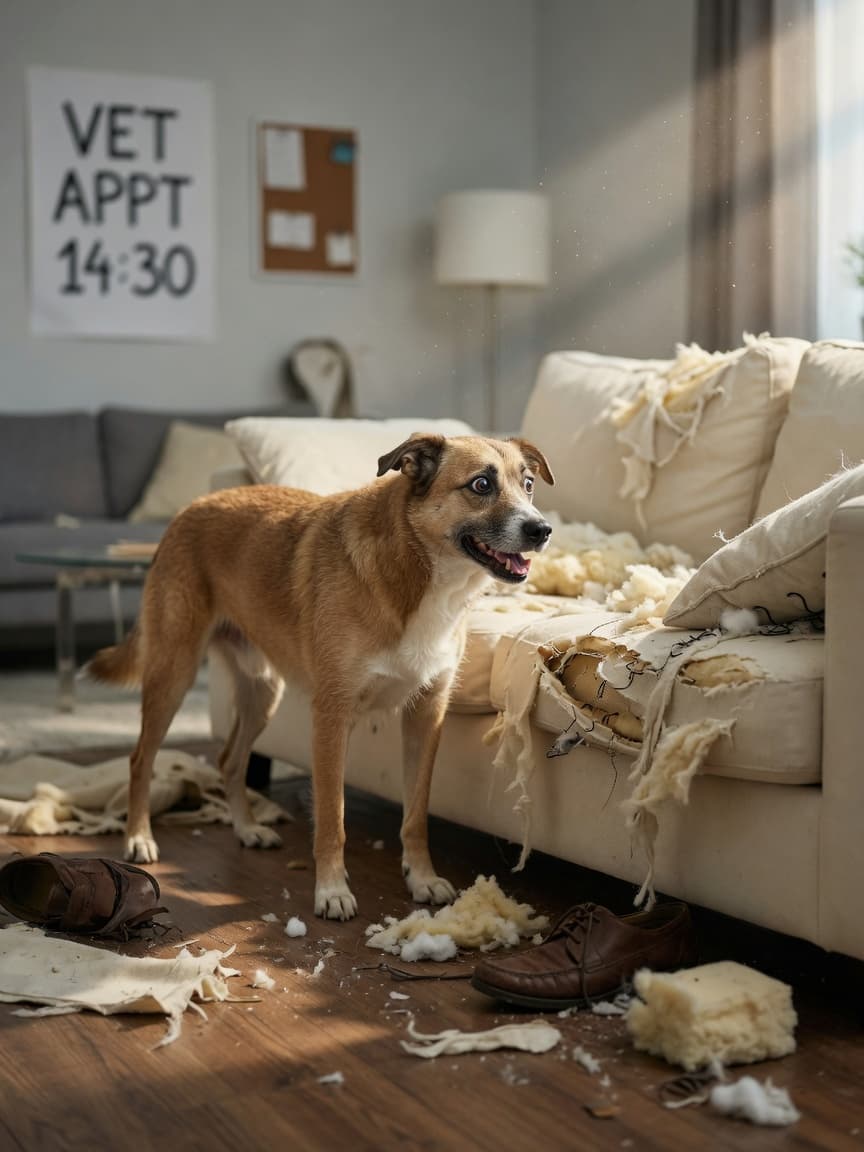
Pocas cosas resultan más desgarradoras — o más frustrantes — que volver a casa y encontrarse la casa destrozada, quejas de los vecinos por los aullidos y un perro al que parece imposible dejar solo. La ansiedad por separación está ampliamente malinterpretada. No se trata de que su perro se porte mal. Es un trastorno de pánico genuino, y tratarlo como desobediencia lo empeora de forma drástica. Esta guía cubre qué es realmente la ansiedad por separación, cómo reconocerla con precisión y los enfoques de tratamiento basados en la evidencia que realmente funcionan.
Qué es realmente la ansiedad por separación
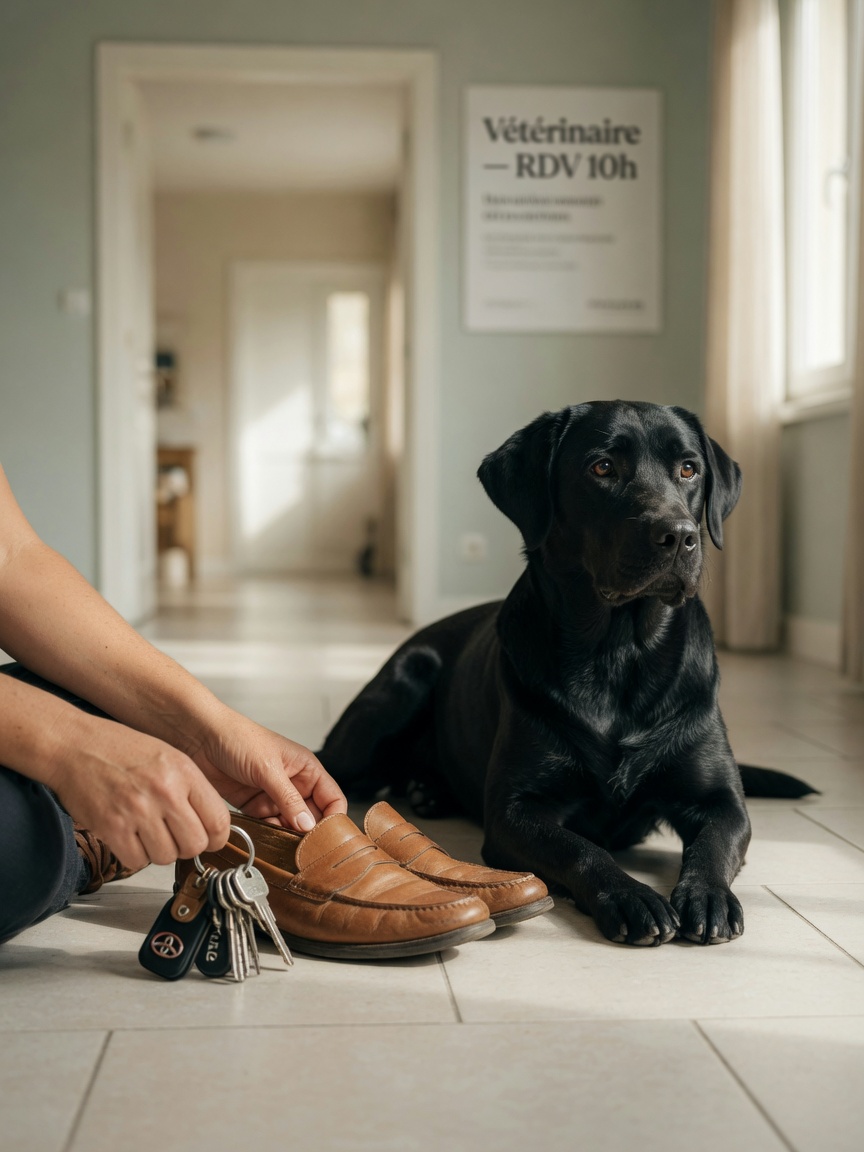
La ansiedad por separación (AS) es una afección en la que un perro se angustia de forma aguda cuando se separa de su figura de apego principal — normalmente una persona concreta. El malestar comienza durante las señales previas a la salida (coger las llaves, ponerse los zapatos) y alcanza su punto máximo en los 30 minutos posteriores a que la persona se marche. Está impulsada por los mismos mecanismos neurológicos que el trastorno de pánico en humanos: cortisol elevado, activación del sistema nervioso simpático e incapacidad genuina de autorregularse.
La AS se distingue de la «angustia por aislamiento» (malestar por estar solo independientemente de quién esté presente) y de los perros que simplemente se aburren o son destructivos por otras razones. Acertar con el diagnóstico es enormemente importante para el tratamiento.
Cómo saber si su perro realmente tiene AS: grábelo
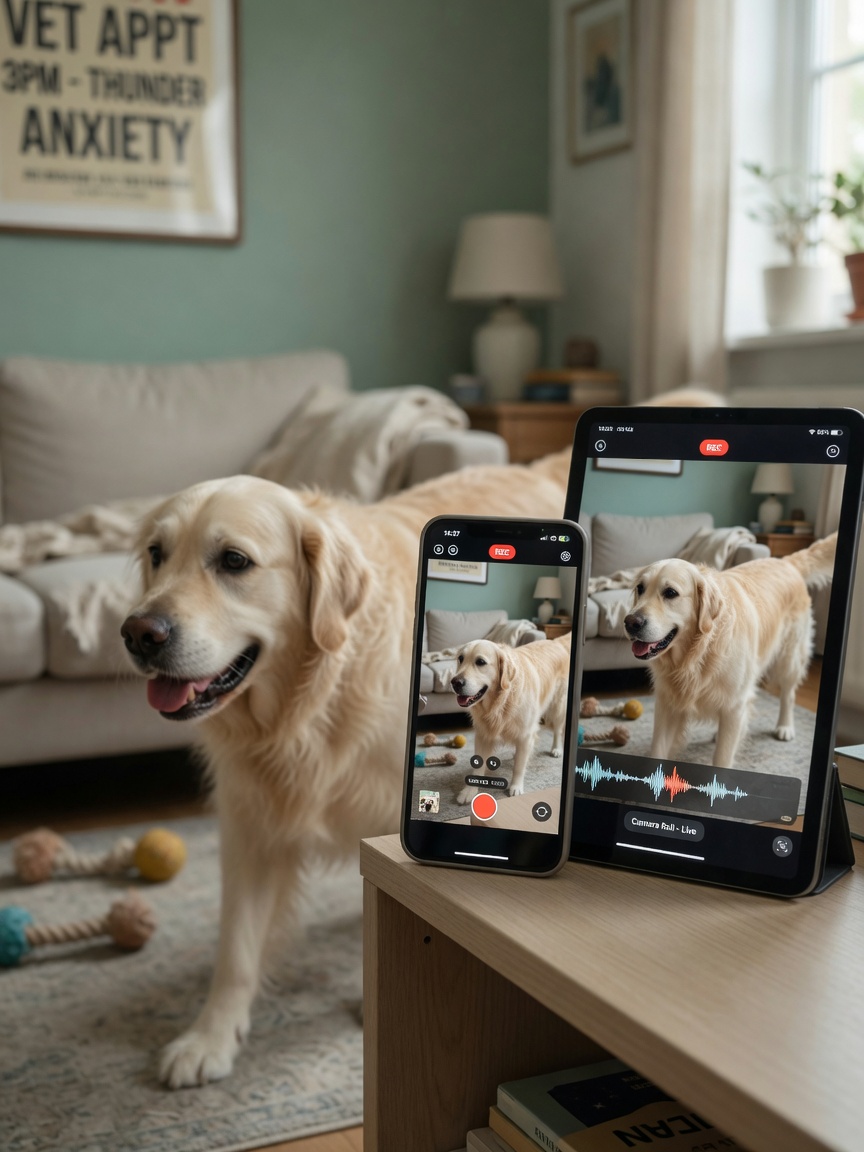
La herramienta diagnóstica más útil es una cámara. Prepare un teléfono o una tableta para grabar a su perro después de marcharse. Los signos de una auténtica ansiedad por separación incluyen:
- Vocalización persistente y angustiada (aullidos, gemidos) a los pocos minutos de la salida
- Incapacidad para calmarse — ir de un lado a otro, dar vueltas, temblores
- Conducta destructiva centrada en los puntos de salida (puertas, ventanas)
- Eliminación en el interior a pesar de estar completamente educado en casa
- Conducta autolesiva en casos graves (morderse las patas, restregarse el hocico hasta dejarlo en carne viva)
- Salivación excesiva y jadeo visibles en la grabación
Un perro que se calma en 10–15 minutos y se relaja o echa una siesta no tiene verdadera AS. Un perro que muestra lo anterior durante toda la ausencia probablemente sí la tiene.
El espectro de gravedad
| Gravedad | Signos | Duración típica antes de calmarse |
|---|---|---|
| Leve | Gemidos, algo de inquietud, destrucción menor | 15–30 minutos |
| Moderada | Vocalización persistente, destrucción más significativa, no come | 30–60+ minutos |
| Grave | Malestar continuo, intentos de escape, autolesiones, eliminación | No se calma; malestar durante toda la ausencia |
El protocolo de desensibilización sistemática
Este es el tratamiento conductual con más evidencia para la AS. El principio fundamental: el perro nunca debe quedarse solo más allá de su umbral actual (el punto en el que comienza la ansiedad) mientras el tratamiento está en curso. Cada episodio de pánico refuerza la vía de la ansiedad; cada experiencia calmada de tiempo a solas construye tolerancia.
Fase 1: Desensibilización previa a la salida
Muchos perros con AS empiezan a entrar en pánico antes de que usted se marche, desencadenado por las señales de salida. Desensibilice estas señales realizándolas al azar a lo largo del día sin marcharse. Coja las llaves, déjelas. Póngase los zapatos, quíteselos. Esto rompe la asociación predictiva.
Fase 2: Desarrollar la tolerancia al tiempo a solas
Empiece las ausencias con una duración más corta que el umbral del perro — a menudo solo segundos. Salga durante 3 segundos, vuelva con calma. Sin grandes reencuentros. Prolónguelas gradualmente en incrementos minúsculos. Esto no es intuitivo — el progreso se mide en segundos y minutos a lo largo de semanas, no en horas. Acelerar es el error más común y hace retroceder el tratamiento de forma significativa.
Fase 3: Práctica de duraciones aleatorias
Una vez que el perro tolera, por ejemplo, 15 minutos, no practique solo ausencias de 15 minutos. Aleatorice: 2 minutos, 12 minutos, 8 minutos, 15 minutos. Esto impide que el perro «cuente atrás» y desarrolla una tolerancia generalizada.
Durante el tratamiento, organice que el perro esté con alguien (cuidador de perros, guardería, pareja que teletrabaja) para cualquier ausencia más allá de su umbral actual. El perro no puede practicar el pánico.
Medicamentos como tratamiento adyuvante
En la AS de moderada a grave, la modificación de conducta por sí sola suele ser insuficiente. Dos medicamentos tienen la aprobación de la FDA específicamente para la ansiedad por separación canina:
- Fluoxetine (Reconcile) — un ISRS de toma diaria; tarda 4–6 semanas en alcanzar el efecto completo. Más eficaz cuando se combina con la modificación de conducta.
- Clomipramine (Clomicalm) — un antidepresivo tricíclico; también de toma diaria, también requiere 4–6 semanas para el efecto completo.
Un veterinario también puede recetar un ansiolítico de acción rápida (como trazodone o alprazolam) para eventos concretos de alto estrés mientras los medicamentos de acción más prolongada hacen efecto. La medicación no es una muleta — en la AS grave a menudo es necesaria incluso para que el perro sea adiestrable, ya que un perro en pleno pánico no puede aprender.
Apoyo natural para calmar: suplementos de CBD
En la ansiedad por separación de leve a moderada, o como complemento de otros tratamientos, muchos dueños exploran los suplementos de CBD (cannabidiol). Un estudio de 2019 en Frontiers in Veterinary Science halló que el aceite de CBD reducía las puntuaciones de ansiedad en perros durante eventos estresantes. Aunque la investigación aún se está desarrollando, los hallazgos iniciales son prometedores.
Si decide explorar el CBD, consulte siempre primero a su veterinario y use solo un producto sin THC formulado específicamente para perros. HolistaPet ofrece una gama bien valorada de productos de CBD sin THC para perros, incluidos aceites y masticables calmantes diseñados para el estrés situacional y el manejo continuado de la ansiedad. Sus productos están analizados por terceros en cuanto a pureza y potencia.
Lo que no funciona (y empeora las cosas)
- Castigo — castigar a un perro por destrucción o eliminación ocurridas horas antes es ineficaz; castigar a un perro en pánico añade trauma.
- Conseguir otro perro — la AS tiene que ver con el apego a una persona, no con la soledad. Un segundo perro rara vez lo resuelve.
- Ignorar más al perro en casa — consejo anticuado sin base de evidencia; no reduce la AS.
- Inundación — encerrar al perro solo y esperar a que «se le pase» causa trauma y empeora la ansiedad.
Cuándo consultar a un etólogo certificado
La AS grave, la AS con agresividad o los casos en los que se produce una alteración significativa del estilo de vida justifican una consulta con un etólogo veterinario (DACVB) o un entrenador certificado en ansiedad por separación (CSAT). Estos profesionales tienen formación específica en protocolos de AS y pueden diseñar un plan adaptado al perfil exacto de umbral de su perro.
- Grabe a su perro después de marcharse — el vídeo es la única forma fiable de confirmar la AS frente a otros problemas.
- La desensibilización sistemática desarrolla la tolerancia al tiempo a solas en incrementos minúsculos; acelerar causa regresión.
- Durante el tratamiento, el perro nunca debe experimentar un episodio de pánico — organice cobertura para todas las ausencias.
- Los medicamentos aprobados por la FDA (fluoxetine, clomipramine) son adyuvantes valiosos para la AS de moderada a grave.
- Los suplementos de CBD sin THC pueden aportar un apoyo calmante leve — consulte siempre primero a su veterinario.
Referencias
- Flannigan G, Dodman NH. (2001). Risk factors and behaviors associated with separation anxiety in dogs. Journal of the American Veterinary Medical Association, 219(4), 460–466. PMID: 11521748
- Kogan LR, Hellyer PW, Robinson NG. (2019). Consumers' perceptions of hemp products for animals. Journal of the American Holistic Veterinary Medical Association, 52, 40–48.
- Ogata N. (2016). Separation anxiety in dogs: What progress has been made in our understanding of the most common behavioral problems in dogs? Journal of Veterinary Behavior, 16, 28–35.