
Miedo de los perros a las tormentas eléctricas: causas y estrategias para calmarlos
Por Julia Wrenfield, investigadora en bienestar de mascotas — 25 de junio de 2026
- Afecta: Se estima que el 15–30% de los perros muestra un miedo significativo a las tormentas
- La fobia a las tormentas es más que sensibilidad al ruido: intervienen múltiples estímulos sensoriales
- Herramientas de manejo: espacio seguro, difusor Adaptil, Thundershirt, medidas antiestáticas
- Apoyo natural: suplementos de CBD sin THC (consulte primero a su veterinario)
- Casos graves: la medicación con receta puede cambiar la vida
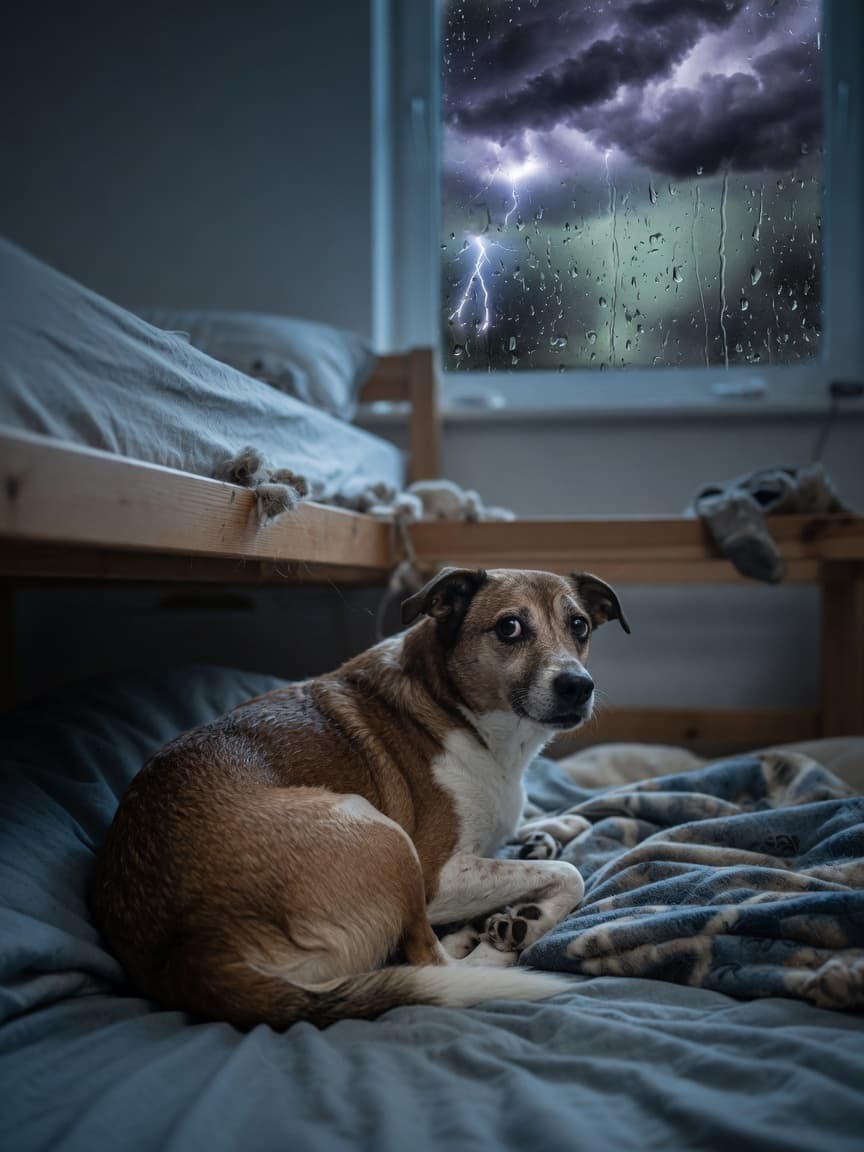
Empieza antes del primer trueno: inquietud, jadeo, deambular o esconderse debajo de la cama. Para muchos perros, el miedo a las tormentas eléctricas no se limita al ruido. Es una experiencia compleja y multisensorial que desencadena una auténtica respuesta de miedo y, en algunos perros, se agrava hasta convertirse en una fobia plena que causa un sufrimiento importante. Comprender lo que realmente ocurre durante una tormenta ayuda a los dueños a responder de forma eficaz en lugar de empeorar las cosas sin querer.
Por qué los perros temen las tormentas: más que el sonido
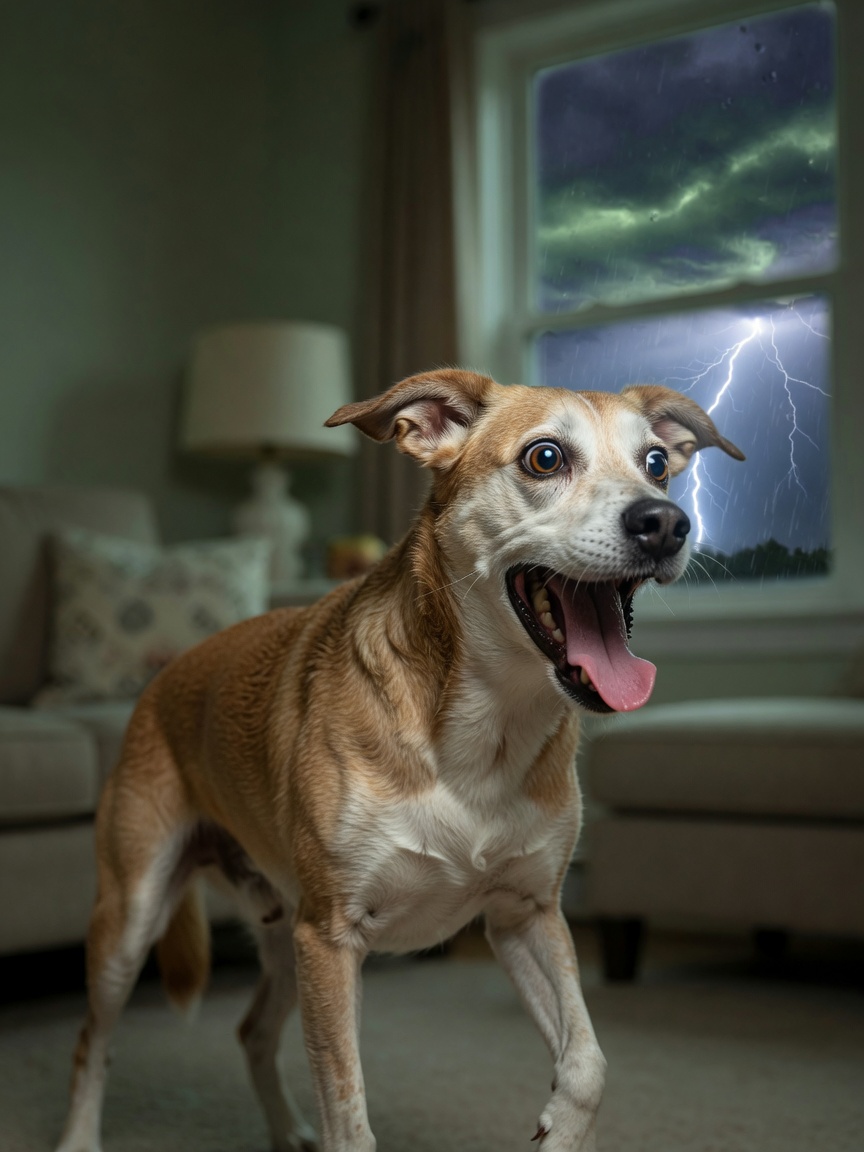
Sensibilidad al sonido
El componente más evidente. Los perros oyen un rango de frecuencias mucho más amplio que los humanos, y el trueno puede ser sobresaltante y doloroso por su intensidad. Los perros con sensibilidad al ruido en general —a los fuegos artificiales, los disparos o los vehículos ruidosos— tienen más probabilidades de temer también las tormentas.
Electricidad estática
Uno de los componentes menos conocidos de la fobia a las tormentas es la electricidad estática. A medida que aumentan la presión atmosférica y la carga eléctrica antes y durante las tormentas, los perros pueden recibir pequeñas descargas estáticas a través del pelaje, en particular los perros con doble capa de pelo denso. Algunos investigadores creen que esto explica por qué los perros con fobia a las tormentas buscan espacios pequeños y cerrados (como las bañeras), que están más conectados eléctricamente a tierra. Los perros que se frotan contra la alfombra o buscan suelos de baldosas durante las tormentas pueden estar intentando descargar la estática.
Cambios de presión barométrica
Los perros pueden detectar cambios de presión barométrica que preceden a las tormentas con horas de antelación. Esto explica por qué muchos perros con fobia a las tormentas empiezan a mostrar ansiedad mucho antes de que se oiga ningún trueno: el descenso de presión ya es detectable para ellos. Esto también hace que la desensibilización mediante grabaciones de sonido sea parcialmente limitada: la grabación imita el componente auditivo, pero no los componentes de presión o de estática.
Otros componentes sensoriales
Los cambios de luz (destellos de relámpagos), el olor (ozono, lluvia) e incluso el infrasonido sutil (sonido de muy baja frecuencia producido por las tormentas) pueden contribuir todos al conjunto de estímulos que un perro con fobia a las tormentas asocia con el miedo.
Miedo frente a fobia: comprender la gravedad
| Categoría | Signos | Respuesta habitual |
|---|---|---|
| Miedo leve | Inquietud leve, busca al dueño, se calma con consuelo | Las herramientas de manejo suelen ser suficientes |
| Miedo moderado | Jadeo, deambular, gemidos, esconderse, no come | Enfoque multimodal: manejo + suplementos |
| Fobia grave | Conducta destructiva, autolesiones, intentos de escape, micción por pánico | Es probable que se necesite consulta veterinaria + medicación |
Manejo durante las tormentas
Crear un espacio seguro
Permita —y fomente— que su perro vaya al lugar que le resulte más seguro. Puede ser un transportín, un armario, un baño o debajo de una cama. Obligar a un perro asustado a permanecer en un espacio abierto aumenta su malestar. Si elige la bañera, está bien: el efecto de conexión a tierra puede ser realmente útil. No impida que su perro busque seguridad. Cree de forma proactiva un espacio seguro atractivo (un transportín con ropa de cama familiar en una habitación interior tranquila) antes de que empiece la temporada de tormentas.
Reducir los desencadenantes auditivos y visuales
Cierre las ventanas y las cortinas. Ponga música relajante o encienda un ventilador o una máquina de ruido blanco para suavizar el audio de los truenos. La música clásica y los programas de sonido específicos para la especie (como «Through a Dog's Ear») tienen cierta evidencia de efecto calmante en perros estresados.
Adaptil (feromona de apaciguamiento canina)
Adaptil es una versión sintética de la feromona de apaciguamiento que producen las perras lactantes. Señala seguridad al sistema olfativo del perro. Disponible como difusor (enchúfelo antes de la temporada de tormentas), spray (aplíquelo a la ropa de cama) o collar. Los estudios muestran que reduce las puntuaciones de ansiedad en diversas situaciones estresantes. No es una cura, pero es una herramienta útil en un enfoque multimodal.
Thundershirt y chaquetas antiestáticas
Las prendas de presión (Thundershirt y similares) aplican una presión suave y constante en el torso del perro, similar a envolver a los bebés. Los resultados de las investigaciones son mixtos, pero muchos dueños informan de una mejora significativa, en particular en el miedo leve-moderado. Las chaquetas antiestáticas (como la capa Storm Defender con forro metálico) abordan específicamente el componente de electricidad estática y han mostrado beneficio en algunos estudios para perros en los que la estática parece ser un desencadenante principal.
Desensibilización con grabaciones de sonido
La desensibilización sistemática mediante grabaciones de sonido de tormentas eléctricas puede reducir la sensibilidad al componente auditivo. Recursos como «Sounds Scary» (Dogs Trust) ofrecen pistas de audio graduadas. Empiece a un volumen muy bajo, asócielo con comida de alto valor y aumente el volumen a lo largo de muchas sesiones. Esto aborda solo el componente del sonido: no resolverá por completo una fobia que también implica sensibilidad a la estática y a la presión, pero reduce la carga total de desencadenantes.
Apoyo calmante natural: suplementos de CBD
Para perros con miedo leve a moderado a las tormentas, los suplementos de CBD (cannabidiol) son una opción de apoyo natural cada vez más popular. El cannabidiol interactúa con el sistema endocannabinoide para modular las respuestas al estrés. La investigación preliminar y los informes clínicos sugieren un beneficio para la ansiedad situacional en perros. Consulte siempre a su veterinario antes de empezar cualquier suplemento y use solo un producto sin THC: el THC es tóxico para los perros.
HolistaPet ofrece masticables y aceites calmantes de CBD sin THC formulados específicamente para perros. Los productos se someten a pruebas de terceros para verificar la pureza y la potencia. Otra opción para consultar a su veterinario es Candid Tails, un suplemento de cáñamo sin THC diseñado pensando en el bienestar de las mascotas. Como con todos los suplementos, hable primero con su veterinario y permita varias semanas de uso constante para evaluar el efecto.
Opciones de medicación para casos graves
Para los perros con fobia grave a las tormentas —los que entran en pánico, se lesionan o permanecen angustiados durante horas—, las herramientas de manejo por sí solas son insuficientes. Las opciones prescritas por el veterinario incluyen:
- Trazodone — un ansiolítico situacional de prescripción habitual que se administra 1–2 horas antes de las tormentas previstas; reduce la activación general sin sedación intensa.
- Sileo (dexmedetomidine) — aprobado por la FDA específicamente para la aversión al ruido canina; se administra como gel oral en la mejilla. Actúa en 30 minutos.
- Alprazolam o diazepam — benzodiacepinas para el pánico agudo; actúan con rapidez, pero requieren una dosificación cuidadosa.
- ISRS diarios (fluoxetine) — para perros con ansiedad de base que los hace más reactivos a todos los estímulos; reduce el umbral general de ansiedad.
La medicación para la fobia a las tormentas no es un signo de fracaso: es un cuidado compasivo apropiado para un perro en auténtico malestar.
- El miedo a las tormentas es multisensorial: la electricidad estática, la presión barométrica, el sonido y la luz contribuyen.
- Permita que su perro busque el espacio seguro que elija: obligarlo a permanecer al descubierto aumenta el malestar.
- Adaptil, Thundershirts y las chaquetas antiestáticas son herramientas de manejo útiles para el miedo leve-moderado.
- Los suplementos de CBD sin THC (consulte primero a su veterinario) pueden ayudar en la ansiedad leve a moderada por tormentas.
- La fobia grave a las tormentas justifica una consulta veterinaria: existen opciones eficaces con receta.
Referencias
- Dreschel NA, Granger DA. (2005). Physiological and behavioral reactivity to stress in thunderstorm-phobic dogs and their caregivers. Applied Animal Behaviour Science, 95(3–4), 153–168.
- Sheppard G, Mills DS. (2003). Evaluation of dog-appeasing pheromone as a potential treatment for dogs fearful of fireworks. Veterinary Record, 152(14), 432–436. PMID: 12708701
- Korpivaara M, Laapas K, Huhtinen M, Schöning B, Overall K. (2017). Dexmedetomidine oromucosal gel for noise-associated acute anxiety and fear in dogs: a randomised, double-blind, placebo-controlled clinical study. Veterinary Record, 180(14), 356. PMID: 28069628