
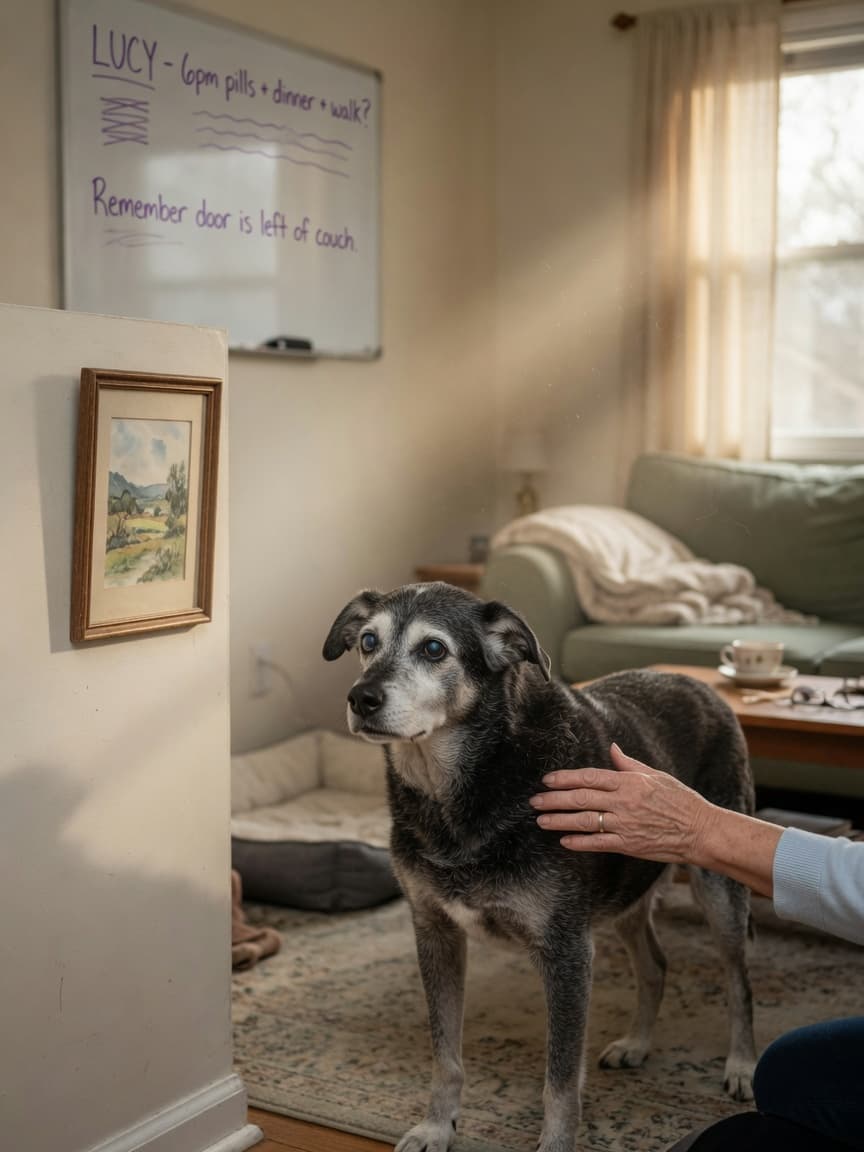
¿Qué es el síndrome de disfunción cognitiva canina?
El síndrome de disfunción cognitiva canina (SDC), a veces denominado SDCC o simplemente demencia canina, es una enfermedad neurodegenerativa que guarda un gran paralelismo con la enfermedad de Alzheimer en las personas. El mecanismo subyacente implica la acumulación de placas de beta-amiloide en el cerebro, junto con alteraciones en la función de los neurotransmisores y una reducción del flujo sanguíneo al tejido cerebral. Con el tiempo, estos cambios deterioran la memoria, el aprendizaje, la percepción y el estado de alerta.
El SDC es mucho más frecuente de lo que muchos propietarios creen. Los estudios estiman que afecta aproximadamente al 14-35 % de los perros mayores de 8 años, y su prevalencia aumenta notablemente con la edad. Un perro de 15 años o más tiene una probabilidad muy elevada de mostrar al menos cierto grado de deterioro cognitivo. A pesar de ello, la enfermedad sigue estando muy infradiagnosticada, en gran medida porque sus síntomas se atribuyen fácilmente a la «vejez normal»: una expresión que, en muchos casos, encubre un sufrimiento tratable.
Reconocer los signos: el marco DISHAA
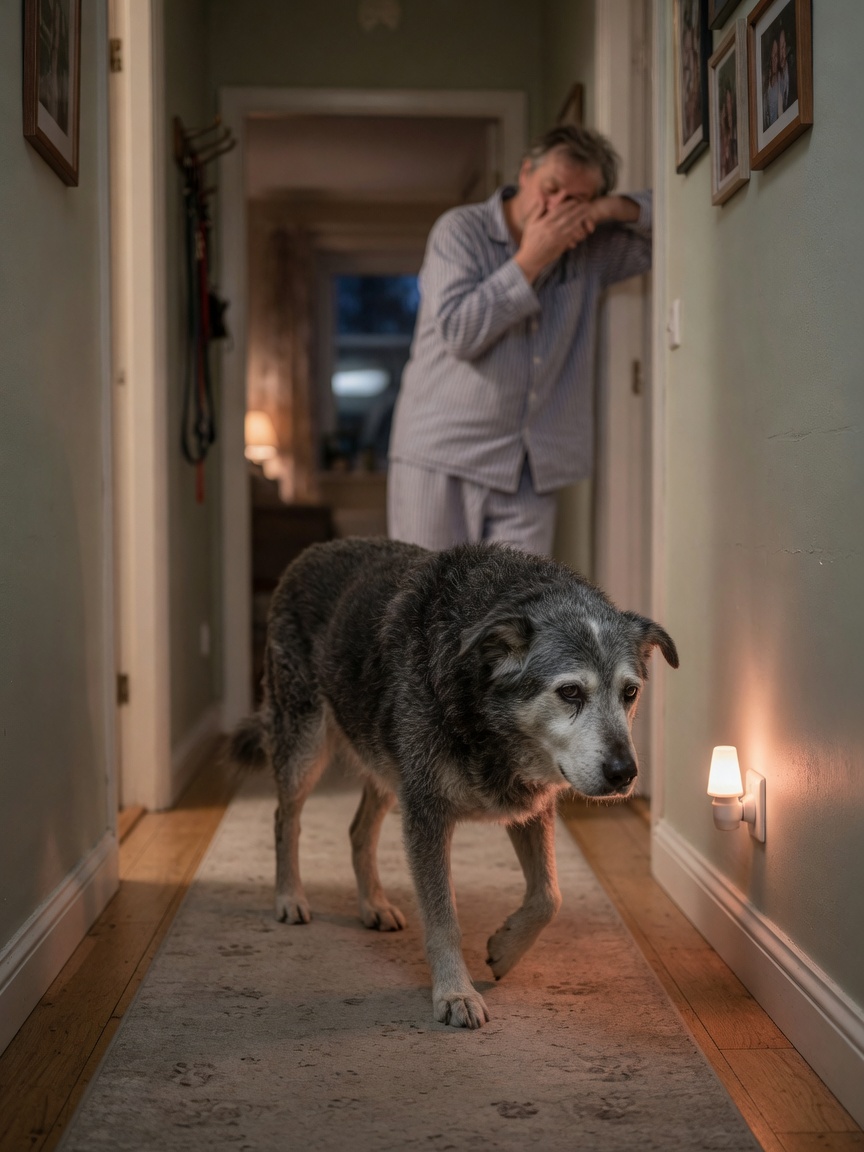
Los profesionales veterinarios utilizan un marco estandarizado denominado DISHAA para identificar los cambios de comportamiento asociados al SDC. Cada letra corresponde a una categoría de síntomas y, en conjunto, ofrecen una visión completa de cómo se manifiesta la enfermedad.
Desorientación
Un perro con SDC puede mostrarse confuso en entornos que le son familiares. Puede quedarse atrapado en rincones o detrás de los muebles, mirar fijamente las paredes sin motivo, no reconocer a personas o a otros animales conocidos, o parecer que ha olvidado dónde está la puerta. Puede entrar en una habitación y dar la impresión de no tener ni idea de por qué está allí.
Cambios en la interacción
El comportamiento social suele modificarse de forma significativa. Algunos perros se vuelven retraídos y muestran menos interés en saludar a los miembros de la familia, cuando antes eran exuberantemente afectuosos. Otros van en la dirección contraria y se vuelven inusualmente pegajosos y ansiosos cuando se quedan solos. Un perro que antes disfrutaba de las caricias puede ahora parecer indiferente o irritable.
Cambios en el ciclo sueño-vigilia
La alteración del sueño es una de las características más angustiosas del SDC para los propietarios. Los perros afectados pueden deambular o vocalizar durante la noche, despertando a toda la casa, mientras duermen profundamente durante el día. Esta inversión de los patrones normales de sueño se debe a cambios en la regulación cerebral de los ritmos circadianos.
Eliminación inadecuada en casa
Un perro que antes era totalmente fiable puede empezar a orinar o defecar dentro de casa, no por un problema de vejiga o intestinal, sino porque ha olvidado su aprendizaje. Puede parecer que no es consciente de que se ha ensuciado, o hacer sus necesidades justo después de entrar en casa. Este síntoma resulta especialmente angustioso para los propietarios y siempre debe investigarse desde el punto de vista médico antes de atribuirlo al SDC, ya que la incontinencia tiene muchas causas físicas.
Cambios en la actividad
Los perros con SDC muestran con frecuencia un menor interés por el juego y la interacción. Pueden presentar comportamientos repetitivos o sin finalidad aparente: dar vueltas, deambular o dar mordiscos al aire. Pueden responder menos a órdenes que han conocido durante años, o quedarse «atascados» en movimientos repetidos.
Ansiedad y fobias
Los miedos nuevos son frecuentes. Un perro al que antes no le molestaban las tormentas puede desarrollar una fobia grave a los ruidos. Es habitual observar ansiedad generalizada, inquietud y un umbral bajo frente al estrés, y pueden estar entre los primeros signos de que algo está cambiando en el cerebro.
¿Cómo se diagnostica el SDC?
No existe una única prueba para el SDC. El diagnóstico es un proceso de exclusión: tu veterinario irá descartando otras posibles causas de los mismos síntomas antes de llegar al diagnóstico de SDC. El dolor (especialmente por artrosis), las pérdidas sensoriales como la sordera o el deterioro visual, el hipotiroidismo, la enfermedad hepática, las infecciones del tracto urinario y los tumores cerebrales pueden producir cambios de comportamiento que se parecen mucho al SDC. Habitualmente se recomiendan análisis de sangre, análisis de orina, medición de la presión arterial y, en algunos casos, pruebas de imagen.
El cuestionario DISHAA es una herramienta validada que completa el propietario y que ayuda a estructurar la conversación con el veterinario. Rellenarlo con honestidad y detalle antes de la consulta mejora significativamente la precisión de la valoración. Tu veterinario también puede utilizar la Escala de Valoración de la Disfunción Cognitiva Canina u otros instrumentos similares.
Manejo: frenar la progresión
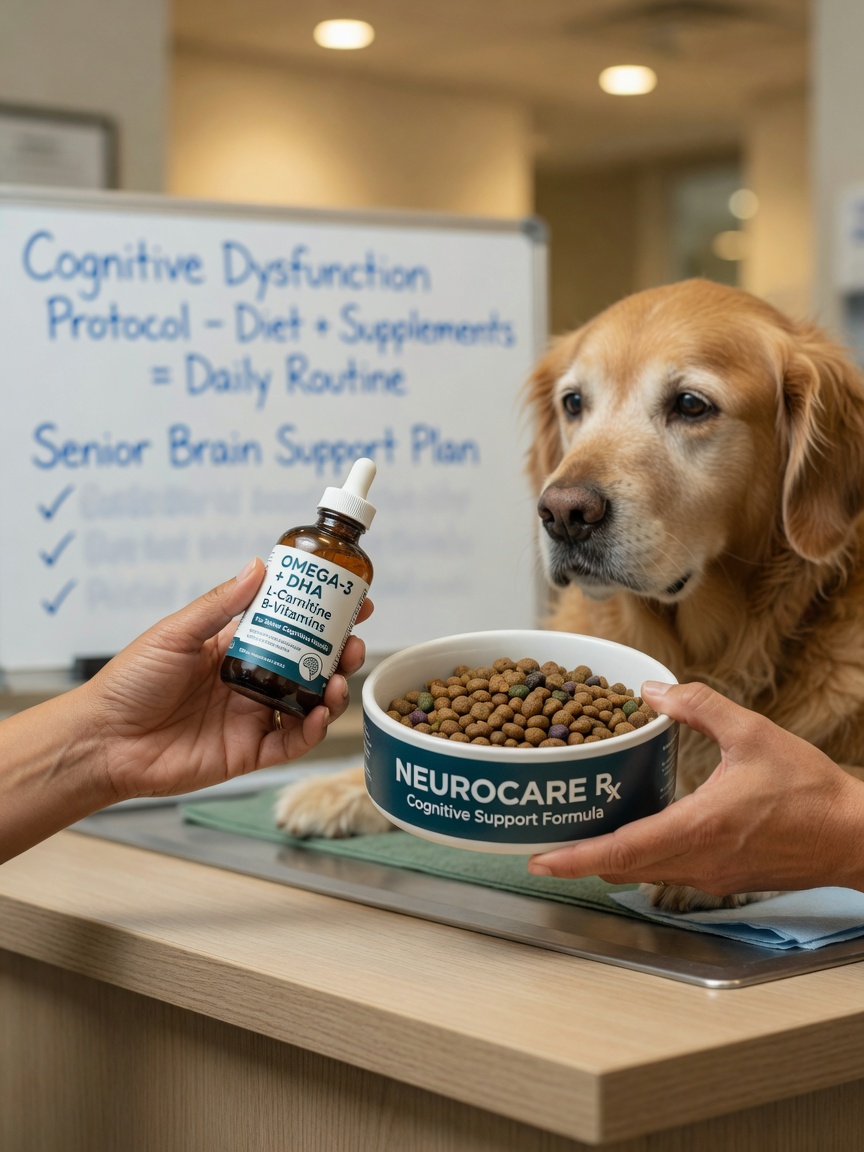
El SDC no se puede curar, pero su progresión puede ralentizarse, y la calidad de vida puede mantenerse de forma significativa con la combinación adecuada de manejo ambiental, dieta y, cuando sea apropiado, medicación.
Apoyo ambiental y conductual
Mantener la rutina de tu perro lo más estable posible es una de las cosas más importantes que puedes hacer. Los cambios en los horarios de comida, en las rutas de paseo o en el lugar de descanso pueden causar una desorientación importante. Las luces nocturnas ayudan a los perros a orientarse con seguridad en la oscuridad. Los olores familiares —por ejemplo, una prenda de ropa usada cerca de su cama— pueden resultar tranquilizadores. Evita reorganizar los muebles, ya que los perros con SDC dependen en gran medida de la memoria espacial para moverse con confianza.
Mantener el enriquecimiento mental cuenta con buena evidencia para frenar el deterioro cognitivo. Las sesiones de entrenamiento cortas y suaves, los juguetes dispensadores de comida, el trabajo de olfato y las interacciones sociales variadas estimulan el cerebro de formas que pueden ayudar a preservar su función.
Dieta y suplementos
Hill's Prescription Diet b/d (Brain Ageing Care) es una dieta estudiada clínicamente y formulada con antioxidantes, ácidos grasos omega-3 y otros nutrientes que favorecen la salud cerebral. La suplementación con omega-3 cuenta por sí sola con buena evidencia de respaldo. Varios suplementos veterinarios, entre ellos Aktivait y Senilife, contienen combinaciones de antioxidantes, fosfatidilserina y vitaminas del grupo B destinadas a apoyar la función neurológica en perros mayores.
Medicación
La selegilina (comercializada con nombres comerciales como Selgian y Anipryl) está autorizada en la UE y el Reino Unido para el tratamiento del SDC. Actúa aumentando la disponibilidad de dopamina en el cerebro y reduciendo el estrés oxidativo. No todos los perros responden de forma espectacular, pero en algunos produce mejoras notables en el estado de alerta y la implicación. Por lo general se tolera bien. Pueden considerarse otros fármacos para controlar síntomas concretos, como la ansiedad o la alteración del sueño.
Cuidarte a ti mismo como cuidador
Cuidar de un perro con SDC es emocionalmente exigente. Ver cómo un compañero querido se vuelve confuso, ansioso o irreconocible en su carácter resulta verdaderamente angustioso, y las noches en vela añaden agotamiento físico a la carga emocional. Conectar con otras personas en la misma situación —a través de grupos de apoyo veterinarios o comunidades en línea— puede marcar una gran diferencia. Habla con sinceridad con tu veterinario sobre cómo lo estás llevando, y no dudes en tratar la valoración de la calidad de vida cuando llegue el momento. El SDC es progresivo, y saber cuándo actuar en el mejor interés de tu perro es un acto de amor, no un fracaso.