
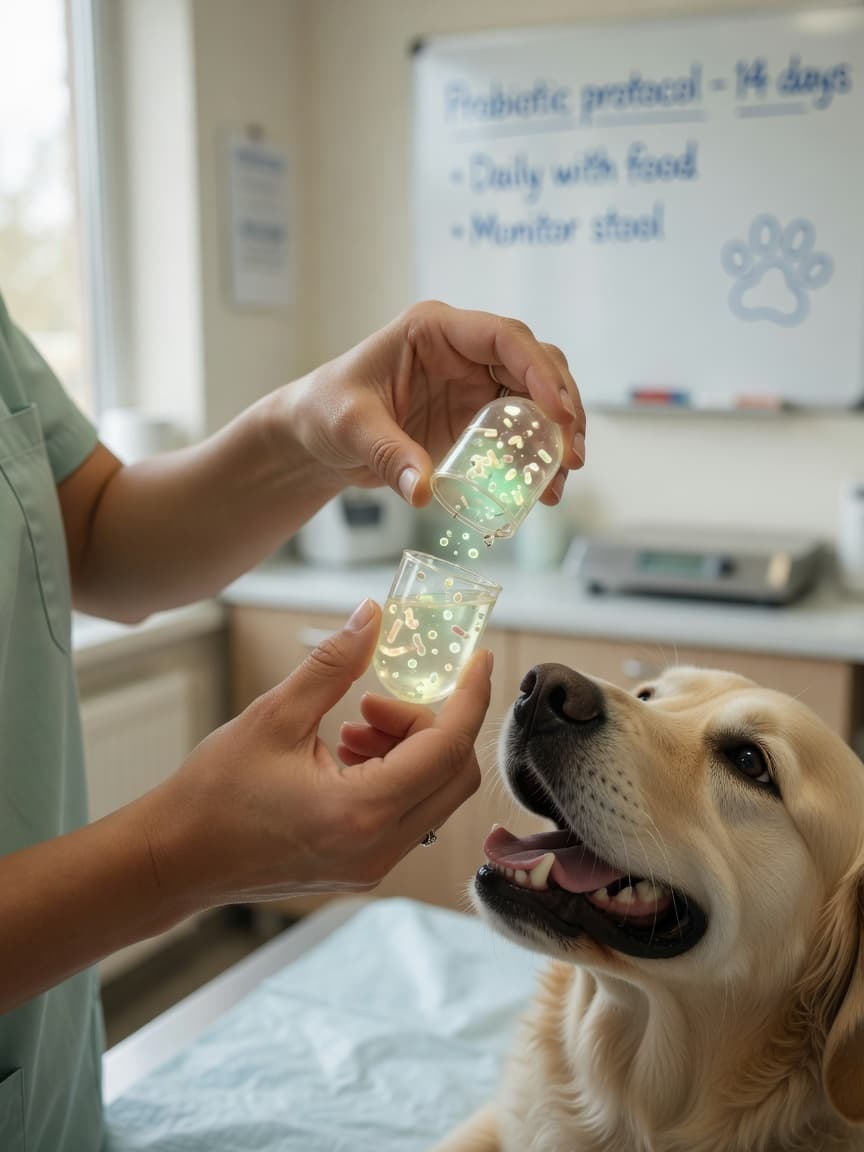
The Gut as a Gateway to Overall Health
The gastrointestinal tract of a dog or cat is home to trillions of microorganisms — bacteria, fungi, viruses, and protozoa — that collectively form the gut microbiome. This community is not passive. It influences digestion, immune function, inflammatory responses, and even behaviour through the gut-brain axis. When the balance of this microbial community is disrupted, the effects can extend well beyond digestive symptoms.
Probiotics — live microorganisms that, when administered in adequate amounts, confer a health benefit on the host — represent one of the more actively researched areas of veterinary nutrition. The science is more nuanced than most probiotic marketing would suggest, but there are genuinely evidence-supported applications for their use in companion animals.
What the Microbiome Does
Understanding why probiotics matter requires a brief look at what a healthy microbiome actually does. In the gastrointestinal tract, beneficial bacteria ferment dietary fibre into short-chain fatty acids (SCFAs) such as butyrate, propionate, and acetate. These SCFAs serve as energy sources for colonocytes (cells lining the colon), help maintain the intestinal barrier, and have anti-inflammatory effects.
A diverse, balanced microbiome also competes with pathogenic bacteria for adhesion sites and nutrients, effectively crowding out potential invaders. It modulates immune responses, training the immune system to distinguish between harmless antigens and genuine threats. Disruption of this balance — dysbiosis — has been associated in dogs and cats with conditions ranging from acute diarrhoea to inflammatory bowel disease, atopic dermatitis, and even anxiety-related behaviours.
When Probiotics Are Most Likely to Help
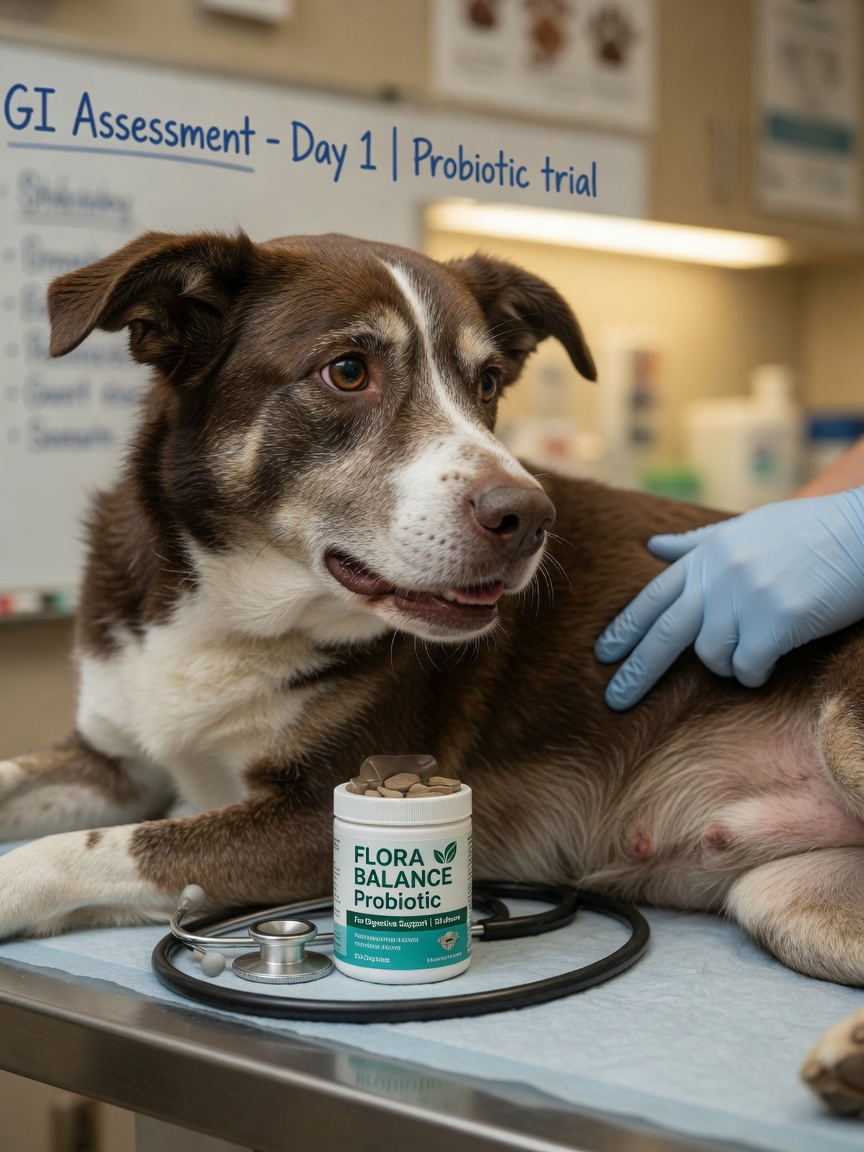
Antibiotic-Associated Diarrhoea
This is arguably the best-supported use of probiotics in companion animals. Antibiotics, while essential for treating bacterial infections, indiscriminately damage the gut microbiome. The resulting dysbiosis frequently causes diarrhoea, which can itself become problematic. Multiple studies in dogs have shown that probiotic supplementation during and after antibiotic courses can reduce the incidence and duration of antibiotic-associated diarrhoea.
The timing matters: probiotics should be given a few hours apart from the antibiotic itself to avoid the antibiotic simply killing the probiotic organisms before they can establish.
Acute Diarrhoea
For dogs with uncomplicated acute diarrhoea — the kind that resolves within a few days — probiotics appear to shorten the duration of symptoms in several clinical trials. A 2017 study published in the Journal of Veterinary Internal Medicine found that dogs treated with a species-specific probiotic combination had significantly shorter episodes of acute diarrhoea compared to placebo. This kind of evidence makes probiotics a reasonable first-line addition for mild, uncomplicated digestive upsets.
Inflammatory Bowel Disease
Dogs and cats with chronic inflammatory bowel disease (IBD) show consistent evidence of gut dysbiosis, and probiotic therapy is an area of active research. The evidence here is more mixed than for acute conditions — IBD is heterogeneous, and no single probiotic strain has emerged as definitively effective. However, some studies show benefits for specific preparations, particularly in combination with dietary management. Probiotics should be considered as an adjunct to, not a replacement for, veterinary management of IBD.
Atopic Dermatitis and Skin Health
The gut-skin axis is a genuine phenomenon. The microbiome influences immune responses, including those that drive allergic skin conditions. In dogs with atopic dermatitis, some studies have found that probiotic supplementation improves skin scores and reduces the need for medication. The effect sizes are generally modest, but given the safety profile of probiotics, they are worth considering in dogs with chronic skin problems.
Species Specificity Matters
One of the most important points in veterinary probiotic science is that not all probiotics are interchangeable. Lactobacillus acidophilus might have excellent human data behind it, but that does not mean it will colonise or benefit a dog's gut. The canine and feline gastrointestinal tracts have different physiological characteristics, pH gradients, and resident microbiome compositions.
Species-specific strains — those isolated from dogs or cats and tested in those species — are more likely to be effective. Products such as Fortiflora (Enterococcus faecium SF68, studied in dogs and cats), Proviable (a multi-strain canine and feline preparation), and Visbiome Vet have the most clinical data behind them in companion animals. Human probiotic supplements are not an appropriate substitute, not because they are harmful, but because their benefit in pets is largely unproven.
Prebiotics: The Other Half of the Equation

Probiotics are often discussed in isolation, but prebiotics — non-digestible food ingredients that selectively stimulate the growth of beneficial bacteria — are equally important. Fructooligosaccharides (FOS), inulin, and psyllium husk are common prebiotics included in both pet foods and supplements.
Prebiotics feed the probiotic organisms, helping them establish and thrive. Many veterinary probiotic products now combine both in a "synbiotic" formulation. For dogs with digestive issues, ensuring adequate dietary fibre — either through whole food sources or supplementation — supports a healthier microbiome independently of probiotic use.
What Probiotics Do Not Do
It is worth being clear about the limitations. Probiotics do not work quickly enough to be a primary treatment for severe or prolonged diarrhoea, particularly if there is a risk of dehydration. They are not a substitute for parasite treatment, dietary management of food intolerance, or medical management of serious GI disease. They should not be used as a reason to delay veterinary assessment for a dog or cat that is unwell.
- Probiotics are generally safe but should be used cautiously in immunocompromised animals.
- Cats can be particularly fussy about the smell and texture of probiotic supplements — palatability varies between products.
- More strains does not automatically mean better — the quality and viability of organisms at time of use matters more than the number of species listed.
- Storage conditions affect viability: many probiotics require refrigeration, and heat or moisture can kill organisms before they are consumed.
Choosing a Probiotic for Your Pet
Look for products that clearly state the species and strain of organisms included, not just the genus (for example, Lactobacillus acidophilus NCFM, not just "Lactobacillus"). CFU (colony-forming unit) count should be stated at time of use, not just at time of manufacture. Products with third-party testing and verifiable clinical studies in dogs or cats are preferable to those relying solely on general probiotic marketing claims.
Your vet is the best starting point for recommendations, particularly if your pet has a specific condition you are hoping to address. The landscape of probiotic research is evolving rapidly, and a vet with an interest in nutrition or internal medicine will be up to date on which products have the best current evidence.