
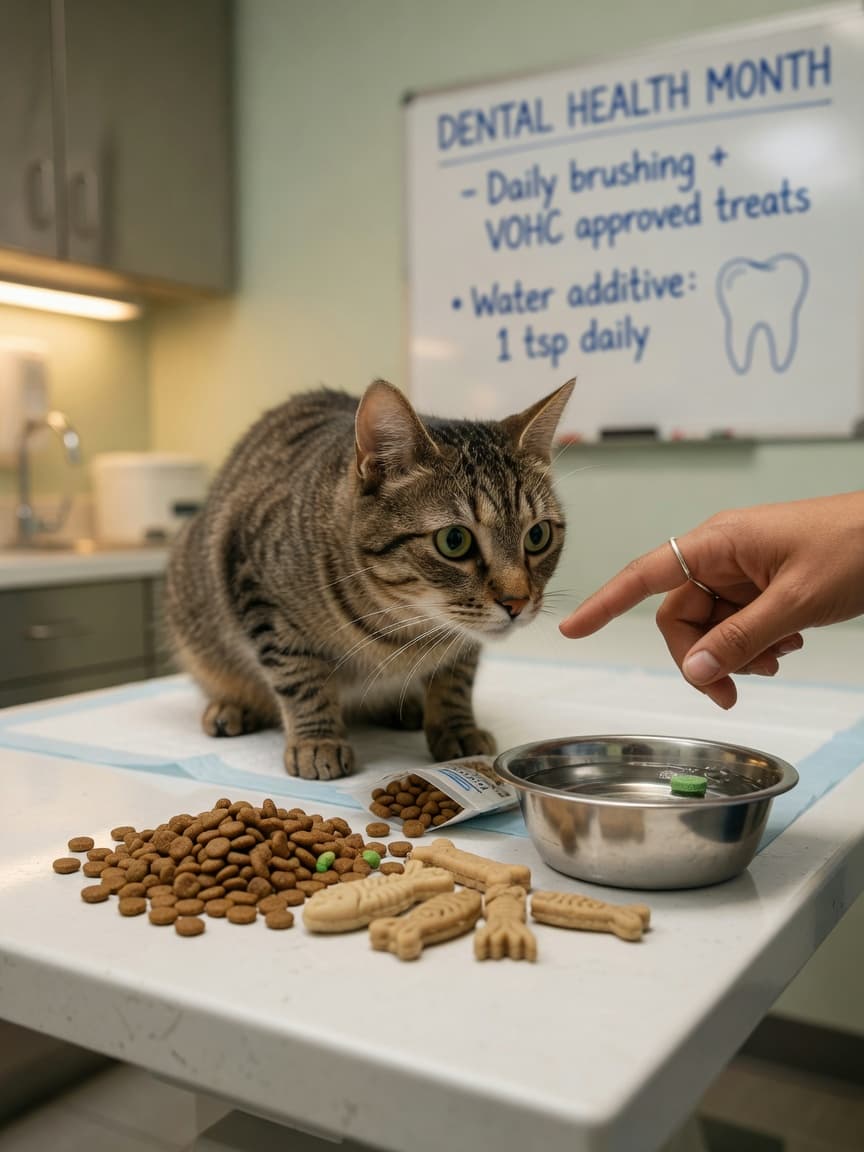
Why Cats Are Harder to Treat Than Dogs
Dental disease affects the majority of cats over three years of age, yet managing feline oral health at home is considerably more challenging than it is for dogs. Cats have strong texture preferences and an independent nature that makes them far less tolerant of having things placed in or near their mouths. Many cat owners who attempt toothbrushing find their cat becomes stressed, aggressive, or simply disappears whenever the toothbrush appears. This does not mean home dental care is impossible — it means it requires a different approach, and usually a combination of strategies rather than one single product.
The VOHC Seal for Cats
As with dogs, the Veterinary Oral Health Council (VOHC) Seal of Acceptance is the most reliable indicator that a cat dental product has proven efficacy. The VOHC evaluates products through controlled clinical trials and awards its seal only to those that demonstrably reduce plaque or tartar by at least 10 to 15 per cent compared to a control group. Importantly, VOHC approval for dogs and cats is separate — a product approved for dogs has not been tested in cats and should not be assumed to be appropriate.
Fewer cat products hold VOHC approval than dog products, which reflects both the difficulty of conducting feline dental trials and the more limited market. The current list of approved cat products can always be found on the VOHC website at vohc.org. Check it before purchasing, as approvals are updated regularly.
VOHC-Approved Products for Cats
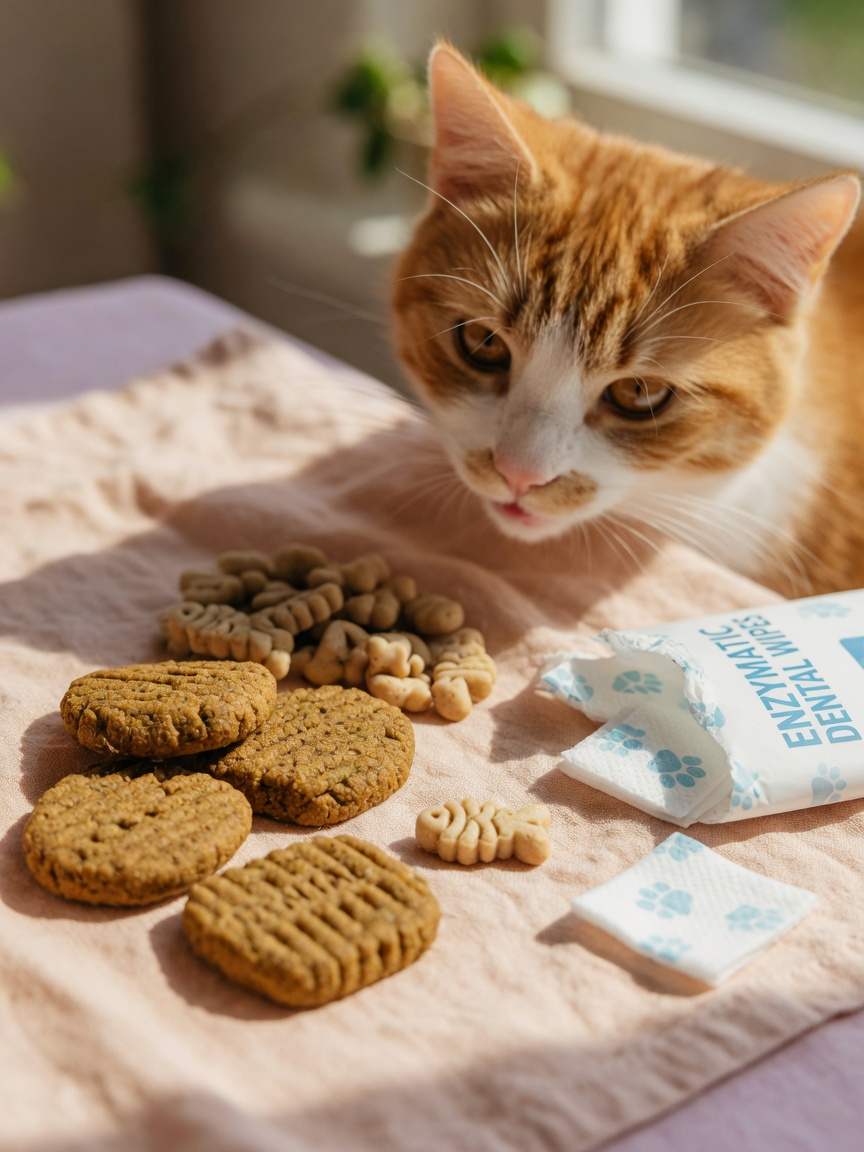
Among the products that have held VOHC approval for cats, Royal Canin Dental diets are notable. These are prescription or veterinary-line diets formulated specifically to reduce plaque and tartar through a combination of kibble texture, size, and fibre orientation that causes the tooth to penetrate more deeply into the kibble before it breaks, producing a scrubbing effect. Specific dental treats approved for cats have also appeared on the VOHC list at various times — always consult the current list to confirm which products hold approval at the time of purchase.
How Dental Diets Work for Cats
Dental diets for cats work differently from treats. The kibble in a standard dry food crumbles on contact with the tooth, providing minimal cleaning action. In dental-formulated diets, the kibble is larger and the internal fibre structure is aligned so that the tooth must compress through the whole piece before it breaks, creating mechanical abrasion along the tooth surface and down towards the gumline. Some formulations also contain polyphosphates, which bind to calcium in saliva and reduce its incorporation into tartar.
Hills Prescription Diet t/d (tooth diet) for cats works on this principle. The large kibble size requires the cat to bite fully through each piece, and the fibre matrix provides scrubbing action. This diet is intended as a complete food rather than a supplement, meaning it can be fed as the cat's entire daily ration and still deliver daily dental benefit without the calorie concerns associated with treats.
Water Additives for Cats
Water additives are one of the easier dental interventions to introduce for cats, because they require no active cooperation from the cat — you simply add the recommended quantity to the water bowl. Some water additives hold VOHC approval for cats; again, check the VOHC website for the current approved list. Look for products that are colourless, odourless, and tasteless, as cats are sensitive to any changes to their water and may refuse to drink if the taste or smell is altered. Introduce the additive gradually, starting with a lower dose, to allow the cat to adjust.
Water additives typically contain enzymes or antimicrobial agents that reduce oral bacterial load. They are not a replacement for mechanical cleaning but can be a useful addition to a broader dental care routine, particularly in cats that resist all other interventions.
Dental Wipes as an Intermediate Step
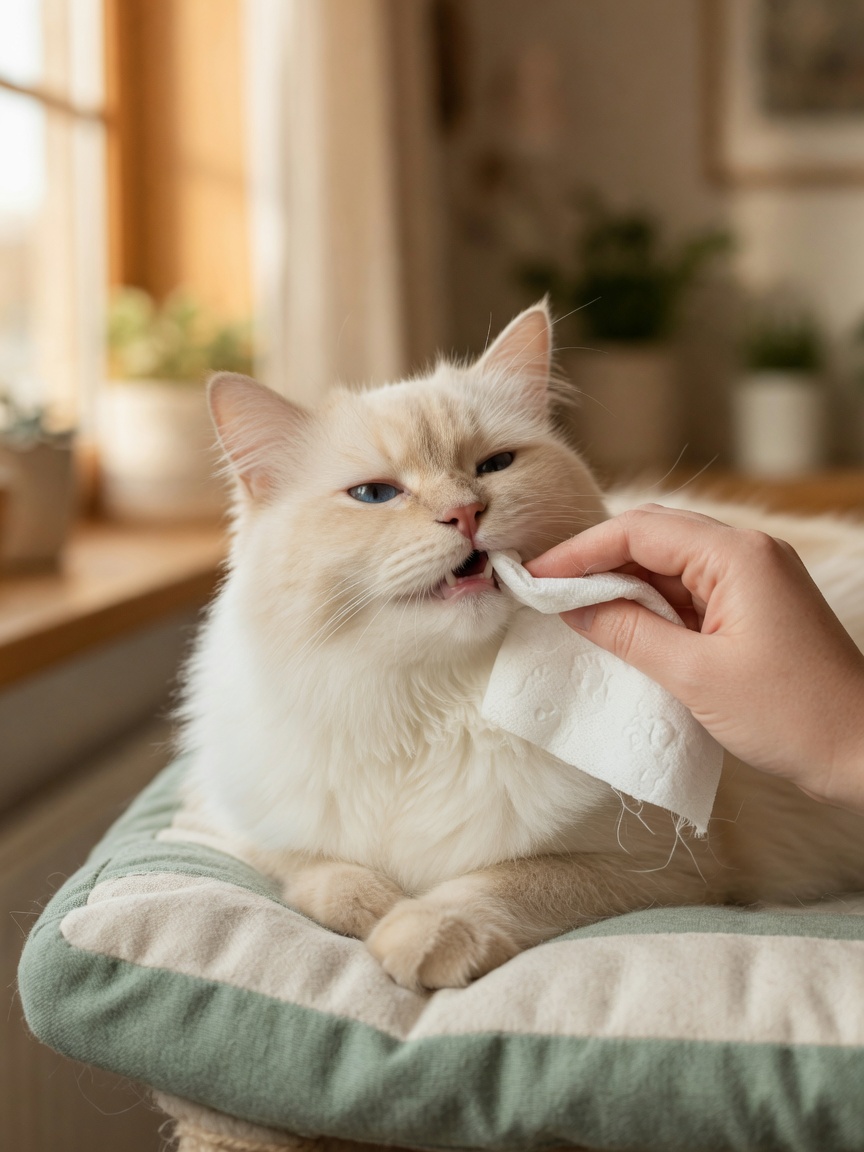
For cats that will not tolerate a toothbrush, dental wipes can serve as a stepping stone. These are soft gauze or fabric pads impregnated with enzymatic agents that you wrap around a finger and use to wipe along the outer tooth surfaces and gumline. They do not clean as effectively as a brush but they do provide some mechanical action and deliver enzymatic ingredients to the tooth surface. Many cats will accept finger-wiping more readily than a brush, particularly if introduced gradually with positive reinforcement using a food reward.
What to Avoid
Never use human dental products on cats. Human toothpastes contain fluoride and often xylitol, both of which are toxic to cats. Xylitol in particular is extremely dangerous — it can cause a rapid drop in blood sugar and liver failure even in small amounts. Always use products specifically formulated and approved for cats. Similarly, avoid giving cats dental chews designed for dogs, as these may be too large, too hard, and formulated with ingredients that are not safe for cats.
Building a Dental Care Routine
The most effective approach for cats is to combine multiple strategies rather than relying on one product. A practical routine might include:
- A VOHC-approved dental diet as the main food, or supplementary dental treats given daily.
- A VOHC-approved water additive added to the drinking bowl each day.
- Tooth wiping with a finger wrap or dental wipe two to three times per week, progressing to brushing if the cat tolerates it.
- A veterinary dental check every six to twelve months to monitor progress.
Introduce each new element gradually and use positive associations — offer the dental treat or wipe immediately before a meal or a play session so the cat begins to associate the experience with something pleasant.
When Treats Are Not Enough
Signs that home care is insufficient include persistent bad breath, visible yellow or brown tartar deposits (particularly on the upper back teeth), red or inflamed gums, drooling, pawing at the mouth, or a reluctance to eat hard food. These are indications that professional dental treatment is needed. In cats, this always requires a general anaesthetic, as it is not possible to perform a thorough dental examination and clean on a conscious cat.
In the UK, a feline dental clean under general anaesthesia typically costs between £300 and £700 depending on the practice and the extent of treatment required, with tooth extractions adding to the cost. This underscores the value of consistent home care — reducing the frequency of anaesthetic procedures is both better for the cat's health and considerably cheaper over a lifetime. Cats with a history of dental disease may need professional cleans every one to two years despite diligent home care, but without home care, intervention is often needed more frequently.
The Stress Factor
Veterinary visits are stressful for many cats, and repeated anaesthetics carry a small but cumulative risk, particularly in older animals. Effective home dental care reduces the frequency with which professional cleaning is needed, which is a meaningful welfare benefit beyond the direct oral health improvements. A calm, consistent home routine that your cat tolerates is always preferable to a theoretically superior routine that causes daily stress and is abandoned within a fortnight.