
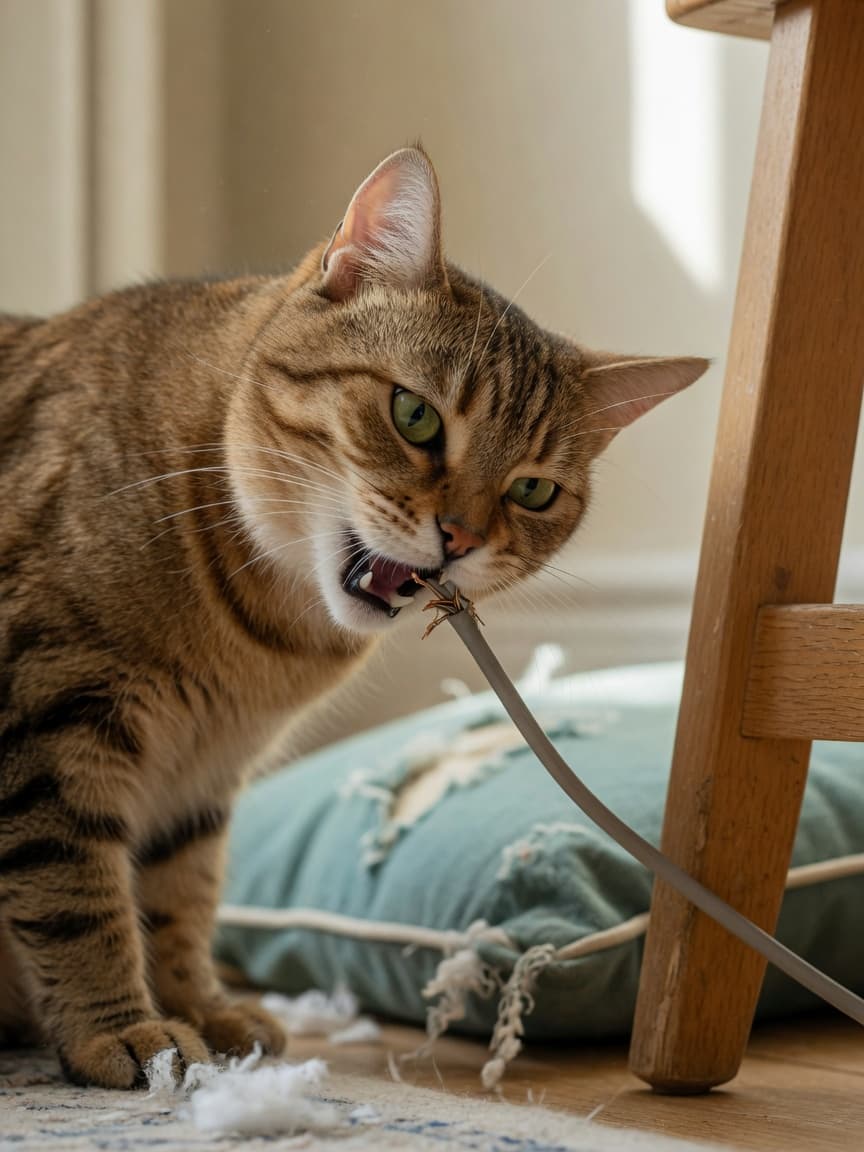
If your feline friend has turned into a household vandal, gnawing on furniture, cables, and your favourite houseplants, you're certainly not alone. Cats chewing on inappropriate objects is more common than many owners realise, and whilst it can be frustrating, it's rarely a sign of misbehaviour. Rather, it's usually your cat's way of communicating that something in their environment or health needs attention. Understanding the root cause is the first step towards resolving the issue and protecting both your home and your pet's wellbeing.
Common Reasons Why Cats Chew
Cat chewing behaviour can stem from several different causes. The most important thing is to identify which one applies to your situation:
- Teething: Young kittens chew to relieve sore gums as their permanent teeth emerge, typically between 4 and 6 months old.
- Boredom and understimulation: Indoor cats with limited enrichment often resort to chewing as a form of entertainment.
- Stress and anxiety: Changes in the home environment, new pets, or household disruptions can trigger nervous chewing.
- Dental problems: Cats with toothaches, gum disease, or other oral discomfort may chew to alleviate pain.
- Nutritional deficiencies: Rarely, inappropriate chewing can indicate a diet lacking essential nutrients or minerals.
- Pica: Some cats develop an abnormal appetite for non-food items, which requires veterinary investigation.
Health Concerns Associated with Chewing
Beyond the damage to your belongings, excessive chewing can pose real health risks to your cat. Ingesting foreign materials like plastic, string, or foam can lead to intestinal blockages—a serious condition requiring emergency surgery. Electrical cables present electrocution hazards, whilst some houseplants are toxic to cats. Regular dental checks can help identify oral issues early, preventing pain and infection.
Practical Solutions to Reduce Chewing Behaviour

- Provide appropriate chewing alternatives: Offer cat-safe toys designed for chewing, such as rubber toys or specially formulated cat treats. Rotate toys regularly to maintain interest.
- Enhance environmental enrichment: Ensure your cat has climbing structures, window perches, puzzle feeders, and interactive play sessions. Aim for at least two 15-minute play sessions daily.
- Remove temptation: Store cables in protective tubing, place plants out of reach, and cover furniture corners with double-sided tape or protective guards.
- Use deterrent sprays: Bitter-tasting, cat-safe sprays applied to forbidden objects can discourage chewing. Reapply regularly for effectiveness.
- Address stress factors: Create a calm environment with hiding spots, maintain consistent routines, and use feline pheromone diffusers if needed.
- Schedule a veterinary check-up: Rule out dental disease, nutritional imbalances, or underlying medical conditions.
When to Seek Veterinary Advice
Consult your vet if your cat's chewing is sudden, intense, or accompanied by other symptoms such as drooling, bad breath, difficulty eating, or weight loss. These signs may indicate dental disease or other health issues requiring professional treatment. Additionally, if your cat has already ingested foreign materials, seek immediate veterinary attention.
Key Takeaways
Cat chewing is rarely a behavioural problem—it's usually your pet's way of telling you something needs changing. By identifying the underlying cause, whether it's teething, boredom, stress, or a health issue, you can implement targeted solutions. Combine environmental enrichment, appropriate alternatives, and regular veterinary care to keep your cat happy and your home safe. Remember, patience and consistency are essential, and most cases improve significantly within a few weeks of implementing these strategies.