ForPetsHealthcare
Dogs

Why Do Cats Like Catnip?

By Julia WrenfieldUpdated August 4, 20263 min read
Evidence-based · Sources checked
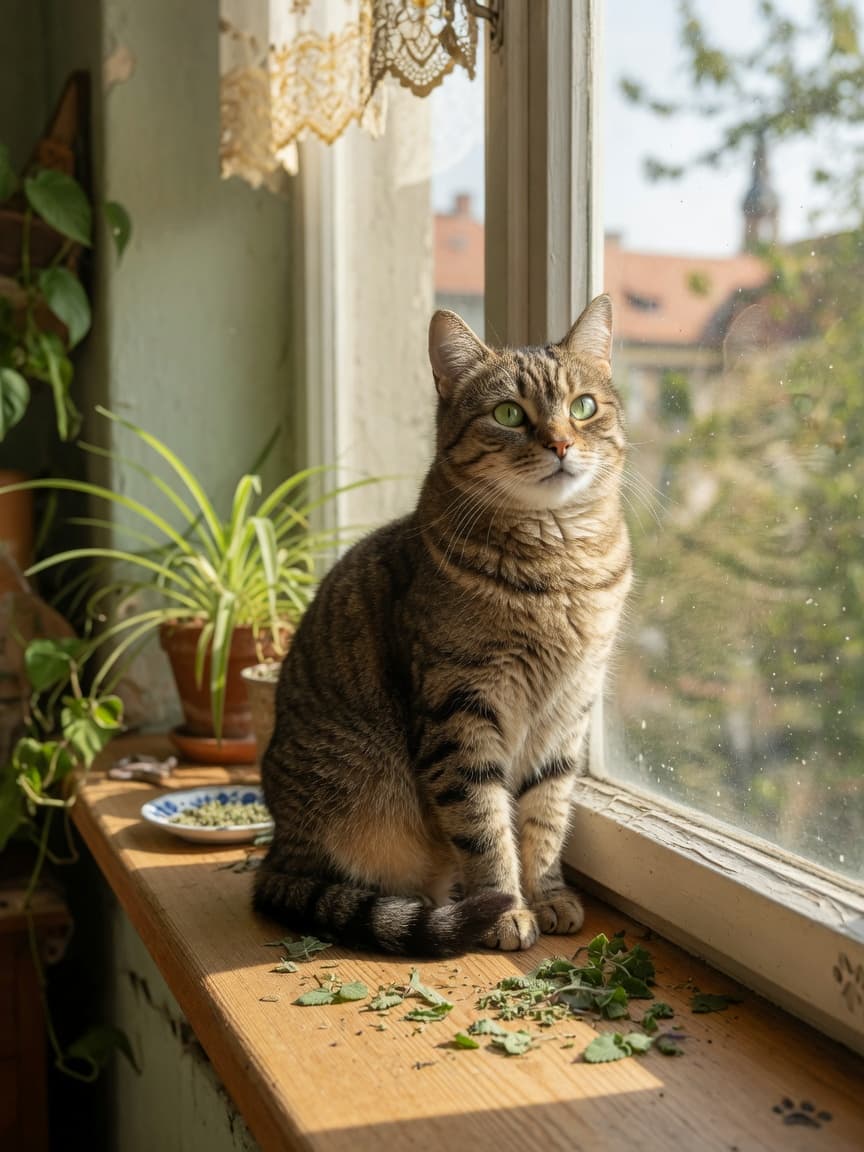
{"en": "Gray cat rolling on floor with catnip, eyes wide and playful during typical feline response to the plant", "es": "Gato gris rodando en el suelo con hierba gatera, ojos abiertos y actitud juguetona durante respuesta felina t\u00edpica", "fr": "Chat gris se roulant sur le sol avec de l'herbe \u00e0 chat, yeux \u00e9carquill\u00e9s et attitude ludique lors de r\u00e9action f\u00e9line", "de": "Grauer Kater rollt sich auf dem Boden mit Katzenminze, gro\u00dfe Augen und verspielte Reaktion auf die Pflanze", "nl": "Grijze kat rollend op de grond met kattenkruid, wijdopen ogen en speelse reactie op het kruid", "pt": "Gato cinzento rolando no ch\u00e3o com erva-dos-gatos, olhos arregalados e comportamento l\u00fadico t\u00edpico felino", "it": "Gatto grigio che si rotola sul pavimento con erba gatta, occhi spalancati e comportamento giocoso tipico felino"}

If you've ever watched your cat roll around ecstatically whilst sniffing a small pouch of dried plant material, you've witnessed one of the most entertaining and puzzling aspects of feline behaviour. Catnip—scientifically known as Nepeta cataria—has captivated cat owners for centuries, but the reasons behind this peculiar attraction have only recently become clear. Understanding what makes catnip so irresistible to our feline friends can help you use it safely and effectively to enrich your cat's life.

The Science Behind Catnip's Appeal

The secret to catnip's popularity lies in a chemical compound called nepetalactone, found in the plant's leaves and stems. When cats smell this volatile oil, it binds to receptors in their nasal tissues, triggering a response in their brain that can only be described as euphoric. Research suggests that nepetalactone acts similarly to pheromones—natural chemical messengers that cats use to communicate with one another.

What's particularly fascinating is that catnip doesn't actually contain any addictive substances. The effect is entirely sensory and neurological, with no risk of dependency or harm to your cat's health.

How Catnip Affects Different Cats

Not all cats respond to catnip in the same way. Sensitivity to catnip is hereditary, with approximately 70-80% of cats showing a noticeable reaction. Some factors influence this variation:

  • Age: Kittens under three months and senior cats may show reduced interest or no response at all
  • Genetics: If your cat's parents weren't responsive, your cat may not be either
  • Individual personality: Some cats are naturally less reactive to stimuli than others

If your cat doesn't respond to catnip, don't worry—it's completely normal. You might explore alternatives such as silvervine or valerian root, which trigger responses in some cats that don't react to catnip.

Common Catnip Behaviours Explained

When catnip takes effect, cats may exhibit a range of entertaining and sometimes surprising behaviours:

  1. Rolling and rubbing: Your cat may roll around on the catnip or rub their face against it repeatedly
  2. Purring and vocalisations: Increased meowing, chirping, or other sounds are common
  3. Jumping and pouncing: Sudden bursts of energy and playful aggression towards the catnip toy
  4. Drooling: Some cats may drool slightly during their catnip experience
  5. Relaxation: After the initial excitement, many cats become calm and sleepy

These responses typically last between 5 to 15 minutes, after which your cat will need a break before they become responsive to catnip again.

Safe and Effective Catnip Use

To maximise the benefits of catnip whilst ensuring your cat's safety, follow these practical guidelines:

  • Use catnip in moderation—offering it 2-3 times per week is ideal
  • Store catnip in an airtight container to preserve its potency
  • Choose high-quality, organic catnip without additives or pesticides
  • Supervise your cat during catnip sessions, particularly with kittens or elderly cats
  • Rotate between catnip and other enrichment toys to maintain novelty and interest

Key Takeaways

Catnip's charm lies in its ability to trigger genuine neurological responses through nepetalactone, creating moments of joy and stimulation for most cats. Rather than a guilty pleasure, catnip is a legitimate tool for enrichment, exercise, and mental stimulation when used appropriately. Whether your cat is a catnip enthusiast or indifferent to its charms, understanding this fascinating plant helps you provide the best possible care for your feline companion.

#why do cats like catnip#cat health#feline nutrition#forpetshealthcare

Sources & further reading

This article is based on peer-reviewed veterinary research and reputable animal-health sources. Explore the underlying science in our Research Library.

Related articles

The 19 Best Animal Shelters in the Netherlands (2026)

the Netherlands's animal shelters, rescue associations and refuges save thousands of dogs, cats and other animals every year, almost always on tiny budgets and volunteer power. To build the most objective ranking possible, we analysed public Google reviews across more than 56 registered animal-prote…

Read more →

The 25 Best Animal Shelters in Italy (2026)

Italy's animal shelters, rescue associations and refuges save thousands of dogs, cats and other animals every year, almost always on tiny budgets and volunteer power. To build the most objective ranking possible, we analysed public Google reviews across more than 121 registered animal-protection org…

Read more →

The 48 Best Animal Shelters in Germany (2026)

Germany's animal shelters, rescue associations and refuges save thousands of dogs, cats and other animals every year, almost always on tiny budgets and volunteer power. To build the most objective ranking possible, we analysed public Google reviews across more than 152 registered animal-protection o…

Read more →

The 32 Best Animal Shelters in France (2026)

France's animal shelters, rescue associations and refuges save thousands of dogs, cats and other animals every year, almost always on tiny budgets and volunteer power. To build the most objective ranking possible, we analysed public Google reviews across more than 89 registered animal-protection org…

Read more →

The 8 Best Animal Shelters in Portugal (2026)

Portugal's animal shelters, rescue associations and municipal centros de recolha save thousands of dogs, cats and other animals every year, almost always on tiny budgets and volunteer power. To build the most objective ranking possible, we analysed public Google reviews across more than 86 registere…

Read more →

Sphynx Cat Skin care and hygiene: Causes, Signs & Care

Sphynx cats have little to no coat, which means the skin itself takes on jobs that fur normally does — insulation, oil dispersal, and barrier protection — leaving it prone to greasiness, blocked pores, fungal infections, and sunburn. The single most important thing to know is that a Sphynx's skin ne…

Read more →
Disclaimer:This article is for informational purposes only and does not constitute veterinary advice. Always consult a qualified veterinarian for your pet's health concerns.

Free newsletter

Pet health tips, straight to your inbox

Weekly science-backed advice for dog & cat owners. No spam, unsubscribe anytime.