
Indoor Cat Enrichment: 10 Ways to Prevent Boredom and Depression
Keeping a cat indoors is one of the safest decisions you can make for its long-term health. Indoor cats live significantly longer on average, are protected from road traffic, infectious diseases, and predators, and are far less likely to go missing. But safety without stimulation is not welfare. An indoor cat that lacks sufficient mental and physical enrichment can develop genuine psychological problems — anxiety, compulsive behaviours, lethargy, aggression, and a condition that veterinary behaviourists increasingly recognise as feline depression.
The good news is that addressing this is neither expensive nor complicated. Cats have specific, well-understood needs, and meeting them consistently makes an enormous difference to their quality of life.
Understanding What Indoor Cats Actually Need
Before looking at solutions, it helps to understand what a cat's brain is designed to do. Cats are solitary hunters that would, in a natural context, spend the majority of their waking hours engaged in low-level predatory activity — patrolling territory, stalking, waiting, chasing, and catching. They are also crepuscular, meaning they are naturally most active at dawn and dusk. An indoor environment that provides no outlet for this activity leaves a significant neurological gap.
Cats also need vertical space, opportunities for hiding and retreat, scent exploration, and — for many cats — appropriate social interaction. A flat with one floor, no window access, and a single toy in the corner is not enriching. It is a cage with better cushions.
1. Rotate Toys Regularly
Cats habituate quickly to familiar objects. A toy that produces a strong investigative response on Monday may be completely ignored by Friday. Keeping toys in rotation — putting some away and reintroducing them after a week or two — preserves their novelty. You do not need to buy constantly; you simply need to manage what is available.
2. Introduce Puzzle Feeders
Feeding a cat from a bowl delivers calories without engaging the brain. Puzzle feeders, lick mats, and food-dispensing toys require the cat to work for its food, mimicking the cognitive engagement of hunting. Even hiding small portions of dry food around the house — food foraging — can extend mealtime engagement significantly and reduce boredom-related behaviours.
3. Invest in a Cat Tree or Climbing Structure
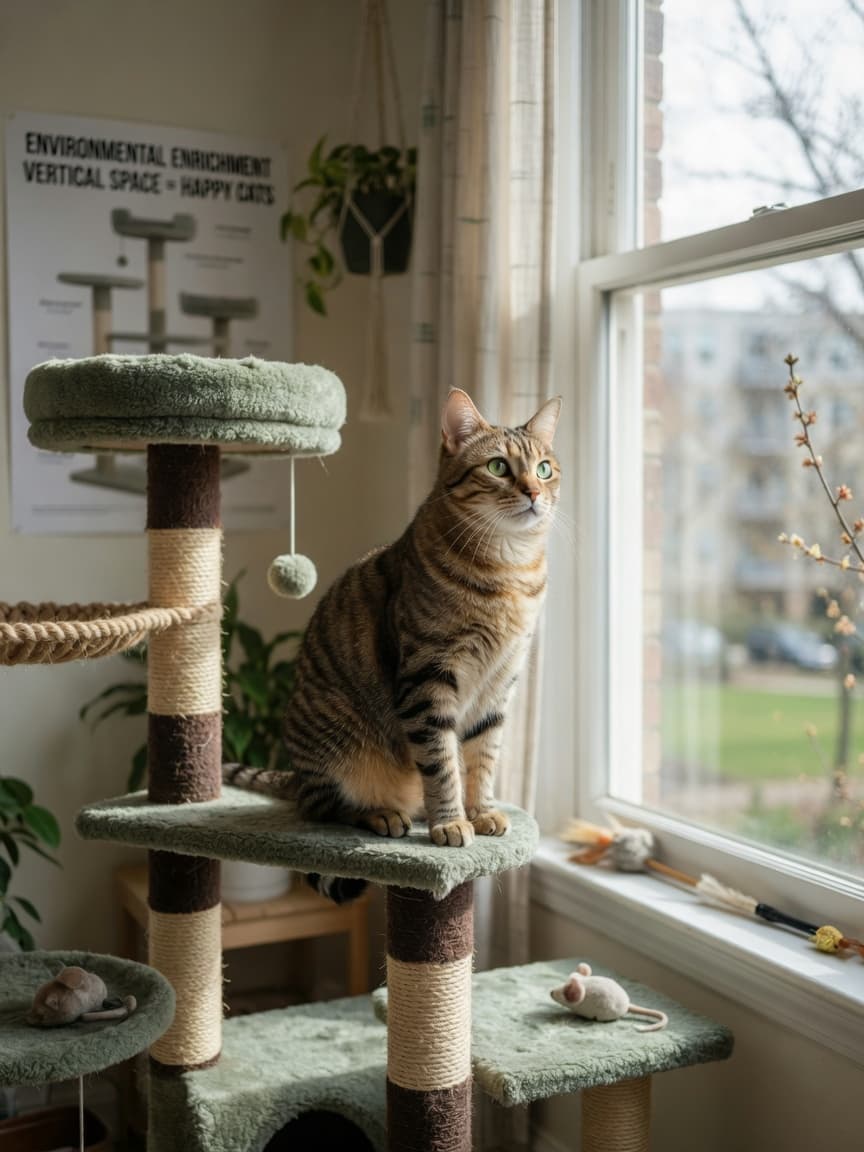
Vertical space is not a luxury for cats; it is a fundamental welfare requirement. Height provides security, vantage points for surveillance, and a sense of territory. A well-positioned cat tree near a window gives a cat access to both climbing and visual stimulation simultaneously. If budget is a concern, sturdy wall-mounted shelves at different heights can achieve a similar effect at lower cost.
4. Create a Window Perch with a View
A window with bird feeders or a garden view outside functions as feline television. Studies have shown that cats spend significant portions of their day watching activity outside, and that this visual engagement has measurable calming and stimulating effects depending on the cat's temperament. If you are able to install a bird feeder or a squirrel feeding station within view of a window, the investment in your cat's daily enrichment is considerable.
5. Schedule Daily Interactive Play
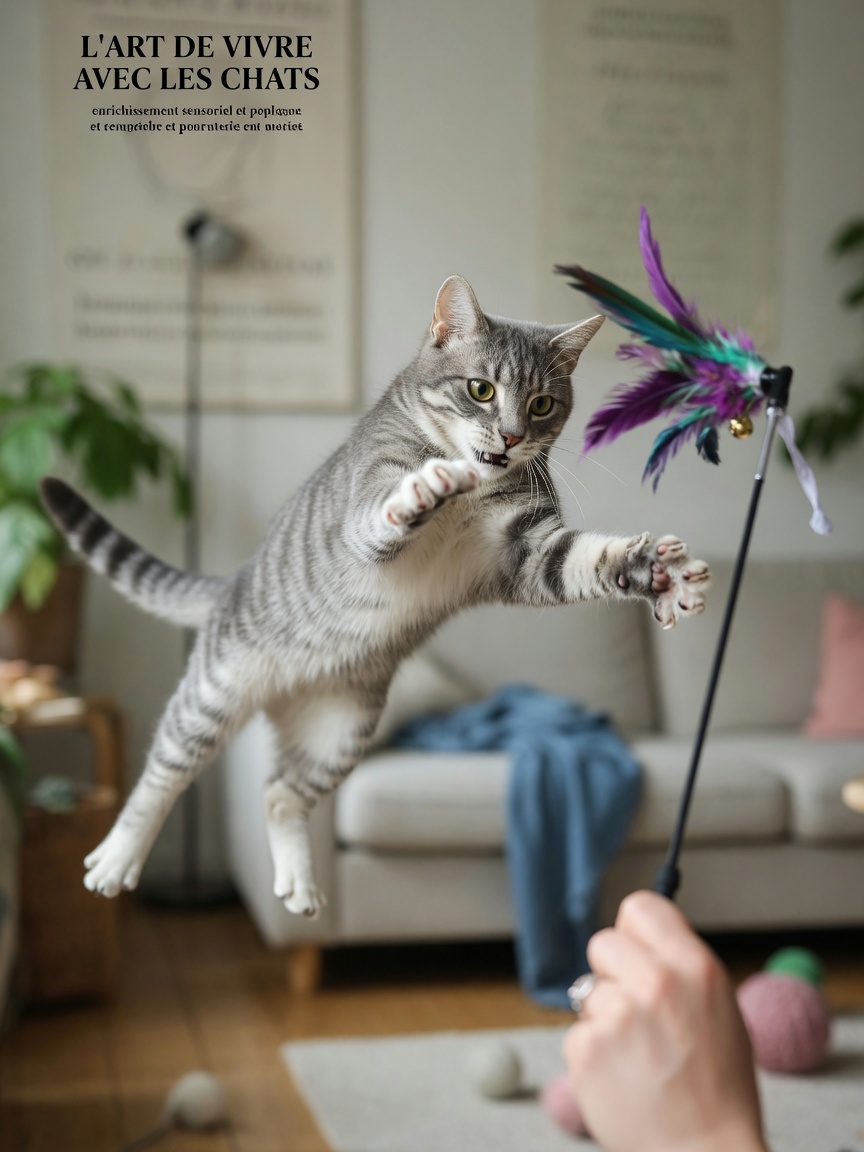
Wand toys, feather toys, and laser pointers allow you to engage your cat's full predatory sequence — stalk, chase, pounce — in a controlled environment. Research from the University of Lincoln suggests that two fifteen-minute interactive play sessions daily can significantly reduce stress-related behaviours in indoor cats. Always end laser pointer sessions with a physical toy the cat can actually catch, to avoid the frustration of an unresolvable chase.
6. Provide Scratching Opportunities in Multiple Locations
Scratching is not destructive behaviour. It is territory marking, claw maintenance, and a form of physical stretching. Cats that do not have appropriate scratching surfaces will find their own, which is rarely the outcome owners prefer. Provide both vertical and horizontal scratching surfaces in areas where your cat already tends to spend time. Placement matters enormously — a scratching post hidden in a corner will often be ignored.
7. Introduce Scent Enrichment
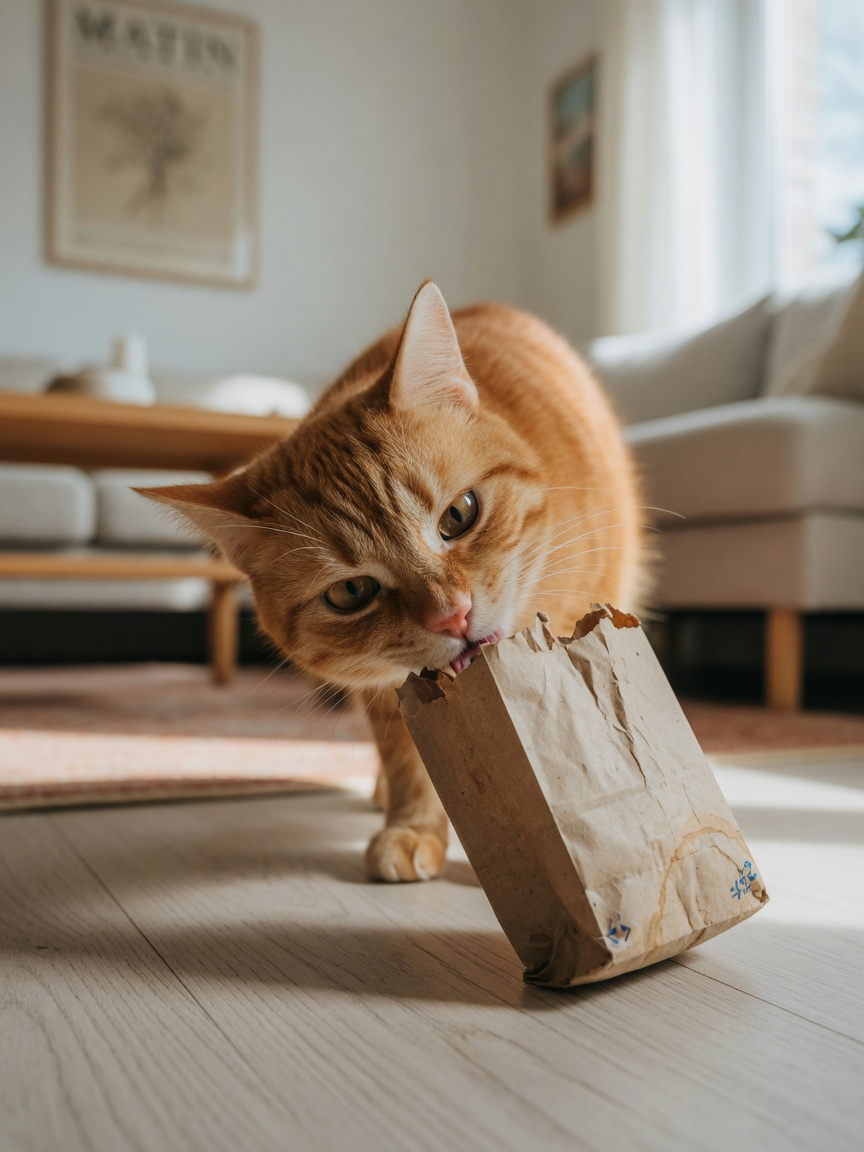
Cats navigate the world heavily through scent, and introducing novel smells provides genuine cognitive stimulation. Dried catnip or silver vine hidden inside a sock, a paper bag that has been outdoors, or herbs such as valerian or chamomile can all produce strong investigative responses. Rotating scent enrichment items alongside toy rotation extends the benefit.
8. Consider a Bird or Fish to Watch
A securely housed fish tank or a bird cage your cat can observe without accessing provides ongoing passive enrichment. The movement, sound, and unpredictability of another animal is significantly more engaging than most commercial cat toys. This requires careful management to ensure the other animal's welfare is not compromised, but when set up safely, it can be a highly effective enrichment tool.
9. Build in Hiding Spots and Retreat Spaces
Cats need to feel they can withdraw and be unseen when they choose to. Cardboard boxes, covered beds, and dedicated hiding spaces around the home reduce ambient stress levels, particularly in multi-cat or multi-pet households. A cat that always feels exposed is a cat that is always, to some degree, on alert — and chronic low-level stress has real physiological consequences over time.
10. Consider a Catio or Secure Outdoor Enclosure
A catio — an enclosed outdoor structure that allows cats to experience fresh air, natural light, and outdoor smells without the risks of free-roaming — is one of the most impactful welfare investments available for indoor cats. These range from simple window boxes to elaborate garden structures and can be constructed relatively affordably with basic materials. The sensory richness of even a few square metres of outdoor space, accessed safely, far exceeds what most indoor environments can provide alone.
Enrichment Is an Ongoing Commitment, Not a One-Time Fix
The key to effective enrichment is consistency and variety over time. Cats thrive on routine but require novelty within that routine to remain mentally engaged. Observing your cat's responses to different enrichment types will quickly show you what it finds most rewarding — and that knowledge is the most useful tool you have for keeping it genuinely happy.