ForPetsHealthcare
Dogs

What to Do When Your Cat Dies at Home

By Julia WrenfieldUpdated September 11, 20263 min read
Evidence-based · Sources checked
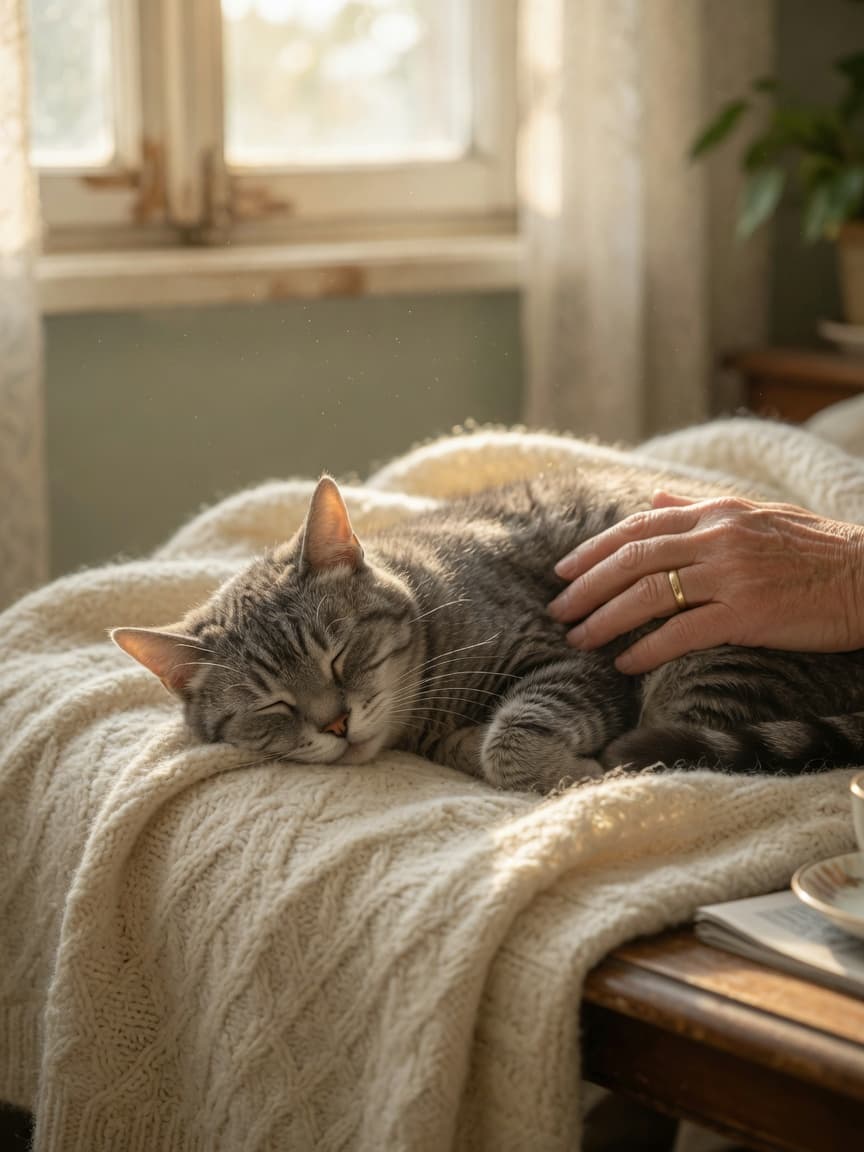
{"en": "Peaceful cat resting at home, representing the loss pet owners face when their beloved companion passes away", "es": "Gato descansando pac\u00edficamente en casa, representando la p\u00e9rdida que enfrentan los due\u00f1os cuando fallece su mascota", "fr": "Chat reposant paisiblement \u00e0 la maison, repr\u00e9sentant la perte que vivent les propri\u00e9taires \u00e0 la mort de leur animal", "de": "Friedlich ruhende Katze zu Hause, die den Verlust darstellt, den Tierbesitzer beim Tod ihres geliebten Haustieres erleben", "nl": "Rustige kat thuis, die het verlies vertegenwoordigt dat huisdiereigenaren voelen wanneer hun dierbare kat overlijdt", "pt": "Gato descansando pacificamente em casa, representando a perda que os donos de animais enfrentam quando seu felino falece", "it": "Gatto che riposa serenamente a casa, rappresentando la perdita che i proprietari affrontano quando il loro amato felino muore"}

Losing a beloved pet at home is one of the most difficult experiences a pet owner can face. The sudden loss, combined with the practical decisions you'll need to make in a state of grief, can feel overwhelming. This guide offers compassionate, practical steps to help you navigate this heartbreaking situation with dignity for your cat and care for yourself during this time.

Immediate Steps to Take

In the first moments after discovering your cat has passed, it's natural to feel shock and distress. Take a moment to compose yourself before proceeding with necessary actions.

  1. Confirm your cat has passed. If there's any doubt, contact your veterinary surgery immediately. Occasionally, a cat may appear lifeless but could still require emergency care.
  2. Handle your cat gently. Move carefully around your pet's body. If you need to move your cat, do so with respect and care.
  3. Keep other pets and children away. Give yourself and your family privacy during this difficult time.
  4. Contact your veterinary practice. Your vet can confirm death and provide guidance on next steps, including arranging collection if you wish.

Deciding on Aftercare Options

Once you've contacted your vet, you'll need to decide how to proceed. There are several options available to you, each offering different levels of ceremony and closure.

  • Veterinary cremation: Your vet can arrange professional cremation services. Many practices offer communal cremation (ashes not returned) or individual cremation (ashes returned in an urn). Individual cremation allows you to keep, scatter, or bury your cat's remains.
  • Home burial: If you have a garden, burying your cat on your property is an option in many areas. Check local regulations, as some regions have restrictions. Burial at least 60 centimetres deep and away from water sources is recommended.
  • Pet cemetery: Specialist pet cemeteries provide dignified burial options with memorial services.
  • Tissue donation: Some veterinary colleges accept donations for research and teaching purposes.

Managing the Practical Details

Amid your grief, there are several administrative matters to address. Don't hesitate to ask family or friends for help.

  • Request a copy of your cat's death certificate from your vet for insurance or records purposes
  • Notify your microchip registry that your pet has passed away
  • Consider cancelling pet insurance or other pet-related subscriptions
  • Arrange for collection of litter trays, food bowls, and toys when you're ready

Supporting Your Mental Health and Grief
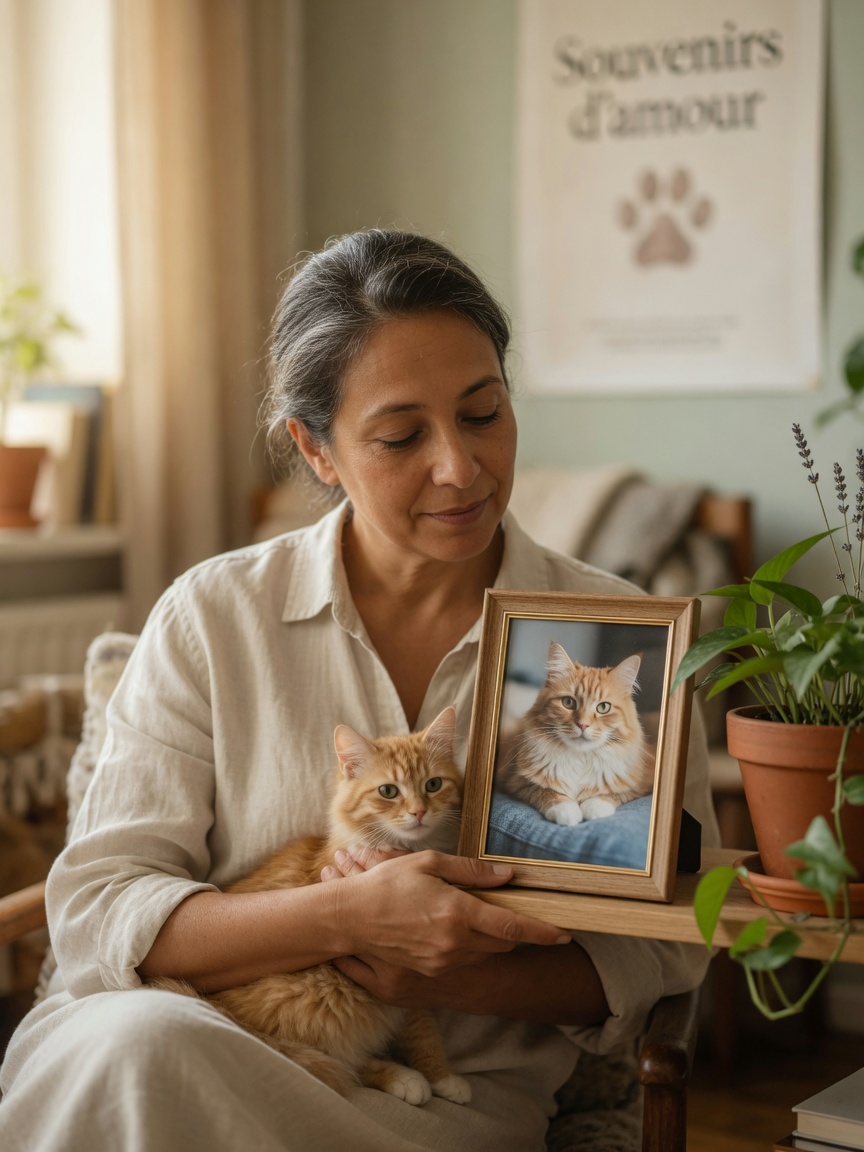
A person holding a framed photograph of their cat while sitting peacefully indoors, with a potted plant nearby, captured in warm natural light suggesting quiet remembrance and healing

Pet loss is genuine grief. Your feelings—whether sadness, guilt, anger, or numbness—are all valid and normal. Allow yourself to mourn.

  • Talk to understanding friends or family members about your loss
  • Consider pet loss support groups, many available online
  • Some veterinary practices recommend grief counselling services
  • Create a memorial—a photograph album, plant a tree, or donate to an animal charity in your cat's name

Key Takeaways

Losing your cat at home is heartbreaking, but taking time to make thoughtful decisions about aftercare and allowing yourself to grieve properly honours your relationship with your pet. Remember that your cat's passing, however sudden, does not diminish the joy and love they brought to your life. Be gentle with yourself during this difficult period, and reach out for support when you need it.

#what to do when your cat dies at home#cat health#feline nutrition#forpetshealthcare

Sources & further reading

This article is based on peer-reviewed veterinary research and reputable animal-health sources. Explore the underlying science in our Research Library.

Related articles

The 19 Best Animal Shelters in the Netherlands (2026)

the Netherlands's animal shelters, rescue associations and refuges save thousands of dogs, cats and other animals every year, almost always on tiny budgets and volunteer power. To build the most objective ranking possible, we analysed public Google reviews across more than 56 registered animal-prote…

Read more →

The 48 Best Animal Shelters in Germany (2026)

Germany's animal shelters, rescue associations and refuges save thousands of dogs, cats and other animals every year, almost always on tiny budgets and volunteer power. To build the most objective ranking possible, we analysed public Google reviews across more than 152 registered animal-protection o…

Read more →

The 25 Best Animal Shelters in Italy (2026)

Italy's animal shelters, rescue associations and refuges save thousands of dogs, cats and other animals every year, almost always on tiny budgets and volunteer power. To build the most objective ranking possible, we analysed public Google reviews across more than 121 registered animal-protection org…

Read more →

The 32 Best Animal Shelters in France (2026)

France's animal shelters, rescue associations and refuges save thousands of dogs, cats and other animals every year, almost always on tiny budgets and volunteer power. To build the most objective ranking possible, we analysed public Google reviews across more than 89 registered animal-protection org…

Read more →

The 8 Best Animal Shelters in Portugal (2026)

Portugal's animal shelters, rescue associations and municipal centros de recolha save thousands of dogs, cats and other animals every year, almost always on tiny budgets and volunteer power. To build the most objective ranking possible, we analysed public Google reviews across more than 86 registere…

Read more →

Yorkshire Terrier Collapsing trachea: Causes, Signs & Care

Yorkshire Terriers are one of the breeds most commonly affected by collapsing trachea, largely because their windpipe cartilage is naturally softer and more prone to weakening than in larger dogs. This means the rings of cartilage that hold the airway open can flatten during breathing, causing a cha…

Read more →
Disclaimer:This article is for informational purposes only and does not constitute veterinary advice. Always consult a qualified veterinarian for your pet's health concerns.

Free newsletter

Pet health tips, straight to your inbox

Weekly science-backed advice for dog & cat owners. No spam, unsubscribe anytime.