

Aggression Is the Number One Reason Owners Request Castration — Yet the Evidence Is More Complicated Than Most Expect
When a male dog begins showing aggression, castration is often the first solution suggested — by neighbours, fellow dog owners, and sometimes even well-meaning veterinary staff. The logic seems straightforward: testosterone fuels aggression, remove the testosterone, remove the problem. Reality, however, is considerably more layered, and acting on this assumption without understanding the type and cause of aggression can lead to disappointment or, worse, a dog whose behaviour deteriorates further.
The Testosterone-Aggression Link: What Research Actually Shows
Testosterone does influence certain aggressive tendencies. Studies consistently show that intact male dogs display higher rates of inter-male aggression and competitive behaviour than neutered males. Testosterone increases arousal, reduces some inhibitory responses, and heightens sensitivity to social challenges. These effects are real.
However, the relationship between testosterone and aggression is not linear. A dog with low testosterone can still be severely aggressive. A dog with high testosterone may be entirely non-aggressive. The hormone creates a predisposition or lowers a threshold — it does not write the behavioural script from scratch.
Types of Aggression and How Castration Affects Each
Inter-male Aggression
This is the category where castration has the strongest evidence behind it. When an intact male dog is aggressive specifically towards other intact males — reacting to the scent and signals of testosterone — castration frequently reduces or eliminates this behaviour. If your dog is selectively aggressive towards other males but friendly with females and neutered dogs, the prognosis after castration is generally good.
Dominance-Related or Status Aggression
Some male dogs display aggression linked to competition over resources or social position. Castration produces mixed results here. Where testosterone is amplifying the behaviour, reduction in hormones may help. Where the behaviour is established, learned, and reinforced over time, the hormonal change alone is unlikely to resolve it.
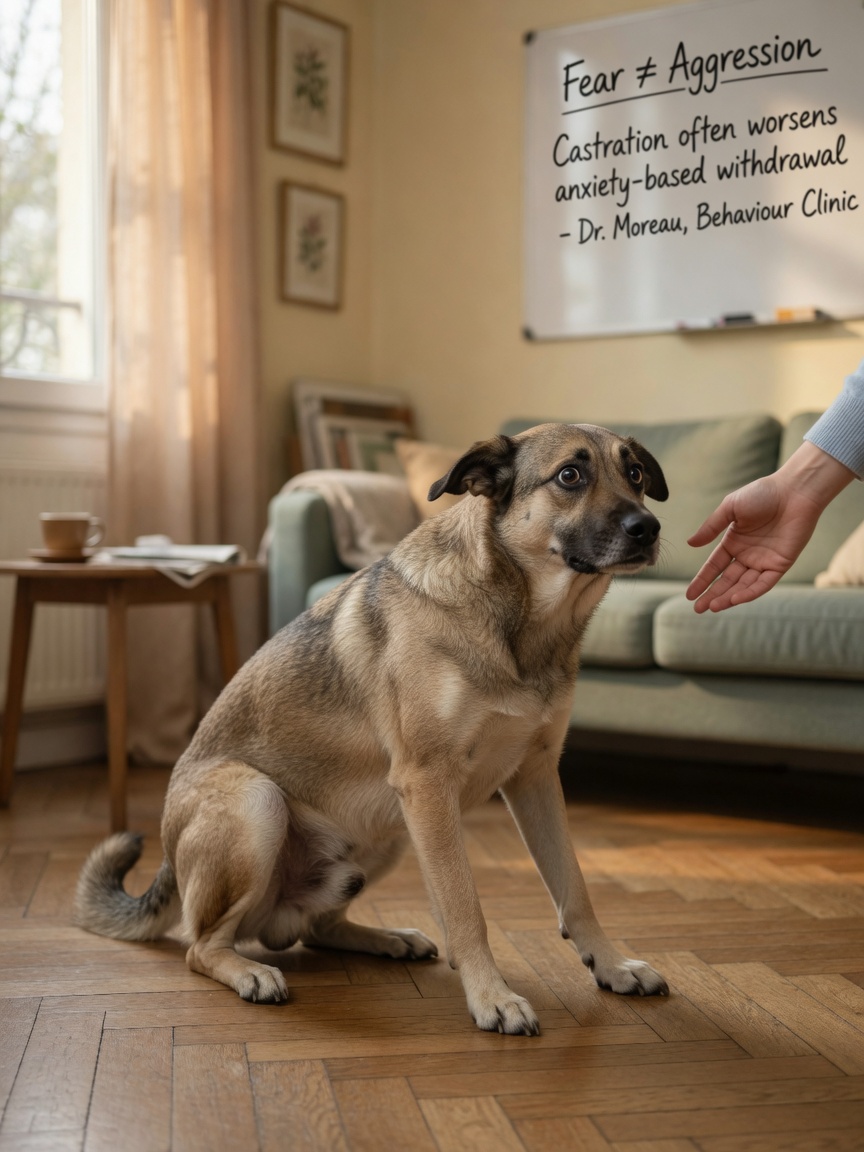
Fear-Based Aggression
This is the category where castration is least likely to help — and may, in some cases, worsen the situation. Fear aggression arises from anxiety, not from sexual motivation or competitive drive. Testosterone has mild anxiolytic effects, meaning its removal can increase underlying anxiety in some dogs. Castrating a fear-aggressive dog without addressing the root cause through behaviour modification can occasionally remove a small inhibitory buffer and make the dog more reactive, not less.
Predatory Behaviour and Redirected Aggression
Predatory drive and redirected aggression — where a dog lashes out at a nearby person or animal when frustrated or over-aroused — are not hormonally governed in any meaningful way. Castration will not reliably affect these.
The Role of Learning and History
Aggression in dogs is rarely a purely hormonal phenomenon by the time an owner seeks help. Most dogs presenting with significant aggression have months or years of reinforced behaviour behind them. The aggressive response has worked — it has made threatening things go away, or it has produced a reaction that was self-reinforcing in some way. That learning does not disappear when testosterone drops.
Research from the University of Pennsylvania found that castration reduced aggression towards unfamiliar dogs in approximately 60% of cases, but had modest effects on aggression directed at owners or strangers. The type of aggression matters enormously in predicting the outcome of surgery.
Chemical Castration as a Trial
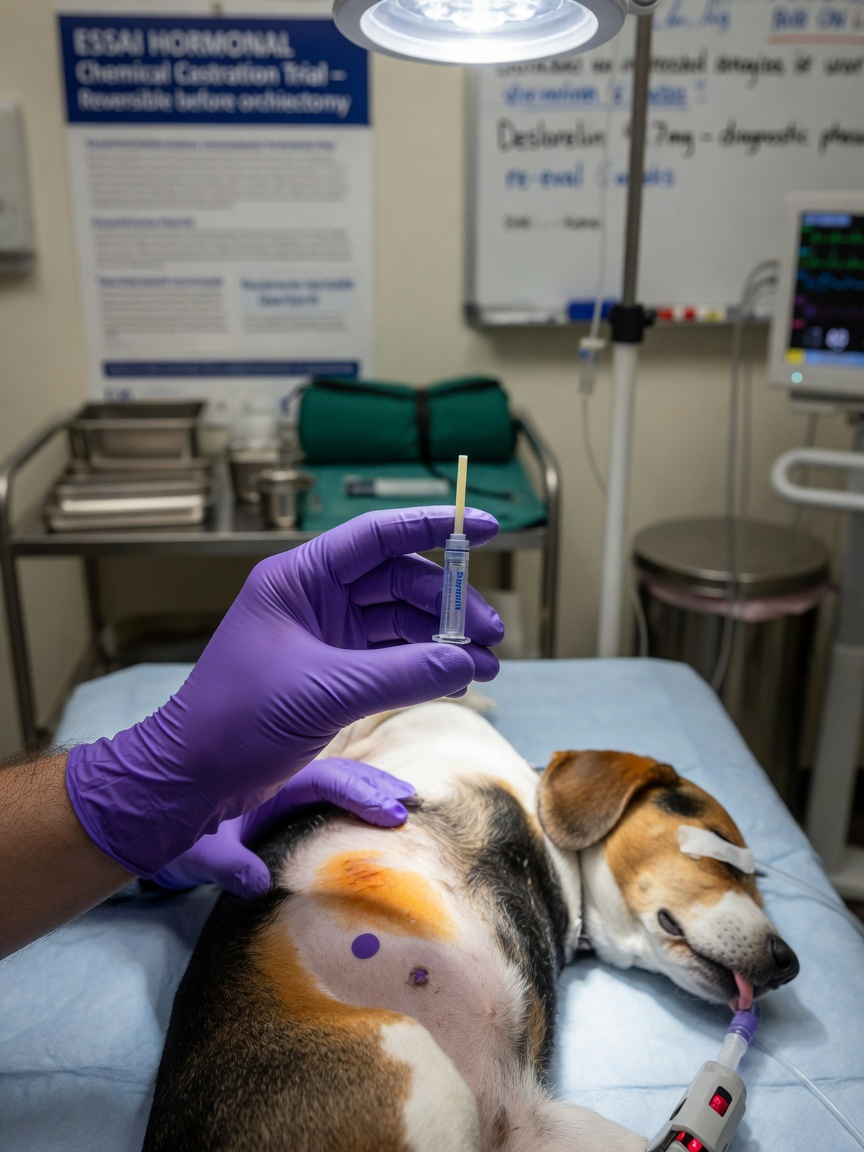
Before committing to surgical castration, chemical castration — delivered via an implant that temporarily suppresses testosterone — offers a reversible way to assess whether hormonal reduction will help. If behaviour improves noticeably during the three to six months of hormonal suppression, surgical castration is more likely to produce lasting benefits. If behaviour remains unchanged or worsens, surgery is less likely to be the answer, and behavioural intervention becomes the priority.
This approach is underused but increasingly recommended by veterinary behaviourists as a first step in cases where aggression is the primary concern.
When Castration Is Not Enough
Even in cases where castration does reduce aggressive behaviour, it is rarely sufficient as a standalone intervention. Behaviour modification — working with a qualified clinical animal behaviourist — is almost always necessary to achieve reliable, lasting change. Castration may lower the ceiling on arousal and reactivity; training and desensitisation work teach the dog what to do instead.
A Practical Framework for Owners
- Identify the type of aggression with help from a qualified behaviourist before making surgical decisions
- Consider a deslorelin implant (chemical castration) as a reversible trial if testosterone-linked aggression is suspected
- Do not castrate a fear-aggressive dog without concurrent behaviour support — discuss risks with your vet
- Set realistic expectations: castration is an adjunct to treatment, not a cure
- Begin or continue behaviour modification regardless of surgical decisions
- Consult a veterinary behaviourist for complex or high-risk cases — this is a clinical matter, not just a training one
Castration can be a meaningful part of managing aggression in male dogs, but only when the type of aggression is correctly identified, expectations are realistic, and behavioural support accompanies any surgical decision. Always involve your vet and a qualified behaviourist in developing a plan tailored to your individual dog.